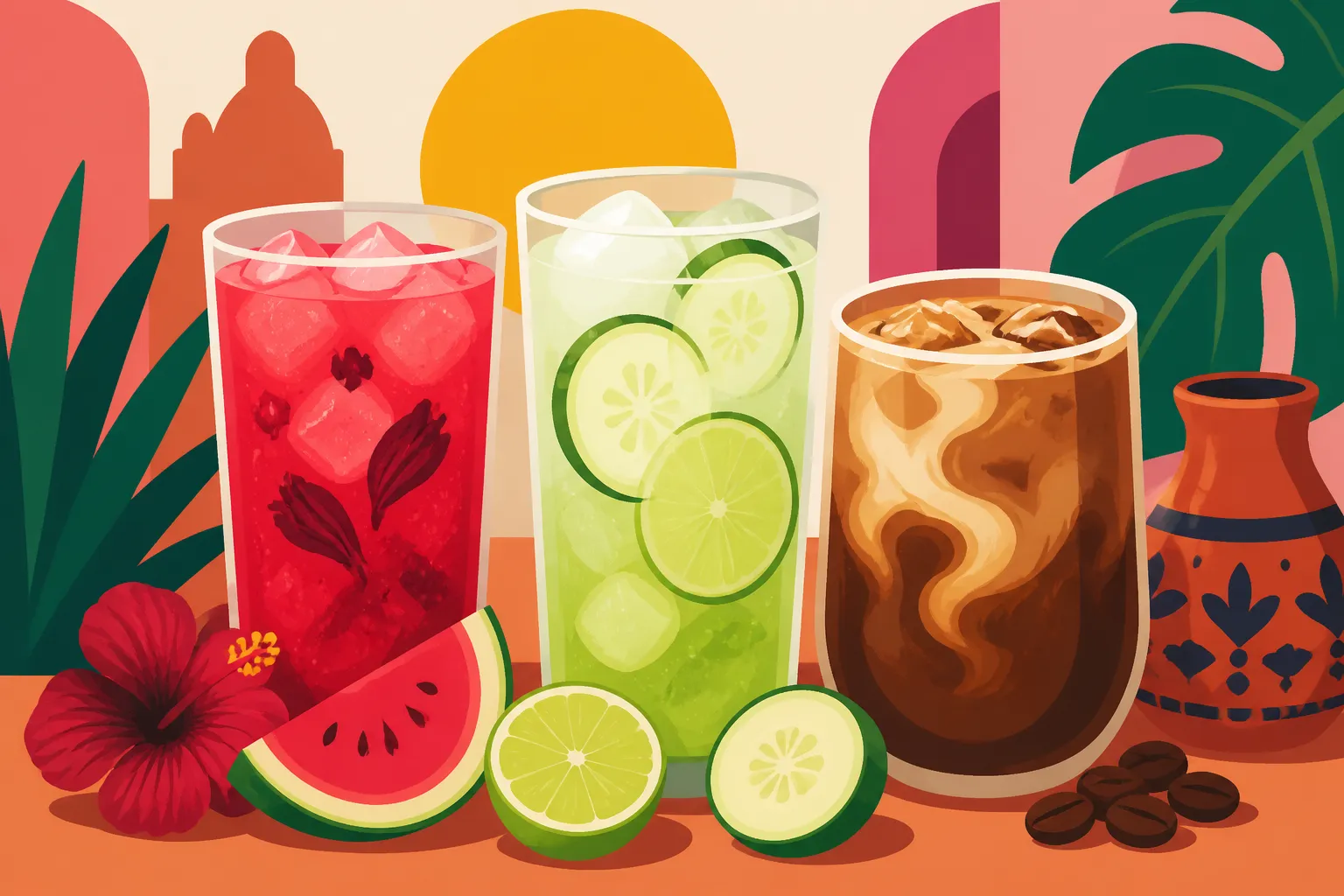
Aguas Frescas, Coffee, and Non-Alcoholic Drinks in Mexico
Picture a stall in a market in Mexico on a hot afternoon. Giant glass barrels hold pink, white and amber liquids, the vendor is calling out flavors, and you have no idea what any of them are. You might also wonder whether the ice is safe. This guide covers aguas frescas, coffee, corn and cacao drinks, juices and sodas, so you can order with confidence.
Disclosure: This post may contain affiliate links. We may earn a commission at no extra cost to you if you make a purchase through these links. Read full disclosure.
Aguas Frescas Explained: Mexico’s Everyday Refreshment
The first time I lived in Mexico, I stuck to bottled soda for nearly a month. The aguas frescas looked wonderful, but the barrels, the ladles and the Spanish all intimidated me. When a neighbor in my colonia finally handed me a plastic cup of agua de jamaica, I felt slightly foolish for waiting so long. Aguas frescas are the real everyday drink of Mexico. They appear at family lunches, taco stands and office cafeterias, and you will find them at almost every comida corrida in the country.
An agua fresca is fruit, flower, seed or grain blended or steeped in water, strained if needed, and usually sweetened. It is lighter than juice and closer to a lightly flavored water than a smoothie. The sweetness varies a lot from one place to the next. Some fondas pour something close to syrup, and some home cooks barely sweeten at all. If you want a wider picture of where these drinks fit into daily eating, see Mexican Food Culture: Eating and Drinking as a Visitor.
The Classic Trio: Horchata, Jamaica, and Tamarindo
Horchata is the one most visitors already know. Mexican horchata is made from soaked rice blended with cinnamon and sugar, and some cooks add milk, evaporated milk or vanilla. It is creamy, cool and soothing, which is why it pairs so well with spicy salsas. The Spanish version is made from tiger nuts, so do not be surprised if a Mexican horchata tastes nothing like one you had in Valencia. Some places top it with chopped nuts or a swirl of cajeta, but the plain version is the standard.
Jamaica is made from dried hibiscus calyxes, which turn the water a deep ruby red. The flavor is tart and slightly floral, somewhere between cranberry and sour cherry. Jamaica is my personal default because it cuts through rich food better than anything else. You will see sacks of the dried flowers in every market, and many expats start brewing it at home within a few weeks of arrival. Ask for it with less sugar if you find the restaurant versions too sweet.
Tamarindo comes from the sticky brown pods of the tamarind tree. The pulp is soaked, mashed and strained into a drink that tastes sweet and sour with a faintly smoky depth. It is cloudy and brown, which puts some newcomers off, but give it a try. Tamarind is also the base of countless Mexican candies, so once you know the flavor, you will start spotting it everywhere.
Fruit Waters and Seasonal Flavors
Beyond the classic trio, the choices change with the season and the region. Limón con chía is lime water with chia seeds floating in it, and the seeds give it a texture people either love or find odd. Pepino is cucumber, often blended with lime and sometimes mint, and few drinks are as refreshing in the heat of the Yucatán. Sandía is watermelon, piña is pineapple, and melón is cantaloupe. All three show up at taco stands across the country.
Then come the flavors that surprise first-timers. Guanábana, or soursop, makes a creamy, tropical agua that tastes like a mix of pineapple, strawberry and banana. Guayaba is guava and tends to be thick and fragrant. Mango appears in spring and early summer, when the fruit is at its cheapest and sweetest. Fresa is strawberry, sometimes made with milk, which pushes it closer to a licuado. In the Yucatán, look for chaya, a leafy green blended with pineapple or lime. It is bright green, a little grassy and very popular with locals.
The best approach is to ask what they have that day. Vendors who make aguas from fresh fruit change their lineup based on what was good at the market that morning. That is also why the same stand can taste different from one week to the next. For a deeper look at specific flavors and the best ones to hunt down, see What Are the Best Aguas Frescas to Try in Mexico?.
Where to Find Them and How They Are Served
You will find aguas frescas in three main settings. Market stalls and street vendors keep them in large glass barrels called vitroleros, ladled over ice. Fondas and comida corrida restaurants usually include an “agua del día” with the set lunch, served in a jug or by the glass. Sit-down restaurants and taquerías offer them by the glass or the jarra, a pitcher meant for sharing.
Street vendors still sometimes serve aguas in a small plastic bag tied around a straw, especially for takeaway. It looks chaotic, and holding it is a learned skill, but it works. Most stalls also offer plastic cups with lids, and sizes are usually chica, mediana and grande. In markets, the agua stand is often next to the juice and licuado counter, so you can compare both. For tips on getting around the market itself, see Mexican Markets and Food Halls for Visitors.
Mexican Coffee Culture from Café de Olla to Specialty Roasters
Mexico is one of the world’s notable coffee producers, yet for years many visitors left believing the country ran on instant coffee. To be fair, you will still be offered a jar of instant granules and a cup of hot water in plenty of homes, roadside restaurants and small-town fondas. Nobody is being rude. Instant coffee is simply a long-standing habit in many households. The good news is that real Mexican coffee, from traditional spiced pots to serious specialty roasters, is easy to find once you know where to look.
Café de Olla and the Traditional Cup
Café de olla is the drink you should try at least once, ideally on a chilly morning in the highlands. It is coffee brewed in a clay pot, the olla, with cinnamon sticks and piloncillo, the unrefined cane sugar sold in cone-shaped blocks. Some versions add orange peel, clove or star anise. The result is sweet, warming and gently spiced. It is not a fancy latte. It is a country drink with deep roots, and many people say the clay pot adds its own earthy note.
You will find café de olla at breakfast spots, market fondas and traditional restaurants, especially in central and southern Mexico. It goes naturally with pan dulce, the sweet breads like conchas and orejas sold at every panadería. If you are wondering how breakfast is structured and when locals drink their coffee, see Mexican Breakfast and Meal Times Explained.
A different classic lives in Veracruz: the café lechero. At the famous Gran Café de la Parroquia in the port of Veracruz, and in the many cafés that copy its style, you are served a glass with a shot of strong coffee at the bottom. You then tap the glass with your spoon. The clinking summons a waiter with a kettle of hot milk, which he pours from a dramatic height. The first time I did it, I felt silly clanging away. Then the whole room started doing the same, and I realized it is half the fun.
Mexico’s Coffee Regions Worth Visiting
Mexican coffee comes mostly from the south and the Gulf slopes, where altitude, rain and shade suit the plant. The main regions every coffee lover should know:
- Chiapas is the largest producer. Coffee grows in the Soconusco region near Tapachula and in the highlands around San Cristóbal de las Casas. Much of it is grown by small farmers and cooperatives, often under shade.
- Veracruz centers on the Coatepec and Xalapa area, plus Huatusco and Córdoba. Coatepec is a Pueblo Mágico known for its coffee farms, cafés and misty hillsides.
- Oaxaca is known for the Pluma Hidalgo area in the Sierra Sur. Coffee labeled “Pluma” comes from there and is prized for its bright, clean flavor.
- Puebla grows coffee in the Sierra Norte around Cuetzalan and Xicotepec, where you can pair coffee tastings with waterfalls and cloud forest.
- Guerrero and Nayarit produce smaller but respected harvests, often from remote mountain communities.
If you want to visit a finca, Coatepec is the easiest region to reach and has the most developed coffee tourism. Chiapas offers a more rural experience. Getting there by bus is straightforward, and booking platforms like Busbud let you compare long-distance routes, for example from Mexico City to Xalapa or from Oaxaca to San Cristóbal, before you commit. For a regional overview of the south, see Chiapas: Jungle, Ruins, and Indigenous Culture.
Many farms near Coatepec and in the Soconusco accept visitors for tours that walk you from cherry to cup. Some also have rooms or cabins. You can find lodging on Booking.com by searching the town name and filtering for farm stays or rural lodges. When you book, check whether the property actually grows coffee or simply sits near the plantations, because the listing language can be vague. Guided coffee and cacao experiences are also listed on Viator, which helps if you want transport and an English-speaking guide arranged in advance. To compare tour styles in more depth, see Chocolate, Coffee, and Vanilla Tours: Regional Options Worth Booking.
Coffee Shops, Chains, and the Third-Wave Scene
In big cities, Mexico’s café culture can rival anywhere. Mexico City’s Roma, Condesa, Juárez and Coyoacán neighborhoods are packed with specialty shops that serve single-origin pour-overs and cortados made with beans from Chiapas, Veracruz and Oaxaca. Guadalajara, Oaxaca City, Mérida and Puebla all have their own growing roaster scenes. Many of these cafés label their beans by region and farm, so you can learn the map of Mexican coffee one cup at a time.
On the chain side, Starbucks is everywhere in urban areas. Mexican chains such as Cielito Querido and Punta del Cielo offer a local twist, including café de olla-style drinks and Mexican-grown beans. At the very bottom of the ladder, the OXXO convenience store has self-serve coffee machines. Every long-distance driver in Mexico has relied on them at some point.
A few practical notes. “Americano” means espresso topped up with hot water, and it is the closest you will get to drip coffee in many cafés. “Café con leche” can mean anything from a latte to instant coffee stirred into hot milk, depending on the place. In small towns, ask “¿Es café de grano?” to check whether it is brewed from real beans or is instant. The waiter will not be offended.
Corn and Cacao Drinks: Atole, Champurrado, Tejate, and Hot Chocolate
This is the category that surprises visitors most, because many of these drinks have no equivalent back home. Corn has been the foundation of Mexican food for thousands of years, and it shows up in drinks as well as tortillas. Cacao, which has been grown in this region since ancient times, was drunk long before it was ever eaten as a chocolate bar. These drinks are filling, comforting and closely tied to tradition.
Atole and Champurrado
Atole is a thick, hot drink made from masa or cornstarch cooked with water or milk and sweetened, often with piloncillo. Flavors range from plain vanilla and cinnamon to strawberry, guava, pecan, rice and arroz con leche. It is less a beverage than a warm liquid porridge. You drink it from a cup, usually in the morning or evening, and it is especially popular in cold weather and highland towns.
The classic pairing is atole with a tamal. A related breakfast even has a nickname: a guajolota is a tamal stuffed inside a bolillo roll, sold at morning street stands in Mexico City, and atole is the natural drink to go with it. If you walk past a corner with a steaming pot and a crowd of office workers before eight in the morning, that is probably what is happening. For more on tamales and other street classics, see Street Food in Mexico: Tacos, Tamales, and More.
Champurrado is atole made with chocolate. It is darker, richer and slightly frothy, and it is the drink of cold nights, Christmas posadas and Día de Muertos gatherings. Many families make a large pot to share while setting up the ofrenda, the altar for the departed.
Oaxacan Hot Chocolate and Tejate
Oaxaca takes chocolate seriously. In the markets of Oaxaca City, especially the 20 de Noviembre market and the streets around it, chocolate shops grind roasted cacao beans with sugar, cinnamon and sometimes almonds in large mills. The smell fills the whole block. You can watch the process, pick your blend and take home a bag of the finished paste or tablets. Mayordomo is the best-known local name, but many smaller shops grind to order as well.
Traditional Oaxacan hot chocolate is made “de agua” with water or “de leche” with milk, then frothed with a carved wooden whisk called a molinillo. Purists prefer it with water, because the cacao flavor comes through more clearly. It is served with pan de yema, a rich egg bread made for dunking. During Día de Muertos, the bread is often decorated with small painted faces.
Tejate is one of Mexico’s most unusual drinks and a true Oaxacan specialty. It is made from toasted maize, cacao, the fermented seed of the mamey fruit and a flower called rosita de cacao, all ground into a paste and mixed with water by hand. A foamy, pale layer rises to the top, and it is ladled into painted gourd bowls called jícaras. The flavor is earthy, nutty and faintly bitter. San Andrés Huayapam, near Oaxaca City, is known as its home, and tejate vendors, usually women working in a long tradition, can be found in the city’s markets. For more on exploring the city itself, see Oaxaca City Guide: Markets, Mezcal, and Art.
Pozol and Tascalate in Chiapas and Tabasco
In Chiapas and Tabasco, the everyday drink of farmworkers and market vendors is pozol. It is made from nixtamalized corn dough, sometimes left to ferment slightly and sometimes mixed with cacao. The dough is dissolved in water and drunk cold, often from a gourd, sometimes with a pinch of salt or chili. It is gritty, sour and very filling. Locals describe it as food and drink at once, which is exactly how it has been used for generations in the hot lowlands.
Tascalate is the Chiapas cousin of hot chocolate, but it is usually served cold. It blends toasted corn, cacao, cinnamon, sugar and achiote, which gives it a reddish color. It tastes sweet, gently spiced and slightly gritty. Look for it in market stalls in Tuxtla Gutiérrez and in cafés around San Cristóbal. These drinks show how much Mexican cuisine changes from region to region, a theme covered in depth in Mexican Regional Cuisine: How Food Changes Across Mexico.
Juice Stands, Licuados, Sodas, and Fermented Specialties
Mexico has a whole street culture around fresh juice. On the other hand, the country also drinks a great deal of soda, so both sides are worth knowing. In between sit a few fermented drinks that confuse visitors about whether they count as alcohol.
Juguerías and Licuados
A juguería is a juice stand or shop, and nearly every market has a row of them. Fresh orange juice, jugo de naranja, is squeezed in front of you, often by the liter, and it is a breakfast staple. Jugo verde, the green juice, typically blends nopal cactus, celery, parsley, pineapple and orange, and it is popular with locals who want a healthy start to the day. Carrot, beet and orange combinations are also common. You can often build your own mix.
A licuado is a blended drink made with milk, fruit and sometimes oats, nuts, honey or a raw egg if you ask. Banana, strawberry, papaya and mamey are popular choices. Many workers drink a licuado as a quick breakfast on the go. The serving is usually generous, and the vendor will often pour the extra from the blender jar into your cup once you have drunk some, so you get more than one glass’s worth. If you want to avoid extra sugar, ask for “sin azúcar”. Many stalls add sugar by default even when the fruit is sweet.
Mexican Sodas and Mineral Water
Mexico has strong soda loyalties. Coca-Cola made in Mexico, sold in glass bottles and sweetened with cane sugar, has a cult following north of the border. Jarritos comes in flavors like tamarind, mandarin, lime and guava. Sidral Mundet is an apple soda, and Boing is a fruit drink in a box or bottle, with mango and guava being the favorites. Squirt is the grapefruit soda behind the Paloma cocktail, though it is perfectly good on its own.
Mineral water is its own category. Topo Chico and Peñafiel are the big names, and asking for “agua mineral” gets you sparkling water, often served with lime and salt on the rim at taquerías. If you want still water, ask for “agua natural” or “agua sin gas”. In some places, “natural” can also mean room temperature rather than cold. To be clear, ask for “fría” for cold or “al tiempo” for room temperature. Many locals actually prefer drinks al tiempo, believing that very cold drinks are bad for the throat.
Tepache and Tejuino: Fermented but Mostly Not Boozy
Tepache is made by fermenting pineapple peels and rinds with piloncillo and cinnamon for a few days. It is sweet, tangy and slightly fizzy. Because it ferments, it can contain a small amount of alcohol, especially if left to sit longer, but street versions are generally treated as a soft drink and sold in bags or cups like an agua fresca. Some bars now serve tepache mixed with beer, which is a different drink entirely, so ask if you are avoiding alcohol.
Tejuino is a Jalisco specialty, very common on the streets of Guadalajara. It is fermented corn dough mixed with piloncillo and water, served cold with lime juice, salt and often a scoop of lime sorbet, nieve de limón, dropped in. It tastes sweet, sour and salty at once, which sounds strange until you try it on a hot afternoon. Like tepache, it has only light fermentation and is sold as a refresher rather than a drink to get tipsy on.
Quick Comparison of Mexico’s Non-Alcoholic Drinks
| Drink | Main Ingredients | Served | Where It Shines | Best Time to Drink |
|---|---|---|---|---|
| Horchata | Rice, cinnamon, sugar, sometimes milk | Cold over ice | Everywhere, especially taquerías | With spicy food at lunch |
| Agua de jamaica | Dried hibiscus, water, sugar | Cold | Everywhere | Any hot afternoon |
| Agua de tamarindo | Tamarind pulp, water, sugar | Cold | Everywhere | With rich or fried food |
| Chaya con piña | Chaya leaves, pineapple | Cold | Yucatán Peninsula | Midday heat |
| Café de olla | Coffee, piloncillo, cinnamon | Hot | Central and southern highlands | Breakfast, cool mornings |
| Café lechero | Espresso, hot milk | Hot | Veracruz | Breakfast or late evening |
| Atole | Masa or cornstarch, milk or water | Hot and thick | Nationwide street stands | Early morning with tamales |
| Champurrado | Masa, chocolate, piloncillo | Hot and thick | Nationwide | Cold nights, festivals |
| Oaxacan hot chocolate | Ground cacao, sugar, cinnamon | Hot and frothy | Oaxaca | With pan de yema |
| Tejate | Maize, cacao, mamey seed, rosita de cacao | Cool, in a gourd | Oaxaca Valley markets | Midday market visit |
| Pozol | Corn dough, sometimes cacao | Cold | Chiapas and Tabasco | Hot afternoons |
| Tascalate | Corn, cacao, achiote, cinnamon | Usually cold | Chiapas | Afternoon snack |
| Licuado | Milk, fruit, oats or nuts | Cold, blended | Market juice stalls | Quick breakfast |
| Tepache | Fermented pineapple rind, piloncillo | Cold | Central Mexico street stalls | Afternoon refresher |
| Tejuino | Fermented corn, lime, salt, sorbet | Cold | Guadalajara and Jalisco | Hot afternoons |
Ordering, Etiquette, and Drinking Safely
The drinks themselves are rarely the hard part. The trouble comes with the ordering moment, the queue forming behind you and the worry about ice. Here is what helped me move from pointing nervously at barrels to chatting with vendors.
Spanish Phrases for Ordering Drinks
You do not need fluent Spanish to order a drink, just a handful of phrases. These cover almost every situation at a stall or café:
- “¿De qué tiene agua hoy?” asks what aguas they have today.
- “Una de jamaica, grande, por favor” orders a large hibiscus water.
- “Con poca azúcar” means with little sugar, and “sin azúcar” means without sugar.
- “Sin hielo” means no ice, and “con poco hielo” means light ice.
- “Para llevar” means to go, and “para tomar aquí” means to drink here.
- “¿Me da una probadita?” politely asks for a small taste, which many vendors are happy to give.
- “Una jarra para la mesa” orders a pitcher to share at a restaurant.
- “¿Es café de grano o soluble?” asks whether the coffee is brewed or instant.
At a fonda, the agua del día often comes automatically with the set lunch, so check before ordering a separate drink. For a broader set of phrases for restaurants and stalls, see Ordering Food and Drinks in Spanish in Mexico. Tipping at a street stall is not expected. In a sit-down café with table service, a tip is normal. The norms are covered in Tipping in Mexico (Propina): When and How Much.
Ice, Water, and Choosing Stalls
This is the question every new arrival asks me, so let me be direct. Restaurants, cafés and most established vendors in Mexico make aguas frescas with purified water, and they buy commercially made ice from ice plants. Industrial ice usually comes in cylinders with a hole through the middle. If you see those tube-shaped cubes, it is a good sign the ice was bought rather than frozen from the tap. Purified water is delivered in large jugs called garrafones, and you will often see them stacked behind the counter.
Common sense still applies when picking a stall. A busy stall with a steady line of locals turns over its barrels quickly, so nothing sits around for hours. Covered barrels, clean ladles and a vendor who handles money separately from the drinks are all good signs. Fruit waters made from fresh fruit are best drunk the same day. If a barrel looks like it has been sitting in the sun since morning, pick another stand. For how locals handle water at home and why garrafones are everywhere, see Drinking Water in Mexico: Filter or Bottled? What Expats Do.
If you are especially cautious in your first days, start with hot drinks like café de olla, atole or hot chocolate. They are brewed or boiled. Bottled sodas and mineral waters are another easy option until you feel more settled. Most visitors find they relax quickly once they see how routinely Mexicans themselves drink aguas from busy, reputable vendors.
Seasonal and Festive Drinks
Some of Mexico’s best non-alcoholic drinks appear only at certain times of year, and catching them is a highlight of living here. In December, ponche navideño fills homes and street stalls. It is a hot fruit punch simmered with tejocotes, a small orange fruit, along with guava, sugarcane, apple, prunes, hibiscus, cinnamon and piloncillo. It is served at posadas, the neighborhood gatherings in the days before Christmas. Adults sometimes add a splash of liquor, so ask for it “sin piquete” if you want it plain. To learn how those celebrations work, see Christmas and Las Posadas in Mexico.
From late October into early November, champurrado, atole and hot chocolate take center stage with pan de muerto during Día de Muertos. Families share them at home, at cemetery vigils and around altars. If you are invited to join, accepting a cup is a warm gesture of connection. For guidance on taking part respectfully, see Día de Muertos in Mexico: A Visitor’s Guide.
During Lent and Semana Santa, many fondas lean toward lighter meals, and aguas like chía, pepino and horchata become especially popular. Mango season fills the stalls with mango aguas, and the rainy season brings guanábana and guava to the markets. The longer you live here, the more you will notice that the drink barrels at your local market work like a calendar. They tell you what time of year it is better than any app.
Whether it is a bag of jamaica at a bus terminal, a clinking glass of café lechero in Veracruz or a gourd of tejate in a Oaxacan market, these drinks are one of the easiest and most rewarding ways into everyday Mexican life. Start with one new flavor a week, ask vendors what they recommend, and before long you will have a favorite stall of your own.
Disclaimer
This article is for general informational purposes only and does not constitute professional advice. Laws, prices and regulations vary by location and change over time. Consult a qualified professional for guidance on your specific situation.