What Are the Best Aguas Frescas to Try in Mexico?
If you have ever spent a scorching afternoon navigating the crowded aisles of a local tianguis or walking the sun-drenched streets of Mérida, you know that the Mexican heat is no joke. The standard temptation is to grab a cold soda, but the real secret to staying hydrated and healthy lies in the vibrant, oversized glass jars found at every corner. This guide will walk you through the essential world of Mexican aguas frescas, teaching you which flavors to hunt for and how to enjoy them safely without the dreaded stomach issues.
Disclosure: This post may contain affiliate links. We may earn a commission at no extra cost to you if you make a purchase through these links. Read full disclosure.
The Soul of Mexican Hydration: What Exactly is an Agua Fresca
To the uninitiated, an agua fresca might look like a simple fruit juice, but to anyone who has lived here for more than a week, it is clear that these beverages are a cultural pillar. The term translates literally to "fresh waters," and they represent a middle ground between plain water and a heavy smoothie. They are light, refreshing, and designed to be consumed in large quantities to combat the midday sun. Unlike the processed juices you find in many Western supermarkets, authentic aguas frescas are made daily from scratch using water, fruit, seeds, or flowers, and a touch of cane sugar.
When I first moved to Mexico, I was overwhelmed by the rows of colorful glass containers known as vitroleros. These beehive-shaped jars are the centerpiece of any traditional fonda or street stall. Watching a vendor use a long metal ladle to stir a deep red liquid filled with ice cubes is a quintessential Mexican experience. These drinks are deeply tied to Mexican Food Culture: Eating and Drinking as a Visitor, where the focus is on seasonal availability and natural ingredients.
The history of these drinks stretches back to the Aztec era. Legend has it that Aztec runners would mix crushed fruit with water to keep their energy up during long journeys. Today, that tradition survives in every neighborhood. Whether you are staying in a high-end neighborhood you found on Booking.com or a quiet colonial street, you are never more than a few blocks away from a fresh batch. The beauty of the agua fresca is its simplicity, but as any veteran expat will tell you, the variety is staggering. You aren't just choosing a flavor; you are choosing a remedy for the heat.
The Must-Try Classics: From Hibiscus to Creamy Rice
While you can find an agua fresca made from almost any fruit in the market, there are a few heavy hitters that you will see everywhere. These are the staples of the Mexican diet and for good reason—they are perfectly balanced to complement spicy food.
The Refreshing Floral: Agua de Jamaica
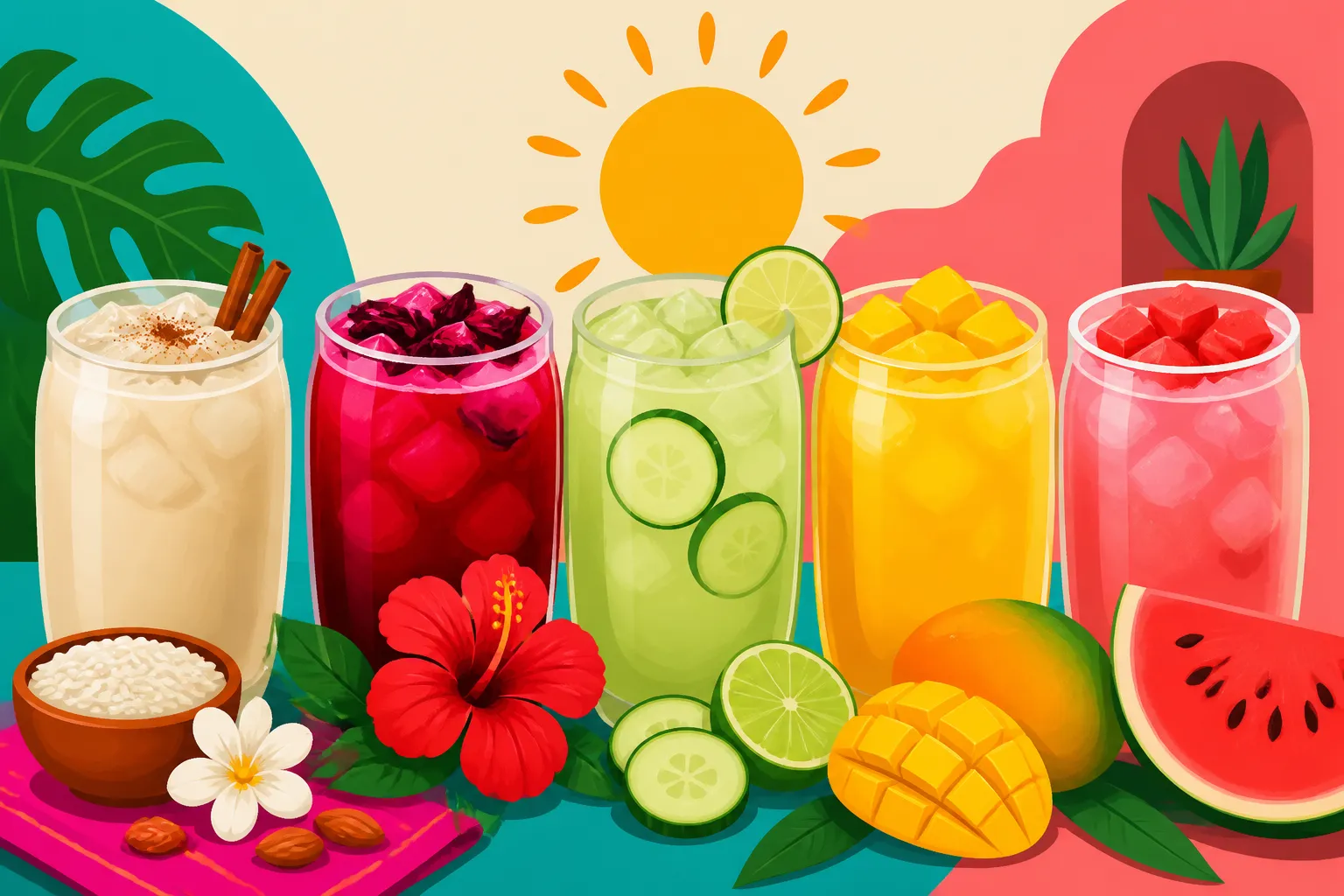
Agua de Jamaica (pronounced ha-MY-kah) is perhaps the most iconic of the bunch. Made from dried hibiscus flowers, this deep crimson drink is tart, acidic, and incredibly refreshing. It acts almost like a palate cleanser. If you are eating heavy tacos al pastor or a rich mole, the tannins in the Jamaica help cut through the fat.
One thing many newcomers don’t realize is that Jamaica is naturally diuretic and full of vitamin C. It is a powerhouse for Staying Healthy in Mexico: Essential Tips for Food, Water, and Preventive Care. I always suggest beginners start here because the flavor profile is familiar—similar to a tart cranberry juice but with a floral finish that is uniquely Mexican. Just be careful; it’s so delicious you might find yourself drinking a liter before your food even arrives.
The Creamy Delight: Agua de Horchata
If Jamaica is the refreshing king, Horchata is the comforting queen. This is a milky, opaque drink made from soaked rice, cinnamon, and sometimes vanilla or almonds. Despite its creamy appearance, it is often dairy-free (though some modern recipes add evaporated milk for extra richness).
Horchata is the perfect companion for anything with a lot of heat. The starch from the rice and the sweetness of the cinnamon coat your tongue, providing a shield against the habanero salsa you probably shouldn't have added to your taco. In regions like Oaxaca, you’ll often find it served with a scoop of tuna (prickly pear) sorbet or topped with chopped pecans and melon pieces. It’s practically a dessert in a glass. When you are looking for What Are the Must-Try Foods in Mexico?, a traditional Horchata should be at the top of your beverage list.
The Green Powerhouse: Limón con Chía
You might think you know lemonade, but Mexican agua de limón is a different beast entirely. It uses small, tart Mexican limes (often called Key limes elsewhere) rather than the large, thick-skinned lemons common in the US. When you add chía seeds to the mix, it becomes a nutritional powerhouse.
The chía seeds swell up in the water, creating a slight texture that is surprisingly pleasant. It’s the ultimate thirst quencher. I used to grab a liter of this before hopping on a long-distance bus booked through Busbud to ensure I stayed hydrated during those eight-hour mountain hauls. It’s light, not too sweet, and the fiber from the chía helps with digestion—something every expat values.
Navigating the Street Stalls: Safety, Etiquette, and Finding the Best
I know the hesitation. You see a beautiful vitrolero on a street corner, but your mind flashes back to every horror story you’ve heard about "Montezuma’s Revenge." It is a valid concern, but with a little bit of local knowledge, you can enjoy these drinks without worry.
The primary question is always: Is Tap Water Safe to Drink in Mexico? The answer is a firm no, and reputable vendors know this. They use garrafones (large jugs of purified water) to make their drinks. The real danger is often the ice. However, in most urban areas and established markets, vendors buy factory-made ice that is also purified. Look for ice that has a uniform, cylindrical shape with a hole in the middle—this is a sign of commercially produced, purified ice.
| Flavor Name | Primary Ingredient | Taste Profile | Best Season |
|---|---|---|---|
| Jamaica | Hibiscus Flower | Tart, Floral, Tannic | Year-round |
| Horchata | Rice & Cinnamon | Sweet, Creamy, Spiced | Year-round |
| Tamarindo | Tamarind Pods | Sour, Earthy, Sweet | Spring/Summer |
| Sandía | Watermelon | Light, Sweet, Fruity | Summer |
| Alfalfa | Alfalfa Sprouts & Lime | Herbal, Fresh, Grassy | Spring |
| Guayaba | Guava | Aromatic, Musky, Sweet | Fall/Winter |
When you are exploring Mexican Markets and Food Halls for Visitors, look for the stalls with the longest lines of locals. This is the golden rule of street food. High turnover means the batch is fresh. Don't be afraid to ask, "¿Es agua purificada?" (Is it purified water?). They won't be offended; they are used to the question.
As for etiquette, aguas frescas are typically sold by the liter or half-liter. If you are sitting down at a fonda, you can usually just order a "jarra" (pitcher) for the table. This is often the most economical way to dine, especially when you are watching your Cost of Living in Mexico City (2026): Detailed Expat Budget Guide. Also, keep in mind that Tipping in Mexico (Propina): When and How Much applies to sit-down service, but if you're just grabbing a cup from a street vendor, rounding up the change is appreciated but not strictly required.
The Rare and Regional: Tamarind, Alfalfa, and Exotic Fruits
Once you have mastered the basics, it’s time to move on to the more "adventurous" flavors. Mexico’s biodiversity is reflected in its drink menu, and some of the best flavors are those that sound the most unusual to a foreign ear.
Agua de Tamarindo is a love-it-or-hate-it experience. Made from the brown, pod-like fruits of the tamarind tree, it has a brown, earthy color and a complex sweet-and-sour flavor. It is incredibly effective at cooling the body down, which is why you’ll find it frequently in coastal towns. If you’ve booked a food tour through Viator in a place like Puerto Vallarta, the guide will almost certainly insist you try it. It’s tart, slightly pulpy, and deeply refreshing once you get used to the unique tang.
Then there is Agua de Alfalfa. Yes, the stuff usually associated with horse feed. When blended with lime and a bit of pineapple, it creates a bright green, chlorophyl-rich drink that tastes like a garden in the best possible way. It’s common in central Mexico and is often touted for its health benefits, particularly for kidney function and digestion. It’s one of those "expat secrets" that makes you feel like a local once you start ordering it regularly.
Finally, don't sleep on the seasonal fruit waters. Depending on the month, you can find:
- Agua de Zapote: A dark, almost chocolatey-tasting fruit with a dense texture.
- Agua de Pitaya: Bright pink and visually stunning, usually available for a short window in the spring.
- Agua de Guayaba: Sweet and incredibly aromatic, though some people find the grit of the fruit a bit much.
The best way to find these is by Grocery Shopping in Mexico: Supermarkets vs Local Markets and seeing what is currently overflowing in the bins. If the market is full of mangoes, the mango agua fresca will be spectacular that day.
A Note on Sugar and Customization
One thing that catches many expats off guard is the sugar content. Traditionally, aguas frescas are quite sweet. If you are trying to cut back on sugar, you can ask for "agua de fruta natural" at some restaurants, which might be made to order without added sweetener, though at a street stall, the batch is already mixed.
If you are buying from a market, you can use your Survival Spanish for Travelers in Mexico: Key Phrases to ask for "poca azúcar" (little sugar), but be prepared for the vendor to tell you it’s already made. My tip? Wait for the ice to melt a little. It dilutes the sweetness and makes the drink last longer.
In the end, the world of aguas frescas is about exploration. It’s about that first cold sip on a Tuesday afternoon when the pavement is radiating heat and you still have six blocks to walk. It’s a cheap, healthy, and culturally rich way to experience the "real" Mexico. So, the next time you see a row of colorful vitroleros, put down the bottled water and try the Jamaica. Your taste buds—and your body—will thank you.
Disclaimer
The information provided in this guide is for educational and informational purposes only. While every effort is made to ensure the accuracy of the health and safety tips provided, the author and publisher are not responsible for any illness or adverse reactions resulting from the consumption of street food or beverages in Mexico. Always use your best judgment and consult with a medical professional regarding any specific health concerns or dietary restrictions.