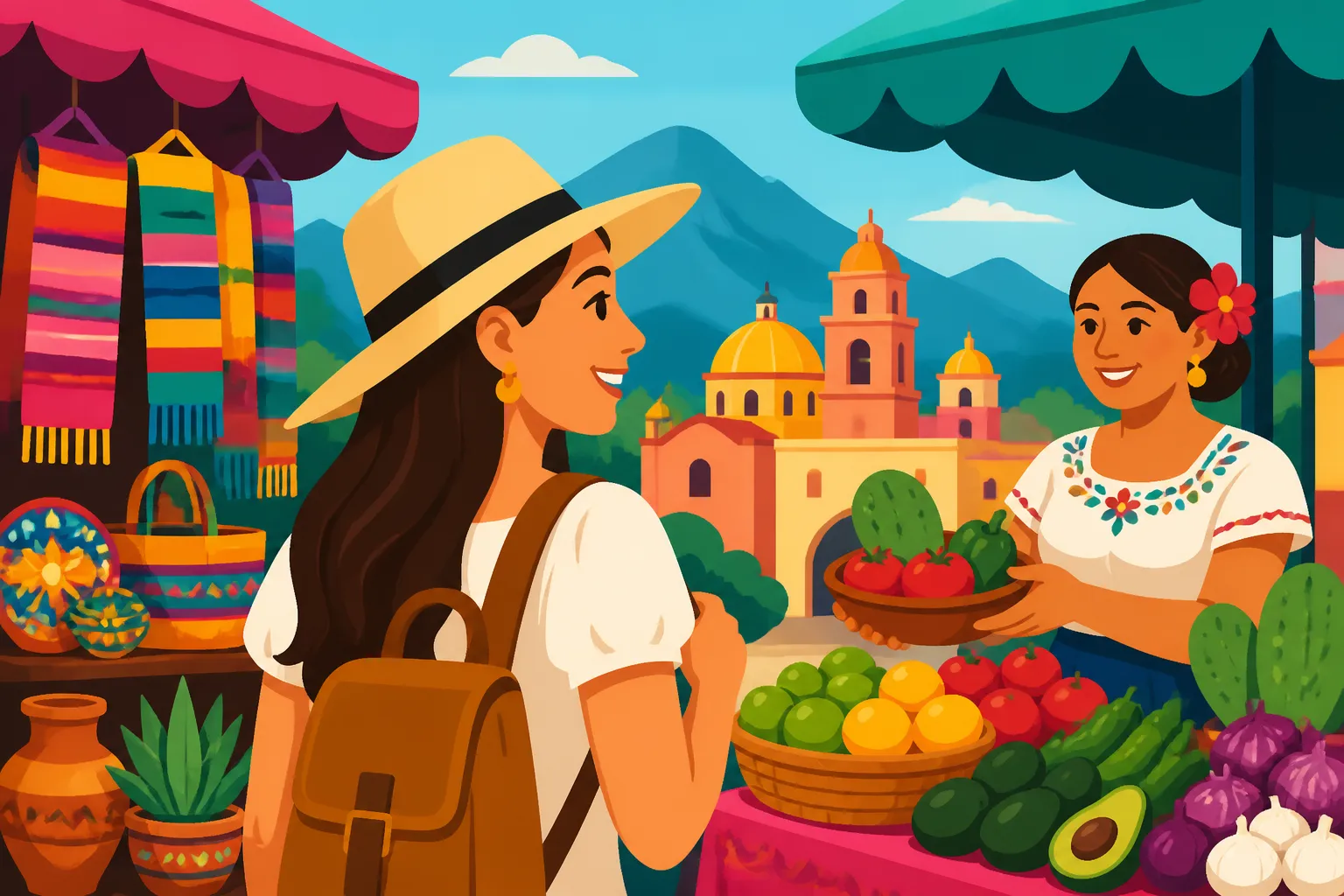
Markets (Mercados and Tianguis) in Mexico for Visitors
Stepping into a traditional Mexican market for the first time can feel like a sensory assault that leaves you clutching your wallet in a mix of awe and pure anxiety. Between the shouting vendors, the smell of raw meat mingling with sweet papaya, and the labyrinthine aisles, many visitors end up retreating to the sanitized safety of a supermarket, missing out on the cheapest and most authentic experiences the country offers. This guide breaks down the chaos, teaching you exactly how to navigate the permanent mercados and pop-up tianguis like a seasoned resident.
Disclosure: This post may contain affiliate links. We may earn a commission at no extra cost to you if you make a purchase through these links. Read full disclosure.
Understanding the Difference: Mercados vs. Tianguis
When you first arrive in Mexico, you might use the word market for everything, but locals distinguish between a mercado and a tianguis. A mercado is a permanent, government-regulated building that is open every day of the week. These are the hearts of their neighborhoods, often occupying a full city block or more. Inside, you will find everything from fresh produce and butchers to shoe repair stalls and small diners known as fondas. They are reliable, fixed points of reference in any Mexican city.
A tianguis, on the other hand, is a nomadic beast. The word comes from the Nahuatl language, and the tradition predates the Spanish conquest by centuries. These are open-air street markets that "pop up" on a specific day of the week and vanish by sunset. A street that was filled with cars on Tuesday might be a bustling sea of pink tarps (known as lonas) on Wednesday. If you are staying in a neighborhood for a while, it is essential to ask your neighbors, "What day is the tianguis?" so you don't miss the freshest local goods.
The experience of shopping at a tianguis is much more frenetic than a fixed mercado. Because the vendors only have one day to make their sales in that specific location, the shouting—known as "pregones"—is louder and more persistent. You will hear rhythmic cries of "¡Pásale, marchante!" or "¡A diez el kilo!" It can be overwhelming, but it is also where you will find the most competitive prices and the most unique seasonal items brought in from nearby farms. If you are planning a trip to see these regional wonders, checking Busbud for intercity travel can help you time your arrival for the big market days in places like Oaxaca or Querétaro.
Navigating the Market Layout: A Survival Strategy
Most foreigners walk into a market and wander aimlessly, which is a quick way to get lost and frustrated. Mexican markets actually follow a loose but logical internal zoning system. Generally, the perimeter is occupied by "cleaner" goods like clothing, plastics, and household items. As you move toward the center, you will hit the produce sections, and usually, the center or a dedicated wing is reserved for the "mercado de carne" (meat market) and "pescadería" (fish market).
The meat section is often the biggest hurdle for new expats. You will see entire carcasses hanging from hooks and piles of offal that are not common in Western supermarkets. The floor might be damp, and the smell is intense. If this bothers you, identify where the meat section is early on so you can navigate around it. Conversely, if you are looking for the best carnitas or chicharrón, this is exactly where you want to be. Many visitors find that booking a guided tour through Viator is a great way to have someone else lead the way through these more intense sections until they get their "market legs."
Don't be afraid to use the second floor if the market has one. In many colonial cities, the ground floor is for groceries and food, while the upper level is dedicated to "artesanías" (crafts) or specific services like tailors and electronics repair. The upper floor often provides a great vantage point for photos of the colorful fruit displays below. Just be mindful that the stairs in older markets can be steep and uneven; the administrative hurdles of building maintenance in Mexico often mean things stay "vintage" for a long time.
Etiquette and the Art of the Deal: How to Behave
One of the biggest frustrations for tourists is feeling like they are being charged a "gringo tax." While price gouging does happen, it is often a misunderstanding of Bargaining at Mexican markets: Etiquette and Tips. In a permanent mercado, prices for food and produce are usually fixed and clearly marked with little cardboard signs stuck into the piles of fruit. If the price is written down, do not try to haggle over your kilo of tomatoes. It is seen as disrespectful to the vendor's thin margins.
Haggling is generally reserved for the tianguis or for high-ticket items like hand-woven rugs, leather goods, and antiques. Even then, the goal isn't to "win" or "beat" the vendor. It is a social dance. Start by asking, "¿Cuánto cuesta?" (How much does it cost?) and then follow up with, "¿Es lo menos?" (Is that the least?). This signals that you are open to a small discount. If you are buying multiple items from the same stall, you have much more leverage. A polite request like, "Si me llevo tres, ¿en cuánto me los deja?" (If I take three, how much will you give them to me for?) is a standard way to get a better deal.
Always remember the power of "politeness over price." In Mexico, social grease makes the wheels turn. Always start an interaction with a "Buenos días" or "Buenas tardes." Never just point and demand. Using the term "marchante" or "marchanta" (which refers to both the customer and the vendor) shows you understand the local culture. If you become a regular at a stall, you will eventually receive the "pilón"—a small extra handful of cilantro or an extra lime thrown into your bag for free. This is the ultimate sign that you have graduated from "tourist" to "neighbor."
Eating Safely: Street Food and Market Stalls
The fear of "Montezuma’s Revenge" keeps many visitors away from the best food in the country. Market food is often some of the freshest you can get because the ingredients are sourced from the stall twenty feet away. However, you do need to be selective. Look for the "crowd rule." If a stall is packed with locals, especially families and office workers, the turnover of food is high, meaning nothing has been sitting out for long.
Hygiene in a market is handled differently than in a sterile restaurant. A key tip is to watch how they handle money. In the best stalls, one person handles the food while another person—often a teenager or a matriarch sitting at the end of the counter—handles the cash. If the person wiping the counter and taking your pesos is also the person patting out your tortilla with bare hands, move on to the next stall. This is one of the Common Cultural Surprises for First-Time Visitors to Mexico that you eventually learn to spot in seconds.
To ease your transition into market eating, start with items that are cooked at high heat in front of you. Comida corrida (set lunch menus) are fantastic. You will usually get a soup, a main dish with rice and beans, and a flavored water (agua fresca) for a very low price. If you are worried about the water, ask if the "agua de fruta" is made with "agua de garrafón" (purified bottled water). In 99% of established market stalls, it is, because the vendors don't want to get sick either. For those still nervous, reading up on Is street food safe? How to Enjoy Mexican Street Eats Without Worry can provide that extra layer of confidence.
| Market Type | Duration | Best For | Typical Atmosphere |
|---|---|---|---|
| Mercado Municipal | Daily (Permanent) | Daily groceries, butchers, repairs, cheap lunch | Busy but organized, predictable |
| Tianguis | Weekly (Temporary) | Seasonal produce, used clothes, antiques, street food | Chaotic, loud, festive, very crowded |
| Mercado de Artesanías | Daily (Permanent) | Souvenirs, textiles, pottery, silver jewelry | Relaxed, tourist-friendly, higher prices |
Essential Market Logistics: Cash, Safety, and Transport
Cash is king in the world of Markets (Mercados and Tianguis) in Mexico for Visitors. While some higher-end craft vendors might have a card reader, the vast majority of produce and food stalls operate strictly in pesos. Even more importantly, you need "cambio" (small change). Handing a 500-peso bill to a vendor for a 20-peso bag of limes is the quickest way to get a frustrated look. Try to break your large bills at a pharmacy or a chain convenience store like OXXO before heading into the market.
Safety is another concern that visitors often blow out of proportion, but it requires common sense. Markets are crowded, which makes them prime territory for pickpockets. Don't wear flashy jewelry or hang an expensive camera around your neck. I always recommend carrying a "decoy" wallet with a small amount of cash and keeping your main cards and larger bills in a front pocket or a cross-body bag worn in front of you. It isn't about being paranoid; it's about not being an easy target in a sea of distracted people.
Finally, think about how you are getting your haul home. If you are staying at a place booked via Booking.com in a central neighborhood, you might be able to walk, but a heavy bag of mangoes and avocados gets heavy fast. Many markets have a dedicated taxi stand nearby, but I find that ride-sharing apps are often easier because you don't have to negotiate the fare while holding heavy bags. If you are taking a local bus, be prepared for a squeeze; markets are the busiest hubs in the city, and the buses will be packed with other shoppers.
Iconic Markets You Can't Miss Across Mexico
If you find yourself in Mexico City, you have to visit La Merced. It is one of the largest markets in the Americas. It is so big that it has its own metro station. For something a bit more curated, Mercado de San Juan is the "gourmet" market where you can find exotic meats and high-end cheeses. If you want souvenirs without the hassle, La Ciudadela is a dedicated crafts market where you can see the diversity of Mexican art in one place. These are essential stops for anyone Finding Familiar Products: An Expat Shopping Guide (Walmart, Costco, etc.) who realizes the local stuff is actually better.
Outside of the capital, the markets take on a more regional flavor. In Oaxaca, the Mercado 20 de Noviembre is famous for the "Pasillo de Humo" (Smoke Aisle), where you can buy raw tasajo (thin beef) and have it grilled for you on the spot. In Mérida, the Mercado Lucas de Gálvez is the place to try cochinita pibil and buy habanero peppers that will make your eyes water just by looking at them. Every region has its specialty, and the market is the best place to find it.
Don't overlook the specialized tianguis. The Lagunilla antique market in Mexico City on Sundays is a treasure trove for mid-century furniture and oddities. In Guadalajara, the Mercado Libertad (San Juan de Dios) is a three-story architectural marvel that claims to be the largest indoor market in Latin America. Whether you are looking for a new pair of boots, a spiritual cleansing with some herbs (curanderismo), or just the best taco of your life, these spaces are where the "real" Mexico lives and breathes.
Tipping in Mexican Markets
One question that always comes up is Tipping in Mexico (Propina): When and How Much when shopping at a market. In general, you do not tip the person selling you fruit or meat. However, there are a few exceptions. If there is a "cerillo" (a person, often a senior or a student, who bags your groceries at a larger market stall), it is customary to give them 5 to 10 pesos. If you are eating at a fonda (a sit-down stall), a tip of 10% to 15% is standard, just like in a restaurant.
If you hire a "cargador"—a person with a wooden cart who offers to carry your heavy bags as you shop—you should negotiate the price beforehand or tip them generously at the end. These men perform back-breaking work in the heat, and a 50-peso tip can go a long way for them. Small acts of generosity like this help build your reputation as a "buena gente" (good person) in the neighborhood, which is the most valuable currency an expat can have.
Disclaimer
The information provided in this guide is based on personal experiences and current cultural norms in Mexico as of 2026. Market conditions, safety levels, and prices can change rapidly. This guide is intended for informational purposes only and does not constitute legal, financial, or safety advice. Always exercise personal judgment and stay aware of your surroundings when traveling.