Is Street Food Safe? How to Enjoy Mexican Street Eats Without Worry
The fear of "Montezuma's Revenge" is a rite of passage for almost every foreigner landing in Mexico, often manifesting as a paralyzing hesitation in front of a delicious-smelling taco stand. I remember my first week in Mexico City, standing on a street corner in Roma Norte, watching a line of businessmen in suits inhale tacos al pastor while I clutched a bottle of hand sanitizer like a shield. This guide solves the mystery of Mexican street food safety, teaching you the unspoken rules of the "puesto" so you can indulge in the country’s best flavors without a single worry.
Disclosure: This post may contain affiliate links. We may earn a commission at no extra cost to you if you make a purchase through these links. Read full disclosure.
Understanding the Street Food Culture in Mexico
To eat safely in Mexico, you first have to understand that street food is not just a cheap convenience; it is the culinary heartbeat of the nation. From the tech hubs of Monterrey to the coastal stretches of Puerto Vallarta, the street stall—or puesto—is where social classes merge. You will see construction workers, lawyers, and expat families all crowded around the same stainless steel counter.
The Role of the Puesto in Daily Life
In many Mexican households, the kitchen isn't even fired up for breakfast or lunch because the local tamalera or taquero offers something fresher and more traditional than what can be made at home. These vendors often have generations-old recipes. When you approach a stand, you aren't just buying a meal; you are participating in a cultural institution. Understanding this helps reframe the experience from "risky street meat" to "local artisanal dining." Because these vendors rely on repeat business from their neighbors, they have a massive incentive to keep their customers healthy. A vendor who makes the neighborhood sick doesn't last a week.
Why Street Food is Often Safer than Restaurants
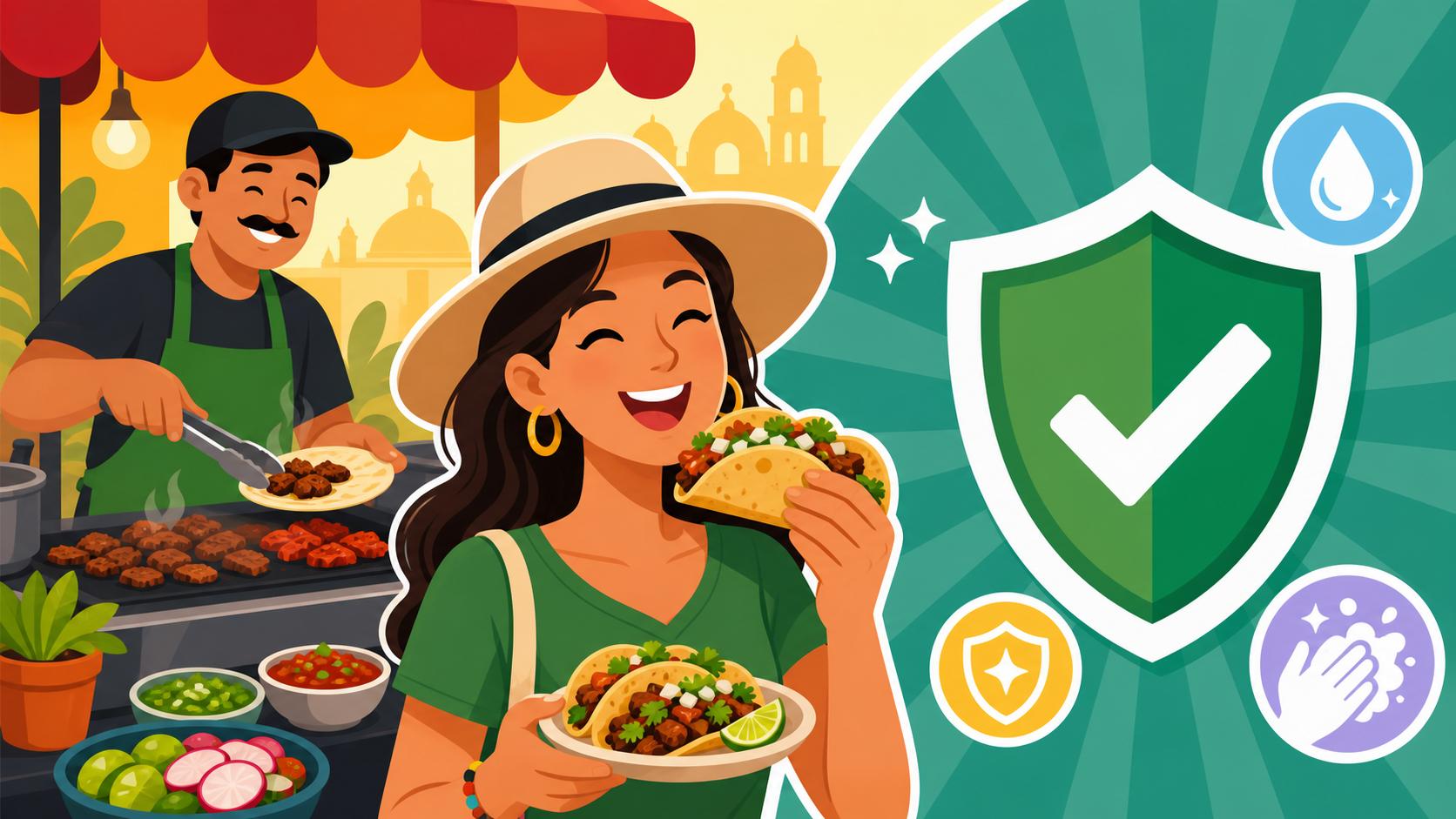
It sounds counterintuitive, but street food can actually be safer than sit-down restaurants in certain contexts. In a restaurant, the kitchen is hidden. You have no idea how long that salsa has been sitting out or if the chef washed their hands. At a puesto, everything is performed in high-definition right in front of your eyes. You see the meat coming off the flame, you see the tortillas being pressed, and you see the cleaning habits of the staff. This transparency is your greatest tool for safety. If you are still feeling uneasy about the transition, check out our Living in Mexico: Cultural and Practical Guide for New Expats for more on navigating daily local life.
How to Spot a Safe Street Food Stand
Choosing where to eat is an art form that every veteran expat eventually masters. It is less about looking for a government health inspection sticker—which you won't find—and more about reading the "vibe" and specific hygiene cues that indicate a well-run operation.
The Crowd Factor and Turnover
The golden rule of Mexican street food is simple: follow the crowd. A busy stand is a safe stand. High turnover means the ingredients aren't sitting around in the sun; the meat is being sliced, grilled, and served in a continuous cycle. If you see a stand with a long line of locals, it’s a sign that the food is both delicious and unlikely to cause issues. Conversely, a lonely stand with a mountain of pre-cooked meat sitting on a cold grill is a red flag. When I’m exploring a new neighborhood, I often use Airalo to stay connected and quickly check local food blogs or community forums to see which stands have the best reputation among residents.
Cleanliness and Hygiene Cues
Look at the surfaces. Is the stainless steel wiped down? Are the salsas kept in deep containers, preferably nestled in ice or at least kept in the shade? One of the most important things to check is the "money handler." In a professional setup, the person touching the raw meat and tortillas should never be the same person touching the cash. Many stands have a dedicated "dinero" person, or the cook will use a plastic bag over their hand when handling coins. If the taquero is flipping your steak with the same hand he just used to give change to the previous customer, it’s time to move on to the next stall.
The Two-Hand Rule
Veteran eaters look for the "two-hand" or "two-person" system. One person handles the food—the taquero—and another handles the logistics. This separation of labor is a hallmark of a high-standard street stall. You should also look at how they handle their dishes. Many stands use plastic plates covered with a thin plastic bag. When you finish, they toss the bag and put a fresh one on for the next customer. This is actually much more hygienic than washing plates in a bucket of questionable water behind the stall. For more on the basics of hygiene and water safety, read our guide on Is Tap Water Safe to Drink in Mexico? to understand why avoiding local tap water extends to how food is prepared.
What to Eat and What to Avoid as a Newbie
Not all street food is created equal when it comes to the "acclimatization" of a foreign digestive system. When you are new to the country, your gut flora hasn't yet developed the local reinforcements needed to handle every microbe.
High-Heat Heroes: Tacos and Gorditas
Your safest bets are always the items cooked at high temperatures right before they hit your plate. Tacos al pastor, where the meat is sliced directly from a flaming spit, are generally very safe. The same goes for gorditas, quesadillas, and mopas that are fried or heated on a comal (a flat griddle). The intense heat kills most of the bacteria that might cause a problem. If you’re worried about how these costs add up, you can look at our Cost of Living in Mexico: 2026 Comprehensive Guide to see how affordable eating out can actually be.
The Hidden Dangers: Salsas and Garnishes
The meat is rarely the culprit in a case of stomach upset; it’s usually what you put on top of it. Salsas that have been sitting in the sun for hours are prime real estate for bacteria. As a rule of thumb, the spicier the salsa, the more "natural" protection it has, but even then, be cautious. Fresh garnishes like cilantro and onions are often washed in local water. If you are in your first month of living in Mexico, you might want to skip the raw onions and cilantro or stick to stands that you see specifically using purified water jugs for their prep. We go into more detail about this in Staying Healthy in Mexico: Essential Tips for Food, Water, and Preventive Care.
Fresh Fruit and Juices
Aguas frescas (fruit waters) and pre-cut fruit cups are tempting, especially in the sweltering heat of Mérida or Cancún. However, these are higher risk because they involve raw produce and water. If you want fruit, look for vendors who peel it in front of you. For juices, ensure they aren't diluting the mix with tap water. If you are staying at a place like Selina, they often have communal kitchens or trusted local vendors nearby where you can get your fruit fix in a more controlled environment before graduating to the "tianguis" (street market) stalls.
Practical Tips for a Worry-Free Experience
Beyond choosing the right stand, there are steps you can take to "armor" your stomach and handle the logistics of street eating like a pro.
| Food Category | Risk Level | Safety Tip |
|---|---|---|
| Tacos al Pastor | Low | Ensure meat is sliced directly from the flame. |
| Deep-Fried Snacks | Low | High heat kills most bacteria; watch for old oil. |
| Salsas (Creamy) | Medium | Avoid if they look warm or "bubbly." |
| Fresh Fruit Cups | High | Only eat if peeled/cut in front of you. |
| Seafood (Cocktails) | Very High | Only eat at the coast or highly reputable spots. |
Preparing Your System
Many long-term expats swear by a daily probiotic to keep their gut microbiome strong. Starting a course of probiotics a few weeks before you arrive and continuing them during your stay can provide a significant defense. Some people also take Pepto-Bismol as a preventative measure, though you should consult a professional about that. If you need to stock up on supplements or specific digestive aids, Amazon Mexico is incredibly reliable for delivering international brands right to your door.
Essential Supplies for Your Day Out
Never leave the house without a small bottle of hand sanitizer. While many stands have a pump available, having your own ensures you can clean up before the first taco hits your hand. I also recommend carrying a small pack of tissues. Street stalls are notoriously hit-or-miss with napkins; often, they use a thin, waxy paper that doesn't actually absorb anything. Having your own stash makes the experience much less messy. If you do end up with a minor stomach grumble, knowing the location of the nearest pharmacy is key. You can find out more about local medications in our guide to Pharmacies in Mexico: How to Get Medications (OTC vs Prescription).
Digital Tools for Foodies
The modern expat has a major advantage over those who moved here twenty years ago. Apps and social media groups are invaluable. Before I head to a new "colonia," I'll jump on local expat Facebook groups or use food-tracking apps to see where the "clean" spots are. Staying connected with a local SIM or an eSIM through Airalo allows you to check reviews in real-time while you're standing on the sidewalk. If you're looking for more tech tips, see our guide on Internet and Mobile Phone Plans in Mexico: Staying Connected as an Expat.
What to Do if You Actually Get Sick
Despite your best efforts, sometimes "it" happens. Getting sick doesn't mean you failed; it’s often just part of the adjustment period. The key is to act quickly to prevent dehydration.
Identifying Symptoms
There is a difference between "I ate too much spicy salsa" and a genuine bacterial infection. If you experience persistent vomiting, high fever, or blood in your stool, it is not just a standard case of traveler's diarrhea. In these cases, you should seek medical attention immediately. Most neighborhoods have a "Consultorio" attached to pharmacies like Farmacias Similares or Farmacias del Ahorro where you can see a doctor for a very small fee. For a deeper dive into these situations, read Traveler’s Diarrhea (Montezuma’s Revenge): Prevention and Treatment.
Local Remedies vs. Pharmacies
For mild cases, the local go-to is "Electrolit," a hydration drink sold in every OXXO and pharmacy. It’s far more effective than Gatorade. Many locals also recommend "Té de Manzanilla" (Chamomile tea) to soothe the stomach. If you need something stronger, medications like Treda or Lomotil are available over the counter, but use them sparingly as they can sometimes "trap" the bacteria in your system. If your symptoms persist, you might need to find a specialist. Check our guide on Finding English-Speaking Doctors and Specialists in Mexico to ensure you can communicate your symptoms clearly.
Final Advice for Aspiring Street Food Explorers
The rewards of Mexican street food far outweigh the risks. The first time you bite into a perfectly seasoned taco de suadero at 2:00 AM, you’ll realize why we all risk it. Start slow—maybe one taco stand a week—and let your body adjust. Stick to the busy spots, watch the vendor's hands, and trust your gut (literally). If a place looks "off," it probably is. There are thousands of other stands to choose from. As you become more comfortable, you'll find that the street is where the most authentic Mexican memories are made. For more tips on settling into your new life, don't miss our Settling in Mexico: Step-by-Step Guide to Your First 30 Days as an Expat.
Disclaimer
This article is for informational purposes only and does not constitute medical advice. Always consult with a qualified healthcare professional regarding any health concerns, diet changes, or before taking any medication. The author and publisher are not responsible for any adverse effects resulting from the use of information contained in this guide.