Living in Cancún: Expat Life in a Tourist Paradise
Waking up to black mold rapidly colonizing my leather boots while waiting out a Category 3 hurricane warning completely shattered my Caribbean fantasies. I quickly learned that vacationing in Cancún is profoundly different from surviving its relentless humidity and chaotic infrastructure. This guide breaks down the physical, financial, and logistical realities of relocating to Mexico’s most famous beach paradise.
Disclosure: This post may contain affiliate links. We may earn a commission at no extra cost to you if you make a purchase through these links. Read full disclosure.
The Tale of Two Cities The Hotel Zone vs Downtown Cancún
Cancún was literally carved out of the dense coastal jungle in the 1970s by the Mexican government to generate international tourism revenue. Unlike historical colonial towns such as Oaxaca or Guanajuato, it lacks organic, centuries-old history. Instead, the city is violently split into two wildly different environments, and where you choose to anchor yourself dictates your entire reality.
The Illusion of the Hotel Zone
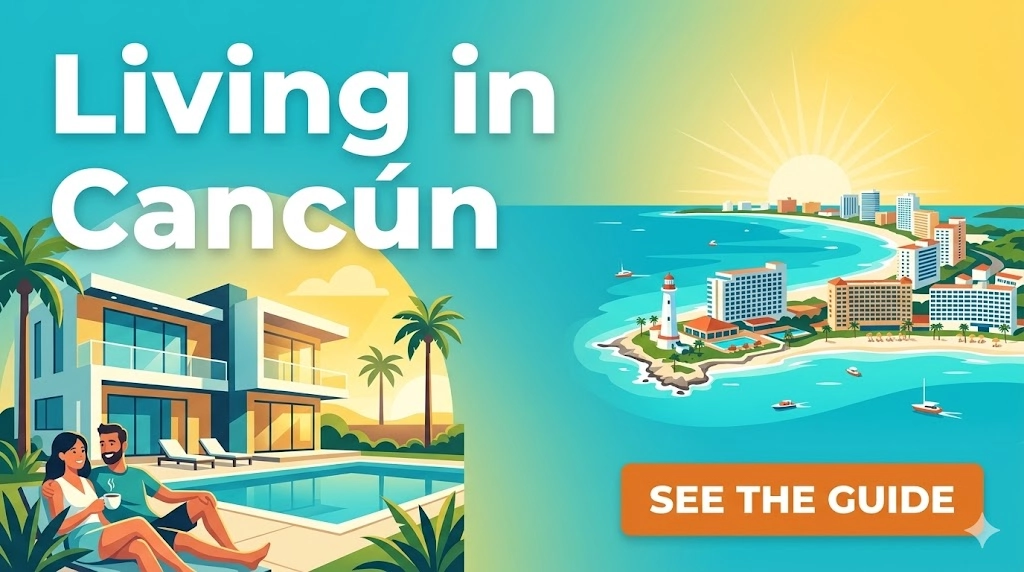
The Hotel Zone, or Zona Hotelera, is the Cancún you see on postcards. It is a 14-mile strip of pristine white sand, blindingly turquoise Caribbean water, and massive, all-inclusive mega-resorts. The culture shock here is minimal because the entire infrastructure is meticulously designed to feel exactly like Miami or Las Vegas, heavily injected with a sanitized Mexican flavor. English is spoken everywhere, US dollars are readily accepted at terrible exchange rates, and the environment caters entirely to short-term, high-spending vacationers.
Living in the Hotel Zone is visually spectacular but practically uninhabitable for expats on a standard budget. Renting a modest, aging condo overlooking the ocean can easily cost well over three thousand dollars a month. Furthermore, you are trapped on a narrow peninsula with only one main road, Boulevard Kukulcán, meaning you are entirely at the mercy of brutal tourist traffic.
Buying basic groceries means driving miles out of your way, and eating at local restaurants means paying massively inflated tourist prices every single night. If you live here, you exist in a fabricated, highly expensive bubble that completely shields you from authentic Mexican culture, leaving you profoundly isolated from the actual local community.
The Reality of El Centro
Downtown Cancún, known as El Centro, is where the actual heartbeat of the city exists. It is where the local workforce and the vast majority of savvy expats actually live. It was built rapidly on an urban grid system, characterized by heavy concrete architecture, massive, chaotic roundabouts, and intense, aggressive daily traffic.
While El Centro completely lacks the pristine, colorful colonial charm of interior Mexican cities, it offers genuine, vibrant authenticity. You will find incredible, affordable Yucatecan street food, bustling local community spaces like Parque Las Palapas, and a diverse, hardworking Mexican population.
However, you must accept a hard physical truth: living in El Centro means you are essentially living in an urban, concrete jungle. The spectacular beaches that drew you to the region are a twenty-minute, highly stressful drive or bus ride away. The concrete infrastructure heavily absorbs the tropical heat, making downtown noticeably hotter and more stifling than the breezy coastal strip.
Finding the Middle Ground in the South
For expat families or remote workers seeking peace, quiet, and modern amenities, the massive residential expansion south of the city is the ultimate sanctuary. The areas stretching south along Avenida Huayacán toward the airport are booming with modern development, specifically designed for middle-class and upper-class residents.
This southern sector is dominated by modern, master-planned gated communities known as fraccionamientos cerrados. They offer incredible security perimeters, manicured community pools, pristine dog parks, and remarkably quiet streets. The housing stock here is brand new, incredibly spacious, and significantly more affordable than anything on the coastal strip.
The major trade-off for this tranquility is absolute car dependency. You cannot simply walk out your front door to a corner store or a charming local cafe; you must drive absolutely everywhere. However, for expats looking for a sustainable, long-term lifestyle shielded from the chaotic tourist masses, the southern suburbs represent the most logical and comfortable choice in the region.
Financial Reality and the Cost of Living
Mexico is no longer the dirt-cheap budget paradise it was ten years ago. The massive influx of foreign capital, combined with a strong peso and aggressive global inflation, has shifted the financial realities of the Caribbean coast, requiring meticulous budgeting and an understanding of local economics.
Combating the Gringo Tax
The economic reality of living in a Mexican beach town is heavily dictated by global tourism. Cancún is aggressively priced to extract maximum capital from short-term vacationers. As a full-time resident, you are constantly fighting the infamous “Gringo Tax”—the inflated, opportunistic pricing applied to everything from real estate rentals to a simple lunch at a beachfront restaurant.
To survive financially, you must adapt your lifestyle to the local economy. If you insist on buying imported American brands, dining at upscale fusion restaurants in the Hotel Zone, and drinking at high-end hotel bars, your monthly budget will quickly mirror that of a major United States city. You must learn to shop at the local open-air markets for seasonal produce, eat at traditional fondas in El Centro, and fiercely negotiate service prices in Spanish.
Furthermore, the tipping culture in Cancún has been heavily influenced by American tourists. While a 10 percent tip is the standard across traditional Mexico, many restaurants in the tourist zones now aggressively push for 15 to 20 percent. To legally manage the income you are spending and understand your complex tax liabilities in this environment, you must read Taxes in Mexico for Expats: A Complete Guide to Income Tax and More.
Renting Unfurnished and Bypassing the Chaos
When you finally secure a long-term lease in Cancún, you must brace for the brutal reality of the Mexican rental market. When you sign a contract for an unfurnished apartment, you are essentially renting a bare concrete box. In Mexico, an unfurnished home often means absolutely no kitchen appliances. There will be no refrigerator, no stove, no washing machine, and frequently no built-in closets or light fixtures. You are entirely responsible for outfitting the functional interior of the home from scratch.
Doing this during your first week by fighting the infamous traffic to visit local big-box stores is an exhausting, spirit-breaking endeavor. Local stores often lack premium inventory, and organizing delivery in rapid-fire Spanish with local freight drivers adds massive friction to your move-in process.
To bypass this chaotic retail supply chain, savvy expats digitize their household setup. Instead of hauling heavy appliances across town in the sweltering heat, they order premium mattresses, microwaves, ergonomic office chairs, and specialized cookware directly through Amazon Mexico. The convenience of having heavy, specialized household items delivered reliably to your new apartment allows you to focus your energy on your new life rather than fighting the local retail supply chain.
Grocery Logistics and Supermarkets
The grocery landscape in Cancún is vast and diverse, catering to every single budget tier simultaneously. If you want a premium, high-end shopping experience, you will visit Chedraui Selecto. These massive, pristine supermarkets offer an incredible array of imported cheeses, high-quality cuts of meat, and European wines, but the checkout total will shock you.
For daily, sustainable grocery shopping, expats heavily utilize massive local chains like Soriana, standard Chedraui, or Walmart. These stores offer excellent local produce, fresh tortillas, and affordable household staples.
However, the absolute best value in the city is found at the local municipal markets in El Centro, such as Mercado 23 or Mercado 28. Here, you can buy a week’s worth of fresh tropical fruit, vegetables, and local spices for a fraction of the supermarket price, while directly supporting the local Mayan and Mexican agricultural community.
Bureaucracy and Securing Your Basecamp
Navigating the Mexican administrative system is an endurance test designed to break your spirit. You must abandon your home-country expectations of speed and embrace the slow, heavily paper-reliant rhythm of local bureaucracy.
The Truth About Tourist Visas
You cannot simply move to the Yucatan Peninsula and live long-term on a tourist visa anymore. The era of the “perpetual tourist” doing border runs to Belize every six months is completely dead. Immigration agents at the Cancún International Airport use digital tracking and frequently hand out restricted 15-day or 30-day tourist stamps rather than the standard 180 days to anyone they suspect of living in the country illegally.
To legally rent a long-term home, buy a car, and open a bank account, you must secure a Temporary or Permanent Resident Visa based on economic solvency. This requires proving specific income or savings thresholds at a Mexican consulate in your home country before you move. To ensure your paperwork is flawless and you survive the initial bureaucratic gauntlet, strictly follow the steps outlined in How to Apply for Temporary Residency in Mexico: Step-by-Step. To calculate the exact financial thresholds required for approval, consult Mexico Immigration Fees and Costs: Budgeting for Your Residency.
Navigating the Aval and Mexican Leases
When you attempt to sign a long-term lease in Cancún, you will immediately face the strict Aval requirement. Because evicting a squatter in Mexico is a grueling, multi-year legal process, landlords fiercely protect their assets. They almost universally demand a local co-signer, known as an Aval, who owns debt-free property in the exact same city to guarantee your lease.
As a newly arrived foreigner, you will not have an Aval. Bypassing this massive hurdle usually requires paying for a specialized legal eviction policy out of pocket, known as a Póliza Jurídica. If the landlord refuses that policy, offering to pay three to six months of rent upfront in cash will almost always make the Aval requirement magically disappear. To deeply understand these complex legal negotiations and protect your deposits, review Real Estate in Mexico: Renting vs Buying for Expats.
Securing a Transitional Landing Pad
The most dangerous, financially devastating mistake you can make is signing a blind 12-month lease in a neighborhood you have only seen in highly edited online photographs. Internet rental scams targeting eager foreigners are rampant in coastal Facebook groups.
To give yourself the necessary time to scout neighborhoods safely without rushing into a terrible housing contract, you must book a transitional basecamp. Utilizing a private room or a suite at a Selina location in downtown Cancún for your first month provides a highly secure environment with commercial-grade internet. More importantly, Selina instantly plugs you into a massive, active community of other expats and digital nomads. You can network in the Selina co-working space to find out which local real estate agents are honest, which landlords to avoid, and which specific downtown streets completely flood during the tropical thunderstorms. It is the ultimate bridge between arriving with a suitcase and signing a permanent lease.
Climate Challenges and Infrastructure
The romantic aesthetics of beachfront living often mask the brutal reality of developing infrastructure. Your daily comfort and your physical safety are directly tied to the environmental grid of the Caribbean.
Hurricane Preparedness and Safety
Living on the edge of the Caribbean Sea means accepting the terrifying, annual reality of hurricane season, which stretches from June through November. The Yucatan Peninsula is geographically exposed, serving as a massive target for severe tropical cyclones moving through the warm ocean waters. When you live here, tracking atmospheric depressions becomes a daily, anxious habit.
Preparing for a hurricane is an intense logistical hurdle. If a major storm targets the coast, the entire city goes into panic mode. Grocery store shelves are stripped bare of bottled water, canned goods, and toilet paper within hours. You must proactively build a comprehensive hurricane survival kit long before the season begins.
Furthermore, when renting an apartment, you must fiercely interrogate the structural integrity of the building. Does the property have integrated, heavy-duty metal storm shutters? If the windows are just standard glass, a hurricane will shatter them effortlessly, destroying everything you own. You must also establish a formalized evacuation plan, knowing exactly which inland municipal shelters accept foreigners and pets. Surviving your first hurricane is the ultimate test of your expat resilience.
The Humidity and Black Mold War
Even when the skies are clear, the climate is a relentless adversary. The reality of coastal Mexico is a suffocating humidity that fundamentally alters how you live. The air is so thick with moisture that stepping outside feels like walking into a wet towel. You will sweat through your clothes within ten minutes of leaving your air-conditioned bedroom.
During the summer rainy season, this extreme humidity breeds absolute chaos inside your home. Black mold becomes your sworn enemy, aggressively attacking leather bags, belts, and the backs of wooden cabinets within days if left unchecked. You cannot simply open a window to air out the house; doing so only invites more moisture and mosquitoes inside.
The intense coastal climate forces you to live in a sealed, climate-controlled bubble for half the year. You must run air conditioning constantly and invest heavily in commercial-grade dehumidifiers to protect your respiratory health and your personal belongings from fungal destruction.
Setting Up Utilities and Power Grids
Running your air conditioning constantly to fight the heat and mold has a direct, painful impact on your monthly budget. Electricity in Mexico is managed by the national provider, the CFE, and is billed on a complex, tiered system.
If you use excessive electricity, you will be pushed into the punitive DAC (High Consumption) rate, which completely removes all government subsidies and triples your bill overnight. An electricity bill that was $50 USD in January can easily become $300 USD in August if you are not monitoring your meter. Setting up reliable utilities as a foreigner requires massive patience and often requires presenting your original lease and resident card at a crowded government office. To navigate this frustrating process without losing your mind, carefully study Setting Up Utilities in Mexico: Electricity, Water, and Internet.
Digital Connectivity and Remote Work
For digital nomads and remote corporate professionals, the reliability of your internet connection is a matter of absolute career survival. Cancún has modernized aggressively, but the extreme climate introduces unique vulnerabilities.
Surviving Wi Fi Blackouts
In the central, developed neighborhoods of Cancún and the affluent southern suburbs, high-speed fiber-optic internet from providers like Telmex and Totalplay is the absolute standard. You can easily secure residential speeds of 200 to 500 Mbps, making heavy data transfers completely effortless.
The primary threat to your remote career is not the Wi-Fi bandwidth, but the fragile CFE power grid. During the heavy summer thunderstorms, intense lightning frequently knocks out neighborhood power transformers. A ten-minute blackout will instantly kill your router and drop your client call. You must absolutely invest in an Uninterruptible Power Supply battery backup for your modem to survive these rolling micro-outages.
Mobile Data on Arrival
Hunting for an apartment or attending meetings across the sprawling Cancún grid requires you to be hyper-responsive and highly mobile. You cannot rely on spotty public Wi-Fi at coffee shops to stay connected. Relying on your home country’s free roaming plan is a dangerous gamble, as major carriers frequently throttle data speeds to an unusable crawl.
You must localize your cellular data the absolute second your plane lands at the chaotic Cancún International Airport. By downloading an eSIM profile through Airalo before you even cross the border, your phone instantly connects to Mexico’s robust Telcel networks. Having a dedicated Airalo data package is the ultimate digital safety blanket, ensuring you can summon a secure Uber, translate complex Spanish lease terms on the fly, or navigate the confusing downtown roundabouts without being stranded in a dangerous dead zone.
Coworking Spaces and Networking
Working remotely from an apartment in a tourist-heavy city can quickly lead to intense isolation and cabin fever. Because so many people in Cancún are on vacation, finding locals or expats who are focused on professional growth requires intentional effort.
Fortunately, the city has embraced the co-working revolution. Utilizing dedicated, highly connected spaces like the Selina coworking hubs provides commercial-grade, redundant internet and backup generators. More importantly, it surrounds you with a built-in community of local tech entrepreneurs and foreign creatives. It is the perfect environment to network outside of the transient tourist bubble and integrate into the local professional ecosystem.
Healthcare Access in a Medical Tourism Hub
Your physical health, ongoing medical maintenance, and personal security are paramount to a successful relocation. Cancún offers exceptional, world-class medical infrastructure, provided you know how to access it.
World Class Private Hospitals
Because millions of wealthy tourists flow through the city annually, Cancún has developed into a massive medical tourism destination. It features pristine, elite private hospitals like Hospital Galenia and Hospiten, which operate with clinical standards that frequently surpass hospitals in the United States or Canada.
These elite facilities possess the latest diagnostic imaging machines and are heavily staffed by leading specialists who trained internationally and speak flawless English. If you live in Cancún and suffer a severe cardiac event or require complex orthopedic surgery, you have immediate access to life-saving, world-class intervention. To understand the massive divide in quality, wait times, and bedside manner between these elite private facilities and the underfunded public system, you must review Healthcare in Mexico: Complete Guide for Expats Public vs Private.
Navigating Pharmacies and Routine Care
For routine care, such as a severe sinus infection, a sprained ankle, or a tropical stomach bug, the city is incredibly easy to navigate. You can walk into small, impeccably clean clinics attached to major commercial pharmacies like Farmacias del Ahorro and see a licensed general practitioner for less than $4 USD, receiving your basic prescription on the spot.
However, if you require highly specialized care or ongoing maintenance medications for chronic conditions, communicating your complex needs requires significant effort. To learn how to locate vetted, bilingual specialists before an emergency strikes, utilize the strategies detailed in Finding English-Speaking Doctors and Specialists in Mexico. For the strict laws regarding importing your medications and understanding local chemical equivalents, consult Pharmacies in Mexico: How to Get Medications OTC vs Prescription.
Securing International Health Coverage
Do not be lulled into a false sense of security by the cheap pharmacy consultations. A major medical crisis in a premium private hospital in Cancún will cost tens of thousands of dollars, and the administration will mercilessly demand a massive credit card deposit upfront before they will even admit you to the emergency room to stabilize you.
Relying entirely on out-of-pocket cash for catastrophic medical events is financial suicide. You must secure robust international health coverage to guarantee you have VIP access to these elite hospitals without draining your life savings. A premium policy ensures you bypass the public clinics entirely and are transported directly to a facility equipped to handle complex trauma. To deeply understand the financial mechanics of this catastrophic medical protection, review Choosing Private Health Insurance: Local Mexican Plans vs International Coverage.
Transportation and Getting Around
Moving your physical body across this sprawling coastal landscape requires a high tolerance for chaos and a strategic understanding of the deeply contentious local transit systems.
The Uber vs Taxi Turf War
If there is one logistical nightmare that defines the daily stress of living in Cancún, it is the violent, deeply entrenched turf war between the local taxi syndicate and ride-sharing applications. The local taxi union operates like a highly aggressive mafia. They fiercely protect their monopoly on tourist transportation, and their drivers are notorious for aggressive driving, refusing to use meters, and extorting foreigners with astronomically inflated prices.
When Uber finally won the legal right to operate in the state, the taxi syndicate retaliated aggressively. Expats and tourists frequently report incidents of taxi drivers blocking Ubers on the road, intimidating passengers, and creating highly volatile, dangerous situations.
As an expat, you must navigate this conflict strategically. Hailing a street taxi off the curb is a massive financial gamble; always negotiate the exact fare before you get into the vehicle. If you choose to use Uber, which is vastly cheaper and safer, you must be discreet. Never attempt to call an Uber directly outside a major hotel lobby or a designated taxi stand, as this will immediately trigger a confrontation.
Public Buses and Colectivos
To bypass the taxi mafia entirely, the local working class and savvy expats rely on the massive, chaotic public transit network. In the Hotel Zone, the R1 and R2 public buses run constantly up and down the coastal strip 24 hours a day. They are incredibly cheap, efficient, and perfectly safe during daylight hours, though the drivers drive with terrifying speed.
In downtown Cancún, mobility is ruled by colectivos. These are cramped, white passenger vans that operate on fixed routes throughout the local neighborhoods. They are heavily crowded, lack air conditioning, and you simply yell out when you want the driver to stop. While intimidating at first, mastering the colectivo routes gives you cheap, immediate access to the entire city.
Buying a Car in the Yucatan
If you choose to live in the sprawling southern suburbs, owning a personal vehicle becomes a strict necessity. Walking to a grocery store in these areas is often completely impossible due to the oppressive summer heat and a lack of pedestrian infrastructure.
If you are debating the complex logistics and massive guarantee deposits associated with bringing your own vehicle across the US border on a temporary permit, you must be aware that the coastal salt air will relentlessly destroy your imported car’s undercarriage. Taking the financial hit to purchase a vehicle locally from a Mexican dealership is often the safest long-term strategy. You must deeply analyze your automotive options by reading Bringing Your Car vs Buying in Mexico: Pros and Cons for Expats.
| Living Scenario | Transportation Strategy | Monthly Cost Estimate | Stress Level |
| Hotel Zone Living | R1/R2 Buses, Occasional Taxis | $50 – $100 USD | High (Taxi Extortion Risk) |
| Downtown (El Centro) | Colectivos, Ubers, Walking | $30 – $80 USD | Moderate (Traffic Congestion) |
| Southern Suburbs | Personal Vehicle / Leased Car | $150 – $300 USD (Gas/Insurance) | Low (Car Dependent) |
Living in Cancún requires abandoning the illusion of a perpetual vacation and embracing the gritty, vibrant, and challenging reality of a developing Mexican city. By securing your digital connectivity, fortifying your home against the climate, and navigating the local bureaucracy with patience, you can transform this tropical paradise into a highly functional, deeply rewarding permanent home.
References
Primary sources (official)
- H. Ayuntamiento de Benito Juárez (Cancún): The official municipal government site outlining local civic regulations, property tax payments, and urban development plans for the downtown districts. https://cancun.gob.mx/:
- Secretaría de Turismo de Quintana Roo (SEDETUR): The official state tourism and development portal providing data on coastal infrastructure, safety protocols, and emergency hurricane guidelines for residents and visitors. https://sedeturqroo.gob.mx/
Other helpful sources
- Travel.State.Gov: The official U.S. government advisory detailing specific security threats, cartel activity, and regional safety profiles crucial for expats choosing a neighborhood. https://travel.state.gov/en/international-travel/travel-advisories/mexico.html
- ExpatDen: An incredibly detailed, firsthand resource covering the cultural, financial, and logistical nuances of renting apartments and navigating the healthcare system as a foreigner. https://www.expatden.com/mexico/
Disclaimer
The information provided in this comprehensive guide is for educational, logistical, and informational purposes only and does not constitute formal immigration, legal, real estate, or medical advice. The cost of living, rental market prices, and public transit conditions in Cancún are highly volatile and subject to rapid economic shifts and intense gentrification. Always consult with a certified bilingual Mexican attorney or a registered immigration facilitator before signing long-term leases, and thoroughly verify your international health insurance coverage networks before relocating abroad.