Pharmacies in Mexico: How to Get Medications OTC vs Prescription
Navigating pharmacies in Mexico offers expats significant cost savings and unparalleled accessibility. This comprehensive guide explains the vital differences between over-the-counter and prescription medications, how to utilize neighborhood pharmacy clinics, and localized strategies for maintaining your essential health supplies safely abroad.
Disclosure: This post may contain affiliate links. We may earn a commission at no extra cost to you if you make a purchase through these links. Read full disclosure.
The Landscape of Mexican Pharmacies
Understanding the Different Types of Pharmacies
When expats relocate to Mexico, they are often surprised by the sheer volume and variety of pharmacies dotting the urban landscape. Unlike in many North American or European countries where pharmaceutical retail is heavily consolidated into a few massive corporate chains, the Mexican market is highly diverse. The most visible and reliable options for expats are the major national chains, such as Farmacias del Ahorro, Farmacias Guadalajara, Farmacias San Pablo, and Farmacias Benavides. These large corporate entities operate hundreds of brightly lit, air-conditioned storefronts across the country. They utilize strictly controlled digital inventory systems, ensuring that the medications they sell are properly sourced and stored under appropriate climate conditions.
In addition to the massive national chains, Mexico is home to thousands of independent, neighborhood pharmacies, often referred to as farmacias de barrio. These independent shops can be highly convenient if you live in a smaller town or a localized residential neighborhood. However, their inventory is typically much smaller than the corporate chains, and they may not carry specialized or highly specific medications. While independent pharmacies serve an important role in the community, expats managing complex chronic conditions typically prefer the reliability and extensive stock of the larger chains.
A third category includes the pharmacies located within massive supermarkets and big-box retailers like Walmart, Chedraui, and H-E-B. These supermarket pharmacies are incredibly useful for completing all your household shopping and prescription refills in a single trip. They frequently offer highly competitive pricing on generic medications and often employ dedicated pharmacists who can assist with special orders. Understanding the nuances between these three types of retail environments is the foundational step in successfully managing your healthcare routine in Mexico, a concept we expand upon in our broader guide on Healthcare in Mexico: Complete Guide for Expats Public vs Private.
The Consultorio System Explained
One of the most unique, efficient, and celebrated features of the Mexican pharmaceutical landscape is the consultorio system. A consultorio is a small, fully functional doctor’s office physically attached to the side or back of a retail pharmacy. Chains like Farmacias del Ahorro and Farmacias Similares have popularized this model, placing fully licensed general practitioners just steps away from the pharmacy checkout counter. These attached clinics operate entirely on a first-come, first-served walk-in basis, fundamentally changing how residents interact with the healthcare system for minor ailments.
The primary function of the consultorio is rapid triage and prescription writing. If you wake up with a mild earache, a suspected sinus infection, or a mild case of traveler’s diarrhea, booking a formal appointment at an expensive private hospital clinic is unnecessary. Instead, you simply walk into the neighborhood consultorio, sign the clipboard, and wait a few minutes. The doctor will perform a basic physical examination, diagnose the acute issue, and write a formal prescription. You then walk next door into the pharmacy to purchase the medication. The consultation fee is astonishingly low, typically ranging from thirty to sixty Mexican Pesos.
While the consultorio is incredibly convenient, expats must understand its strict medical limitations. These clinics are entirely unequipped to handle complex diagnostics, chronic disease management, or severe trauma. They do not possess X-ray machines, comprehensive blood testing equipment, or advanced life support tools. If you present symptoms of a serious condition, the consultorio doctor will immediately refer you to a specialist or a local hospital. Knowing exactly when to utilize these quick clinics versus when to seek advanced care is vital, a topic we cover deeply in Navigating Hospitals and Clinics in Mexico: An Expat Guide to Medical Care.
Language Barriers and Pharmacy Staff
A common misconception among newly arrived expats is that Mexican pharmacists, due to their extensive scientific education, will naturally speak fluent English. In reality, while pharmacists and pharmacy technicians in Mexico are highly knowledgeable regarding drug interactions and active ingredients, they very rarely speak conversational medical English, even in heavily touristed areas. Relying on complex English explanations at the pharmacy counter frequently leads to dangerous miscommunications regarding dosages and side effects.
To overcome this language barrier, expats must adopt highly proactive communication strategies. The most effective method is to always write down the exact chemical name of the medication you need, rather than trying to pronounce it. Additionally, utilizing translation apps to write out specific questions about dosage frequencies or potential drug interactions before you approach the counter ensures your concerns are accurately communicated.
If your medical regimen is highly complex and requires detailed conversations with the pharmacist, it is highly advisable to bring a bilingual friend or utilize a professional medical facilitator to assist you. Never assume that a nod from the pharmacy clerk indicates total comprehension. Misunderstanding a crucial instruction regarding how to take a powerful medication can have severe health consequences. For more targeted strategies on handling language gaps in medical scenarios, review our guide on Finding English Speaking Doctors and Specialists in Mexico.
Over the Counter Medications in Mexico
What is Available Without a Prescription
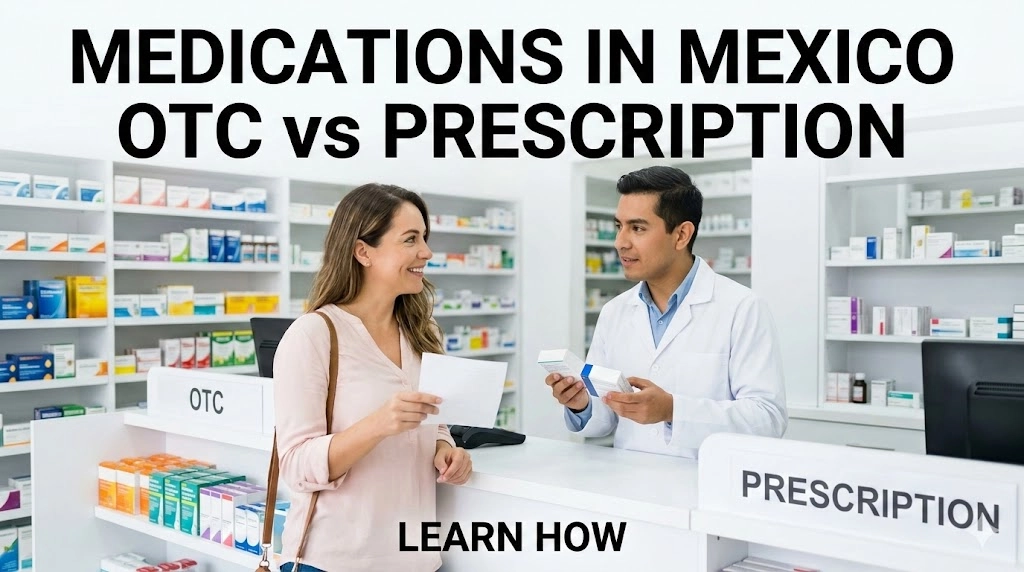
The regulatory landscape governing which medications require a doctor’s signature and which can be purchased freely over the counter varies drastically between Mexico and countries like the United States or Canada. In Mexico, the pharmaceutical market operates with a significantly higher degree of consumer freedom for specific classes of drugs. Expats are frequently delighted to discover that many medications they previously had to beg their home-country doctors for are available directly off the shelf in a Mexican farmacia.
For example, a wide array of highly effective muscle relaxants, high-dose non-steroidal anti-inflammatory drugs, specific formulations of birth control pills, and potent asthma inhalers are completely accessible without a prescription. Additionally, many medications used to control chronic, non-communicable conditions—such as certain blood pressure medications, cholesterol-lowering statins, and specialized gastric acid inhibitors—can often be purchased simply by asking the pharmacy clerk for the specific active ingredient.
This immense accessibility empowers expats to take proactive, independent control over their minor health issues and long-term maintenance needs. However, this freedom demands a high level of personal medical responsibility. Because there is no doctor acting as a gatekeeper for these specific drugs, you must be absolutely certain of the correct dosage and hyper-aware of any potential interactions with other supplements or medications you are currently taking. Relying on your own research or consulting with an online physician before purchasing powerful over-the-counter drugs is a critical safety measure.
Comparing Brand Name versus Generic Drugs
When purchasing over-the-counter medications in Mexico, consumers are immediately presented with a choice between brand-name drugs, known locally as medicamentos de patente, and generic alternatives, known as medicamentos genéricos. Understanding the difference between these two categories is essential for effectively managing your healthcare budget without compromising clinical efficacy. The Mexican generic drug industry is massive, highly competitive, and strictly regulated by the federal health authority.
Brand-name medications in Mexico are typically produced by the massive, familiar global pharmaceutical conglomerates. These drugs are heavily marketed, beautifully packaged, and correspondingly expensive. In some cases, heavily imported brand-name drugs can cost almost exactly as much in Mexico as they do in the United States. Conversely, generic medications are manufactured by domestic Mexican laboratories once the original drug’s international patent has expired. These generics contain the exact same active chemical ingredient, in the exact same dosage, as the premium brand name.
The federal regulatory agency, COFEPRIS, mandates rigorous bioequivalence testing for all generic medications sold in the country. This guarantees that a generic blood pressure pill will dissolve and absorb into your bloodstream at the exact same rate as the expensive brand-name version. The cost savings associated with choosing generics are staggering, often reducing the price of a monthly medication supply by seventy to eighty percent. For a broader analysis of how to manage out-of-pocket medical spending, refer to Healthcare Costs in Mexico: Doctor Visits Hospital Stays and Surgery Expenses.
Identifying Active Ingredients and Translations
One of the most frustrating experiences for an expat standing at a Mexican pharmacy counter is asking for a familiar medication, only to be met with a blank stare. Global pharmaceutical companies utilize entirely different, regionally specific brand names for their products across different international markets. If you ask a Mexican pharmacist for “Lipitor,” “Advil,” or “Tylenol,” they may not immediately recognize the commercial name, especially in smaller, independent pharmacies outside of major resort areas.
To navigate this issue flawlessly, expats must entirely abandon brand names and learn to communicate using the universal language of chemistry: the active ingredient (el principio activo). Before moving to Mexico or visiting the pharmacy, you must meticulously research and write down the generic chemical name of every medication you take. For example, instead of asking for Tylenol, you must ask for Paracetamol. Instead of asking for Advil, you ask for Ibuprofeno.
Creating a comprehensive, printed document that lists your required medications by their exact active chemical ingredients, alongside the precise milligram dosage you require, is the single most effective tool for pharmacy success. You simply hand this printed list to the pharmacy technician. They will instantly recognize the chemical compounds and can swiftly present you with both the expensive brand-name options and the highly affordable domestic generic alternatives available in their current inventory.
Navigating Prescription Medications
How Mexican Prescriptions Work
While Mexico offers immense freedom regarding over-the-counter drugs, the regulations surrounding specific classes of prescription medications are incredibly strict and heavily enforced. If a medication legally requires a prescription, a Mexican pharmacy absolutely will not sell it to you without the proper, formalized paperwork. A valid Mexican prescription, known as a receta médica, must meet several highly specific legal criteria to be accepted by the pharmacist.
First and foremost, the prescription must be written and physically signed by a physician who is legally licensed to practice medicine within the Republic of Mexico. The prescription pad must clearly display the doctor’s full name, their clinic address, and most crucially, their Cédula Profesional number. The Cédula Profesional is the federally issued medical license number that proves the doctor has graduated from an accredited medical school and passed their board examinations. The pharmacist will frequently cross-reference this number in a federal database before dispensing highly controlled substances.
Furthermore, a Mexican prescription is typically only valid for a highly specific, short window of time. Unlike prescriptions in North America that might remain valid for a full calendar year and include dozens of automated refills, a Mexican prescription for acute medications often expires within seventy-two hours of being written. The pharmacist will frequently stamp the paper prescription and keep it for their official records, meaning you cannot simply take the same piece of paper to another pharmacy a week later to buy more pills.
Antibiotics and Controlled Substances Regulations
The most heavily regulated medications in Mexico fall into two distinct categories: antibiotics and controlled psychotropic substances. Historically, antibiotics were available over the counter in Mexico, which led to a massive, dangerous surge in antibiotic resistance among the general population. In response, the Mexican government enacted sweeping federal legislation completely banning the over-the-counter sale of all antibiotics. You absolutely cannot purchase penicillin, amoxicillin, or any other antibacterial drug without a freshly dated, physically signed receta médica from a licensed doctor.
Controlled substances—which include powerful narcotic painkillers, specific ADHD medications, highly potent anti-anxiety drugs, and heavy sleep aids—are subject to even more draconian regulations. These drugs are legally classified by the government as Group 1 or Group 2 medications. To prescribe these highly sensitive drugs, a doctor must possess a special, highly secure prescription pad issued directly by the federal health ministry. These specialized prescriptions feature unique barcodes and holographic security seals.
Finding a doctor who possesses these specialized prescription pads can be highly challenging, as many general practitioners simply do not go through the intense bureaucratic hassle required to obtain them. If you manage a chronic pain condition or require specific psychiatric medications, you must proactively locate a specialized pain management clinic or a board-certified psychiatrist immediately upon arriving in Mexico. Attempting to navigate the complexities of controlled substances without a dedicated, highly specialized physician is nearly impossible.
Refilling Foreign Prescriptions
A highly common and incredibly dangerous mistake made by newly arrived expats and tourists is assuming they can simply walk into a Mexican pharmacy, present a prescription bottle issued by their home-country doctor in the US, Canada, or the UK, and request a refill. Mexican pharmacies are strictly bound by national law; they absolutely cannot legally honor, fill, or recognize any medical prescription written by a foreign physician practicing outside of Mexican jurisdiction.
If you arrive in Mexico and run out of your critical prescription medication, you must undergo the formal process of having the prescription completely rewritten by a local Mexican doctor. To facilitate this process efficiently, you must bring your original, foreign prescription bottles and a highly detailed, printed medical summary from your home-country physician explaining exactly why you require the medication. You then book an appointment with a local specialist or a private general practitioner, present your documentation, and request that they evaluate you and issue a valid, localized Mexican receta.
Because this process requires scheduling an appointment, paying a consultation fee, and potentially undergoing new local blood tests, you should never wait until you are down to your final pill to seek a refill. Proactive expats always secure an appointment with a local doctor weeks before their imported medication supply runs dry. To safely manage the costs of these localized consultations without incurring heavy foreign transaction fees, expats utilize modern currency tools like Wise to pay the clinics directly from their home accounts using optimal exchange rates.
Costs and Payment Methods for Medications
Average Pricing and Cost Savings
The financial relief expats experience when engaging with the Mexican pharmaceutical market is often profound. The cost of maintaining complex medical regimens in countries like the United States has driven countless individuals to seek medical residency abroad. When utilizing the domestic generic market in Mexico, the out-of-pocket costs for daily maintenance medications are a tiny fraction of North American prices.
To provide a clear perspective, consider common chronic conditions. A thirty-day supply of generic Metformin for diabetes management often costs less than five US dollars. Generic statins for cholesterol control and generic beta-blockers for hypertension typically range between five and ten US dollars per month. Even specialized, non-generic medications for complex autoimmune conditions are frequently priced thirty to fifty percent lower than their exact brand-name counterparts north of the border. These massive savings dramatically reduce the overall cost of living for retirees, allowing them to stretch their fixed pensions significantly further.
However, expats must remain vigilant regarding dynamic pricing. Prices can vary significantly not just between different corporate pharmacy chains, but even between different branches of the exact same chain located in different neighborhoods. A pharmacy located directly across the street from a luxury, tourist-heavy hospital will almost certainly charge higher prices for the exact same generic medication than a pharmacy located in a quiet, working-class residential neighborhood. Savvy expats take the time to comparison shop between local farmacias to lock in the absolute best ongoing prices for their daily routines.
Utilizing Insurance for Pharmacy Expenses
When evaluating how to pay for expensive medications, expats must clearly understand how health insurance intersects with the Mexican pharmacy landscape. Local Mexican health insurance plans—the policies specifically designed for domestic use—very rarely cover the cost of routine, outpatient prescription medications. These local policies are primarily designed as catastrophic safety nets, fully covering medications only when they are administered intravenously during an active, overnight hospital admission.
If you desire comprehensive coverage that actually pays for your expensive daily pills at the local pharmacy counter, you must look toward premium, international global health insurance plans. Massive global providers offer highly specialized policies specifically designed for the expatriate lifestyle. With a premium global policy from a provider like Cigna Global, you can explicitly add an “Outpatient Coverage” module to your plan. This premium module provides substantial annual limits specifically earmarked for prescription drugs.
When utilizing an international policy like Cigna Global for outpatient medications, you typically pay the pharmacy out of pocket using your credit card, meticulously collect the itemized receipt and the doctor’s original prescription, and then digitally submit the claim through your insurance provider’s online portal for rapid reimbursement. We deeply analyze the strategic differences between localized catastrophic plans and these comprehensive global policies in our guide on Choosing Private Health Insurance Local Mexican Plans vs International Coverage.
Payment Options and Currency Exchange
Mexican corporate pharmacies are highly modernized retail environments that happily accept a wide variety of payment methods. You can seamlessly utilize major international credit cards, local Mexican debit cards, and cash. However, relying on a standard foreign credit card for your daily pharmaceutical needs often results in thousands of dollars lost over a year due to hidden bank exchange rate markups and hefty foreign transaction fees applied to every single purchase.
To optimize their pharmaceutical spending, financially intelligent expats completely bypass traditional banking bottlenecks by utilizing digital borderless accounts. Establishing an account with Wise allows you to hold your retirement funds in a highly secure, multi-currency digital wallet. You can instantly convert your US Dollars or Euros into Mexican Pesos precisely when the exchange rate is most favorable.
When you stand at the pharmacy counter, you simply use your linked Wise debit card to pay the final bill in local pesos. This highly efficient method guarantees you receive the absolute best, transparent mid-market exchange rate without any hidden banking fees, effectively lowering the true cost of your medications even further. Ensuring you have highly fluid, low-cost access to your money is just as critical as finding the right doctor, a concept deeply related to managing broader medical expenses discussed in Medical Emergencies in Mexico: What Expats Should Know and Prepare.
Supplements and Specialized Health Products
Availability of High Quality Vitamins
While the Mexican market excels at providing highly affordable, strictly regulated pharmaceutical drugs for treating illnesses, it frequently struggles to provide a robust, high-quality selection of holistic wellness products. The inventory of vitamins, organic minerals, and specialized dietary supplements found in a typical Mexican farmacia is usually quite basic. You will easily find standard Vitamin C effervescent tablets and generic multivitamins, but locating highly bioavailable, specialized formulations is incredibly frustrating.
Furthermore, the specialized wellness products that are successfully imported and placed on the shelves of high-end grocery stores or specialized health boutiques are subject to massive import taxes and immense retail markups. Expats searching for specific strains of refrigerated probiotics to manage gut flora, high-quality organic joint supplements, or specialized vegan protein powders often find that these products cost double or triple what they would pay in their home countries.
Because maintaining a robust, proactive preventive health routine is essential for minimizing long-term medical costs and avoiding hospital visits, relying exclusively on the highly limited local Mexican supplement market is not a sustainable strategy. Expats must seek alternative, reliable supply chains to secure the exact nutritional support their bodies require to thrive in a foreign environment.
Importing Personal Supplements
To entirely bypass the severe limitations and astronomical costs of the local Mexican wellness market, the vast majority of the established expatriate community turns to international e-commerce. By far, the most reliable and heavily utilized platform for securing high-quality nutritional supplements in Mexico is iHerb. This massive global retailer has completely streamlined the complex logistics of shipping highly sensitive health products directly across international borders.
Utilizing iHerb allows expats to access an immense, globally competitive catalog of trusted organic vitamins, specialized dietary supplements, and crucial probiotics at standard, uninflated international market prices. Most importantly, the platform handles the notoriously complex Mexican customs clearance process entirely on their end. They calculate and securely collect any necessary import duties directly at the online checkout, ensuring that your package of vital supplements is not mysteriously delayed, aggressively inspected, or permanently confiscated by border officials.
By establishing a highly reliable, recurring delivery schedule through iHerb, expats can perfectly maintain the exact holistic and preventive health regimens they relied upon before relocating. Ensuring you have completely uninterrupted access to your trusted daily wellness products is a critical component of adapting to the local climate and food systems, an expansive topic we cover thoroughly in Staying Healthy in Mexico: Essential Tips for Food Water and Preventive Care.
Managing Chronic Condition Supplies
For expats who require highly specific, non-medication medical supplies to safely manage chronic conditions—such as specialized continuous glucose monitors for diabetes, specific ostomy supplies, or highly customized orthopedic braces—the Mexican market can be unpredictable. While major cities possess specialized medical supply stores (tiendas de equipo médico), finding the exact brand or hyper-specific measurement you require can require exhaustive searching.
In situations where a highly specialized medical device or crucial chronic supply is completely unavailable domestically, holding a premium international health insurance policy becomes an incredible logistical asset. Top-tier global providers understand that treating a patient holistically extends beyond simple hospital admissions.
If you hold a comprehensive policy with a provider like Cigna Global, you gain immediate access to their 24/7 global medical concierge teams. These highly connected professionals can actively assist you in globally sourcing the rare medical supplies you require. In certain complex cases, they can coordinate the legal, safe importation of the necessary devices directly to your Mexican physician, ensuring your chronic condition is perfectly managed without dangerous interruptions. We explore how to leverage these immense concierge benefits in our overview of Health Insurance in Mexico How Expats Can Get Coverage 2026.
Safety, Authenticity, and Best Practices
Avoiding Counterfeit Drugs and Tourist Traps
While the mainstream corporate pharmacy sector in Mexico is highly regulated and incredibly safe, expats and tourists must exercise extreme caution when purchasing medications in heavily touristed resort towns or specific border cities. In these high-traffic areas, independent “discount pharmacies” aggressively market heavily discounted pharmaceuticals, particularly lifestyle drugs, weight loss pills, and unprescribed antibiotics, directly to foreigners walking the streets.
The federal health authority, COFEPRIS, frequently issues severe warnings regarding counterfeit medications infiltrating these specific tourist-trap pharmacies. Counterfeit drugs may look absolutely identical to the legitimate brand, complete with fake holographic seals, but they often contain zero active ingredients, or far worse, highly toxic filler substances. Purchasing medications from an unverified, independent shop in a tourist zone simply to save a few dollars is a massive, potentially lethal gamble.
To completely eliminate the risk of counterfeit drugs, expats must establish a strict personal rule: only purchase prescription medications and vital chronic illness drugs from the major, nationally recognized corporate chains. Pharmacies like Farmacias del Ahorro and Farmacias San Pablo utilize highly secure, vertically integrated supply chains that bypass the black market entirely. Prioritizing absolute safety and verified authenticity over a tiny perceived discount is the ultimate best practice for medical security abroad.
Safe Storage in Warm Climates
A frequently overlooked aspect of managing pharmaceutical health in Mexico is the physical environment. Mexico boasts a diverse array of climates, but many of the most popular expat destinations—from the lush jungles of the Riviera Maya to the stunning beaches of the Pacific coast—are characterized by extreme, relentless heat and punishing humidity. These severe environmental conditions are the absolute enemy of chemical stability.
Medications are typically formulated to remain chemically stable precisely at “room temperature,” which pharmaceutical manufacturers define as roughly 68°F to 77°F (20°C to 25°C), in a completely dry environment. If you leave your vital blood pressure medication sitting on a brightly lit kitchen counter in a humid coastal apartment without aggressive air conditioning, the active chemical compounds will rapidly degrade. Degraded medications lose their clinical efficacy, meaning you might suffer a severe medical episode despite diligently taking your pills every single day.
Expats must be deeply proactive regarding medication storage. Never store your daily pills in the bathroom, where the intense heat and heavy steam from the shower create the worst possible environment. Instead, store all medications in a cool, dark, highly climate-controlled area of your home, such as a dedicated drawer in an air-conditioned bedroom. If a specific medication or imported liquid supplement explicitly requires strict refrigeration, ensure your kitchen refrigerator maintains a highly consistent, stable temperature despite frequent regional power grid fluctuations.
Emergency Pharmacies and 24 Hour Access
Medical emergencies do not politely adhere to standard business hours. If you suffer a severe bout of food poisoning at 3:00 AM, or if you are discharged from a private emergency room in the middle of the night with a crucial prescription for powerful painkillers and strong antibiotics, knowing exactly how to securely access an open pharmacy is vital.
Fortunately, the major corporate pharmacy networks in Mexico deeply understand this necessity. In virtually every mid-sized city and major expat hub, chains like Farmacias del Ahorro and Farmacias Guadalajara maintain dedicated locations that operate twenty-four hours a day, seven days a week. However, for severe security reasons, the physical doors of these pharmacies are frequently locked tight after 10:00 PM or 11:00 PM.
During the late-night hours, these pharmacies utilize a highly secure “ventanilla” system. You must approach a reinforced, bulletproof glass window facing the street or the parking lot. You pass your written prescription and your cash or credit card through a small, secure sliding drawer, and the pharmacist passes your medication back out to you. While this late-night transaction can feel slightly intimidating to a newly arrived foreigner, it is a highly standardized, incredibly safe procedure designed to protect the staff while ensuring the public has completely uninterrupted access to life-saving medications. Ensuring you know exactly where the nearest 24-hour location is situated is a critical step in finalizing your localized emergency plan, a concept deeply related to the strategies outlined in Public Healthcare in Mexico: IMSS and IMSS Bienestar Explained for Expats.
OTC vs Prescription: A Quick Reference Guide
To help expats rapidly understand the general regulatory environment, review this comparative table outlining the typical status of common drug classes in Mexico:
| Medication Class / Type | Typical Status in US/Canada | Typical Status in Mexico | Mexican Requirement |
| Standard Pain (Ibuprofen, Paracetamol) | OTC | OTC | None |
| Muscle Relaxants (Standard) | Prescription | OTC | None (Usually) |
| Birth Control Pills | Prescription | OTC | None |
| Antibiotics (Amoxicillin, etc.) | Prescription | Prescription ONLY | Valid Receta & Doctor’s Cédula |
| Psychotropics (Xanax, Valium) | Controlled RX | Strictly Controlled | Group 2 Specialized Prescription |
| Strong Narcotics (Oxycodone) | Controlled RX | Strictly Controlled | Group 1 Specialized Barcode RX |
References
Primary sources (official)
- COFEPRIS (Federal Commission for the Protection against Sanitary Risk): https://www.gob.mx/cofepris
- Secretariat of Health (Secretaría de Salud) Mexico: https://www.gob.mx/salud
Other helpful sources
- US Embassy in Mexico – Medical Assistance Guide: https://mx.usembassy.gov/medical-practitioners/
- CDC Traveler’s Health – Traveling Abroad with Medicine: https://wwwnc.cdc.gov/travel/page/travel-abroad-with-medicine
Disclaimer
The detailed information strictly provided in this extensive article is for educational and informational purposes only and absolutely does not constitute professional medical, legal, or financial advice. Mexican pharmaceutical laws, strict controlled substance regulations, and the legal availability of specific medications are highly complex and subject to rapid change without prior notice by federal authorities. Always deeply consult with a certified medical professional regarding your specific health issues, strictly avoid purchasing medications from unverified vendors, and intimately verify all importation laws before traveling across borders with large quantities of prescription drugs.