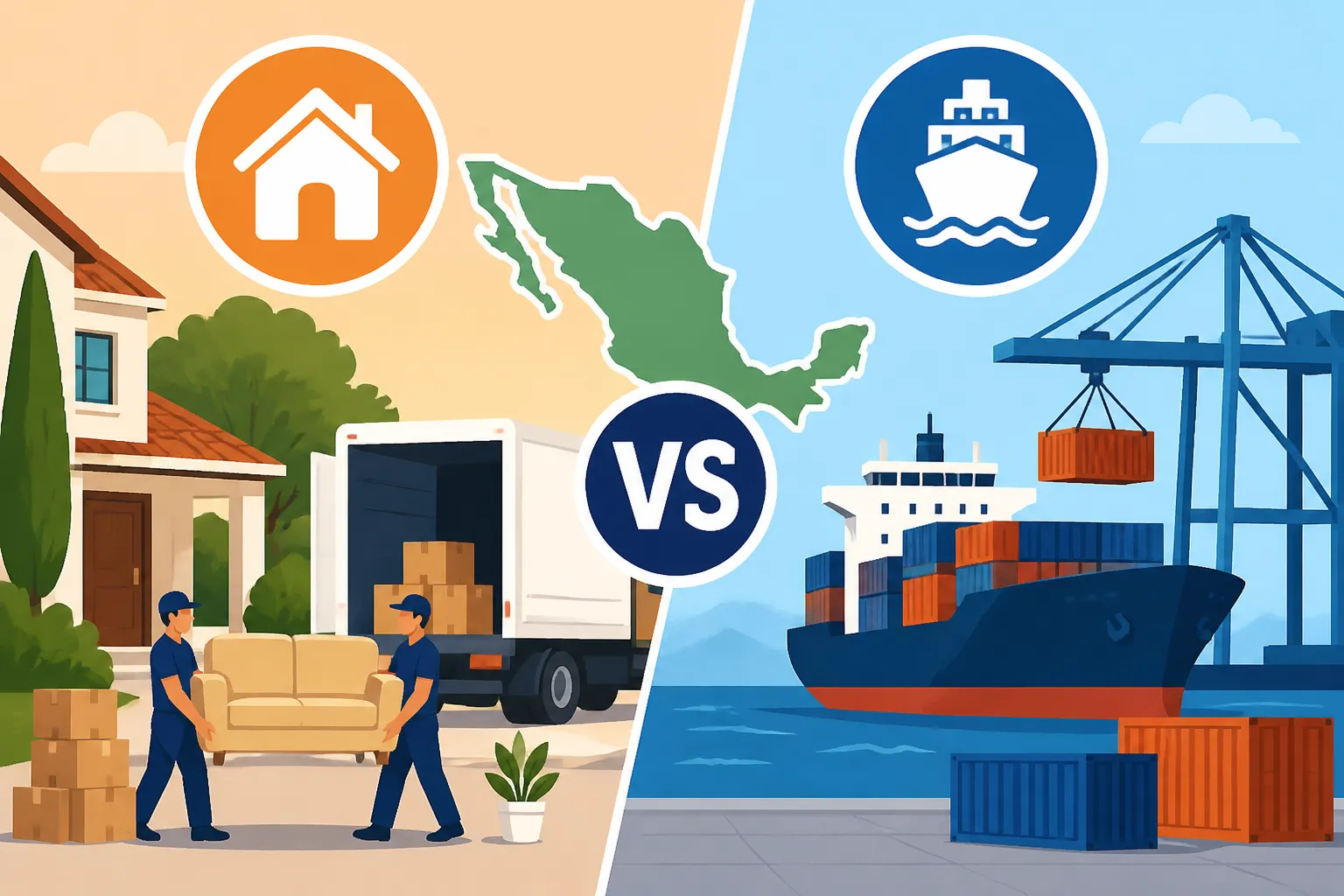
Door-to-Door vs Port-to-Port Moves to Mexico: What Each Quote Includes
Moving to Mexico is thrilling, yet understanding international moving quotes, especially 'door-to-door' versus 'port-to-port,' often feels like deciphering ancient scrolls. The confusion around what’s included can add immense stress. This comprehensive guide will demystify these options, meticulously break down what each quote truly covers, and help you confidently choose the ideal moving solution for your new life here.
Disclosure: This post may contain affiliate links. We may earn a commission at no extra cost to you if you make a purchase through these links. Read full disclosure.
Understanding the Basics: Door-to-Door vs Port-to-Port Moves
When you're preparing to pack up your life and start fresh in Mexico, the sheer volume of choices and unfamiliar terminology can be overwhelming. Two of the most common, and often misunderstood, moving services you'll encounter are "door-to-door" and "port-to-port." It's not just about how your boxes get from point A to point B; it's about how much you have to do along the way, and what hidden costs might jump out at you.
What is a Door-to-Door Move?
Imagine a moving service where you essentially point to your old front door and then to your new one, and the moving company handles nearly everything in between. That, my friends, is the dream of a door-to-door move. It’s designed for maximum convenience and minimal hassle on your part. This service usually encompasses professional packing at your origin residence, careful loading of your household goods onto a moving truck or container, transportation to the port, ocean or air freight to Mexico, all the complex customs clearance procedures, and finally, delivery and sometimes even unpacking at your new home in Mexico.
For many expats, especially those juggling jobs, families, or simply seeking peace of mind, a door-to-door service is a godsend. It means you deal with one primary point of contact, reducing the headache of coordinating multiple parties across different countries and time zones. You don't have to navigate the aduana (customs) yourself, nor do you need to worry about the logistics of getting your container from the port of Veracruz or Manzanillo to your cozy casa in San Miguel de Allende. This comprehensive approach typically includes insurance for your belongings during transit, which is a non-negotiable for me. It's truly for those who value their time and sanity over pinching every last peso on the logistical side of things.
What is a Port-to-Port Move?
Now, let's talk about port-to-port, which is the less glamorous, more hands-on sibling of door-to-door. With a port-to-port move, the moving company's responsibility generally begins when your packed belongings arrive at the origin port and ends when they reach a port in Mexico. That's it. Everything before and after those two points falls squarely on your shoulders.
This means you are responsible for packing your entire household, arranging for your goods to be transported to the departure port in your home country, and securing all necessary export documentation. Once your shipment arrives at a Mexican port, your responsibilities ramp up significantly. You’ll need to personally (or through a hired local agent) handle all import duties, taxes, customs clearance, and pick up your shipment from the port. Then, you arrange for local transportation to get your belongings from the port to your new residence. While this might sound like a cost-saving venture, it requires a significant investment of time, a good grasp of Spanish, and a strong understanding of Mexican import regulations. It's often chosen by seasoned movers, those with very tight budgets, or people who already have reliable contacts and resources on the ground in Mexico to assist them with the complex logistics.
Deconstructing Your Moving Quote: What's Really Included?
The phrase "what's included" can be a minefield in international moving. You might see a seemingly attractive number, only to find yourself buried under additional fees and unexpected charges later. This is where the real work of scrutinizing your quotes comes in. Understanding the line items will save you from major headaches and potential financial pitfalls.
Breaking Down a Door-to-Door Quote
A proper door-to-door quote should be a detailed document that leaves very little to question. Here’s a breakdown of what you can expect to see and what those items mean:
- Packing Services: This usually covers professional packers coming to your home, carefully wrapping and boxing all your belongings. They use specialized materials to protect fragile items, and often inventory everything for customs. This is a huge time-saver and stress reducer.
- Loading and Disassembly: The crew will load your packed boxes and furniture onto the truck. If you have large items that need to be taken apart (like beds or large tables), this service often includes disassembly at origin and reassembly at destination.
- Transportation to Origin Port: The cost of moving your packed goods from your home to the port where they’ll begin their international journey.
- Ocean or Air Freight: This is the big one – the actual cost of shipping your container or consolidated shipment across the ocean or by air to Mexico. This depends heavily on volume, weight, and distance.
- Terminal Handling Charges (THC) at Origin & Destination: Fees charged by the port authorities for handling your container at both ends of the journey.
- Customs Clearance in Mexico: This is where things get truly complex. A good door-to-door service will include the services of a customs broker in Mexico who will prepare all the necessary documentation, declare your goods, and guide them through the rigorous aduana process. This typically includes assistance with your menaje de casa (household goods declaration), which is critical for potentially avoiding high import duties on your personal belongings. Without a proper menaje de casa and valid residency, you could be looking at significant taxes.
- Import Duties and Taxes (sometimes): Be very, very careful here. Some quotes might estimate duties, or include the broker's fee for processing duty-free items, but very few include the actual duties if they are assessed. Always clarify this. For most household goods of a resident with a valid menaje de casa, duties are minimal or waived, but always confirm.
- Delivery to New Residence: Once cleared, your goods are transported from the Mexican port directly to your new home.
- Unloading and Basic Unpacking: The crew will unload boxes and furniture into the appropriate rooms. Some services even include basic unpacking and debris removal (though this is often an add-on).
- Insurance: Most reputable door-to-door movers include transit insurance as standard, or offer it as a crucial add-on. This protects you in case of damage or loss.
Hidden Costs to Watch For (Even with Door-to-Door):
- Storage: If your new home isn't ready, storage fees at origin or destination can add up quickly.
- Shuttle Service: If your Mexican home isn't accessible by a large moving truck, a smaller truck (shuttle) might be needed, incurring extra cost.
- Long Carry Fees: If the movers have to carry items an unusually long distance from the truck to your door.
- Special Item Handling: Pianos, artwork, antiques, or very heavy items often have surcharges.
- Pest Control/Fumigation: Sometimes required by Mexican authorities for wooden items.
- Demurrage/Detention Fees: If your container is held at port longer than expected (often due to delays with your paperwork or customs), you can face daily fees. This is why having all your Mexico Temporary Resident Visa: Comprehensive Guide for Expats (2026 Update) documents in order is vital.
Breaking Down a Port-to-Port Quote
A port-to-port quote will be significantly leaner, reflecting the much narrower scope of services provided. Here’s what you’ll typically find:
- Ocean or Air Freight: This is the core of the quote – the cost to transport your goods from the origin port to the destination port in Mexico.
- Terminal Handling Charges (THC) at Origin & Destination: Again, fees for handling your container at both ports.
- Security and Port Charges: Various other mandatory fees imposed by port authorities.
What's NOT Included (and where you'll spend your time and money):
- Packing and Supplies: You're on your own here. You buy the boxes, wrap the dishes, and pack every single item.
- Transportation to Origin Port: You arrange and pay for the truck to get your packed goods to the departure port.
- Export Documentation: While the freight forwarder might help with some shipping manifests, you’re responsible for ensuring all export declarations from your home country are correctly filed.
- Customs Clearance in Mexico: This is the biggest differentiator. You must engage a licensed customs broker (agente aduanal) in Mexico, or try to navigate the INM and aduana yourself – which I strongly advise against unless you are incredibly experienced with Mexican bureaucracy and speak fluent Spanish. The broker will charge fees for their services, and these can vary widely. Remember, you'll need documents like your menaje de casa and proof of residency. Getting all your Customs Tips for New Residents: What You Can Bring When Moving to Mexico in order is absolutely essential.
- Import Duties and Taxes: These will be assessed by Mexican customs. If your menaje de casa isn't properly handled or your residency isn't solid, you could pay substantial duties.
- Transportation from Destination Port: Once cleared, you’ll need to arrange and pay for a local trucking company to pick up your goods from the port and deliver them to your new home.
- Unloading and Unpacking: That’s all on you or a local team you hire.
- Insurance: Often, only basic liability is included by the shipping line. You'll need to secure comprehensive marine cargo insurance separately if you want real protection.
- Demurrage/Detention Fees: These are even more likely to be an issue here because you are responsible for the speed of customs clearance and pickup. Delays cost money, fast. Understanding Dealing with Bureaucracy in Mexico: Tips for Handling Paperwork and Appointments will be crucial if you go this route.
The Cost Equation: Factors Influencing Your Final Bill
No two moves are exactly alike, and the final price tag for shipping your belongings to Mexico can swing wildly depending on several key factors. It's not just about the distance; it's about the details, the timing, and your personal involvement.
Variables Affecting Door-to-Door Costs
While seemingly all-inclusive, door-to-door quotes are still sensitive to various elements:
- Volume and Weight of Goods: This is the most significant factor. Moving companies price by the cubic meter (for sea freight) or weight (for air freight). The more stuff you have, the more it costs. So, really consider what you absolutely need versus what you could buy new in Mexico.
- Distance and Accessibility: The further your origin and destination are from major ports, the higher the ground transportation costs will be. If your new Mexican home is up a narrow, winding cobblestone street in a Pueblo Mágico like San Miguel de Allende, and a large truck can't access it, be prepared for potential shuttle or long carry fees.
- Specialty Items: Antiques, grand pianos, elaborate artwork, or even very large appliances require specialized packing, crating, and handling, which adds to the cost.
- Seasonality: Moving during peak seasons (summer, holidays) or at short notice can drive prices up due to higher demand.
- Insurance Value: The higher the declared value of your goods for insurance purposes, the more you'll pay for coverage.
- Additional Services: Electing for full unpacking, debris removal, or temporary storage will increase the overall price.
- Fuel Surcharges and Port Congestion: These are external factors that can fluctuate. While movers might quote a fixed price, these surcharges can sometimes be added even late in the game, though reputable companies will try to absorb or warn you.
Variables Affecting Port-to-Port Costs
Though the initial quote seems lower, remember the "hidden" costs of your time and effort. Here's what impacts the port-to-port bottom line:
- Volume and Weight: Just like door-to-door, the physical size and weight of your shipment directly dictate the freight portion of the cost.
- Distance to/from Ports: You are responsible for the ground transport to the origin port and from the destination port. The further these are from your residences, the more you'll pay in local trucking fees.
- Customs Broker Fees: This is a major variable. A reputable Mexican customs broker is indispensable, but their fees can vary based on the complexity of your shipment, the port, and the broker's own pricing structure. Always get multiple quotes and verify credentials. This process can be further complicated if you don't have all the required documents, like your RFC Number or a fully approved menaje de casa.
- Port Fees and Handling at Destination: These are not always transparent in the initial port-to-port quote. You'll likely pay fees to the shipping line's agent in Mexico for documentation, port fees, and potentially storage if your clearance is delayed. These are often called "destination charges" and can sometimes feel arbitrary.
- Self-Clearance vs. Hiring Help: If you decide to tackle customs clearance yourself (not recommended unless you're practically a Mexicano yourself and have done this many times), you save the broker fee but risk costly delays, fines, and immense frustration. Your time is money, after all.
- Local Transportation from Port: Finding a reliable, affordable local trucking company to move your goods from the port to your home is another item on your to-do list and budget.
- Unexpected Storage: If customs holds your shipment, or you can't arrange pickup quickly, you'll incur daily storage fees at the port.
Making the Right Choice for Your Move to Mexico
Deciding between door-to-door and port-to-port isn't about which is inherently "better," but which is better for you. It comes down to your budget, your comfort level with bureaucracy, your timeline, and your desire for convenience versus control.
When Door-to-Door Makes Sense
Choose door-to-door if:
- You Prioritize Convenience and Peace of Mind: This is the ultimate "set it and forget it" option. You want to focus on settling into your new life, not wrestling with customs forms in Spanish.
- Your Budget Allows For It: Door-to-door is almost always more expensive upfront, but it bundles many potential hidden costs and saves you significant time and stress. Consider this an investment in your mental health during a major life transition.
- You're New to International Moving or Mexico: If this is your first big move abroad, or your first time navigating the intricacies of Mexican administration, the comprehensive support is invaluable. You won’t have to worry about the specific requirements for importing your menaje de casa or dealing with INM paperwork; the professionals will guide you.
- You Don't Have Local Contacts: Without a trusted network on the ground in Mexico, coordinating local transport, customs brokers, and problem-solving at the port can be a nightmare.
- You're on a Tight Schedule: The streamlined nature of door-to-door often means a more predictable timeline, as the professionals are experts at navigating potential delays.
When Port-to-Port Might Be a Fit
Consider port-to-port if:
- You're on a Very Strict Budget: If saving every single dollar is paramount, and you have the time and energy to manage the logistics, port-to-port can indeed be cheaper on paper.
- You Have Extensive International Moving Experience: You've done this before, you understand customs procedures, and you're comfortable with the paperwork and potential hurdles.
- You Speak Fluent Spanish and Have Reliable Local Contacts: Having a trusted customs broker, a local logistics contact, or even a very helpful Mexican friend who can assist with ground transport and bureaucracy is crucial. Without this, you could face immense frustration and unexpected costs.
- You're Moving Minimal Items: For very small shipments that aren't worth a full container, the flexibility of handling the last mile yourself might make sense, especially if you can pick it up in a small vehicle.
- You Thrive on Control: If you prefer to oversee every step, engage directly with local service providers, and aren't afraid of the legwork, this option gives you more direct control over the process once it hits Mexican soil.
| Feature | Door-to-Door Move | Port-to-Port Move |
|---|---|---|
| Convenience | High – minimal effort required by you | Low – significant effort required by you |
| Cost (Upfront) | Higher | Lower (but many hidden costs in time/effort) |
| Included Services | Packing, loading, transport, freight, customs, delivery, (often) insurance | Freight transport between origin and destination ports only |
| Customs Clearance | Handled by professional customs broker (included) | Your responsibility to arrange and pay for broker |
| Local Transport | Included from origin home to port & port to new home | Your responsibility to arrange & pay at both ends |
| Risk/Stress | Lower – managed by the moving company | Higher – greater personal responsibility for logistics |
| Best For | Busy expats, first-time international movers, peace of mind | Budget-conscious, experienced movers, strong local support, fluent in Spanish |
| Transparency | Generally clearer, fewer surprise fees (if reputable) | Initial quote simple, but many subsequent, unquoted fees |
Finding a Reliable Mover: Why Sirelo is Your Best Bet
Regardless of whether you choose door-to-door or port-to-port, the most critical step is finding a reliable and transparent international moving company. This is where a platform like Sirelo becomes an absolute game-changer for anyone planning a move to Mexico. As expats, we've all heard horror stories of shipments gone missing, damaged goods, or exorbitant hidden fees that suddenly appear at customs. Sirelo cuts through that noise.
Sirelo acts as a fantastic bridge, connecting you with vetted, reputable international movers specializing in routes to Mexico. Instead of slogging through countless websites and contacting companies one by one, Sirelo allows you to quickly compare multiple quotes from pre-screened companies. This isn't just about price; it’s about comparing what each quote genuinely includes, understanding their terms, and reading real reviews from other expats who have used their services.
Using Sirelo means you get to compare like-for-like quotes, reducing the chances of nasty surprises down the line. They simplify the complex process, helping you find movers who clearly outline their door-to-door or port-to-port offerings. This transparency is priceless when you’re dealing with the bureaucracy of moving to a new country. They’re a valuable tool for ensuring you get fair pricing and reliable service, making your move to Mexico smoother and less stressful. Don't leave your precious belongings to chance; use Sirelo to make an informed decision.
Disclaimer
Please remember that immigration laws, customs regulations, and financial requirements in Mexico can change frequently. While we strive to provide the most accurate and up-to-date information, it is crucial to verify all details with official Mexican government sources (such as the Instituto Nacional de Migración – INM and Aduana México), reputable legal professionals, or certified customs brokers before making any decisions related to your move. This guide is intended for informational purposes only and does not constitute legal or financial advice.