Dealing with Bureaucracy in Mexico: Tips for Handling Paperwork and Appointments
I once waited five hours in the blazing sun outside a government office only to have my application rejected because my passport photocopy was in color instead of black-and-white. Navigating Mexican bureaucracy can feel like a psychological endurance test designed to break your spirit. This guide decodes the unwritten rules, paperwork obsessions, and appointment systems required to conquer your administrative relocation.
Disclosure: This post may contain affiliate links. We may earn a commission at no extra cost to you if you make a purchase through these links. Read full disclosure.
The Psychology of Mexican Bureaucracy
Surrendering to the “Mañana” Culture
When you first arrive in Mexico, you bring your home-country expectations of efficiency and linear timelines. If an office says it opens at 9:00 AM, you expect the doors to unlock at 8:59 AM. In Mexico, the concept of time—and specifically the word mañana—operates on an entirely different cultural frequency. Mañana rarely means literally “tomorrow”; it is a polite, culturally ingrained way of saying “not today.”
If you fight this cultural rhythm, you will spend your entire expat journey angry, stressed, and exhausted. I have seen newly arrived foreigners yell at bank tellers and government clerks because a promised document was delayed by a week. This aggressive approach achieves absolutely nothing in Mexico. In fact, displaying impatience or anger is the fastest way to have your paperwork mysteriously moved to the very bottom of the pile.
To survive here, you must actively practice surrender. When you dedicate a day to an administrative task—whether it is registering your car, updating your visa, or paying a municipal fine—you must accept that it will consume your entire day. Do not schedule a strict lunch date or a Zoom meeting for the afternoon. Bring a book, a bottle of water, and lower your heart rate. The system works, but it works at its own majestic, unhurried pace.
The Power of Politeness and Respect
In Northern cultures, transactions at government offices are brief, highly transactional, and devoid of pleasantries. You walk up to the window, state what you need, and hand over your form. In Mexico, attempting a purely transactional interaction is considered incredibly rude and will immediately put the clerk on the defensive.
Before you hand over a single piece of paper, you must establish a human connection. You must look the agent in the eye and offer a warm Buenos días (Good morning) or Buenas tardes (Good afternoon). Ask how they are doing. This simple display of educación (good manners and upbringing) completely changes the dynamic of the encounter. The clerks behind these windows deal with hundreds of frustrated, sweating people every single day. Being the one person who treats them with genuine respect makes them significantly more likely to overlook a minor typo on your form.
Furthermore, dress appropriately when visiting any government building. Mexican culture still places a high value on formal presentation in professional settings. Do not show up to the immigration office in board shorts, flip-flops, and a tank top. Wear long pants and a collared shirt or a modest blouse. Looking presentable signals to the official that you respect their institution, which earns you their respect in return.
Why Logic Does Not Always Apply
One of the most maddening aspects of Mexican bureaucracy is the sheer inconsistency of the rules. You can ask three different officials the exact same question and receive three completely different, highly confident answers. The rules are not always applied uniformly; they are often interpreted subjectively by the specific agent sitting at the desk on that specific Tuesday.
Do not attempt to argue with an agent using logic. If an agent tells you that your utility bill must be less than 30 days old, and you point out that the official website says it can be 90 days old, you will not win the argument. The agent’s word in that exact moment is the absolute law. Arguing will only cause them to entrench their position to save face.
The secret to navigating this inconsistency is over-preparation. You must assume the agent will ask for documents that are not listed on the official requirements page. If you are told to bring the original and one copy, you bring the original and three copies. You bring extra passport photos, a blue pen, a black pen, and printed screenshots of your appointments. By anticipating the illogical hurdles, you remove the agent’s ability to reject your application.
Preparing Your Master Document Dossier
The Obsession with Copies and Formats
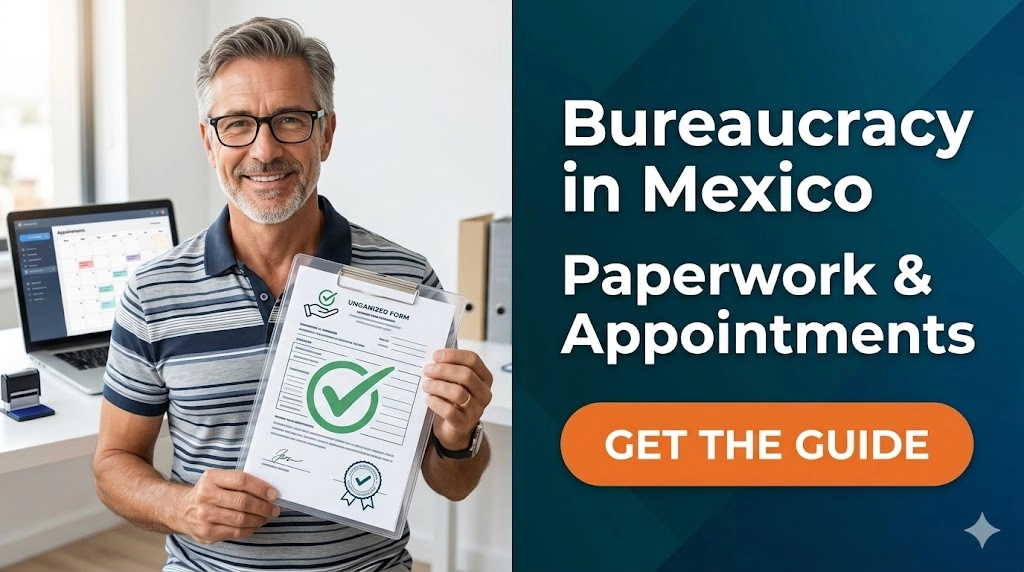
Mexican bureaucracy runs on a staggering mountain of paper. The digital revolution has only partially reached government institutions. While you might initiate an application online, you will almost always be required to present a massive physical file (expediente) in person.
You must build a “Master Dossier” before you attempt any administrative task. This is a sturdy binder containing multiple, pristine copies of every piece of identification you own. You need copies of your passport data page, copies of your visa sticker, copies of your entry stamp, and copies of your physical resident card (front and back, printed on the same side of a single sheet of paper).
Crucially, you must pay attention to the requested format. Almost all government offices, especially the National Institute of Migration (INM), demand that photocopies be in crisp black-and-white. If you submit a color photocopy, it will be rejected because it can be mistaken for a forged original. Never staple your documents unless explicitly told to do so, as agents prefer to organize the files with paperclips according to their specific internal protocols. For a deep dive into exactly which forms you need for your residency, carefully review How to Apply for Temporary Residency in Mexico: Step-by-Step.
Apostilles and Certified Translations
If there is a word that will haunt your relocation nightmares, it is “Apostille.” An Apostille is an international certification that authenticates the seals and signatures on foreign public documents. The Mexican government will absolutely not accept a standard US, Canadian, or UK birth certificate, marriage license, or university degree. If it does not bear an official Apostille from the issuing state or national government, it is a legally worthless piece of paper in Mexico.
You must secure Apostilles for all vital family documents long before you pack your bags. Attempting to mail original documents back to your home country’s Secretary of State to be Apostilled while you are living in Mexico is a logistical nightmare that can delay your visas and school enrollments for months. I spent hundreds of dollars on international DHL shipments to fix this exact mistake.
Furthermore, an Apostilled document in English is still not ready for the Mexican government. Every single foreign document must be legally translated into Spanish by a Perito Traductor (a certified, court-approved translator) physically located in Mexico. You cannot use an online translation service or translate it yourself. The government will only accept translations bearing the official stamp and signature of a registered Perito.
The Comprobante de Domicilio Challenge
The Comprobante de Domicilio (proof of address) is the cornerstone of Mexican administration. You need it to open a bank account, sign up for healthcare, buy a car, and renew your visa. However, it presents a massive catch-22 for newly arrived expats.
To get a utility bill in your name, you often need a bank account and a resident card. To get the bank account, you need a utility bill. The standard acceptable Comprobante is an electricity bill (CFE), a water bill, or a fixed-line internet bill (Telmex) that is no more than two to three months old. A cell phone bill or a foreign bank statement is rarely accepted.
If you are renting an apartment, the utility bills will almost certainly remain in your landlord’s name. Fortunately, Mexican bureaucracy is accustomed to this. You can usually use a utility bill in your landlord’s name, provided you bring a copy of your formalized, signed lease agreement matching the address. To understand how to legally protect yourself when drafting these leases, you must read Real Estate in Mexico: Renting vs Buying for Expats.
Navigating Government Appointments and Portals
The Citas System Conundrum
Since the pandemic, almost all Mexican government agencies have transitioned to a mandatory online appointment system (Citas). Whether you need to visit the SAT for your taxes, the INM for your visa, or the local transit authority for a driver’s license, you cannot simply walk in. You must secure a digital Cita.
The problem is that these online portals are notoriously fragile and chronically backlogged. The SAT portal, for example, is infamous for crashing, freezing, or simply showing zero available appointments for months at a time. Expats routinely spend weeks waking up at 3:00 AM to check the portal, hoping the system has released a new batch of appointments.
When you finally secure a Cita, you must print the confirmation page. Do not rely on showing a PDF on your phone; the security guard at the front door of the government building will demand a physical, printed piece of paper before they even allow you to enter the lobby. If you show up without the printed confirmation, you will be turned away, and your weeks of waiting will be entirely wasted.
The Reality of Waiting in Line
Securing an appointment for 10:00 AM does not mean you will speak to an agent at 10:00 AM. It simply means you are legally permitted to join the queue on that specific day.
When you arrive at a government office, you will typically encounter multiple lines. There is a line to speak to the receptionist, who will verify your documents and hand you a numbered ticket (ficha). Then, you sit in the waiting room until your number is called, which can take hours. Finally, you meet with the actual agent processing your request.
During these agonizingly long waits, you will quickly realize the importance of hydration and battery power. Government buildings in Mexico are notoriously lacking in air conditioning and accessible electrical outlets. Bring a fully charged power bank, a large bottle of water, and physical snacks. If you leave the building to find food, you will likely lose your place in the queue or miss your number being called over the distorted loudspeaker.
Using Digital Tools and Connectivity
Because you will spend dozens of hours sitting in waiting rooms or standing in lines outside, maintaining your digital connectivity is your only tether to sanity. You will need to rapidly message your landlord for a missing document, email a PDF to a nearby print shop, or use Google Translate to decipher a complex legal form the agent just handed you.
If you rely on your home country’s mobile plan, you will inevitably experience throttled data or dead zones inside thick concrete government buildings. You must localize your connectivity immediately. Veteran expats bypass the hassle of finding local physical SIM cards by downloading an eSIM profile through Airalo before they even leave the house. Having a dedicated Airalo data package ensures you are instantly connected to Mexico’s strongest 4G and 5G networks.
When the immigration agent suddenly demands a digital copy of your payment receipt, having rock-solid internet via Airalo allows you to download and email the file in seconds, rather than losing your spot in line because you had to wander the streets looking for a cafe with Wi-Fi. It is the ultimate digital safety blanket for administrative combat.
The Role of Facilitators and Fixers
When to Hire an Immigration Lawyer
Many expats pride themselves on their fierce independence, assuming they can navigate the Mexican immigration system using Google Translate and sheer willpower. While it is entirely possible to do it yourself, your time and mental health have a profound value.
Hiring a bilingual immigration lawyer or a dedicated facilitator (facilitador) is often the best investment you can make during your first year. A good facilitator understands the unwritten rules of the local INM office. They know exactly which clerk is working on which day, they know the specific margin requirements for photocopies, and they will physically stand in the 6:00 AM line for you to secure your numbered ticket.
If your case is complex—such as applying for residency through family unity, navigating an expired tourist visa, or bringing a foreign-plated vehicle across the border—attempting a DIY approach is reckless. To understand the exact financial costs involved in hiring professional help versus paying the federal fees, review Mexico Immigration Fees and Costs: Budgeting for Your Residency.
Spotting Scams and Unofficial Tramitadores
The dense bureaucracy has created a massive shadow economy of unofficial fixers known as tramitadores or coyotes. These individuals often hover around the entrances of government buildings, promising to expedite your paperwork or secure impossible appointments for a hefty cash fee.
You must be incredibly vigilant. While some tramitadores provide legitimate queuing services, many are running aggressive scams. They might forge official documents, which, if discovered by the government, will result in your immediate deportation and a permanent ban from Mexico. Furthermore, they will often demand your original passport or cash upfront and simply disappear.
Never hand your original passport to a stranger on the street. Always vet your facilitators through trusted local expat Facebook groups. A legitimate lawyer or facilitator will have a physical office, verifiable client testimonials, and will operate transparently, clearly separating their service fee from the official government rights fees you must pay.
Cost Versus Time Analysis
| Administrative Task | DIY Approach (Time & Frustration) | Hiring a Facilitator (Estimated Cost) | Recommendation |
| INM Residency Canje | 3-5 days of waiting, multiple rejections likely. | $250 – $500 USD | Highly Recommended. Saves massive stress. |
| Getting an RFC at SAT | Weeks of checking for Citas, 1 full day at office. | $100 – $200 USD | Optional. The actual appointment is straightforward if you have the Cita. |
| Opening a Bank Account | 2-4 hours, highly dependent on Spanish fluency. | N/A (Must be done in person) | DIY. Bring a bilingual friend if needed. |
| Converting Foreign License | 1-2 days at the Tránsito office. | $50 – $150 USD | Recommended if you lack advanced Spanish. |
Managing Financial and Daily Administration
Opening Your First Bank Account
Integrating into the Mexican financial system is crucial for a sustainable life abroad. You cannot pay your rent, utilities, or internet bills indefinitely using foreign debit cards or stacks of cash. You need a local bank account to access SPEI (the Mexican instant bank transfer system).
Opening an account at a major bank like BBVA, Banorte, or Intercam requires extreme patience. You must possess your physical resident card (a visa sticker is almost never accepted), your passport, your Comprobante de Domicilio, and your Mexican Tax ID (RFC).
You will sit with a banking executive for at least an hour while they manually enter your data into their legacy systems. They will demand a local Mexican phone number to activate your mobile banking app. Be prepared to sign your name on dozens of paper forms. Ensure your signature perfectly matches the signature on your passport, as Mexican banks are notoriously strict about signature verification and will freeze your account if they detect a discrepancy on a future check.
The SAT and Securing Your RFC
Five years ago, expats routinely lived in Mexico for decades without ever interacting with the Mexican tax authority (the SAT). That era is completely dead. Today, securing your Registro Federal de Contribuyentes (RFC)—your Mexican Tax ID—is an absolute legal requirement for anyone holding a resident card, even if you do not earn a single peso in the local economy.
Without an RFC, you cannot open a bank account, buy a car, or put the electric bill in your name. To get it, you must navigate the brutal Citas system mentioned earlier, visit the SAT office, and register your biometric data (fingerprints and iris scans).
Once you receive your RFC document (Constancia de Situación Fiscal), guard it with your life. Furthermore, depending on your global income sources and how many days you spend in the country, holding an RFC ties into your overall global tax liabilities. To protect your wealth and stay entirely compliant with the new digitized laws, you must thoroughly read Taxes in Mexico for Expats: A Complete Guide to Income Tax and More.
Establishing a Basecamp Before Signing Leases
Because the paperwork required to sign a long-term lease is so intense—often requiring a local co-signer, a legal policy, and local bank statements—you cannot rush this process. Attempting to secure a 12-month lease during your first week in the country while battling jetlag and immigration appointments is a recipe for a disastrous housing mistake.
You need a highly reliable, frictionless basecamp for your first 30 to 60 days. Instead of booking a sterile, overpriced hotel or an isolated vacation rental, veteran expats heavily utilize Selina. Booking a private room or a micro-suite at a Selina location is a strategic masterclass in relocation logistics.
Whether you are navigating bureaucracy in Mexico City, Oaxaca, or Playa del Carmen, Selina provides commercial-grade internet for printing your government forms, built-in co-working spaces, and an instant community. You can walk downstairs, grab a coffee, and instantly network with other expats who have already conquered the local INM office. They can recommend trustworthy lawyers and honest landlords. Selina acts as your community anchor, giving you a safe, highly connected environment to return to after a grueling day at the tax office.
Outfitting Your Life Without the Retail Red Tape
Bypassing the Local Supply Chain
The bureaucracy in Mexico extends far beyond government offices; it infiltrates the retail sector as well. When you finally secure an unfurnished apartment, you must outfit it. However, shopping at massive local big-box stores like Coppel or Elektra is an exhausting administrative process.
You will often have to flag down an employee, wait for them to print a physical paper ticket, take that ticket to a completely separate cashier line to pay, and then take the stamped receipt to a warehouse door in the back of the store just to claim a microwave. If you buy a large appliance, delivery logistics are a nightmare of vague promises and “sometime next week” scheduling.
To bypass this retail exhaustion, seasoned expats digitize their household setup by relying exclusively on Amazon Mexico. When you are drowning in government paperwork, the last thing you want to do is spend your weekend fighting traffic to buy a mattress. Utilizing the localized Amazon Mexico platform allows you to order everything from ergonomic office chairs to specialized cookware directly to your front door.
Securing Electronics for the Home Office
If you are working remotely, establishing your home office quickly is a matter of professional survival. Finding specific tech peripherals, high-quality surge protectors, or Uninterruptible Power Supplies (UPS) in local Mexican stores is often impossible. The stores that do carry them mark up the prices astronomically.
By ordering through Amazon Mexico, you access a massive, globally vetted inventory without the nightmarish delays and extortionate import duties of international customs that occur if you try to ship boxes from your home country. You can quickly build a resilient, professional workspace while dedicating your physical energy to fighting the immigration battles. For advice on balancing these logistics with your remote career, check out the Digital Nomads in Mexico: Remote Work Guide.
The Beauty of Digital Deliveries
Once your basecamp is set, you must establish your daily health routines. Navigating local pharmacies for specific imported vitamins, specialized skincare, or premium supplements involves dealing with supply chain shortages and language barriers. While you must use local pharmacies for immediate prescriptions, you can optimize your daily wellness through e-commerce. To understand how to navigate the local retail drug stores for urgent pharmaceutical needs, consult Pharmacies in Mexico: How to Get Medications OTC vs Prescription. Furthermore, if you are setting up your household budget and need to account for private medical infrastructure, review Healthcare in Mexico: Complete Guide for Expats Public vs Private.
Conquering Mexican bureaucracy requires a fundamental shift in your worldview. You must abandon your expectations of speed, embrace the power of extreme politeness, and meticulously over-prepare your paperwork. By leveraging digital tools, securing a supportive community basecamp, and knowing when to hire a professional fixer, you can transform the administrative nightmare into a manageable, highly rewarding rite of passage.
References
Primary sources (official)
- Instituto Nacional de Migración (INM): The official federal portal detailing the exact forms, requirements, and digital application process for securing and renewing your residency in Mexico. https://www.inm.gob.mx/tramites/publico/estancia.html
Other helpful sources
- Mexperience: A highly trusted, veteran expat resource detailing the cultural nuances of Mexican bureaucracy, financial thresholds, and the reality of dealing with government offices. https://www.mexperience.com/lifestyle/living-in-mexico/visas-and-immigration/
- ExpatDen: A Guide for Expats to Live Here: An incredibly detailed, firsthand breakdown of the logistical timelines, document translations, and Apostille requirements necessary for a successful relocation. https://www.expatden.com/mexico/
Disclaimer
The information provided in this guide is for educational, logistical, and informational purposes only and does not constitute formal legal, immigration, tax, or financial advice. Mexican administrative laws, INM processing requirements, SAT digital portal procedures, and the specific formatting required for official documents vary drastically by individual state and municipality, and are subject to frequent and sudden legislative changes without notice. Always retain the services of a certified bilingual Mexican attorney, a registered immigration facilitator, or a cross-border CPA to review your specific documentation and ensure your legal compliance before relocating abroad.