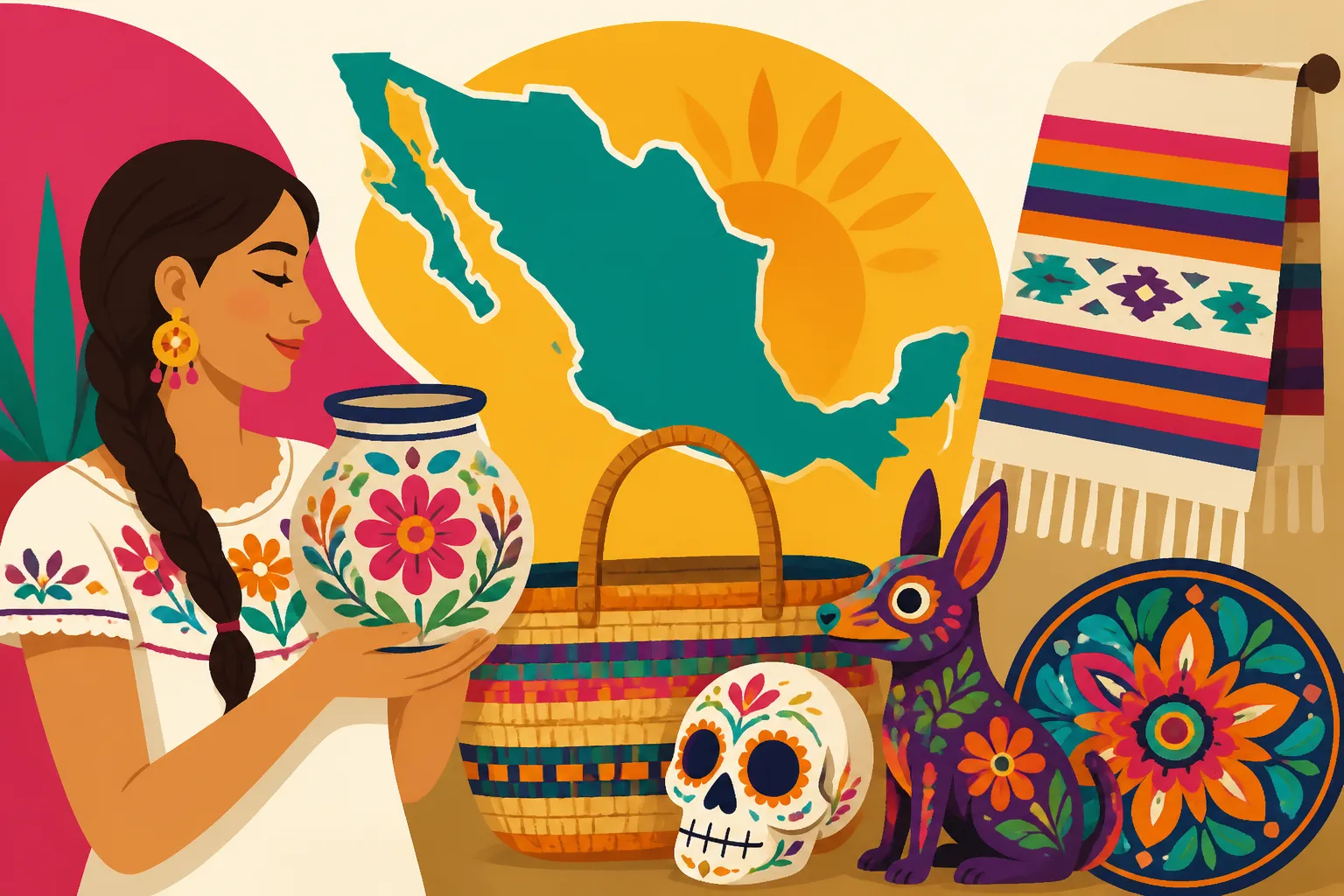
Mexican Crafts (Artesanías): What to Buy and Where
Walking into a traditional Mexican market for the first time can be an assault on the senses—in the best way possible. However, many newcomers struggle to distinguish between a mass-produced plastic trinket and a true piece of cultural heritage. This guide solves that frustration by detailing Mexico’s most iconic artesanías, explaining their regional origins, and teaching you how to find authentic treasures that truly support local artisans.
Disclosure: This post may contain affiliate links. We may earn a commission at no extra cost to you if you make a purchase through these links. Read full disclosure.
Understanding the Soul of Mexican Artesanías
When you first move to Mexico or spend a significant amount of time here, your home or suitcase inevitably begins to fill with color. But it is essential to understand that artesanías are not simply souvenirs; they are the physical manifestation of centuries of indigenous history, colonial influence, and family legacy. Many of the techniques you see today have been passed down through five or six generations, with children learning to paint or weave at their parents' feet. As an expat, I have learned that purchasing these items is a way of participating in the preservation of a culture that is constantly under threat from globalization.
The frustration many foreigners feel often stems from seeing the same "Mexican" hats or ponchos in every tourist shop from Cancun to Cabo. To find the real soul of Mexican craft, you have to look toward the specific regions where these traditions were born. Geography dictates the craft. In the lush valleys of Oaxaca, you find wool and clay. In the mountains of Michoacán, you find hammered copper. Understanding this regionality is the first step toward becoming a savvy collector and ensuring that your money goes toward genuine craftsmanship rather than a factory-made imitation.
You also have to appreciate the time involved. A high-quality wool rug or an intricate beaded sculpture can take months to complete. When you see the price tag, remember you aren't just paying for the materials; you are paying for weeks of labor and a lifetime of specialized knowledge. If you are planning a trip specifically to hunt for these items, using a service like Busbud can help you navigate the long-distance routes between these craft-heavy states like Puebla, Oaxaca, and Jalisco with ease.
Iconic Textiles and Where to Find Them
Textiles are perhaps the most recognizable of all Mexican crafts, yet the variety is staggering. Every indigenous group has its own patterns, colors, and weaving techniques that act as a visual language. For example, the Zapotec people of the Central Valleys in Oaxaca are world-renowned for their wool weavings. These rugs are often dyed using completely natural ingredients: crushed cochineal insects for reds, indigo for blues, and walnut shells for browns. If you are looking for these, How to Buy Oaxacan Textiles and Rugs provides a deeper dive into what to look for regarding knot density and dye quality.
Beyond rugs, you will encounter the huipil and the rebozo. The huipil is a traditional tunic worn by indigenous women, and the embroidery on it often tells the story of the wearer’s community or marital status. The rebozo, a long shawl, is a staple of Mexican womanhood. The most famous ones come from Santa María del Río in San Luis Potosí, where they are so fine they can be pulled through a wedding ring. Buying these pieces requires a level of respect for the culture they represent, so it’s worth reading up on How to Be a Respectful Tourist in Indigenous Communities in Mexico before you head out on a shopping trip into the highlands.
In the state of Hidalgo, you will find the vibrant "Tenangos." these are white cotton cloths covered in whimsical, multicolored embroidery of birds, flowers, and mythical animals. Originally, these designs were inspired by ancient cave paintings found in the region. Today, they are a favorite for modern home decor. When you buy a Tenango, check the back; a true handmade piece will have a messy underside of knots and threads, whereas a machine-made one will look too perfect. This "imperfection" is actually the hallmark of the human hand.
Pottery and Ceramics: From Functional to Fine Art
If your interest lies in home goods, Mexico’s ceramics will likely become your obsession. The most famous is undoubtedly Talavera from the city of Puebla. True Talavera is a protected "Denomination of Origin" product, meaning only pottery produced in specific certified workshops in Puebla can legally use the name. It is characterized by its milky-white glaze and intricate blue, yellow, and green patterns. When you are in the city, How to Shop for Talavera Pottery in Puebla is an essential resource to help you find the certified showrooms and avoid the "Talavera-style" imitations sold on street corners.
In Oaxaca, the pottery tradition takes a darker, more elegant turn with Barro Negro (Black Clay). Originating in the village of San Bartolo Coyotepec, this pottery gets its signature metallic black sheen from a unique firing process and a polishing technique using a simple quartz stone. It is surprisingly lightweight and feels almost like metal. While it is mostly decorative today because the firing temperature makes it slightly porous, a few pieces of Barro Negro on a shelf can transform a room. I always recommend visitors take a day trip to the village; you can often book a driver through Viator to see a demonstration of how they "burnish" the clay to get that shine.
For those who prefer something more rustic, the "Mata Ortiz" pottery from the northern state of Chihuahua is a must-see. Unlike the colonial-influenced Talavera, Mata Ortiz is inspired by the prehistoric Paquimé culture. The vessels are hand-coiled (not thrown on a wheel) and painted with incredibly fine brushes made of human hair. This style was revitalized in the 1970s and has since become some of the most sought-after ceramic art in the world. If you find yourself in the capital or near the border, keep an eye out for these delicate, geometric masterpieces. Knowing How to Shop for Mexican Artesanías (Crafts) generally will help you understand the pricing tiers for these high-end items.
Woodwork and Whimsical Creatures
Perhaps the most "magical" of all Mexican crafts are the Alebrijes. While the concept originated in Mexico City with papier-mâché, the wooden version from Oaxaca has become the definitive style. Carved from the soft wood of the copal tree, these creatures are part-dragon, part-cat, part-eagle, and entirely imaginary. The painting process is what sets them apart—thousands of tiny dots and geometric patterns cover every square inch. If you want a genuine one, you should go to the villages of Arrazola or San Martín Tilcajete. You can find excellent guided tours on Viator that take you directly into the homes of the carving families.
In the state of Michoacán, the town of Santa Clara del Cobre produces world-class hammered copper. The sound of hammers hitting metal rings through the streets all day long. Here, they take a single block of copper and, through heat and manual labor, transform it into everything from massive bathtubs to delicate jewelry. The texture of the hammered surface is something a machine simply cannot replicate. Because Michoacán can be a bit tricky to navigate for new arrivals, many expats prefer to base themselves in a nearby city like Morelia or Pátzcuaro and use Busbud for reliable transport to the artisan towns.
Then there is the Huichol (Wixárika) beadwork. Primarily found in Nayarit and Jalisco, this art form involves pressing thousands of tiny glass beads into a layer of beeswax and resin applied to a wooden or gourd base. The symbols used—the deer, the peyote cactus, and the fire—all have deep religious significance to the Wixárika people. As an expat living here, I have found that these pieces are the ultimate conversation starters. They are vibrant, psychedelic, and deeply spiritual. Just be sure you are buying from a reputable source where the proceeds actually return to the indigenous communities.
Practical Tips for Savvy Collectors
One of the biggest mistakes newcomers make is assuming that every market price is a "starting point" for a long negotiation. While haggling is part of the culture at street markets, it is vital to know when to stop. If you are in a high-end gallery or a family’s home workshop, the price they give you is often fixed and reflects the labor involved. I always suggest reading How to Bargain at a Mexican Market Politely to understand the social cues. Tipping $10 pesos for a $500 pesos carving is insulting; paying the asking price for a masterpiece is a sign of respect for the artist’s time.
Authenticity is another hurdle. For textiles, a simple "burn test" can reveal if a rug is wool or synthetic (wool smells like burnt hair; synthetic smells like plastic). For wood carvings, feel the weight; copal wood is light, but it shouldn't feel like flimsy balsa. For ceramics, look for the artist's signature or the workshop’s stamp. If you are overwhelmed, start your journey at the Museo de Arte Popular in Mexico City. It provides an incredible overview of what "best-in-class" looks like so you have a benchmark for quality when you hit the markets. For more context, check out Oaxaca City Guide: Markets, Mezcal, and Art for a look at one of the country's most craft-rich cities.
Finally, consider the logistics of getting your items home. Large Talavera pots or heavy copper mirrors are beautiful but a nightmare to pack. Many high-end workshops offer international shipping, which I highly recommend. It may seem expensive, but it’s cheaper than arriving home to a box of blue and white shards. If you are shipping within the country to your new expat home, Sending Mail from Mexico: Postal Service vs Private Couriers will give you the lowdown on which services are most reliable for fragile items.
Top Destinations for Mexican Artesanías
To help you plan your shopping itinerary, I’ve put together a table of the best places to find specific crafts. When booking your stay in these locations, Booking.com is usually the most reliable platform for finding boutique hotels or converted colonial mansions that put you right in the heart of the artisan districts.
| Region / City | Famous Craft | Recommended Market or Village |
|---|---|---|
| Oaxaca City, Oaxaca | Alebrijes, Barro Negro, Rugs | Mercado de Abastos & San Martín Tilcajete |
| Puebla City, Puebla | Talavera Ceramics | Barrio del Artista & Calle de los Dulces |
| Tlaquepaque, Jalisco | Pottery, Glass, High-end Art | Calle Independencia (Pedestrian Mall) |
| Santa Clara del Cobre, MIC | Hammered Copper | Main Plaza Workshops |
| San Miguel de Allende, GTO | Tin Work, Textiles, Modern Art | Mercado de Artesanías |
| Taxco, Guerrero | Silver Jewelry | Saturday Silver Market (Tianguis) |
| Mérida, Yucatán | Hamacas (Hammocks), Guayaberas | Lucas de Galvéz Market |
When visiting these spots, remember that the "Magic Towns" (Pueblos Mágicos) often hold the most concentrated talent. A trip to Tlaquepaque, for instance, is a highlight for anyone living in or visiting Guadalajara. You can spend an entire day walking through galleries that feel more like museums. Using Viator to book a specialized shopping guide can often get you "behind the scenes" access to workshops that aren't usually open to the public.
If you are an expat looking to decorate your new Mexican home, don't rush the process. Take the time to visit these places, meet the artists, and learn the stories behind the objects. A house filled with artesanías isn't just a decorated space; it's a map of your travels and a testament to the incredible skill of the Mexican people.
Disclaimer
The information provided in this guide is for informational purposes only. While we strive to provide the most up-to-date and accurate advice based on local knowledge and research, craft availability, regional safety, and market conditions in Mexico can change rapidly. Always verify specific store hours, shipping regulations, and travel safety advisories before planning your trip. No brand mentioned has paid for its inclusion; recommendations are based on common expat and tourist utility.