Surfing on Mexico’s Pacific Coast: Injury Cover and Policy Exclusions
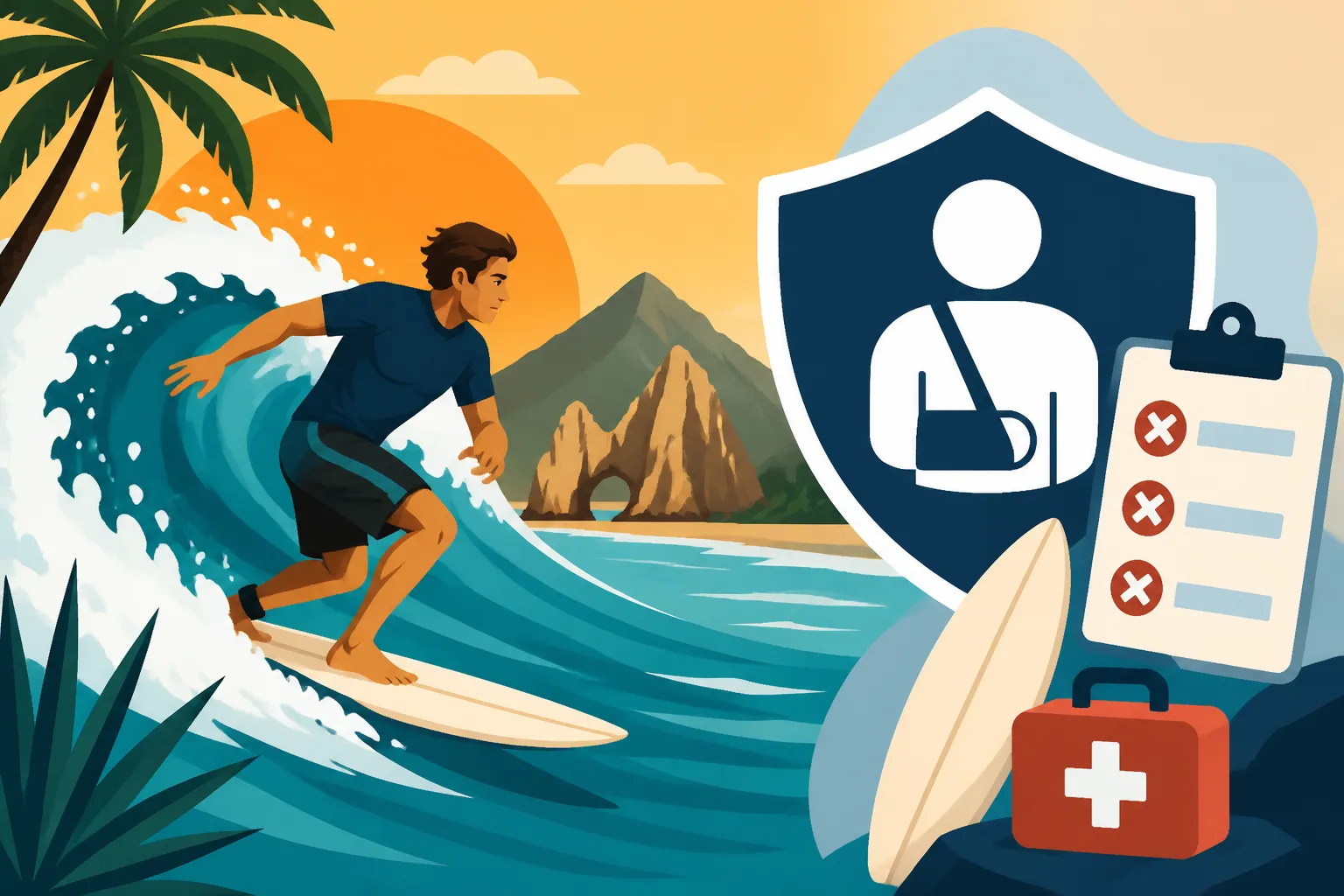
Ah, the Pacific Coast of Mexico! There's nothing quite like the rush of catching a perfect wave under the Mexican sun, is there? But let's be real, paradise has its sharp edges, and when you’re out there chasing barrels, the last thing you want to worry about is what happens if that barrel decides to introduce you a little too intimately to a reef or your own board. Getting injured while surfing can be a terrifying prospect, especially far from home, and figuring out your medical coverage in a foreign country can be a nightmare. This guide is here to cut through the confusion, lay out the realities of surfing in Mexico, and introduce you to a smart solution for staying covered, so you can focus on the waves, not the "what ifs."
Disclosure: This post may contain affiliate links. We may earn a commission at no extra cost to you if you make a purchase through these links. Read full disclosure.
The Thrill and the Realities of Surfing Mexico's Pacific Coast
Mexico’s Pacific coastline is a magnet for surfers from around the globe, and for good reason. From the legendary breaks to the vibrant surf towns, it offers an incredible experience. But with that thrill comes an inherent risk, and it’s vital to understand what you’re getting into before you paddle out.
Popular Surf Spots and Their Unique Challenges
When we talk about surfing on Mexico's Pacific Coast, a few names immediately come to mind. First and foremost, you have Puerto Escondido in Oaxaca, home to the infamous Mexican Pipeline. This place is not for the faint of heart; its powerful, hollow beach breaks are renowned for their size and intensity, often described as a big wave spot. While exhilarating, these waves demand respect and advanced skills, and they can deliver serious wipeouts. Injuries here aren't just minor scrapes; they can be significant, sometimes involving broken bones or head trauma from the sheer force of the water or contact with the sandy bottom during a heavy pound.
Then there’s Sayulita, further north in Nayarit, a charming Pueblo Mágico that's become a beloved spot for beginners and longboarders. The waves here are generally gentler, making it a fantastic place to learn. However, even smaller waves carry risks. The crowded lineup means an increased chance of collision with other surfers or boards. Plus, the rocky bottom in some areas can lead to cuts and scrapes if you're not careful. It’s a common misconception that easier waves mean no risk – tell that to someone who just had their first board-to-head encounter!
Further north, Baja California Sur offers a different kind of surf safari, with spots like Cerritos and Scorpion Bay. These breaks can range from mellow, long point breaks perfect for cruising to more challenging waves during specific swells. The remote nature of some Baja surf camps means that medical facilities might be a long drive away, making emergency response times a serious consideration. Even a simple twisted ankle in a remote area can become a major ordeal if you're unprepared.
In regions like Guerrero, you'll find spots like Troncones and Saladita, known for their long, peeling waves, especially popular with longboarders. These areas often have reef breaks, meaning if you get swept over or caught inside, you could be dealing with sharp coral or rocks. It’s a constant dance between the beauty of the wave and the potential hazards lurking beneath the surface. Each spot, while offering its own unique flavor of surf, comes with its own set of challenges, and it’s never just about riding the wave; it’s about understanding the environment and your own limits.
Common Surfing Injuries and Medical Realities in Mexico
Surfing, by its very nature, exposes you to a range of potential injuries. In Mexico, where many popular surf spots are in smaller towns or more remote areas, the medical realities can be quite different from what you might be used to at home. The most common injuries we see amongst surfers include nasty cuts and lacerations from fins, boards, or sharp coral, particularly if you’re riding reef breaks. These cuts can get infected quickly in a warm, humid climate if not properly cleaned and treated. We also frequently hear about sprains, strains, and dislocations, especially in shoulders, knees, and ankles, from awkward falls or being tossed around by powerful waves.
More serious incidents can involve concussions or head injuries from being hit by your own board or colliding with another surfer. And let's not forget the "surfer's ear," a condition caused by prolonged exposure to cold water and wind, though less common in Mexico's warm waters. Marine life encounters, though rare, can also lead to stings from jellyfish or sea urchin punctures, which, while not usually life-threatening, can be incredibly painful and require immediate attention.
The infrastructure in many Mexican surf towns, while charming, often means that readily available, high-quality medical care can be limited. You might find small local clinics or pharmacies, but for anything beyond a basic wound cleaning or pain relief, you'll likely need to travel to a larger city. For instance, if you're surfing in Puerto Escondido and suffer a serious injury, you might need to be transported to Oaxaca City or even Mexico City for specialized treatment. This is where the logistical nightmare truly begins: who pays for the ambulance, the transfer, the hospital stay, and the potential need for an English-speaking doctor? It's easy to dismiss these concerns when you're dreaming of perfect waves, but the cost of not being prepared can be astronomical. For a deeper dive into preparing for the unexpected, you might find our guide on Medical Emergencies in Mexico: What Expats Should Know and Prepare helpful.
Navigating Injury Cover: Why Standard Travel Insurance Might Not Cut It
Okay, so you’ve got your board, your wax, your endless summer playlist, and you’ve even bought travel insurance. Good for you, right? Well, maybe not as good as you think when it comes to riding those waves. The cold, hard truth is that many standard travel insurance policies have sneaky exclusions that can leave you high and dry when you need coverage the most.
Understanding "Adventure Sports" Exclusions
This is where most surfers get caught out. That cheap travel insurance policy you snagged online likely has a clause, often buried in the fine print, that excludes "adventure sports," "extreme sports," or "high-risk activities." While you might consider surfing a leisurely pastime, insurance companies often view it differently, especially if it involves powerful waves, competitive events, or specific gear. They might not cover injuries sustained while surfing if it's considered outside the scope of "normal" tourist activities.
Imagine this: you've just snapped your ankle at a heavy beach break in Puerto Escondido, and you're in excruciating pain. You call your insurance company, expecting them to arrange for your medical transport and cover your hospital bill. Instead, you hear, "Sorry, sir/ma'am, surfing is listed as an excluded activity in your policy. You're not covered." The frustration and panic that would set in are unimaginable. This isn't just about professional surfers; even a casual dip into moderate waves can fall under these exclusions. It’s imperative to scrutinize your policy document, even for something as seemingly simple as finding an English-speaking doctor if you're hurt. Our guide on Finding English-Speaking Doctors and Specialists in Mexico can give you insights into that challenge.
The devil is truly in the details. Some policies might cover surfing up to a certain height of wave, or only if you’re not taking lessons, or only if you’re not in a competition. It’s a maze of conditions designed to protect the insurer, not necessarily you. This is why relying on a generic policy for your epic surf adventure in Mexico is a gamble you probably don't want to take.
The Importance of Specialized Travel Insurance for Surfers
Given the common exclusions, it becomes abundantly clear that if you plan on catching waves on Mexico’s Pacific Coast, you absolutely need specialized travel insurance. This isn't an optional extra; it's a non-negotiable part of your packing list, just as essential as your leash and board shorts. Specialized policies or those with specific add-ons for adventure sports are designed to cover activities like surfing, giving you peace of mind that if you do encounter a reef or your board has an argument with your head, you'll have medical support.
This is precisely where solutions like SafetyWing come into their own. They understand the lifestyle of digital nomads and travelers who don't just sit on the beach but actively engage in adventures. SafetyWing is specifically crafted to include coverage for many adventure sports, including recreational surfing, right out of the box. You don't have to jump through hoops or pay exorbitant premiums for an "extreme sports" rider that might not even fully cover your specific activity. It's designed for flexibility, ease of use, and, most importantly, for those of us who live life a little more actively. Choosing the right insurance is critical, and understanding the differences between options can literally save you thousands, if not more. We highly recommend reviewing our comprehensive guide on Health Insurance in Mexico: How Expats Can Get Coverage (2027) to compare options thoroughly.
SafetyWing's Approach to Surfing Injuries: What's Covered and What's Not
When you're out there, just you and the ocean, the last thing you want clouding your mind is "What if I wipe out and need stitches?" That's precisely why understanding your insurance coverage, particularly from providers like SafetyWing, is so crucial. SafetyWing aims to provide a robust safety net for the adventurous spirit, including those who find their bliss on a surfboard.
Key Coverage Aspects for Surfing Accidents
One of the biggest reliefs for surfers looking at SafetyWing is that recreational surfing is generally included in their standard travel medical insurance. This means that if you’re catching waves for fun and accidentally injure yourself, the policy can kick in to cover eligible medical expenses. This includes costs for doctor visits, hospital stays, prescription medications you might need after an injury, and even emergency dental treatment if your pearly whites take a hit.
Let's imagine you’re in Oaxaca, riding a moderate swell, when suddenly an unexpected rogue wave sends you tumbling, and you feel a sharp pain in your arm. You manage to paddle back to shore, and it’s clear your arm is broken. With SafetyWing, you’d contact their emergency assistance line. They could help you navigate getting to the nearest appropriate medical facility, whether that's a local clinic for initial assessment or a hospital in a larger city for X-rays and setting the bone. Importantly, SafetyWing also covers emergency medical evacuation, which is a significant factor in more remote surf spots. If your injury is severe enough that local facilities can't handle it, they could arrange for your transport to a place that can, potentially even out of the country if medically necessary. This is a game-changer when you're far from high-tech medical centers. The ease of filing claims online and the global coverage of SafetyWing mean less hassle when you're already dealing with an injury. It really gives you that much-needed peace of mind to truly enjoy the waves.
Policy Exclusions and Limitations for Surfing Activities
While SafetyWing is a fantastic option for most recreational surfers, it’s not a blank check for every scenario. It’s vital to understand the exclusions and limitations, as with any insurance policy. The primary exclusion for surfers typically revolves around professional activities. If you're a professional surfer participating in contests, training for competitions, or earning an income directly from high-risk surfing, your injuries might not be covered. This distinction between "recreational" and "professional" is crucial. For example, if you're competing in the annual Puerto Escondido Challenge, that's likely considered professional activity. But if you're simply enjoying the waves with friends, you're usually good to go.
Another common limitation across many travel insurance policies, including SafetyWing, involves activities where helmets or safety equipment are universally recommended but you choose not to use them. While helmets aren’t standard for all forms of surfing, if you were, for instance, attempting big wave surfing where specialized safety gear is the norm, and you forgo it, coverage might be affected. Pre-existing conditions are also typically excluded unless you've purchased specific add-on coverage. So, if you have a chronic shoulder issue and injure it further while surfing, that might fall under the pre-existing condition clause.
It’s always a smart move to read the specific wording of your SafetyWing policy before you travel. Understand what your chosen plan covers, the maximum payout limits, and any deductibles. No one likes sifting through policy documents, but a few minutes spent doing so can save you immense stress and financial burden later. For general information on healthcare options in the country, our guide to Healthcare in Mexico: Complete Guide for Expats (Public vs Private) offers a broader perspective.
Here’s a quick overview contrasting typical travel insurance with adventure-friendly options like SafetyWing:
| Feature | Standard Travel Insurance | Adventure-Friendly Insurance (e.g., SafetyWing) |
|---|---|---|
| Recreational Surfing | Often explicitly excluded or subject to strict conditions. | Generally included, designed for active travelers and nomads. |
| Professional Surfing | Almost always excluded. | Typically excluded, focuses on recreational activities. |
| Medical Evacuation | May be included, but can be limited to non-adventure injuries. | Strong emphasis on emergency medical evacuation, including for adventure sports injuries. |
| Emergency Medical Care | Covers general illness/injury, but exclusions apply for risky activities. | Covers medical treatment for eligible injuries sustained during covered adventure sports. |
| Coverage Area | Varies by policy, usually geographically specific. | Global coverage, ideal for those moving between countries. |
| Ease of Use/Flexibility | Often designed for one-off trips; less flexible for long-term travel. | Designed for long-term travelers and digital nomads; easy to extend/manage online. |
| Claim Process | Can be cumbersome, especially if exclusions are at play. | Streamlined online claim process, geared towards frequent travelers. |
| Cost | Can seem cheaper upfront, but hidden exclusions negate value. | Transparent pricing, excellent value for comprehensive adventure coverage. |
Practical Steps for a Safer Surf Trip and Injury Preparedness
Okay, so you’ve got the lowdown on insurance. Now let's talk about the practical side of staying safe and being prepared for the inevitable bumps and bruises that come with chasing waves. It’s not just about having a policy like SafetyWing; it’s about doing everything you can to minimize risk in the first place.
Before You Go: Research and Preparation
The best way to deal with a surfing injury is to avoid it entirely. While not always possible, thorough preparation significantly reduces your risk. Firstly, do your homework on the specific surf breaks you plan to visit. Understand the wave type, local currents, potential hazards like rocks or reefs, and peak season conditions. Websites like Surfline or local surf reports are your friends. If you're new to a spot, consider hiring a local surf guide or taking a lesson from a reputable surf school. They know the ins and outs, where to sit in the lineup, and what to watch out for. This isn't just for beginners; even experienced surfers benefit from local knowledge.
Secondly, assess your own fitness level and surfing ability honestly. Don't paddle out into conditions that are beyond your skill set. Mexican waves can be powerful, and it's better to err on the side of caution. Get yourself in good physical shape before your trip, focusing on core strength, swimming endurance, and flexibility. And while we're talking preparation, make sure you pack a comprehensive Building a First Aid Kit: Essential Medical Supplies for Expats in Mexico. Basic items for cuts, scrapes, and sprains can make a huge difference in those initial moments after an injury. Finally, and this is crucial, reconfirm your adventure sports coverage with SafetyWing (or your chosen provider) before you even leave home. Understand your deductible and what steps to take if you need to make a claim. This proactive approach will save you stress and potential financial headaches later.
On the Ground: Staying Safe and What to Do If Injured
Once you're actually in Mexico and heading to the beach, local knowledge and awareness are your best assets. Always observe the waves for a while before paddling out. Look for rip currents, watch how other surfers navigate the break, and identify entry and exit points. A buddy system is always a good idea, especially in less crowded spots. Having someone else with you who knows your skill level and can help if something goes wrong is invaluable. Be respectful of local surfers and the lineup etiquette; this not only makes for a better session but can also prevent collisions. And while we’re on the topic of safety, remember to be mindful of your surroundings not just in the water but on land too. You might find our tips on Is It Safe to Drive at Night in Mexico? Road Safety Tips for Expats useful for ground travel.
If, despite all your precautions, you do get injured, here's what to do:
- Assess and Stabilize: If it's a minor cut or scrape, clean it immediately with fresh water and apply antiseptic from your first aid kit. For anything more serious, try to stabilize the injured area (e.g., splint a suspected fracture) and get to shore or out of the water safely.
- Seek Immediate Help: Don't hesitate. Ask a fellow surfer or someone on the beach for assistance. If it's an emergency, you'll need to know how to call an ambulance in Mexico. You can dial 911 for emergencies, but be aware that response times and English-speaking operators can vary. For non-life-threatening but urgent issues, a local taxi or ride-share might be quicker to get you to a clinic. For more details on emergency services, check out our article on Calling an Ambulance in Mexico: How Emergency Services Operate.
- Contact Your Insurance Provider: As soon as you are safe and able, contact SafetyWing’s emergency assistance number. They are there to guide you through the process, help locate appropriate medical facilities, and initiate the claims process. They can also assist with language barriers and advise on direct billing if available. It's much easier to deal with this when you're lucid than waiting until you're already in a hospital bed.
- Keep Records: Document everything. Take photos of your injury, keep all medical receipts, doctor's notes, and contact information for any witnesses. This information will be crucial when you file your claim with SafetyWing.
- Understand Local Medical Options: Many surf towns have small consultorios (doctor's offices) attached to pharmacies like Farmacias Similares, which can be great for minor issues. For anything serious, you'll want a proper clinic or hospital. Our guide on Pharmacies in Mexico: How to Get Medications (OTC vs Prescription) can also help you navigate getting necessary post-injury medication.
Being prepared with SafetyWing and following these practical steps means you can hit Mexico's incredible Pacific waves with confidence, knowing you've got a plan for both the thrill and the spills.
Disclaimer
Please remember that this article provides general information and guidance based on typical expat and tourist experiences in Mexico. Immigration laws, insurance policies, and local regulations can change rapidly. Always consult with official sources, immigration attorneys, insurance providers like SafetyWing, and other relevant professionals for the most accurate and up-to-date information pertaining to your specific situation. Your safety and legal compliance are paramount.