Building a First Aid Kit: Essential Medical Supplies for Expats in Mexico
Slicing your hand open in a remote Mexican beach town and discovering the local convenience store only sells stale bandages is a terrifying wake-up call. I once spent a panicked midnight in Oaxaca bleeding through a towel because my home medical cabinet was completely empty. This guide explains how to build a comprehensive, life-saving first aid kit tailored to the unique realities of living in Mexico.
Disclosure: This post may contain affiliate links. We may earn a commission at no extra cost to you if you make a purchase through these links. Read full disclosure.
The Reality of Emergency Preparedness in Mexico
When moving to Mexico, it is incredibly easy to be lulled into a false sense of security by the sheer number of pharmacies on every corner. While basic medical care is highly accessible in urban centers, managing a sudden trauma or a severe illness requires proactive, meticulous preparation that goes far beyond knowing the location of your nearest clinic.
Why You Cannot Rely Solely on Local Pharmacies
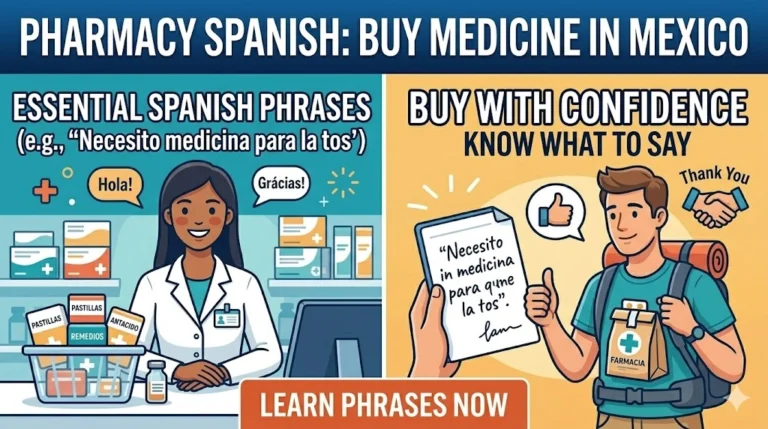
The most common mistake expats make is assuming that a Mexican pharmacy operates exactly like a massive CVS or Walgreens back home. In the United States or Canada, you can walk into a pharmacy at 2:00 AM, browse aisles of highly specialized trauma care products, read the labels in English, and purchase exactly what you need. In Mexico, the physical layout and operational model of a farmacia are fundamentally different. The vast majority of medical supplies, including basic over-the-counter medications, are kept securely behind a glass counter. You cannot browse; you must approach the clerk and verbally request exactly what you need in Spanish.
When you are actively bleeding, dealing with a screaming child, or suffering from a blinding migraine, trying to remember the Spanish translation for “hydrocolloid blister bandage” or “antibiotic ointment” is a nightmare. Furthermore, while local pharmacies are excellent for dispensing generic pills and basic gauze, they frequently do not stock advanced, clinical-grade first aid supplies. Items like medical superglue, advanced clotting sponges, or specialized burn dressings are incredibly difficult to source on short notice, especially outside of massive metropolitan hospitals.
To bridge this critical supply gap, veteran expats do not rely on local corner stores for their serious trauma gear. Instead, they proactively build their kits by ordering advanced medical supplies, specialized ointments, and premium holistic healing salves through iHerb. Because iHerb maintains a massive global inventory and ships reliably directly to residential addresses in Mexico, you can curate a highly sophisticated first aid kit without hunting through dozens of local stores. When building this kit, paying for your imported iHerb haul is best managed using a multi-currency account like Wise, which converts your home currency to Mexican Pesos at the mid-market rate, entirely bypassing the exorbitant foreign transaction fees charged by traditional banks. To understand how these local retail environments operate day-to-day, review our guide on Pharmacies in Mexico: How to Get Medications (OTC vs Prescription).
The Geographic Challenges of Expat Hubs
The need for a robust home first aid kit increases exponentially depending on where you choose to live. Many of the most idyllic, highly sought-after expat destinations—such as the remote surfing villages of Oaxaca, the coastal towns of the Baja peninsula, or the quiet mountain enclaves around Lake Chapala—suffer from severe infrastructural deficits regarding emergency medical transport.
In major cities like Guadalajara or Monterrey, a private ambulance might reach you in fifteen minutes. In a remote coastal town, an ambulance could take over an hour to navigate unpaved, winding jungle roads. In the medical world, the “golden hour” refers to the critical sixty minutes immediately following a severe trauma where rapid intervention prevents death or permanent disability. If you suffer a severe laceration from a kitchen accident or a crush injury from a falling tree branch, you are your own first responder. You must possess the supplies to stop massive arterial bleeding, splint a broken bone, and prevent systemic shock while you wait for transport.
This geographic isolation means your first aid kit is not just for scraped knees; it is a vital life-support bridge. If a localized emergency escalates beyond your ability to manage it with bandages and splints, your next immediate step is coordinating a medical evacuation. This is where holding a premium international health insurance policy like Cigna Global becomes the most important asset you own. A comprehensive Cigna Global plan provides 24/7 bilingual emergency coordination, organizing private ground transport or even a medical airlift to an apex hospital when the local rural clinic simply cannot save your life. For a deeper dive into preparing for these worst-case scenarios, read Medical Emergencies in Mexico: What Expats Should Know and Prepare.
Essential Wound Care and Trauma Supplies
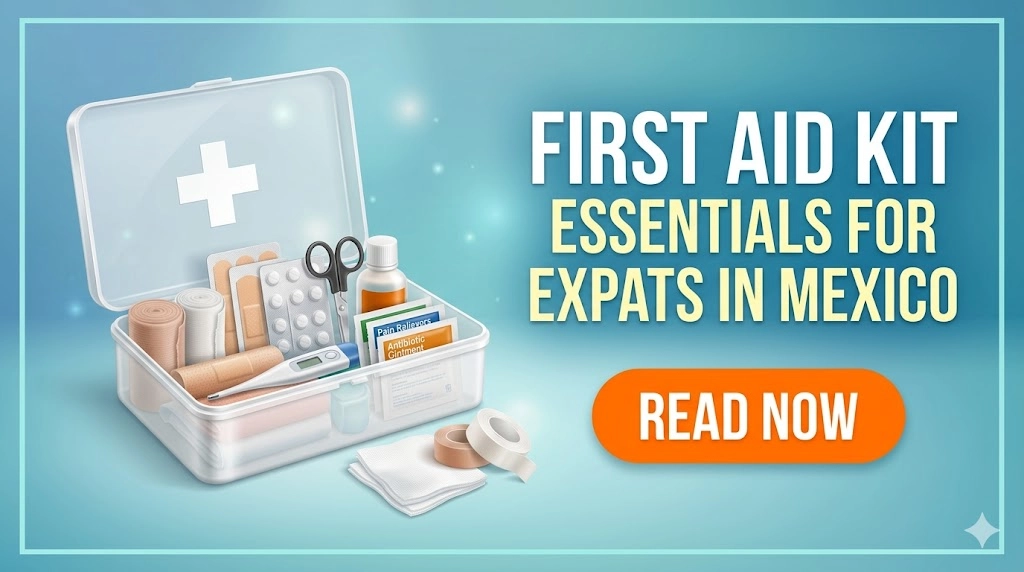
The physical environment in Mexico—from jagged coastal rocks to notoriously uneven colonial sidewalks—presents constant, unique hazards. Your wound care kit must be aggressively stocked to handle everything from minor scrapes to deep, gaping lacerations that require immediate closure.
Disinfectants and Sterile Dressings
Proper wound sterilization in Mexico is critical due to the elevated risk of bacterial infections in tropical and humid climates. You must never wash an open wound with local tap water, as it can introduce severe pathogens directly into your bloodstream. Your kit must contain multiple bottles of sterile saline solution specifically for wound irrigation.
When shopping locally to build your kit, you must know the exact Spanish terminology. You will need hydrogen peroxide (agua oxigenada), isopropyl alcohol (alcohol isopropílico), and a high-quality iodine solution (isodine or mertiolate). For dressings, stock up on sterile gauze pads (gasas estériles) and hypoallergenic surgical tape (cinta microporo). While these basic items are cheap and readily available locally, standard Mexican pharmacies often lack advanced, non-stick silicone dressings that are crucial for healing without tearing newly formed tissue.
To ensure you have the best possible healing outcomes, expats frequently supplement their basic local supplies by ordering premium, hospital-grade hydrocolloid bandages and silver-infused antimicrobial dressings via iHerb. These advanced supplies speed up recovery and severely reduce the risk of tropical scarring. When outfitting your medical cabinet, using your Wise debit card to pay for these online iHerb orders ensures your budget is protected from hidden banking markups, allowing you to stock up generously without overspending.
Managing Severe Cuts and Sprains
Cobblestone streets are the nemesis of every newly arrived expat. Severe ankle sprains, twisted knees, and harsh abrasions from falling on uneven banquetas (sidewalks) are daily occurrences. Your kit must contain multiple heavy-duty ace bandages (vendas elásticas) to provide immediate compression and stabilization for joint injuries.
For deep cuts that occur when you are too far from a clinic to receive immediate stitches, butterfly closures (Steri-Strips) are absolutely non-negotiable. These adhesive strips can pull the edges of a gaping wound together, stopping the bleeding and protecting the tissue until you can reach a surgeon. You should also include instant chemical cold packs, which are surprisingly difficult to find in standard Mexican supermarkets, to immediately reduce massive swelling from blunt force trauma.
If a severe sprain refuses to bear weight, or a cut requires professional suturing, your home kit has done its job, and you must escalate to a local private clinic. Private clinics in Mexico operate purely on a cash-or-credit basis and require upfront payment before they will even triage your injury. Having instant access to liquid funds via your Wise account guarantees you can pay the emergency room deposit immediately in local pesos, completely bypassing the agonizing delays caused by foreign credit card fraud blocks. To understand what these out-of-pocket urgent care visits typically cost, consult Healthcare Costs in Mexico: Doctor Visits, Hospital Stays, and Surgery Expenses.
Gastrointestinal and Waterborne Illness Remedies
No first aid kit in Mexico is complete without a massive, dedicated section for gastrointestinal distress. Adjusting to the local microbiome is a harsh, inevitable reality of the expat experience, and you must be prepared to combat severe food-borne pathogens instantly.
Tackling Traveler’s Diarrhea and Food Poisoning
Colloquially known as “Montezuma’s Revenge,” traveler’s diarrhea can strike with terrifying speed, leaving you entirely incapacitated. Your kit must be heavily stocked with Loperamide (Imodium) to temporarily halt severe symptoms if you are forced to travel, and Bismuth subsalicylate (Pepto Bismol) to soothe severe stomach cramping and nausea. These are easily acquired over the counter in Mexico.
However, if your symptoms persist for more than 48 hours, or are accompanied by a high fever, you likely have a severe bacterial or parasitic infection that requires targeted pharmaceutical intervention. In Mexico, antibiotics are strictly classified as Fraction IV medications and cannot be purchased without a formal, barcoded prescription from a licensed doctor. You cannot simply pull a Z-Pak out of your kit without a physician’s oversight. To understand the exact legalities of this system, read Over-the-Counter Medications: What Can You Get in Mexico Without a Prescription?.
When a severe gastrointestinal infection strikes and you are too weak to leave your bathroom to visit a clinic, this is where your Cigna Global health insurance policy proves invaluable. Many premium Cigna Global plans include 24/7 access to secure telemedicine portals. You can consult with an English-speaking doctor via video call from your bed, have them diagnose your symptoms, and issue a digital prescription for the necessary antibiotics that a local pharmacy can deliver directly to your door.
Rehydration and Probiotic Support
The actual killer in cases of severe food poisoning or tropical illness is not the bacteria itself; it is profound dehydration. Sweating in the Mexican heat while losing fluids to an illness will induce systemic shock rapidly. You must keep powdered oral rehydration salts (Vida Suero Oral) or bottles of clinical electrolytes (like the local brand Electrolit) constantly stocked in your pantry. Sugary sports drinks are entirely insufficient for medical rehydration.
Once the acute infection has passed and the antibiotics have done their job, your internal gut biome will be completely decimated. Rebuilding this flora is essential to prevent chronic stomach issues during your residency. Unfortunately, the probiotic supplements available in standard Mexican pharmacies are usually very low-tier, single-strain formulations that barely survive stomach acid.
To genuinely repair your digestive tract, you need clinical-strength, multi-strain probiotics and high-quality digestive enzymes. Expats heavily rely on iHerb to source these premium gut-health supplements, as iHerb provides access to refrigerated, high-CFU count formulas that simply do not exist in the local Mexican market. Ordering these specialized digestive aids and paying efficiently with Wise ensures your body recovers fully and rapidly, allowing you to return to enjoying the incredible local cuisine without fear. For a comprehensive look at avoiding these illnesses entirely, review Traveler’s Diarrhea (Montezuma’s Revenge): Prevention and Treatment.
Environmental and Climate-Specific Additions
The Mexican climate, ranging from blistering high-altitude sun in the central highlands to humid, insect-heavy jungles on the coasts, demands highly specific additions to your medical arsenal that go far beyond standard bandages.
Sun Exposure and Burn Treatments
The UV index in Mexico is frequently extreme. Severe, second-degree sunburns and sun poisoning are rampant among expats who underestimate the intensity of the tropical sun. Standard local supermarkets sell vibrant green, alcohol-laden aloe gels that often contain artificial fragrances which severely irritate already damaged skin.
Your first aid kit must contain 100% pure, organic aloe vera and clinical-grade burn salves containing silver sulfadiazine to prevent infection in blistering skin. Because finding unadulterated, purely organic burn care products locally can involve hunting through dozens of specialty stores, proactively ordering high-quality, organic aloe and specialized thermal burn dressings through iHerb is the smartest preventative strategy.
If a burn is not from the sun, but from a severe household accident—such as a kitchen grease fire or a motorcycle exhaust pipe—a home kit is entirely insufficient. Deep, partial-thickness thermal burns require immediate, professional debridement in a sterile hospital environment to prevent massive systemic infection. In these terrifying moments, presenting your Cigna Global insurance card at a top-tier private hospital ensures you bypass the crowded public burn wards and receive immediate, world-class surgical care in a private, sterile suite.
Insect Bites, Stings, and Allergy Management
Mexico is home to a vast array of aggressive insects. Depending on your region, you will face mosquitoes carrying Dengue fever, highly venomous scorpions (alacranes), and various spiders. Your kit must contain strong, topical hydrocortisone creams and oral antihistamines like Loratadine (Loratadina) or Diphenhydramine (Difenhidramina) to manage aggressive local swelling and intense itching.
For expats with severe, life-threatening allergies, managing anaphylaxis is a massive logistical hurdle. Epinephrine auto-injectors (EpiPens) are notoriously difficult to source in Mexico, and they frequently run out of stock even in major corporate pharmacies. If you rely on an EpiPen, you must bring a substantial backup supply from your home country, and you must establish a relationship with a local private specialist to help you source replacements locally. To navigate the process of finding these specialists, read Finding English-Speaking Doctors and Specialists in Mexico.
If you suffer a severe scorpion sting or accidentally consume a hidden allergen, and your throat begins to close, your home antihistamines are merely a tool to buy you ten minutes of breathing time while you rush to the emergency room. Severe anaphylactic shock requires immediate intravenous epinephrine and intubation. Having a robust Cigna Global policy means you do not hesitate to call a private ambulance or rush to the most expensive, highly equipped private hospital in your city, knowing your emergency stabilization and ICU stay are completely financially covered.
Prescription Management and Specialized Tools
A true first aid kit is not just reactive; it is proactively designed to monitor your baseline health and protect the essential maintenance medications you literally cannot live without.
Organizing Daily and Emergency Prescriptions
The coastal humidity and extreme heat fluctuations in Mexico can rapidly degrade sensitive pharmaceutical compounds. If you live in an area prone to rolling power outages where your air conditioning frequently fails, you cannot store your life-saving heart medication or insulin in a hot, steamy bathroom cabinet. You must invest in insulated, temperature-controlled storage bags for your most critical prescriptions.
Furthermore, you should always maintain an absolute minimum of a 30-day emergency backup supply of your daily medications. Supply chain shortages in Mexican pharmacies do occur, and a sudden hurricane can cut your town off from delivery trucks for weeks. While many medications are easily accessible over the counter, managing complex, multi-drug protocols requires serious oversight. For a deep dive into structuring this aspect of your life abroad, consult Managing Chronic Illness in Mexico: Access to Medication and Specialists.
If your specific chronic condition requires highly specialized botanical support or targeted nutritional therapy that the local allopathic pharmacies do not provide, you can seamlessly integrate those alternative therapies by ordering your specialized supplements through iHerb. Keeping your wellness routine consistent is vital, and paying for these imported iHerb supplements using the mid-market exchange rate provided by Wise protects your monthly healthcare budget from invisible banking attrition.
Diagnostic Tools to Keep at Home
The modern first aid kit must contain clinical diagnostic tools. You must own a high-quality digital thermometer, an automatic blood pressure cuff, and a fingertip pulse oximeter.
These tools are not just for your own peace of mind; they are legally and clinically vital if you are utilizing telemedicine. When you connect with a private doctor through your Cigna Global digital health portal because you are experiencing severe chest tightness or a high fever, the very first thing the doctor will ask for is your exact blood pressure, your oxygen saturation, and your temperature. If you cannot provide these metrics accurately, the doctor cannot safely triage you remotely and will force you to go to the emergency room.
Purchasing clinical-grade, highly accurate diagnostic tools online and paying for them securely with your Wise account ensures you have the exact medical data required to advocate for yourself effectively when speaking to medical professionals, whether in person or across a digital screen.
Financial Preparedness for Medical Escalations
The final, and arguably most important, component of your first aid kit is not a bandage or a pill; it is your optimized financial infrastructure. When your physical kit reaches its limit, your ability to pay for escalating care determines your survival.
Having Immediate Funds for Clinics
If a severe laceration requires stitches, or a gastrointestinal bug requires an IV drip, you must transition from your living room to a private Mexican clinic. The Mexican private healthcare sector operates entirely as a free market, and these clinics demand upfront, out-of-pocket payment before a doctor will even look at you.
If you attempt to hand the clinic receptionist a debit card from a small credit union in Ohio, the transaction will almost certainly be blocked for international fraud, leaving you bleeding in the waiting room while you wait on hold with your bank. Savvy expats prevent this terror by keeping emergency medical funds loaded into their Wise multi-currency accounts. By utilizing Wise, you can instantly convert your home savings into Mexican Pesos and pay the clinic’s terminal directly with your Wise card, ensuring your urgent care is never delayed by bureaucratic banking friction. To understand the broader differences between public and private urgent care protocols, review Public Healthcare in Mexico: IMSS and IMSS Bienestar Explained for Expats.
The Role of Catastrophic Insurance
Your home first aid kit is designed to handle the first ten minutes of an emergency. Your emergency cash reserves are designed to handle the urgent care clinic. But if the doctor at that clinic determines your appendix has ruptured or you have suffered a massive stroke, you require catastrophic intervention.
This is where your Cigna Global international health insurance policy becomes the ultimate safety net. A premium global policy shields you from the devastating reality of a $50,000 USD emergency surgery bill. It guarantees that you can bypass the crowded, underfunded public IMSS hospitals and secure a bed in a pristine, highly advanced private intensive care unit. For an extensive comparative analysis on why relying solely on local safety nets is a massive gamble, you must read Choosing Private Health Insurance: Local Mexican Plans vs International Coverage. By combining a meticulously stocked home kit, optimized local payment methods, and premium global insurance, you guarantee your health and safety in your new Mexican home.
| First Aid Kit Category | Essential Items to Include | Best Sourcing Method |
| Wound Care & Trauma | Hydrogen peroxide, Iodine, Gauze, Butterfly closures | Local Pharmacy |
| Advanced Dressings | Hydrocolloid bandages, Silver-infused pads, Burn gels | iHerb (Imported) |
| Gastrointestinal | Loperamide, Bismuth subsalicylate, Rehydration salts | Local Pharmacy |
| Gut Restoration | High-CFU Multi-strain Probiotics, Digestive Enzymes | iHerb (Imported) |
| Allergy & Bites | Antihistamines, Hydrocortisone, EpiPens (if needed) | Local Pharmacy / Specialist |
| Diagnostic Tools | Pulse oximeter, Blood pressure cuff, Digital thermometer | Online / Pharmacy |
References
Primary sources (official)
- Cruz Roja Mexicana – Prevención y Primeros Auxilios: https://www.cruzrojamexicana.org.mx/
- Centers for Disease Control and Prevention (CDC) – Travelers’ Health: Mexico Pack List: https://wwwnc.cdc.gov/travel/destinations/traveler/none/mexico
Other helpful sources
- Mexperience – Guide to Health Care Services and Emergencies in Mexico: https://www.mexperience.com/lifestyle/healthcare/
- International Citizens Insurance – Healthcare System and Emergency Transport in Mexico: https://www.internationalinsurance.com/countries/mexico/healthcare/
Disclaimer
The information provided in this guide is for educational and informational purposes only and does not constitute formal medical, legal, or financial advice. The availability of specific medical supplies, the legal classification of over-the-counter medications by COFEPRIS, and the operational protocols of private clinics in Mexico are subject to frequent changes. Always consult directly with a board-certified Mexican physician regarding your specific health condition, and verify all emergency evacuation and coverage protocols directly with your international insurance provider before an emergency strikes.