Managing Diabetes or Other Chronic Conditions: Availability of Supplies in Mexico
Managing a chronic condition like diabetes, hypertension, or a thyroid disorder in Mexico is entirely possible, but it requires abandoning assumptions about how medical supply chains work. I vividly remember the absolute panic of an expat friend who realized her specific brand of glucose test strips wasn’t sold anywhere in our coastal town, leaving her scrambling to safely monitor her blood sugar. This guide breaks down exactly what you can expect to find on local pharmacy shelves, what you need to import, and how to build a bulletproof strategy for maintaining your health abroad.
Disclosure: This post may contain affiliate links. We may earn a commission at no extra cost to you if you make a purchase through these links. Read full disclosure.
The Reality of Mexican Pharmacies for Chronic Care
To successfully manage a chronic illness in Mexico, you must first understand the landscape of local pharmacies (farmacias). The supply chain here is highly regionalized, meaning what is readily available in a massive Mexico City hospital pharmacy might be completely unheard of in a small Oaxacan beach town.
Chain Pharmacies vs. Independent Drugstores
For chronic condition management, you must rely on massive national chains like Farmacias del Ahorro, Farmacias San Pablo, and Farmacias Guadalajara. These corporate behemoths have the sophisticated cold-chain logistics required to safely transport and store temperature-sensitive medications like insulin and biologic injections.
Small, independent corner pharmacies are fantastic for grabbing a quick bottle of ibuprofen or basic antibiotics, but you should never rely on them for your daily maintenance medications. They often lack backup generators, meaning a routine summer power outage could secretly compromise their entire inventory of refrigerated medications.
To fully grasp the nuances of interacting with these retail health hubs, I highly recommend reviewing our comprehensive guide on Pharmacies in Mexico: How to Get Medications (OTC vs Prescription).
Active Ingredients vs. Brand Names
The single biggest hurdle for incoming expats is brand loyalty. The specific North American or European brand name of your blood pressure medication or thyroid pill likely does not exist in Mexico, even if the actual drug is manufactured locally.
You must memorize the Active Pharmaceutical Ingredient (API) of your medications. A Mexican pharmacist organizes their inventory by the chemical compound, not the marketing label. Before crossing the border, look at the fine print on your medicine cabinet bottles and write down the generic chemical names in Spanish.
Managing Diabetes in Mexico: Insulin, CGMs, and Test Strips
Diabetes is incredibly prevalent in Mexico, meaning the medical infrastructure is highly accustomed to treating it. However, the exact tools and brands used to manage the disease locally might differ significantly from what you use back home.
Insulin Availability and Cold Chain Logistics
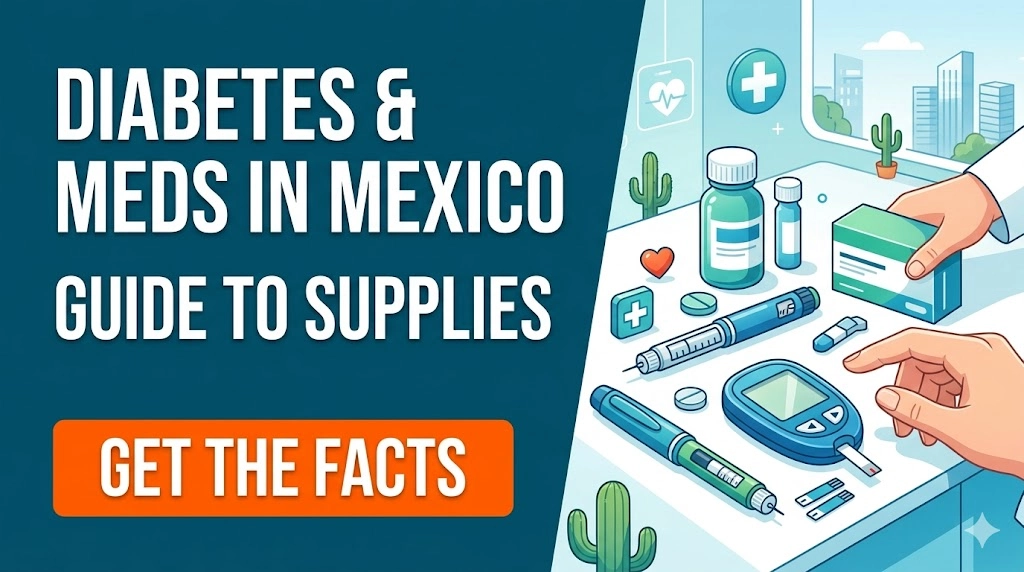
Standard insulins, including regular, NPH, and common analogues like glargine (Lantus) and lispro (Humalog), are widely available at major pharmacy chains. In a surprising twist for many US expats, insulin in Mexico is generally sold over-the-counter (OTC) and does not strictly require a doctor’s prescription, though having one from a local endocrinologist is highly recommended for proper medical records.
The cost of insulin in Mexico is a fraction of what it costs in the United States, often running between $30 and $60 USD a vial depending on the brand and formulation. However, ultra-specific or newly released insulin formulations may take years to enter the Mexican market.
Blood Glucose Meters and Test Strips
This is where many diabetic expats get tripped up. While standard glucometers (like Accu-Chek or OneTouch) are sold in Mexico, the specific models are often regionally locked.
If you bring a glucometer from Canada or the US, you may discover that the local Mexican pharmacies do not stock the exact test strips compatible with your foreign device. The safest strategy is to either bring a massive supply of your home test strips or simply purchase a new, locally supported glucometer for $20 USD at a Farmacias del Ahorro so you can reliably buy compatible strips.
Continuous Glucose Monitors (CGMs) and Insulin Pumps
If you rely on cutting-edge diabetic technology, you must plan meticulously:
- CGMs: The Abbott FreeStyle Libre system is relatively easy to find at premium chains like Farmacias San Pablo or by ordering directly through Abbott’s Mexican website. Dexcom, however, has historically had a much smaller, less reliable footprint in Mexico, and securing sensors locally can be a frustrating hunt.
- Insulin Pumps: Pump therapy (like Omnipod or Medtronic) is not widely utilized in the Mexican public or general private sector. Securing pump supplies (infusion sets, reservoirs) locally is incredibly difficult unless you are working directly with a top-tier endocrinologist in a major city who has specific import channels. Most pump users import their supplies via specialized medical couriers from their home country.
| Diabetic Supply | Local Availability in Mexico | Estimated Cost / Effort |
| Standard Insulin (Lantus, Humalog) | Excellent (at major chains) | Readily available, affordable |
| Basic Glucometers & Strips | Excellent (but models vary) | Requires matching local devices |
| FreeStyle Libre Sensors | Moderate to Good (in cities) | Available, often requires ordering ahead |
| Insulin Pump Supplies (Omnipod, etc.) | Very Poor | High effort; requires importing |
Supporting Your Chronic Condition with Specialized Wellness
Managing a chronic disease isn’t just about securing prescription drugs; it’s about maintaining a strict, holistic lifestyle to prevent flare-ups.
Dietary Supplements and Preventative Care
For diabetics managing neuropathy, or those with autoimmune conditions requiring highly specific dietary supports, local Mexican pharmacies can be a massive letdown. They typically stock standard, sugar-laden multivitamins but severely lack high-quality, targeted nutritional supplements. You will struggle to find clean alpha-lipoic acid for nerve health, high-potency chromium, or diabetic-safe, sugar-free electrolyte complexes.
This is exactly why veteran expats managing chronic illnesses bypass the local supply chain entirely and rely on iHerb. By utilizing iHerb, you can access a massive global catalog of premium, certified dietary supplements, specialized diabetic foot creams, and pure sugar substitutes (like monk fruit or stevia without maltodextrin fillers) that are simply unavailable in rural Mexico. iHerb ships these essential wellness products reliably and directly to your Mexican residential address, ensuring your preventative health routine never misses a beat.
Financial Protection: Insurance for Pre-Existing Conditions
The most dangerous myth in the expat community is that because routine Mexican healthcare is cheap, you can simply “pay out of pocket” for your chronic condition forever.
The Out-of-Pocket Trap
While buying a vial of insulin or a basic blood pressure pill is affordable, the complications of chronic diseases are catastrophically expensive. If your diabetes leads to a severe foot infection requiring surgical intervention, or your hypertension triggers a sudden cardiac event, the local private hospital will ruthlessly demand a cash deposit of $5,000 to $10,000 USD before admitting you to the ICU. To understand how quickly these costs spiral, review Healthcare Costs in Mexico: Doctor Visits, Hospital Stays, and Surgery Expenses.
The Necessity of Premium International Coverage
Local Mexican health insurance plans aggressively underwrite against chronic illnesses. If you apply for a domestic Mexican policy and disclose that you have Type 1 Diabetes or Rheumatoid Arthritis, they will either flatly reject your application or issue a policy that permanently excludes anything related to your pre-existing condition.
This is where securing a premium international policy from Cigna Global becomes a life-saving financial shield. Elite global providers like Cigna Global have the underwriting capacity to cover complex pre-existing conditions (subject to medical review). Furthermore, comprehensive Cigna Global policies often include robust outpatient benefits, meaning they can help cover the ongoing costs of your specialist visits, quarterly HbA1c blood panels, and daily maintenance medications.
More importantly, if your chronic condition triggers a massive emergency, your Cigna Global card grants you immediate, direct-billing access to Mexico’s premier private hospitals, completely bypassing the terrifying cash deposits. For a deeper dive into how to legally protect yourself financially, read Choosing Private Health Insurance: Local Mexican Plans vs International Coverage.
Steps for Ensuring a Seamless Transition
Do not board your flight hoping for the best. Follow this protocol to ensure your medical transition is perfectly secure:
- Stockpile Before You Move: Bring at least a 90-day supply of all your critical medications, test strips, and pump supplies. This gives you a three-month buffer to locate reliable local pharmacies and establish a relationship with a Mexican specialist.
- Translate Your Medical File: Have your current doctor write a comprehensive summary of your condition, including your exact medication dosages using generic chemical names. Translate this document into formal Spanish.
- Locate a Specialist Immediately: Do not wait until you are sick to find a doctor. During your first month in Mexico, book a consultation with a local specialist (endocrinologist, rheumatologist, or cardiologist) simply to establish yourself as a patient and get your local prescriptions written. If you aren’t sure how to find one, review Finding English-Speaking Doctors and Specialists in Mexico.
Managing a chronic condition in Mexico requires meticulous planning, but it shouldn’t stop you from enjoying a vibrant life abroad. By combining local pharmacy savvy, the holistic wellness support of iHerb, and the ironclad financial protection of Cigna Global, you can control your health rather than letting it control you.
References
Primary sources (official)
- Comisión Federal para la Protección contra Riesgos Sanitarios (COFEPRIS): The Mexican federal health authority regulating the import, storage, and retail sale of pharmaceutical products and medical devices like CGMs. https://www.gob.mx/cofepris
- Federación Mexicana de Diabetes, A.C.: The leading national non-profit organization providing resources, clinical guidelines, and advocacy for diabetics living in Mexico. http://fmdiabetes.org/
Other helpful sources
- U.S. Embassy & Consulates: Official guidelines on legally crossing the border with a 90-day supply of personal prescription medications and syringes. https://mx.usembassy.gov/
Disclaimer
The information provided in this guide is for educational, logistical, and informational purposes only and does not constitute formal medical or financial advice. Mexican pharmaceutical regulations, the availability of specific continuous glucose monitors or insulin pumps, and COFEPRIS import rules are subject to frequent and sudden changes. Always consult with a licensed, board-certified Mexican specialist regarding your specific chronic condition, carry a 90-day emergency stockpile of your critical supplies when relocating, and thoroughly verify pre-existing condition coverage limitations directly with your health insurance provider.