ATV, Scooter, and Motorcycle Rentals: Why Travel Policies Often Won’t Pay
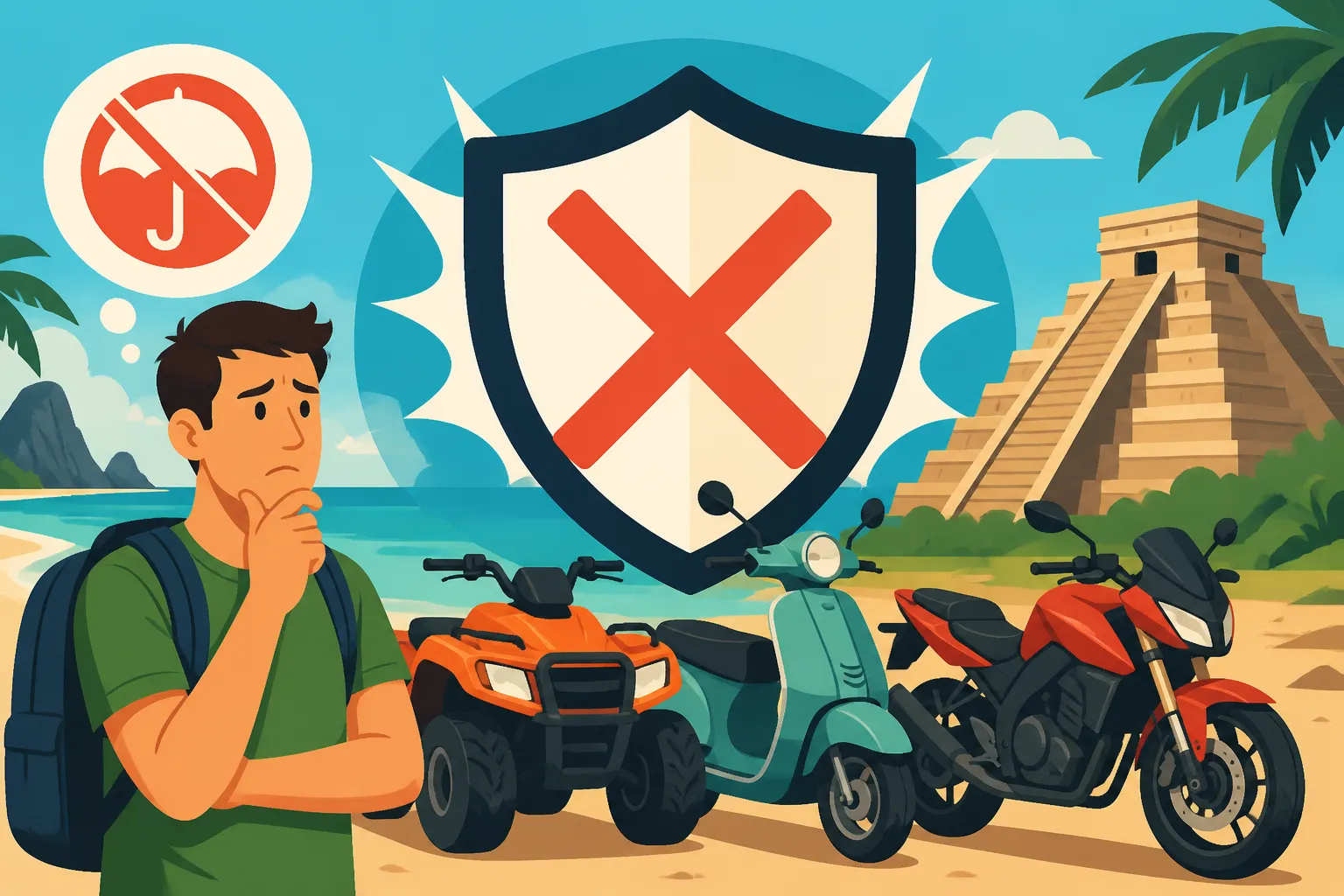
Ah, the siren call of a scooter zipping through a charming Mexican pueblo or an ATV roaring down a jungle path near a pristine beach. It's a fantasy many of us expats and long-term visitors in Mexico have indulged in, dreaming of unbridled freedom and adventure. But here’s the stark reality check from someone who’s seen too many friends get sidelined: that exhilarating ride can quickly turn into a costly nightmare if you're not properly insured. This guide dives deep into why your typical travel insurance often falls short when renting ATVs, scooters, or motorcycles in Mexico, and how policies like SafetyWing can actually offer the lifeline you need.
Disclosure: This post may contain affiliate links. We may earn a commission at no extra cost to you if you make a purchase through these links. Read full disclosure.
The Allure of Two (or Four) Wheels in Mexico – And the Hidden Risks
There’s no denying the magnetic pull of renting a scooter, motorcycle, or ATV in Mexico. Picture yourself cruising along the coastal highway in Quintana Roo, feeling the warm Caribbean breeze, or exploring the winding cobblestone streets of San Miguel de Allende or the bustling Riviera Nayarit on two wheels. It promises independence, an escape from crowded public transport, and the chance to discover hidden gems far from the beaten path. Many expats fall in love with the idea of a simple, breezy way to navigate local towns, run errands, or explore national parks. The low rental prices, especially for a scooter or ATV, make it seem like an absolute no-brainer. But let’s pump the brakes for a moment, shall we? This romanticized vision often clashes head-on with the unvarnished reality of Mexican roads and driving culture.
The Thrill vs. The Reality of Rentals
You see them everywhere, especially in popular tourist spots like Tulum, Playa del Carmen, and Puerto Vallarta: rows of brightly colored scooters and rugged ATVs just waiting to be rented. And let’s be honest, it’s incredibly tempting. The freedom to dart through traffic, park almost anywhere, and feel the wind in your hair is undeniably appealing. It feels like the quintessential Mexican adventure.
However, the reality on the ground is far less idyllic than the Instagram posts suggest. Mexican roads, even seemingly well-maintained ones, can be unpredictable. You’ll encounter everything from unexpected potholes that could swallow a small car to unannounced speed bumps (often unmarked or poorly marked) that can send an unsuspecting rider flying. Loose gravel is common on shoulders and rural roads, creating instant hazards. And then there's the local driving style, which, while often friendly, prioritizes flow over strict adherence to lane markings or right-of-way rules. Drivers might turn without signaling, pull out into traffic unexpectedly, or simply not see a smaller vehicle like a scooter. It's not malicious; it's just a different driving philosophy, and as a foreigner, you’re often at a disadvantage, especially if your Spanish isn't up to par for quick communication or understanding local nuances. It's a world away from the structured driving you might be used to back home.
Common Accidents and Injuries
Given these factors, it’s hardly surprising that accidents involving rental scooters, motorcycles, and ATVs are sadly common. I've personally heard stories from countless expats and tourists who’ve ended up in local clinics or hospitals.
Imagine this scenario: you're riding a scooter on a seemingly calm street in Mérida, heading to a local market. Suddenly, a car turns left from the opposite direction without signaling, expecting you to slow down or anticipate their move. You brake hard, hit a patch of loose sand, and before you know it, you're on the ground, with a scraped knee, a twisted ankle, and a throbbing wrist. Or perhaps you’re on an ATV tour near a cenote, enjoying the rugged terrain, when the vehicle hits a hidden rock, throws you off, and you land awkwardly.
Common injuries range from the "minor" – deep road rash, sprains, and cuts – to the severely life-altering. Fractures are frequent, especially to wrists, collarbones, and legs. Head injuries, even with a helmet, are a terrifying possibility, and many rental places provide helmets that are ill-fitting, outdated, or simply not up to safety standards. The adrenaline and excitement can quickly turn to pain and panic, leaving you wondering what to do next. And believe me, when you're lying on the asphalt with a possible broken bone, the last thing you want to be worrying about is whether your insurance company will actually pick up the tab for that ambulance ride and emergency room visit. Navigating Hospitals and Clinics in Mexico: An Expat’s Guide to Medical Care can be tough enough when you're well, let alone injured and stressed.
Why Your Standard Travel Insurance Might Leave You Stranded (and Broke)
This is where the rubber meets the road, quite literally. Many people assume their standard travel insurance policy or even their general expat health insurance will cover them for anything that happens abroad. It’s a dangerous assumption, particularly when it comes to "adventure activities" like renting a scooter or ATV in Mexico. You might think you're covered, but the fine print often tells a very different, very expensive story.
Understanding "Hazardous Activities" Exclusions
Most general travel insurance policies are designed to cover unexpected illnesses, canceled flights, or lost luggage. They’re not necessarily set up for the adrenaline-fueled escapades many foreigners seek in Mexico. Insurers typically have a long list of "hazardous activities" or "extreme sports" that are either completely excluded from coverage or require a special, often costly, add-on.
Guess what often makes that list? Motorized vehicle rentals like ATVs, motorcycles, and sometimes even scooters, especially if they have an engine size above a certain CC (cubic centimeters). The exclusions aren't just for professional racing or competitive events; they can apply even if you're just using the vehicle for casual transportation or a scenic tour.
For instance, a policy might explicitly state it won't cover injuries sustained while:
- Riding a motorcycle/scooter without a valid license for that country. (Many rental places will rent to you without checking thoroughly, but your insurance company will check.)
- Operating a vehicle with an engine larger than, say, 125cc (a common scooter size, so be careful).
- Participating in off-road activities or competitive events.
- Not wearing a helmet, even if it's not strictly enforced by local law (your policy might still require it).
- Riding under the influence of alcohol or drugs.
If any of these conditions are met and you get into an accident, your insurer can, and likely will, deny your claim. You'll be left holding the bill for everything from the ambulance ride to extensive surgery and recovery. And believe me, Healthcare Costs in Mexico: Doctor Visits, Hospital Stays, and Surgery Expenses can add up shockingly fast.
Vehicle Rental Insurance vs. Medical Travel Insurance
This is a critical distinction that many expats misunderstand. When you rent a scooter or ATV, the rental agency might offer you some sort of "insurance." This is almost always vehicle rental insurance. Its primary purpose is to cover damage to their vehicle or, at best, provide very limited third-party liability coverage if you hit another vehicle or person.
What it does not typically cover are your medical expenses resulting from an accident. So, while the rental agency might be able to repair their damaged ATV, you could be staring down a bill for tens of thousands of dollars for your broken leg, and that "insurance" from the rental shop won't cover a peso of it.
This is why having robust medical travel insurance that specifically covers these activities is absolutely non-negotiable. Without it, you are effectively self-insuring against potentially catastrophic medical bills. Imagine needing an emergency medical evacuation back to your home country – that alone could cost well over $50,000 USD and would definitely not be covered by the rental agency's minimal policy. Your personal Health Insurance in Mexico: How Expats Can Get Coverage (2027) might help, but often has high deductibles or limits when traveling far from your primary care network, and might not kick in if you are deemed to be engaging in "hazardous activities" without specific coverage.
The Cost of an Uncovered Accident in Mexico
Let's not sugarcoat this: a serious, uncovered accident in Mexico can financially ruin you. I've heard too many heartbreaking stories.
You’re riding along, an incident occurs, and suddenly you’re in an ambulance. In Mexico, unlike some countries, ambulance services, even public ones, often require upfront payment or a deposit. Calling an Ambulance in Mexico: How Emergency Services Operate is a whole different beast. Once you reach the hospital, especially a private one (which you’ll want for better quality care and English-speaking staff, like those found in larger cities), you'll likely be asked for a significant deposit before any major treatment begins. This could be anywhere from a few hundred to several thousand dollars, just to get seen.
Then come the actual medical costs:
- Emergency Room Visit: Easily $100-$500 USD, or more if tests are run.
- X-rays/Scans: $50-$300 USD per scan.
- Fracture Treatment: Setting a simple bone could be $1,000-$3,000 USD. A complex fracture requiring surgery could be $5,000-$20,000 USD or higher.
- Hospital Stays: Private rooms can run $200-$500 USD per night, not including doctor fees, medication, or procedures.
- Medication: While generally cheaper than in the US, specialty drugs or post-op pain meds can still add up.
- Physical Therapy/Rehabilitation: Ongoing costs that most basic policies won’t cover long-term once you leave Mexico.
If the injuries are severe enough to warrant medical evacuation back home, as mentioned, you’re looking at an astronomical bill, potentially $50,000 to $100,000+ USD, depending on the urgency and distance. So, when you ask, What If You Get Sick in Mexico Without Insurance? Options and Costs after an accident, the answer is usually: a very deep hole in your savings, or worse. This isn't just about minor inconveniences; it’s about protecting your financial future and your peace of mind.
Finding Coverage That Actually Works: SafetyWing to the Rescue
So, you still want to feel the wind in your hair, huh? I get it. The good news is, you don’t have to completely abandon your dreams of exploring Mexico on two or four wheels. You just need to be smart about your insurance. This is where companies that understand the unique needs of modern travelers, expats, and digital nomads truly shine. And for many, SafetyWing is a game-changer.
What to Look for in a Policy
Before you even think about putting down a deposit on that shiny rental, you need to ensure your travel or expat medical insurance actually covers you for what you plan to do. Here’s what to scrutinize:
- High Medical Limits: Forget policies with a $10,000 or $20,000 limit. A serious accident can easily exceed this. Look for policies with at least $100,000, but ideally $250,000 to $500,000 or more in medical coverage.
- Emergency Medical Evacuation: This is crucial. If you’re seriously injured in a rural area, you’ll want to be transported to the best hospital available, or even back to your home country. This coverage is usually separate from general medical care.
- Adventure Sports / Hazardous Activities Coverage: This is the big one. Explicitly check the policy’s wording regarding ATVs, scooters, and motorcycles. Does it cover them? Are there specific CC limits? Does it require a valid license, and that you wear a helmet? Is it excluded if it’s "off-road" or competitive?
- Accidental Death and Dismemberment: While grim to think about, this provides financial protection in the worst-case scenarios.
- Clear Terms and Conditions: Read the fine print! Don't just skim. If you're unsure, contact the insurer directly and get a written confirmation about coverage for your specific activity.
Many traditional travel insurance plans are geared towards package tourists, not adventurous explorers. That's precisely why a new breed of insurance, designed for the flexible, mobile lifestyle of expats and digital nomads, has emerged. This is where a company like SafetyWing truly steps up. They understand that life abroad often involves a bit of adventure.
SafetyWing's Approach to Adventure and Medical Emergencies
What makes SafetyWing stand out for expats and travelers in Mexico, especially those eyeing an ATV or scooter rental? Their Nomad Insurance policy is built with the understanding that you're not just taking a two-week vacation; you're living life abroad, and that includes potential adventures.
While you should always read the specific policy documents for any updates or exclusions, SafetyWing generally offers coverage for injuries sustained while riding a scooter, motorcycle, or ATV, provided you meet a few crucial conditions:
- Valid License: You must possess a valid driver’s license for the type of vehicle you are operating in Mexico. If you need an International Driving Permit, get one before you go!
- Legal Operation: You must be operating the vehicle legally in Mexico. This includes adhering to local traffic laws, even if they sometimes feel loosely enforced.
- Not a Professional Activity/Race: The coverage typically applies to recreational use, not professional racing or competitions.
- Helmet Use: It is always wise, and often a policy requirement, to wear an appropriate helmet.
If you meet these common-sense criteria, SafetyWing's Nomad Insurance often covers your medical expenses if you get into an accident while riding. This is a massive relief for anyone who wants to explore Mexico on two or four wheels without the constant fear of uncovered medical bills. They simplify a complex problem by creating policies that are genuinely useful for expats.
Moreover, SafetyWing offers benefits like:
- Emergency Medical and Dental: Coverage for unexpected illnesses and injuries.
- Emergency Medical Evacuation: Getting you to the best care facility if needed, which, as we discussed, is crucial.
- Repatriation of Remains: Again, a grim but important consideration.
- Travel Delay and Interruption: Beyond medical, they cover common travel woes.
- Flexible Subscription Model: You can start, stop, and extend your coverage easily, often on a monthly basis, perfect for the expat lifestyle.
It's a policy designed to move with you, giving you the confidence to enjoy activities, rather than constantly worrying about exclusions. This makes SafetyWing an excellent choice for those wanting comprehensive, reliable coverage that aligns with the realities of expat life in Mexico.
Practical Steps Before You Rent
Alright, so you’ve got your SafetyWing policy in hand (or on your phone), and you’ve confirmed it covers scooter/ATV riding under recreational circumstances. You're almost ready to go! But before you grab the keys, here are a few final, crucial steps to ensure your safety and minimize any potential headaches:
- Get an International Driver’s Permit (IDP): While many rental places might not ask for it, your insurance company might, and it's legally required in Mexico for many foreign licenses. It's inexpensive and easy to get in your home country.
- Insist on a Proper Helmet: Don't accept a flimsy, ill-fitting, or damaged helmet. Your brain is worth more than a cheap rental. If they don't have one that fits well and looks sturdy, find another rental shop. Seriously.
- Inspect the Vehicle Thoroughly: Before you pay, walk around the scooter or ATV with the rental agent. Check the brakes (front and back!), tires (tread and pressure), lights (headlight, brake light, turn signals), horn, and mirrors. Take photos or a video of any existing damage (scratches, dents) to avoid being blamed later. Test drive it in the lot if possible.
- Understand Local Road Rules (and Realities): While Mexico does have traffic laws, they're often interpreted differently than in your home country. Be extra vigilant. Assume other drivers don't see you. Be prepared for aggressive driving, sudden stops, and unmarked obstacles. Read up on Driving in Mexico: Toll Roads (Cuotas) vs Free Roads (Libres) even if you're not in a car, as general road conditions apply.
- Know Your Emergency Contacts: Have the local emergency number (911) programmed into your phone. Also, know the nearest major hospital or clinic. If you need to Call an Ambulance in Mexico: How Emergency Services Operate, you want to be prepared.
- Confirm Your SafetyWing Policy Details: One last check! Ensure you understand any specific clauses or conditions related to motorized vehicle rentals. Knowledge is power, and in an emergency, it's priceless.
By taking these precautions and securing a reliable policy like SafetyWing, you can enjoy the thrill of exploring Mexico on two or four wheels with significantly more peace of mind.
Comparison of Insurance Types for Rental Vehicles
To truly highlight the difference, let’s look at a quick comparison between what most standard travel insurance offers versus a more expat-friendly policy like SafetyWing when it comes to activities involving ATVs, scooters, and motorcycles.
| Feature / Scenario | Typical Standard Travel Insurance | Expat-Friendly Policy (e.g., SafetyWing) |
|---|---|---|
| Medical Coverage for Your Injuries in a Vehicle Accident | Often excluded if deemed "hazardous activity" or certain CC limits. | Generally covered, provided you have a valid license, are legal, and not racing. |
| Engine Size Restrictions | Very common (e.g., excludes anything over 50cc or 125cc). | Often more lenient, focusing on legal operation rather than strict CC limits. |
| Off-Road Riding | Almost always excluded. | May be covered if it's recreational and not competitive (check specific terms). |
| Requirement for Valid License | Always required, and often checked rigorously post-accident. | Always required for coverage. |
| Helmet Use Requirement | Often an implicit or explicit requirement for coverage. | Highly recommended and often an implicit requirement for coverage. |
| Emergency Medical Evacuation | May require separate add-on; might be excluded if activity is excluded. | Typically included as part of core coverage, even for covered activities. |
| Damage to Rental Vehicle | Almost never covered; this is for rental agency's insurance. | Not typically covered; focus is on your medical needs. |
| Ease of Understanding Terms | Often hidden in fine print under "Exclusions." | Generally more transparent and designed for adventurous lifestyles. |
| Flexibility for Long-Term Expats | Primarily short-term trip based. | Built for extended stays, with flexible subscription options. |
As you can see, the difference isn't subtle. Relying on a standard policy can be a gamble you simply can't afford.
Disclaimer
Please remember that I am an expat lifestyle blogger and not a licensed insurance professional. The information provided in this guide is for general informational purposes only and does not constitute financial, legal, or insurance advice. While I strive to provide accurate and up-to-date information, insurance policies and regulations can change frequently. You should always consult with a qualified insurance agent and thoroughly read the specific terms and conditions of any insurance policy, including those from SafetyWing, before making a purchase or engaging in activities. Your personal circumstances may vary, and it is crucial to ensure any policy you choose meets your individual needs and covers your planned activities in Mexico.