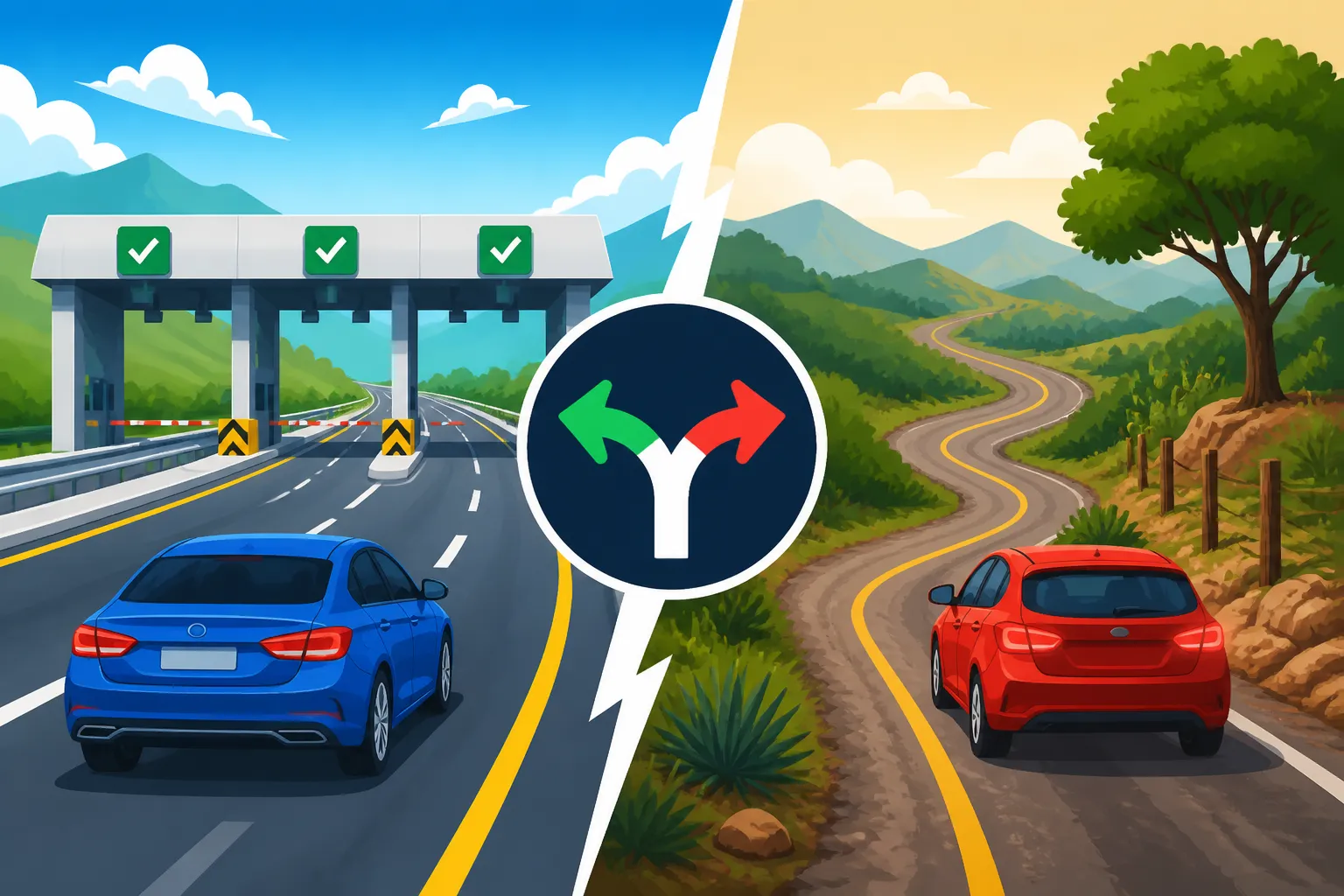
Driving in Mexico: Toll Roads (Cuotas) vs Free Roads (Libres)
Oh, the open road in Mexico! It sounds romantic, doesn't it? Cruising along, wind in your hair, exploring this incredible country. But if you're anything like me when I first moved here, the thought of actually driving in Mexico likely comes with a hefty dose of anxiety. "Cuota or Libre?" is a question that pops up on every map and GPS, and understanding the difference, and more importantly, when to choose which, can feel like solving a complex riddle. This guide is here to demystify Mexico's road network, helping you confidently navigate its toll roads and free roads, making your travels safer and more enjoyable.
Disclosure: This post may contain affiliate links. We may earn a commission at no extra cost to you if you make a purchase through these links. Read full disclosure.
Understanding Mexico's Road Network
Mexico's road infrastructure is a fascinating blend of modern, well-maintained highways and older, more traditional routes. For an expat or a tourist, knowing the distinction between "cuota" and "libre" roads isn't just about saving a few pesos; it's about making informed decisions regarding safety, travel time, and the kind of travel experience you're looking for. It's truly a choose-your-own-adventure on the highways here.
The "Cuota" System: What are Toll Roads?
The cuota roads, often marked with "CUOTA" signs or a "D" for de cuota (of toll), are Mexico's modern, privately operated toll highways. Think of them as the expressways of Mexico. These roads are typically designed for speed and efficiency, bypassing smaller towns and minimizing traffic stops.
The advantages of sticking to cuota roads are considerable, especially for long-distance travel. They are generally in excellent condition, with multiple lanes, clear signage, and robust safety features like shoulders for emergencies. The maintenance is usually top-notch, meaning fewer potholes and a smoother ride. You'll also find emergency call boxes and patrols along these routes, offering a sense of security that can be invaluable when you're far from home. For instance, traveling the cuota from Mexico City to Guadalajara is a relatively straightforward and fast journey, allowing you to cover significant distances without the constant stops and starts you'd encounter on a libre route. The higher speeds and direct routes mean significantly reduced travel times, which is a huge plus if you're on a tight schedule or simply want to get to your destination without undue delay.
However, these benefits come at a cost – literally. Tolls can add up quickly, especially on longer journeys, and they're often more expensive than many foreigners anticipate. This can be a bit of a shock if you're used to fixed-price driving back home. Also, because they bypass smaller towns, you might miss out on some of the authentic local flavor and unexpected roadside attractions that are the hallmark of libre routes. It's a trade-off: convenience and speed for cultural immersion and budget.
The "Libre" System: The Charm (and Challenges) of Free Roads
The libre roads, meaning "free" roads, are the federal and state-maintained routes that don't charge a toll. These are the older, more traditional roads that weave through towns, villages, and agricultural areas. They represent the heart and soul of Mexican travel for many, offering a much more intimate glimpse into local life.
Choosing a libre road is like taking the scenic route through Mexico's vibrant tapestry. You'll pass through bustling markets, small communities where daily life unfolds right before your eyes, and often encounter breathtaking natural landscapes that the cuotas simply bypass. They are, of course, free, which is a major draw for budget-conscious travelers or expats looking to save money. This makes them ideal if you’re planning on exploring a region rather than simply trying to get from point A to B as quickly as possible. For example, if you're heading from Oaxaca to Puerto Escondido, taking the libre route through the mountains, while much slower and windier, offers incredible views and the chance to stop in tiny villages you'd never see otherwise. This slower pace allows for spontaneous detours, discovering hidden gems, and truly feeling connected to the country.
However, the libre experience isn't without its challenges. These roads are typically less maintained than their cuota counterparts, meaning you're more likely to encounter potholes, uneven surfaces, and a general state of disrepair. They often wind through populated areas, leading to frequent topes (speed bumps) – Mexico's infamous, sometimes unmarked, traffic-calming devices that can seriously test your suspension! These roads also tend to be two-lane, undivided highways, which means passing slow-moving vehicles like trucks or tractors can require more caution and patience. Security can also be a greater concern on some libre routes, especially in more isolated areas or after dark, as emergency services might be less accessible. It’s crucial to do your research on specific libre routes before embarking.
How to Navigate Toll Roads (Cuotas)
So, you've decided to embrace the speed and safety of the cuota roads. Excellent choice! But even these modern highways have their own quirks that can trip up an unsuspecting expat or tourist. Knowing how to pay and what to expect can make all the difference.
Payment Methods and Costs
The most common way to pay tolls on Mexico's cuota roads is with cash, specifically Mexican pesos. It's absolutely vital to carry a good stash of small bills (20, 50, 100, and 200 peso notes) when embarking on a toll road journey. While some booths might accept larger denominations, don't count on it, and getting change for a 500 peso note can be a frustrating delay. Many booths, particularly on less trafficked routes, often don't have enough change. They typically do not accept foreign currency or credit/debit cards, although this is slowly changing in some major corridors.
For frequent drivers, particularly expats, investing in an IAVE tag can be a game-changer. This electronic toll collection system works much like an E-ZPass or FasTrak in other countries. You load money onto the tag, and it automatically deducts the toll as you pass through designated IAVE lanes. It saves time, avoids fumbling for cash, and keeps you moving. You can usually purchase and recharge IAVE tags at OXXO stores, gas stations, and sometimes at toll booths themselves. It requires a bit of setup, but for anyone planning extensive driving in Mexico, it's a worthwhile investment. The cost of tolls varies wildly depending on the distance and specific highway. A short stretch might be 50 pesos, while a multi-hour drive can easily cost several hundred pesos. It's wise to budget for tolls as part of your overall trip expenses, and online tools or apps can help you estimate costs for specific routes.
Tips for a Smooth Cuota Journey
Even on the most modern cuotas, preparation is key. First, always plan your route in advance, even if you're using GPS. Familiarize yourself with the general direction and major cities you'll pass through. While signage is generally good, relying solely on a device can leave you in a lurch if service drops. It's a good idea to download offline maps, just in case.
Before hitting the road, fill up your gas tank. While cuota roads often have gas stations at rest stops (often branded as OXXO Gas or Pemex), they might be fewer and further between than you'd expect, especially in rural stretches. Don't let your tank run below half, just to be safe. Rest stops, known as paradores, typically offer clean restrooms, convenience stores, and sometimes restaurants, providing a much-needed break from driving.
If you're renting a car, always confirm with the rental agency if they offer an IAVE tag or if they recommend a specific payment method. Many rental cars might not come with an IAVE, meaning you'll be paying cash. Reputable rental companies like those found on Booking.com or through travel aggregators like Viator often provide detailed information about driving in Mexico, including tips on tolls. Remember to carry your driver's license, vehicle registration, and proof of Mexican car insurance – these are non-negotiable for any driving in Mexico. You can find more detailed information on Renting a Car in Mexico: Insurance and Driving Tips to ensure you're fully prepared.
Embracing the "Libre" Roads (with caution)
While cuotas offer speed, libres offer adventure and authentic experiences. But embarking on a libre journey requires a different mindset and a higher degree of preparedness.
When to Choose a Libre Road
So, when does a libre road make sense? Often, for shorter distances, particularly when exploring a specific region or making local excursions. If you’re staying in a charming Pueblo Mágico and want to visit a neighboring village, the libre road is likely your best, or only, option. For example, if you're staying in San Miguel de Allende and want to visit Guanajuato for the day, the libre road is a scenic, albeit slower, drive through rolling hills and smaller towns, far more enjoyable than a quick hop on a cuota that might bypass the charm.
Libre roads are also fantastic for getting a true feel for rural Mexico. If you have plenty of time and a desire for immersion, these routes offer unparalleled opportunities to stop at roadside fruit stands, grab a quesadilla from a local vendor, or simply admire the scenery without the rush of a toll highway. This is where you encounter the real Mexico, away from the tourist traps. They're also essential for reaching many off-the-beaten-path destinations that aren't served by cuotas. Many smaller archaeological sites, secluded beaches, or remote natural parks are only accessible via libre routes.
Essential Safety and Preparation for Libres
Choosing a libre road means prioritizing safety and thorough preparation. My golden rule is: never drive libre roads at night, especially in unfamiliar or isolated areas. Visibility is often poor, lighting non-existent, and the risk of encountering unmarked obstacles (including topes or even livestock) increases dramatically. Always aim to complete your libre journey well before sunset. You might want to check out Is It Safe to Drive at Night in Mexico? Road Safety Tips for Expats for more guidance on this critical topic.
Before you leave, research the specific libre route you plan to take. Ask locals, check online forums, or consult with your hotel staff about the current road conditions and any known safety concerns. Road conditions can change rapidly, particularly during the rainy season, with landslides or flooding sometimes affecting routes. A good, up-to-date GPS system is crucial, but again, download offline maps. Cell service can be spotty to non-existent on some libre stretches, so don't rely solely on streaming maps.
Ensure your vehicle is in good working order, with properly inflated tires and a spare. Having basic emergency supplies like water, a first-aid kit, and a fully charged cell phone is also smart. While libres offer wonderful opportunities for local interaction, if you're not fluent in Spanish, be prepared for potential language barriers if you need to ask for directions or assistance. This is where those survival Spanish phrases come in handy!
Deciding Between Cuota and Libre: Scenarios and Considerations
The "cuota vs. libre" debate isn't about one being inherently "better" than the other; it's about making the right choice for your specific trip, preferences, and comfort level. Every journey is different, and the ideal route depends on a few key factors.
Factors to Weigh
When planning your drive, consider these points carefully. First and foremost, time is a huge factor. If you're on a tight schedule, needing to make a flight, or simply want to maximize your time at a destination, the cuota is almost always the clear winner. The speed difference can be substantial. For instance, a drive from Cancún to Mérida, while beautiful on the libre, can take significantly longer due to traversing small towns, whereas the cuota is a direct shot.
Your budget will also play a role. Tolls can accumulate, so if you're trying to keep costs down, opting for libre roads can save you money, though you might spend more on gas due to slower speeds and more stops. However, don't just calculate direct costs. Factor in the wear and tear on your vehicle on rougher libre roads, and the value of your time.
Your experience level driving in Mexico is another big one. If you're a newcomer, less familiar with Mexican driving customs, topes, and navigating bustling towns, the cuota offers a more predictable and less stressful experience. More seasoned expats might feel comfortable tackling libres for their exploratory appeal. Finally, your destination itself might dictate your choice. Major cities and tourist hubs are generally well-connected by cuotas. However, many charming small towns, natural wonders, and cultural sites are only accessible via libre routes, meaning you'll have to embrace the adventure.
Real-World Examples
Let's look at a couple of common routes to illustrate the dilemma.
Mexico City to Puebla:
- Cuota: This is a fantastic, well-maintained highway. It's a quick, direct drive, taking about 1.5 to 2 hours, depending on traffic in Mexico City. The tolls are reasonable for the convenience. If your goal is to get from one city center to the other efficiently, the cuota is the obvious choice. You'll bypass the smaller towns and mountainous terrain directly.
- Libre: The libre route will take significantly longer, potentially 3-4 hours or more. It weaves through small villages and over winding roads, offering picturesque views of the volcanoes and the chance to stop at local eateries. This is a great option if you have an entire day and want to explore the towns along the way, like Cholula.
Cancún to Mérida:
- Cuota: A straight, fast, and smooth road through the Yucatán Peninsula. The drive typically takes around 3.5 to 4 hours. It's a modern highway with good signage. This is ideal if you're coming from Cancún Airport and heading directly to Mérida or planning day trips from Mérida.
- Libre: This route takes you through numerous small Mayan villages like Valladolid and Izamal, offering a much richer cultural experience. You can stop at cenotes, explore colonial towns, and experience authentic local life. The journey, however, could easily stretch to 5-6 hours or more with stops, plus the constant slowing for topes. If you have a few days and want to make the journey part of the adventure, exploring the yellow city of Izamal or cooling off in a cenote, the libre route is the way to go. For those planning their itinerary, you can often find great deals on hotels in Mérida through Booking.com, making your multi-day libre adventure more comfortable.
| Feature | Toll Roads (Cuotas) | Free Roads (Libres) |
|---|---|---|
| Speed/Efficiency | High; direct routes, fewer stops | Low; winding routes, many stops (topes, towns) |
| Cost | Pay tolls (can be significant) | Free |
| Maintenance | Generally excellent, smooth, multi-lane | Varies widely, often poorer, potholes, two-lane |
| Safety | Higher, emergency services, clear signage, shoulders | Lower, less maintenance, isolated areas, unmarked obstacles |
| Scenery/Culture | Less scenic, bypasses towns | Highly scenic, passes through towns and villages, authentic |
| Preparation | Cash for tolls, IAVE tag recommended for frequent use | Research route, daylight driving, vehicle check-up, offline maps |
| Best For | Long-distance travel, time-saving, less stressful | Local exploration, cultural immersion, budget travel, adventure |
Practical Driving Tips for Expats in Mexico
Beyond just "cuota or libre," there are overarching tips for driving in Mexico that every expat and tourist should know. These aren't just suggestions; they're essential for a safe and hassle-free experience.
Important Documents and Insurance
First off, your documents. Always carry your valid home country driver's license, your passport or residency card (even if you have a copy on your phone, have the physical card on you), and your vehicle's registration. If you're driving a rental, keep the rental agreement handy. Seriously, keep them in an easily accessible but secure spot.
The biggest, most crucial point here is Mexican car insurance. Your home country insurance, even if it covers you internationally, likely does not cover third-party liability in Mexico to the extent required by Mexican law. Driving without proper Mexican liability insurance is not just illegal; it can lead to severe legal consequences, including detention, in the event of an accident. Get full coverage if you can, but at the absolute minimum, ensure you have robust third-party liability from a Mexican insurer. Many reputable companies offer this, and you can even get it for a short-term trip if you're just visiting. Learn more about this by checking out Do You Need Mexican Car Insurance to Drive in Mexico?.
Road Rules, Signs, and Local Customs
Mexican road rules are generally similar to those in North America or Europe, but there are nuances. Speed limits are in kilometers per hour, obviously. Watch for "E" signs, which mean estacionamiento (parking). A big "E" with a red line through it means No Estacionarse.
The tope (speed bump) deserves its own paragraph. They are everywhere, from major libres to tiny village streets, and they come in all shapes, sizes, and levels of visibility. Some are clearly marked and painted yellow; others are barely visible until you're right on top of them, potentially leading to a jarring jolt. Always be on the lookout, especially when entering or exiting towns. When you see a vehicle ahead slow down suddenly for no apparent reason, assume it’s a tope. It’s a rite of passage for every expat to hit one harder than they should!
Another thing: turn signals are often used differently here. Sometimes a left turn signal means "it's safe for you to pass me," rather than "I'm turning left." It's confusing, I know. It's best to err on the side of caution and assume the literal meaning of the signal, but be aware of the local interpretation. Also, flashing your headlights at an oncoming vehicle can mean "I'm coming through, so yield to me" rather than a friendly "you first." Again, proceed with caution and defensive driving.
When it comes to police, there are federal police (Policía Federal) on the highways, state police, and municipal police. If you are pulled over, remain polite and cooperative. Don't immediately offer money; this is considered a bribe (mordida) and is illegal. Always ask for the reason you were stopped and if there is a ticket (multa) to be issued. Sometimes, a "ticket" will require you to go to the municipal office to pay. If you find yourself in this situation, refreshing your knowledge on What to Do If You’re Pulled Over by Police in Mexico might be helpful.
Driving in Mexico can be an incredibly rewarding experience, opening up vast stretches of this beautiful country that tour buses and taxis simply can't reach. Whether you opt for the efficiency of the cuotas or the authentic adventure of the libres, a little preparation and cultural awareness will ensure your journey is filled with positive memories. And if you’re looking to plan comprehensive road trips, many expat groups share their experiences and route recommendations, and even resources like Busbud offer alternatives if you decide the bus is a better option for certain stretches.
Disclaimer
Please remember that road conditions, regulations, and safety situations in Mexico can change rapidly. While I've done my best to provide current and accurate information based on my experiences and general knowledge, always verify the latest local conditions and consult official sources before you travel. Drive defensively, stay alert, and prioritize your safety above all else.