North America Regional eSIM Plans: Worth It for a US-Mexico Trip
Oh, the joy (and sometimes, utter frustration) of staying connected when you’re bouncing between the U.S. and Mexico! As expats, tourists, and snowbirds, we’ve all been there: landing in a new country, phone suddenly a brick, and scrambling for a local SIM card or bracing ourselves for those eye-watering roaming charges. But what if there was a way to just, well, stay connected seamlessly? This guide is here to unravel the mystery of North America regional eSIM plans, explore if they're truly worth your hard-earned pesos (or dollars!), and shine a spotlight on solutions like Airalo that are making cross-border life a whole lot easier.
Disclosure: This post may contain affiliate links. We may earn a commission at no extra cost to you if you make a purchase through these links. Read full disclosure.
The Connectivity Conundrum for Cross-Border Travelers
Let's face it, navigating the digital landscape when you're crossing borders in North America – whether it's for a quick trip to Tijuana, a long-term stay in San Miguel de Allende, or commuting for work – can be a real headache. It’s not just about having internet; it’s about feeling safe, keeping in touch with loved ones, and avoiding unexpected bills that could rival your flight cost.
The Pain of Traditional Roaming and SIM Cards
Remember the days of landing in Mexico, popping out your home country's SIM card, and fumbling with a tiny, unfamiliar chip that barely fit into your phone? Or maybe you're still doing it, trying to figure out which vendor at the airport actually offers fair prices and reliable service. Then there’s the whole ordeal of translating plans and understanding data limits, all while your Uber driver is waiting. It’s a chore, pure and simple.
And let’s not even get started on traditional international roaming plans offered by carriers like AT&T, Verizon, or T-Mobile back home. Sure, they work, but the cost often feels like highway robbery. You might get a paltry amount of high-speed data before being throttled to dial-up speeds, or worse, find yourself with an unexpected bill hundreds of dollars higher than you anticipated. These plans often tack on daily fees, which can really add up if you're staying for more than a few days, making a long weekend trip surprisingly expensive just for the luxury of having your phone work. The anxiety of checking your data usage every five minutes isn't exactly the relaxing vacation experience you signed up for.
Why a Single Plan for North America Is Appealing
For anyone whose travel patterns frequently involve both the U.S. and Mexico, the idea of a single, unifying connectivity solution is nothing short of a dream. Imagine the freedom of crossing the border and your phone just… working. No frantic SIM card swaps, no hunting for Wi-Fi, no data anxiety. This is precisely where North America regional eSIM plans come into play.
These plans are designed to provide coverage across multiple countries within the region, typically including the United States, Canada, and Mexico. For expats living in Mexico but frequently visiting family in the U.S., or for digital nomads who split their time between San Diego and Sayulita, this means unparalleled convenience. You activate one plan, and you're good to go, regardless of which side of the border you're on. It simplifies your digital life immensely, allowing you to focus on the experience rather than the logistics of staying online. It's about more than just data; it's about peace of mind.
Understanding North America Regional eSIM Plans
Alright, let's dive into what these regional eSIM plans actually are and how they can be a game-changer for your cross-border adventures. Forget what you thought you knew about traditional phone service; eSIMs are the future, and regional plans take that convenience to the next level.
What Exactly Is an eSIM?
At its core, an eSIM (embedded Subscriber Identity Module) is essentially a digital SIM card. Instead of a physical chip that you insert into your phone, the eSIM is built directly into your device's hardware. This might sound like a minor detail, but it unlocks a world of flexibility. Most modern smartphones, tablets, and even some smartwatches now support eSIM technology.
Think of it like this: your phone has a programmable chip that can store multiple "SIM profiles" digitally. When you purchase an eSIM plan, you're not getting a physical card; you're downloading a profile onto this chip. This allows you to have multiple phone numbers and data plans active on a single device, or switch between them with just a few taps in your settings. This is particularly handy for travelers, as you can keep your primary number active for calls and texts from home, while simultaneously activating a local or regional eSIM for data when abroad. It truly simplifies the process of getting connected, removing the need to carry tiny tools or worry about losing a physical card.
How Regional Plans Work for the US and Mexico
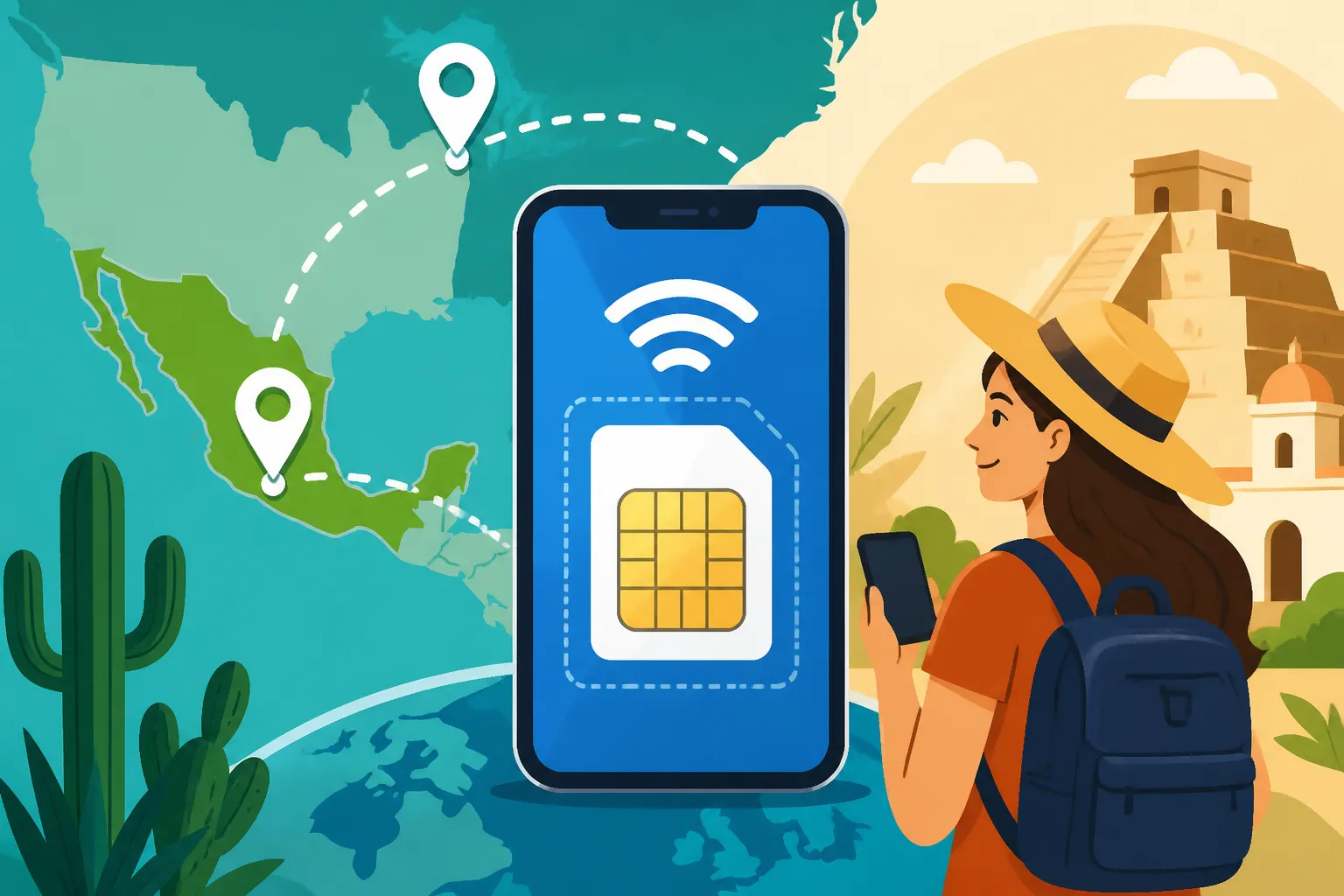
A North America regional eSIM plan bundles data, and sometimes calls/texts, that are valid across the specified countries – in our case, primarily the U.S. and Mexico, though Canada is often included. Instead of buying a Mexico-specific eSIM and then a separate U.S. eSIM, you get one plan that covers both.
When you cross from, say, Texas into Nuevo León, your phone automatically connects to a partner network in Mexico, utilizing the data allowance from your regional plan. You don't have to do anything manual. The beauty of this is that the plan provider, like Airalo, has established agreements with local carriers in both countries (e.g., Telcel or Movistar in Mexico, and major carriers in the U.S.) to offer seamless connectivity. This means you’re essentially tapping into the local infrastructure without needing to jump through hoops with local providers yourself. It's a single point of contact for your connectivity needs across a vast geographic area.
Key Benefits of Choosing a Regional eSIM
The advantages of opting for a regional eSIM, especially for frequent travel between the U.S. and Mexico, are significant and touch on several aspects of an expat or traveler's life.
First and foremost is unmatched convenience. Imagine landing at Mexico City International Airport, and your phone just… works. No desperate search for a Wi-Fi signal, no queues at phone shops. You activate your eSIM before you even leave home, and upon arrival, your data is ready to roll. This is a game-changer, especially after a long flight when all you want to do is get to your accommodation and let your family know you've arrived safely. This seamless transition is incredibly valuable, as it removes a layer of stress that often accompanies international travel.
Next up is cost-effectiveness. While individual country eSIMs might offer slightly lower per-gigabyte rates if you're only staying in one place for an extended period, a regional plan often saves money for those who hop between the U.S. and Mexico. You avoid the cumulative cost of two separate plans or the exorbitant daily fees of traditional roaming. Plus, many eSIM providers like Airalo offer various data packages and validity periods, allowing you to choose a plan that perfectly fits your travel duration and data needs, ensuring you only pay for what you truly use. It's often more transparent and predictable than traditional roaming, helping you avoid those nasty bill surprises.
The flexibility is also a huge draw. If your travel plans change last minute – maybe you decide to extend your stay in Cancún for a few extra days or make an impromptu trip up north – you can often top up your eSIM data or purchase another regional plan with ease, all from your phone. You're not tied to a long-term contract or a specific carrier. This adaptive nature is ideal for the often spontaneous lifestyle of expats and digital nomads. Moreover, you can keep your physical SIM from your home country active, allowing you to receive important calls or texts on your original number while using the eSIM for data. This dual functionality is incredibly practical, ensuring you never miss an important message while still enjoying affordable data abroad. This flexibility is a key reason why so many are shifting away from traditional cellular plans when traveling.
| Feature | Traditional Roaming (Home Carrier) | Local SIM Card (Mexico/US) | Regional eSIM (e.g., Airalo North America) |
|---|---|---|---|
| Cost | High daily fees, expensive data | Varies, can be cheap local | Moderate, often better than roaming |
| Convenience | Automatic, but often throttled | Requires physical purchase | Fully digital, instant activation |
| Setup Time | None (if pre-arranged) | Can be time-consuming | Minutes, via app |
| Cross-Border Use | Seamless, but costly | Need two separate cards | Seamless across specified countries |
| Data Control | Limited, often hard to track | Clear local limits | Easy to monitor and top-up |
| Physical SIM | Uses primary SIM slot | Requires physical SIM slot | Uses eSIM, keeps physical slot free |
| Flexibility | Low | Medium | High (multiple plans, easy switching) |
Is a North America Regional eSIM Right for Your Trip?
Deciding if a regional eSIM is the perfect fit for your cross-border journeys involves weighing your specific travel habits, data needs, and budget. While they offer undeniable advantages, they might not be the absolute best solution for everyone.
Who Benefits Most from Regional eSIMs
Regional eSIMs are a godsend for a specific type of traveler. First, if you're a frequent traveler shuttling between the U.S. and Mexico – perhaps for work, family visits, or simply enjoying the best of both worlds – then a regional plan is practically a non-negotiable. The sheer convenience of not having to worry about connectivity every time you cross the border will save you immense time and mental energy. Instead of constantly sourcing a new local SIM or dealing with your home provider's often-flawed international packages, you have one consistent solution.
Secondly, digital nomads and remote workers who base themselves in Mexico but occasionally need to travel north for a client meeting or a change of scenery will find these plans incredibly efficient. Maintaining a stable, reliable internet connection across multiple countries is critical for their livelihood, and regional eSIMs deliver just that without the hassle of multiple contracts or unreliable public Wi-Fi. Having the peace of mind that your phone will work when you need it most, whether it's for a video conference or an urgent email, is invaluable.
Lastly, expats living in Mexico who maintain strong ties to the U.S. (or Canada) – perhaps they have property there, bank accounts, or close family – will also see the value. Many expats living in Mexico, especially retirees, find themselves making regular trips back home for medical appointments, to see grandchildren, or to handle financial affairs. For them, a regional eSIM can simplify their travel logistics significantly, allowing them to focus on the purpose of their trip rather than connectivity worries. It ensures that when you land back in your home country, you’re instantly connected, just as you are when you arrive back in Mexico. This continuity is a huge stress reliever for those who call both countries home.
Potential Downsides and Considerations
While regional eSIMs are fantastic, they aren't without their considerations. One potential downside is that the per-gigabyte cost might be slightly higher than a very cheap, country-specific local SIM card if you plan on staying in one country for an extended, continuous period and use very little data. For example, if you're spending six months exclusively in Mérida and hardly ever leave, a local Telcel or Movistar SIM might offer a slightly more economical data package purely for that single location. However, the difference is often negligible when you factor in the convenience and the ability to seamlessly use data across borders.
Another point to consider is device compatibility. While most newer smartphones (iPhone XS/XR and later, many Samsung Galaxy models, Google Pixel 3 and later) support eSIMs, older devices might not. Always double-check your phone's specifications before relying on an eSIM plan. It would be a real bummer to arrive in Mexico, ready to activate your new plan, only to find your phone can't handle it! Furthermore, while data coverage is generally excellent in major cities and tourist areas across North America, remote or very rural areas might still present challenges, regardless of the provider. While regional eSIMs leverage local networks, they are still dependent on the existing infrastructure, so if the local towers aren't there, neither is your signal. This is a good general reminder for anyone using a mobile device in Mexico, as service quality can vary significantly once you leave major urban centers. You can learn more about how to set up your phone by checking out guides like Will Your Foreign Phone Work in Mexico? Using SIM Cards and Unlocked Phones.
Comparing Regional vs. Country-Specific eSIMs
The choice between a regional and a country-specific eSIM boils down to your travel itinerary. If your trip is strictly limited to one country – say, a two-week vacation exploring Oaxaca City and its surroundings – a Mexico-specific eSIM might be sufficient and potentially offer slightly better value for that singular destination. You can find excellent local eSIM options that provide plenty of data for your needs while you're focused on a single country.
However, if your journey involves flying into the U.S. and driving across the border, or if you're planning multiple visits back and forth within the validity period of your plan, the regional eSIM pulls ahead significantly. The time and effort saved from not having to switch SIMs, manage multiple accounts, or deal with different currencies for top-ups are considerable. It’s a trade-off between hyper-localization and broad, seamless coverage. For anyone with a dynamic, multi-country travel schedule in North America, the regional option, particularly through platforms like Airalo, offers a level of simplicity and predictability that is hard to beat.
Introducing Airalo: Your North America Connectivity Solution
When it comes to global connectivity, especially for those of us who spend a good chunk of our lives crossing borders, one name consistently rises to the top: Airalo. They've truly revolutionized how we think about staying online abroad, making it simpler, more affordable, and incredibly user-friendly.
Why Airalo Stands Out for Regional Plans
Airalo isn't just another eSIM provider; they're a pioneer in making international data accessible and hassle-free. What makes them particularly shine for North America regional plans? It's their extensive network of partnerships with local carriers in both the U.S. and Mexico. This means when you purchase an Airalo North America plan, you're tapping into reliable, high-speed networks like Telcel or Movistar when you're south of the border, and major carriers when you're up north. This isn't some dodgy discount service; it's robust connectivity leveraging existing infrastructure.
Their user-friendly app is another huge plus. You can browse plans, purchase an eSIM, install it, and manage your data usage all from your smartphone. There's no need to navigate confusing websites or deal with obscure activation processes. For anyone who's ever wrestled with tech issues while traveling, the simplicity of the Airalo experience is a breath of fresh air. They've also been around the block, offering eSIMs in over 200 countries and regions, which speaks volumes about their reliability and reach. This global footprint means they understand the nuances of international connectivity and offer tailored solutions that genuinely meet travelers' needs.
How to Purchase and Activate an Airalo North America eSIM
Getting your Airalo North America eSIM up and running is surprisingly straightforward. Here’s a simple, step-by-step breakdown:
- Download the Airalo App: First things first, head to your phone's app store (iOS or Android) and download the free Airalo app. It's intuitive and well-designed.
- Select Your Destination: Once in the app, search for "North America" or simply "Mexico" or "United States" and look for the regional options. You'll see various plans with different data allowances and validity periods. For example, you might find a plan offering 5GB of data valid for 30 days across North America.
- Choose Your Plan: Pick the plan that best suits your travel duration and estimated data usage. If you're going for a quick weekend trip, a smaller data package might suffice. For longer stays or heavy data users, opt for a larger one. Airalo clearly displays the cost upfront, so there are no surprises.
- Purchase the eSIM: Complete the purchase securely within the app. Airalo accepts various payment methods, making it convenient for international users.
- Install the eSIM: This is where the magic happens. After purchase, you'll receive clear instructions on how to install the eSIM. This usually involves going to your phone's settings (typically under "Cellular" or "Mobile Data"), tapping "Add eSIM" or "Add Data Plan," and then either scanning a QR code provided by Airalo or manually entering activation details. It literally takes a couple of minutes. You can do this before you even leave home, ensuring you're ready to go the moment your plane lands.
- Activate and Enjoy: Once installed, ensure the new eSIM line is turned on in your settings and set as your primary data source. As soon as you arrive in the coverage area (U.S. or Mexico), your phone should automatically connect to a local network, and you'll have data. It’s that easy. For more on general connectivity, consider reading Mobile Data and eSIMs for Travel in Mexico.
Real-World Experiences with Airalo in Mexico and the US
From personal experience and countless expat testimonials, Airalo delivers on its promise. I've used Airalo myself on trips traversing the U.S. border and into different regions of Mexico, from the bustling streets of Mexico City to the quieter beaches of Quintana Roo. The connection has been consistently reliable, allowing me to use navigation apps, stay in touch with friends and family via WhatsApp, and even handle some light remote work without a hitch.
The feedback from the expat community echoes this. Many appreciate the transparent pricing and the ability to avoid bill shock, a common complaint with traditional roaming. For those of us who have dealt with the unpredictable nature of local SIM card purchases – sometimes great, sometimes a total bust – Airalo offers a dependable alternative. It removes a significant layer of travel stress, letting you focus on enjoying your trip rather than hunting for Wi-Fi. It’s a solution that gives you the flexibility to use your phone as you would at home, with the added benefit of knowing exactly what you’re paying for.
Making the Most of Your Regional eSIM in Mexico
Having a regional eSIM from a provider like Airalo is fantastic, but knowing a few practical tips can really enhance your experience and ensure you stay connected without any unnecessary hiccups, especially when you’re navigating the beautiful chaos of Mexico.
Practical Tips for Using Your eSIM for Calls and Data
While your Airalo regional eSIM excels at providing data, it's typically data-only. This means for voice calls, you'll mostly rely on VoIP (Voice over Internet Protocol) apps. Here’s how to make it work seamlessly:
- Embrace VoIP Apps: Apps like WhatsApp, FaceTime Audio, Google Meet, or even Facebook Messenger's calling feature become your best friends. These use your eSIM data to make calls over the internet, allowing you to connect with anyone, anywhere, often for free. For most expats, WhatsApp is the go-to communication tool in Mexico, so having reliable data for it is crucial. This way, you can keep in touch with friends back home and with any new local contacts you make.
- Keep Your Home Number Active for Texts (Optional): If your phone supports dual SIM (one physical, one eSIM), you can keep your home country’s physical SIM active purely for receiving important texts (like verification codes for banking) while directing all data usage through your Airalo eSIM. Just be sure to disable data roaming for your physical SIM to avoid accidental charges. This setup is incredibly useful for maintaining vital connections without incurring roaming fees.
- Monitor Your Data Usage: The Airalo app makes it super easy to track how much data you've used and how much you have left. Get into the habit of checking it every few days, especially if you’re doing a lot of streaming or video calls. This helps you avoid running out of data unexpectedly. If you're getting low, topping up is quick and easy directly within the app, which is a major convenience.
- Download Offline Maps: Even with reliable data, it's always a good idea to download offline maps (e.g., in Google Maps) for the areas you'll be visiting in Mexico. This way, if you ever find yourself in a spot with weak signal or run out of data temporarily, you can still navigate without stress. It's a fundamental safety net for any traveler.
Navigating Coverage in Urban and Rural Areas
Mexico's cellular infrastructure has come a long way, but just like anywhere else, coverage can vary.
- Urban Centers & Tourist Hubs: In major cities like Mexico City, Guadalajara, Monterrey, and popular tourist destinations such as Cancún, Playa del Carmen, and Puerto Vallarta, you can expect excellent 4G LTE and increasingly 5G coverage. Your Airalo eSIM, by leveraging networks like Telcel (which generally has the widest coverage) and Movistar, will provide strong, consistent service in these areas. Whether you're navigating the bustling streets or chilling on a beach, you should be well-connected. Expats often rely on services like Telcel, so having an eSIM that taps into their network is a huge advantage. You can find more specific advice about local connectivity in Internet and Mobile Phone Plans in Mexico: Staying Connected as an Expat.
- Rural & Remote Regions: Venturing off the beaten path into more rural towns or remote natural areas means you might encounter spotty or even non-existent service. This is not a limitation of Airalo specifically but rather the reality of the local infrastructure. If you're planning an adventure to, say, a secluded pueblo mágico or a remote archaeological site, be prepared for potential connectivity gaps. Always inform someone of your itinerary, and perhaps use a satellite communicator for emergencies if you're truly going off-grid. However, for most common travel routes and destinations, your regional eSIM should serve you well. It's always a good practice to set expectations for connectivity outside of the main tourist corridors.
Cost-Benefit Analysis: Are Regional Plans Truly Worth It?
When you’re juggling international travel and budgeting, every dollar (or peso) counts. So, the big question remains: are North America regional eSIM plans, like those offered by Airalo, truly worth the investment for a U.S.-Mexico trip? Let's break it down beyond just the sticker price.
Breaking Down the Costs vs. Value
On the surface, a regional eSIM plan might appear slightly more expensive than buying the absolute cheapest local SIM card in Mexico if you were to commit to a long-term, single-country plan. However, that's rarely an apples-to-apples comparison for the type of traveler who truly benefits from a regional eSIM.
Consider the hidden costs and inconveniences of alternatives:
- Traditional Roaming: This is almost always the most expensive option. Daily charges, limited data, and the constant fear of overage fees quickly make it prohibitive for anything more than very brief emergencies. A regional eSIM plan, even a generous one, will almost certainly cost less than a week of international roaming from a major home carrier.
- Multiple Local SIMs: If you truly want to be connected seamlessly across the U.S. and Mexico with local rates, you'd need to buy a SIM in the U.S. and another in Mexico. This means two separate purchases, two activation processes, two numbers to manage, and two plans to monitor. The time and mental energy spent on this, plus the initial cost of two SIM cards, can easily negate any minor per-gigabyte savings. Remember, your time on vacation or living abroad has value!
- Lost Productivity/Stress: Imagine missing an important email or not being able to navigate because your data ran out, or you couldn’t get a local SIM activated. The stress and potential lost opportunities due to connectivity issues are intangible but real costs. A reliable regional eSIM provides peace of mind that allows you to focus on your trip, whether it’s for leisure or work.
Airalo's plans, for instance, are priced competitively for the convenience they offer. You might find a 10GB North America plan for 30 days around $30-$40 USD. Compare that to daily roaming fees that can hit $10-$15 per day, and the savings become obvious very quickly, especially for a multi-week trip or frequent cross-border visits. For those who frequently visit Mexico, having a consistent and affordable data plan makes a huge difference in managing daily life, whether it’s for navigating with Google Maps, connecting with friends on WhatsApp, or even just researching the best taco al pastor stand nearby.
Long-Term Savings and Convenience
The true "worth" of a North America regional eSIM, particularly for repeat travelers or those with a fluid lifestyle between the U.S. and Mexico, lies in its long-term savings and unparalleled convenience.
For the seasonal traveler or "snowbird" who spends winters in Mexico and summers in the U.S., a regional eSIM means you have one less thing to worry about each time you cross the border. You activate your plan, and you’re covered. No need to research local providers every few months, deal with language barriers, or fuss with physical cards. Over the course of a year, the accumulated savings on roaming charges and the sheer simplicity of management can be significant.
For digital nomads or those on extended trips, the ability to seamlessly transition between countries without a break in connectivity is invaluable. It supports a flexible lifestyle and ensures productivity isn't hampered by connectivity woes. You can check your email, attend virtual meetings, and upload content whether you're in an Airbnb in Mexico City or a coffee shop in Austin. This flexibility is what allows many to truly embrace the digital nomad lifestyle, and a reliable connection, often provided by services like Airalo, is the backbone of that freedom.
Ultimately, a North America regional eSIM plan isn't just about buying data; it's about investing in convenience, peace of mind, and predictable budgeting. For anyone whose travels routinely take them between the U.S. and Mexico, it’s not just "worth it"—it's often the smartest and most stress-free option available. It's the kind of solution that makes expat life just a little bit smoother. When you consider the myriad things you have to think about when relocating or traveling extensively, like Healthcare in Mexico: Complete Guide for Expats (Public vs Private) or Cost of Living in Mexico: 2026 Comprehensive Guide, simplifying your phone plan can be a huge relief.
Disclaimer
Please remember that while I strive to provide the most accurate and up-to-date information, rules, regulations, and service offerings for telecommunications can change rapidly. Always verify the latest terms, conditions, and coverage maps directly with the eSIM provider (like Airalo) before making a purchase. This guide is for informational purposes only and does not constitute professional advice.