How to Buy Oaxacan Textiles and Rugs
Stepping into Oaxaca City, or indeed any part of the state, it doesn't take long for the vibrant colors and intricate patterns of its world-renowned textiles to capture your imagination. From the moment you see them, you know you want to take a piece of that artistry home. But for many of us expats, the thought of navigating bustling markets, discerning authenticity, and haggling in a foreign language can feel utterly daunting. This guide is here to cut through the confusion, offering a deep dive into how to confidently purchase beautiful, authentic Oaxacan textiles and rugs, ensuring you bring home a true treasure and support the artisans who craft them.
Disclosure: This post may contain affiliate links. We may earn a commission at no extra cost to you if you make a purchase through these links. Read full disclosure.
The Soul of Oaxaca: Understanding Its Textile Heritage
Before we even talk about buying, let's truly appreciate what makes Oaxacan textiles so special. This isn't just mass-produced decor; it's a living art form, deeply rooted in the history and culture of the Zapotec people, particularly those from villages like Teotitlán del Valle. Understanding this heritage will not only enrich your purchase but also help you make more informed decisions.
A Legacy of Zapotec Weaving
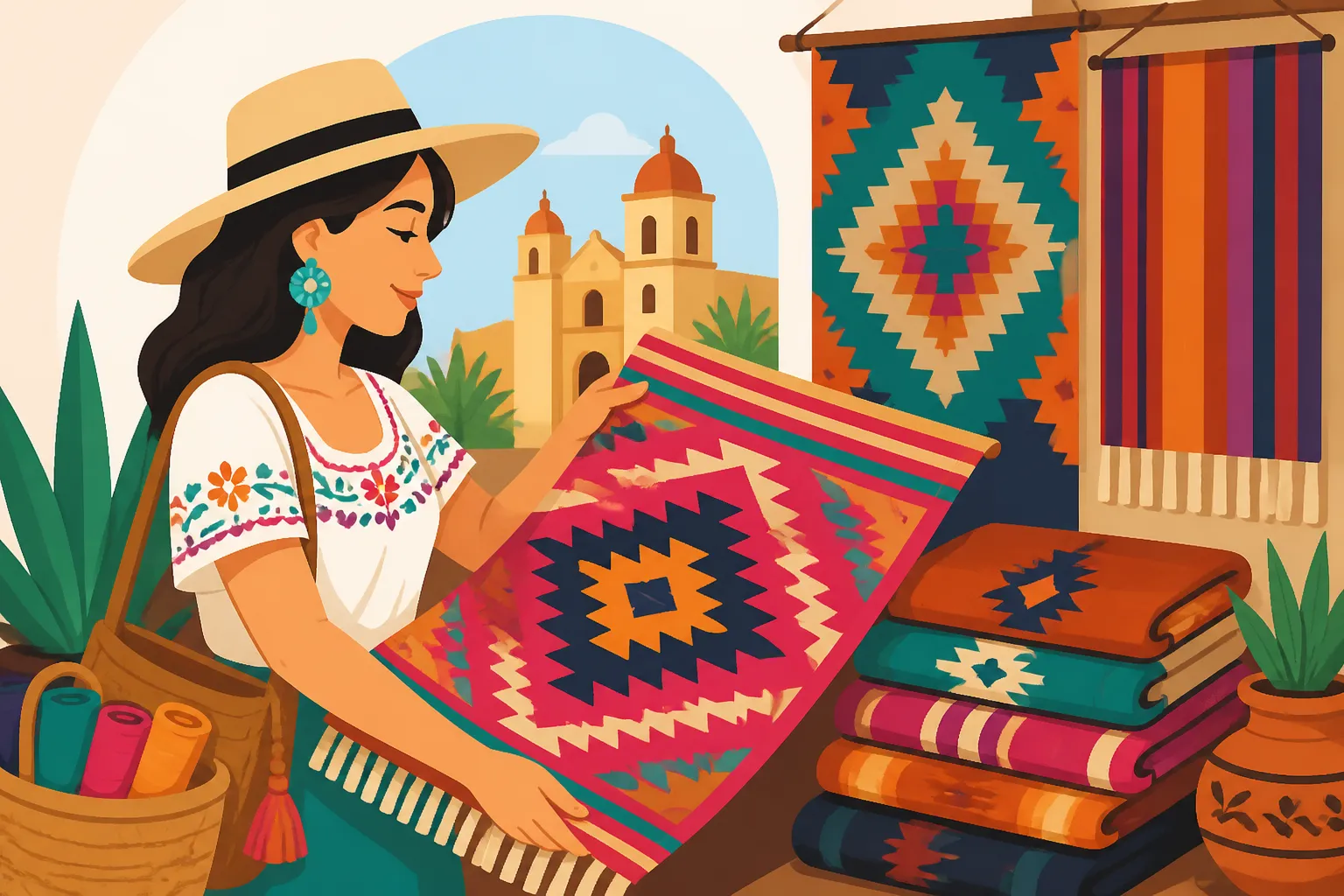
The art of weaving in Oaxaca dates back thousands of years. The Zapotecs, an indigenous people of Oaxaca, were master weavers long before the Spanish arrived. They developed sophisticated techniques and patterns, passing them down through generations. When you see a hand-woven rug or a vibrant huipil, you’re not just looking at a pretty object; you’re witnessing centuries of tradition, skill, and storytelling. Each thread, each dye, each symbol woven into the fabric carries a piece of that ancient history.
Their methods are largely unchanged, relying on backstrap looms for intricate garments and large pedal looms for rugs and blankets. These looms are operated entirely by hand and foot, a laborious process that can take days, weeks, or even months for a single large piece. This explains, in part, why truly authentic Oaxacan textiles carry a higher price tag – you're paying for unparalleled skill, patience, and a connection to a profound cultural lineage. Many families in Teotitlán del Valle still operate their own workshops, continuing these age-old practices.
The Magic of Natural Dyes
One of the most distinguishing features of authentic Oaxacan textiles, especially rugs, is the use of natural dyes. Forget synthetic, factory-produced colors; here, the palette comes directly from the earth, plants, and even insects. The most famous example is cochineal, a tiny insect that lives on nopal cacti, used to produce a breathtaking spectrum of reds, pinks, purples, and oranges. It's a complex process to extract and prepare these dyes, requiring immense knowledge and skill.
Artisans also utilize indigo for blues, marigold for yellows, pecan shells for browns, and moss for various green hues. The variations in color achieved through different mordants (substances that fix the dye) and repeated dips are astonishing. Natural dyes not only create uniquely rich and nuanced colors but also ensure that the textiles are environmentally friendly and often more durable. They also age beautifully, developing a subtle patina over time that synthetic dyes simply can't match. When you're learning about the production process, don't be shy about asking about the dyes used; a true artisan will be proud to explain their methods.
Finding Your Perfect Piece: Where to Shop and What to Expect
Now that we appreciate the artistry, let's talk about where to find these magnificent creations. Oaxaca offers a variety of shopping experiences, each with its own charm, advantages, and things to look out for. From bustling markets to quiet workshops, knowing your options is key.
Exploring the Markets of Oaxaca
The markets in Oaxaca City are a sensory overload in the best possible way. The sights, sounds, and smells are intoxicating, and you'll find an incredible array of textiles. The Mercado Benito Juárez and Mercado 20 de Noviembre are central and popular, brimming with vendors selling everything from blankets and rugs to embroidered shirts and colorful bags. It's an exciting place to hunt for treasures and soak in the local atmosphere. You can spend hours just browsing, enjoying the energy.
However, a word of caution: while you can find some fantastic items here, distinguishing authentic, hand-dyed, hand-woven pieces from more commercially produced, synthetic alternatives can be challenging. Prices are often negotiable, and sellers expect a bit of polite haggling. If you’re not confident in your Spanish, a phrasebook or translation app can be invaluable, especially when trying to understand the details of the craft. Remember that what might look like a great deal could be a mass-produced item rather than a genuine artisan piece. For tips on navigating these vibrant places, you might find our guide on Mexican Markets and Food Halls for Visitors helpful.
Direct from the Source: Visiting Weaving Villages
For the ultimate authentic experience, a trip to Teotitlán del Valle is an absolute must. This village, nestled in the central valleys of Oaxaca, is renowned worldwide for its Zapotec weavers. Here, you're not just buying a rug; you're often buying directly from the family who designed and wove it. Many workshops are set up in family homes, where you can witness the entire process, from carding the wool and spinning the yarn to preparing the natural dyes and weaving on large pedal looms.
In Teotitlán, you'll have the opportunity to really connect with the artisans. They'll often explain their techniques, show you their grana cochinilla (cochineal insects), and talk about the significance of their patterns. This direct interaction not only guarantees authenticity but also ensures that more of your money goes directly to the family doing the work. You'll find a wide range of qualities and prices, but generally, the craftsmanship here is top-notch. Many tour operators, like those found on Viator, offer guided trips to Teotitlán, which can be a great way to experience it without worrying about transportation or language barriers. When planning your trip, consider finding accommodation that allows for a deeper dive into the region's culture via Booking.com. Getting to Teotitlán is quite easy; you can take a colectivo (shared taxi) from Oaxaca City, or if you prefer the comfort of a bus, options like those found on Busbud might connect you, though colectivos are more direct to the village.
Boutique Galleries and Fair Trade Shops
Oaxaca City also boasts a growing number of artisan galleries and fair trade shops. These establishments curate high-quality textiles, often working directly with weavers from Teotitlán del Valle and other communities. While prices in these shops might be a bit higher than what you could negotiate in a market or even directly at a workshop, you're paying for the assurance of authenticity, quality control, and often, transparent fair trade practices. Many of these shops provide detailed information about the artisans, their processes, and the origin of their materials. They're an excellent option if you prefer a more curated, less overwhelming shopping experience and want to be absolutely sure your purchase supports ethical production.
The Art of Discernment: How to Identify Quality and Authenticity
When you're ready to make a purchase, knowing how to spot quality and authenticity will empower you. It’s not just about what looks good; it’s about understanding the craftsmanship.
Material Matters: Wool, Cotton, and Blends
The vast majority of traditional Oaxacan rugs are made from 100% sheep's wool. High-quality wool rugs will feel substantial, soft yet durable, and have a natural lanolin scent. Gently rub the fabric – if it feels synthetic, it likely is. Cotton textiles, often used for clothing and table linens, should feel crisp, breathable, and sturdy. Some artisans blend wool and cotton, which can create interesting textures and durability, but typically, pure wool is the standard for rugs.
Synthetic fibers, like acrylic, are often used in cheaper, mass-produced items. These might feel plasticky or overly slick. While they can still look colorful, they lack the depth, texture, and longevity of natural fibers. They also won't age as gracefully. Always ask about the material composition. A reputable seller or artisan will be happy to tell you.
Weaving Technique and Density
Take a close look at the weave. For rugs, density is a key indicator of quality and durability. A tightly woven rug with consistent, even stitches will last for generations. Flip the rug over and examine the back – the design should look almost as clear and well-defined as the front. This indicates a skilled weaver and a high-quality product. Loose, uneven weaving or a front that looks significantly different from the back can be signs of less experienced craftsmanship or a hurried production.
For clothing and smaller textiles, examine the edges and seams. Are they finished neatly? Are there loose threads or unraveling areas? Hand-stitched details should be secure and uniform. The more meticulous the weaving and finishing, the higher the quality. This attention to detail is a hallmark of truly dedicated artisans.
The Tell-Tale Signs of Natural Dyes
Identifying natural dyes versus chemical dyes can sometimes be tricky for the untrained eye, but there are some general clues. Natural dyes often have a slightly softer, more variegated appearance. The colors might not be perfectly uniform across the entire textile, showing subtle shifts and depths. Chemical dyes, conversely, often appear uniformly bright, almost flat, and sometimes a bit garish.
The cochineal reds and purples are particularly distinctive. The deep, rich crimson, the vibrant fuchsia, or the earthy terracotta hues derived from cochineal are hard to replicate synthetically. If an artisan shows you their cochineal insects and explains the process, that's a very strong indicator of natural dyeing. Don't be afraid to ask to see the dye pots or the raw materials if you're at a workshop. The process of preparing natural dyes is an integral part of the art.
Ethical Buying: Prices, Negotiation, and Respect
Navigating prices and making a purchase that feels fair to both you and the artisan is paramount. Remember, these are not factory goods; they are pieces of someone's heritage and livelihood.
Understanding Price and Value
The price of a Oaxacan textile reflects several factors: the size, the complexity of the design, the type of material (natural dyes are more expensive), and the time it took to create. A large, intricately designed rug made with natural dyes can take weeks or even months for a single weaver to complete. Naturally, these pieces will command higher prices, often in the hundreds or even thousands of US dollars. Smaller pieces, like placemats or table runners, are more affordable but still represent significant skilled labor.
It’s easy for us expats to feel sticker shock, but try to reframe it. You're not just buying a rug; you're investing in a piece of art, supporting a family's traditional livelihood, and acquiring something that truly has soul. Think about the hours of labor, the skill passed down through generations, and the cost of the raw materials. When considering the Cost of Living in Mexico, remember that artisan goods are priced to reflect the immense effort involved, not just typical retail margins.
The Art of Polite Negotiation
In markets and sometimes in smaller workshops, negotiation, or regateo, is a customary part of the buying process. However, it's crucial to approach it with respect and a friendly demeanor. This isn't a high-stakes battle; it's a polite exchange. Start by expressing genuine interest in the item and asking about its creation. When discussing price, offer a fair amount that you're comfortable with, usually starting slightly below the asking price.
A good rule of thumb is to aim for a price that feels fair to both parties. Don't go in with the intention of driving the price down to an absurdly low level. Remember, this is the artisan's income. If you feel the price is too high, it's perfectly acceptable to politely decline and move on. However, if you've fallen in love with a piece and the price feels reasonable, embrace it. In fair trade shops and higher-end galleries, prices are usually fixed, and negotiation is not expected. For more detailed insights, check out our guide on Bargaining at Mexican Markets: Etiquette and Tips.
Supporting the Artisans Ethically
Beyond the transaction, consider the broader impact of your purchase. By buying directly from workshops in places like Teotitlán del Valle, or from reputable fair trade establishments, you ensure that the artisans receive a fair share of the profit. This directly supports their families, helps preserve traditional weaving techniques, and encourages the next generation to continue this invaluable cultural heritage.
Be mindful of vendors who might falsely claim their items are handmade or naturally dyed when they are not. Your careful observation, informed questions, and a willingness to pay a fair price for genuine craftsmanship are the best ways to be an ethical consumer. Taking the time to understand the story behind a piece and the person who made it transforms a simple purchase into a meaningful cultural exchange.
| Buying Location | Pros | Cons | Price Range (Estimated) | Authenticity Assurance |
|---|---|---|---|---|
| Traditional Markets | Wide variety, bustling atmosphere, potential for good deals | Can be overwhelming, quality varies greatly, risk of synthetic materials | Small items: $5-50 USD, Rugs: $50-300 USD (or more) | Low to Medium (requires discernment) |
| Village Workshops | Direct from artisan, see weaving process, guaranteed authenticity | Requires travel, less variety in one spot, may feel pressured | Small items: $10-70 USD, Rugs: $100-1000+ USD (depending on size/complexity) | High (can witness production firsthand) |
| Boutique/Fair Trade | Curated selection, assured quality, ethical sourcing, fixed prices | Higher prices, less room for negotiation | Small items: $15-100 USD, Rugs: $200-1500+ USD | High (transparent practices, curated goods) |
Remember, the prices above are very general estimates and can fluctuate based on the specific item, artisan, and current market conditions.
Taking Your Textile Treasure Home
So, you've found your perfect Oaxacan textile! Congratulations. Now, how do you get it home safely and ensure it continues to bring beauty to your life?
Packing and Transport
Oaxacan rugs and textiles, especially wool, can be surprisingly heavy and bulky. If you're buying a large rug, consider its weight and how it will fit into your luggage. Many artisans can roll or fold rugs tightly for easier transport. For very large or fragile pieces, you might want to look into shipping options, though this can be expensive and add customs complexities. If you're just taking smaller pieces, simply ensure they are well-protected within your suitcase to prevent snags or damage.
When shipping, ensure the vendor uses a reputable carrier and provides tracking information. Also, be aware of any potential import duties or taxes that your home country might levy on your purchase. Always declare your items accurately to customs.
Care and Maintenance of Your Textile
Your Oaxacan textile is an investment, and proper care will ensure it lasts for many years. For wool rugs, professional dry cleaning is usually recommended. Avoid machine washing, as it can shrink or damage the natural fibers and dyes. For smaller cotton items, hand washing in cold water with a mild, pH-neutral soap is often best, followed by air drying out of direct sunlight to prevent fading.
If you have a rug, consider rotating it periodically to ensure even wear. For stains, address them immediately with a gentle spot clean. When not in use, store your textiles in a cool, dry place away from direct sunlight and pests. With a little care, your beautiful Oaxacan textile will be a vibrant reminder of your time in Mexico for decades to come, bringing a piece of this incredible culture into your home.
Disclaimer
The information provided in this guide is for general informational purposes only and does not constitute professional advice. While we strive to offer accurate and up-to-date content, circumstances in Mexico can change rapidly. Always conduct your own research, consult with local experts, and verify information as needed, especially regarding legal, financial, or safety matters. We are not responsible for any outcomes resulting from the use of this information.