How to See Mexico City’s Main Sights in Three Days
Ah, Mexico City! The heart of Mexico, a sprawling, vibrant metropolis that can feel utterly overwhelming when you first arrive. You’ve heard tales of its incredible history, world-class museums, and tantalizing food, but how on earth do you cram the absolute must-sees into a mere three days without feeling like you’re running a marathon? It’s a common expat dilemma, and believe me, I've been there. This guide is going to walk you through a realistic, yet action-packed, three-day itinerary, focusing on the main sights so you can experience the magic without the stress.
Disclosure: This post may contain affiliate links. We may earn a commission at no extra cost to you if you make a purchase through these links. Read full disclosure.
Day 1: Step Back in Time in the Historic Center
Your first day in Mexico City simply has to begin in the Centro Histórico, the literal and figurative heart of the city. This is where modern Mexico pulses over centuries of history, from Aztec temples to grand colonial palaces. It’s a feast for the eyes and a journey through time, but be warned, you'll need good walking shoes and a readiness to be absorbed by the crowds and the energy.
Morning: Zócalo, Cathedral, and Palacio Nacional
Start your day bright and early at the Zócalo, officially known as Plaza de la Constitución. This massive main square is one of the largest in the world, and it's surrounded by some of Mexico City's most iconic buildings. You'll see the giant Mexican flag flapping majestically, often with indigenous dancers performing rituals in traditional dress. It’s a sensory overload in the best possible way, a perfect introduction to the dynamism of the city.
Immediately facing the square, you’ll find the Metropolitan Cathedral (Catedral Metropolitana de la Asunción de la Santísima Virgen María a los cielos). This isn't just any church; it's the largest and oldest cathedral in Latin America, a true architectural marvel. What makes it particularly fascinating (and a bit unsettling) is how visibly it's sinking into the soft lakebed soil that Mexico City is built upon. You can often see restoration efforts underway to stabilize it, a constant reminder of the city's unique geological challenges. Step inside to admire the ornate altars, chapels, and the sheer scale of the building. It’s a place of quiet contemplation amidst the urban bustle.
Next, you absolutely cannot miss the Palacio Nacional, which occupies the entire east side of the Zócalo. This isn't just a government building; it’s home to some of Diego Rivera's most famous murals, depicting the sweeping history of Mexico from pre-Hispanic times to the post-revolution era. The murals are breathtaking and deeply educational, telling a story of conquest, struggle, and resilience. Access can sometimes be tricky as it’s a working government building, so bring your ID and be prepared for security checks. If you're lucky enough to enter, dedicate a good hour or two to truly absorb Rivera's narrative. This is where you really start to feel the layers of history Mexico City holds. If you’re interested in learning more about the layout of this incredible city, check out our guide on Living in Mexico City: An Expat's Guide to Neighborhoods and Lifestyle.
Afternoon: Templo Mayor and Palace of Fine Arts
After the grandeur of the Palacio Nacional, head just behind the Metropolitan Cathedral to discover the Templo Mayor. This incredible archaeological site reveals the foundations of the Aztec capital, Tenochtitlan, specifically the ruins of their primary temple, dedicated to the war god Huitzilopochtli and the rain god Tlaloc. It’s mind-boggling to stand in the middle of a modern city and see these ancient stones, discovered relatively recently in the late 1970s. The adjacent museum houses thousands of artifacts unearthed from the site, providing incredible context and bringing the Aztec world to life. It's truly one of those moments that makes you appreciate the profound history beneath your feet.
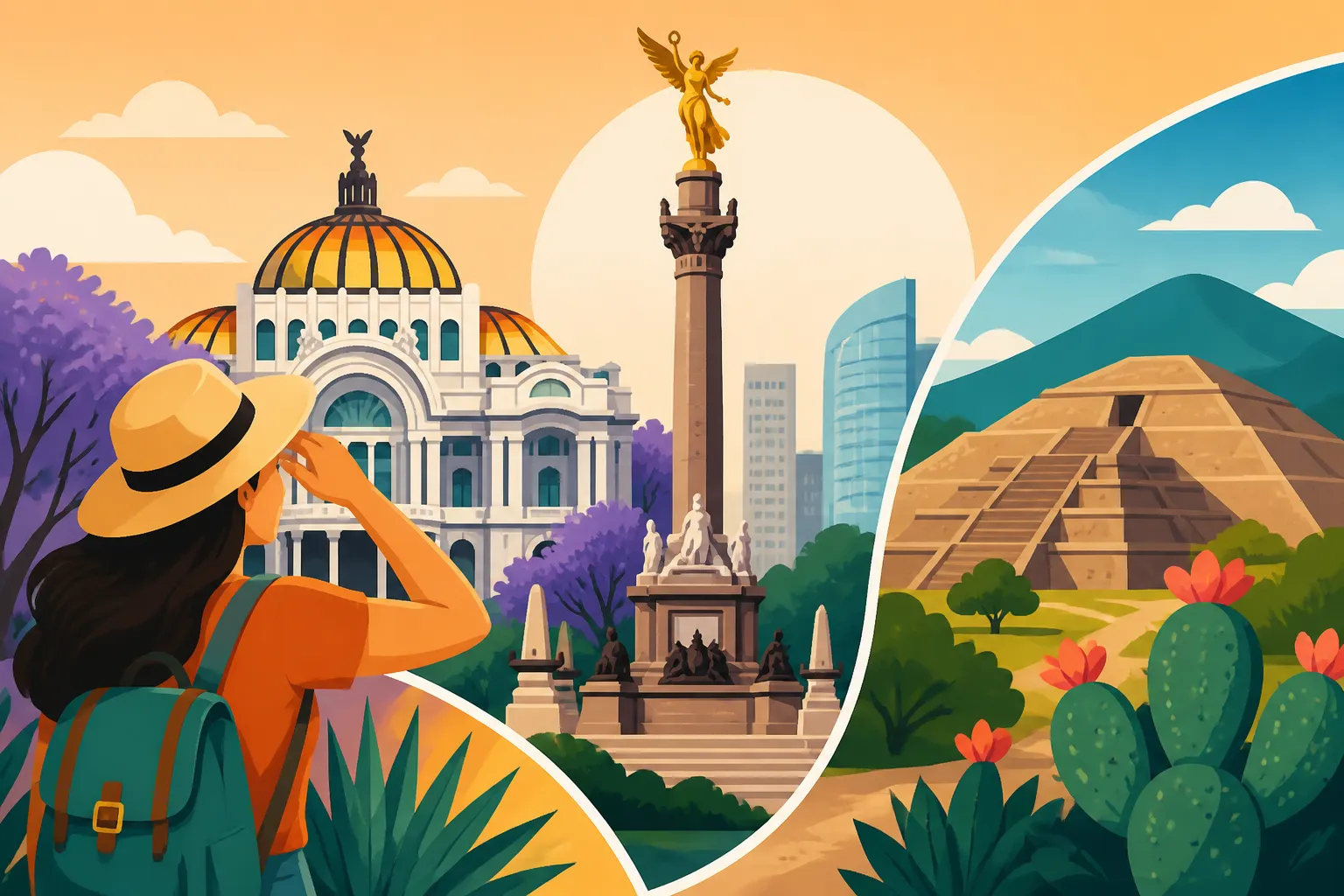
As the afternoon winds down, make your way towards the iconic Palacio de Bellas Artes (Palace of Fine Arts). Even if you don't go inside for a show or museum visit, the building itself is a masterpiece of Art Nouveau and Art Deco architecture. Its gleaming white marble exterior, crowned with a vibrant orange and yellow tiled dome, is one of the city's most recognizable landmarks. Stroll through the adjacent Alameda Central, Mexico City’s oldest public park, a lovely green space perfect for people-watching. For an unbeatable panoramic view of Bellas Artes and the Alameda, head up to the observation deck of the Torre Latinoamericana. The view, especially around sunset, is absolutely spectacular and gives you a real sense of the city’s vastness.
For dinner, stick around the Centro Histórico. There are countless traditional restaurants offering everything from casual antojitos (street snacks) to more formal dining. Don't be afraid to try some local street food, just look for busy stalls with high turnover for freshness, and maybe keep an eye on our tips for Street Food in Mexico: Tacos, Tamales, and More.
Day 2: Culture, Green Spaces, and Bohemian Vibes
Day two takes you away from the colonial core into the expansive green lungs of the city and its more bohemian neighborhoods, offering a different flavor of Mexico City life. This is where you can truly appreciate the urban planning and diverse cultural offerings.
Morning: Chapultepec Park and Castle
Start your day early and head to Bosque de Chapultepec (Chapultepec Park), one of the largest city parks in the world. It’s far more than just a park; it’s a massive urban oasis filled with museums, a zoo, botanical gardens, lakes, and even a castle. Think of it as Mexico City’s answer to Central Park, but with a much richer historical tapestry.
Your primary target should be Castillo de Chapultepec (Chapultepec Castle). Perched atop Chapultepec Hill, this beautiful castle has served as a military academy, imperial residence for Emperor Maximilian I, and presidential home. Today, it houses the National Museum of History. The climb up (or a quick ride on the mini-train) is worth it for the incredible views alone, offering sweeping vistas of Paseo de la Reforma and the city skyline. Inside, you’ll find exquisite royal carriages, period furniture, and fascinating exhibits detailing Mexico’s history. Walking through its grand halls and manicured gardens, you'll feel transported to a bygone era. Booking tickets online in advance is highly recommended, especially on weekends, to avoid long queues.
Afternoon: National Museum of Anthropology and Roma/Condesa
After descending from the castle, make your way to the magnificent Museo Nacional de Antropología (National Museum of Anthropology). Located within Chapultepec Park, this museum is world-renowned and a true highlight of any trip to Mexico City. Seriously, even if you’re not a huge museum person, carve out at least 3-4 hours for this one. Its vast collection covers Mexico's pre-Hispanic civilizations, from the Olmec and Maya to the Aztec. The iconic Aztec Sun Stone (Piedra del Sol) is a centerpiece, and each regional hall is a journey in itself. The architecture of the museum, particularly the central paraguas (umbrella) fountain, is also stunning. You could spend days here, but even a focused afternoon will leave you awe-struck. For more on the city's incredible cultural institutions, explore our guide on Museums of Mexico City: Anthropology and Beyond.
As evening approaches, leave Chapultepec Park and venture into the charming, tree-lined neighborhoods of Roma Norte or Condesa. These areas are known for their Art Deco architecture, beautiful parks, independent boutiques, and an incredible array of restaurants, cafes, and bars. This is where you’ll find a more modern, yet still distinctly Mexican, vibe. It's the perfect spot to unwind after a day of intense sightseeing. Grab a coffee, stroll through Parque México or Parque España, and choose one of the many fantastic eateries for dinner. Whether you're looking for upscale dining, a casual taquería, or something international, you’ll find it here. This is also a great area to experience the vibrant nightlife if you're up for it.
Day 3: Artistic Legacies or Ancient Wonders
For your third and final day, you have a couple of fantastic options, depending on your interests and how much energy you have left. Both offer a deep dive into Mexico's rich cultural tapestry, but in very different ways.
Option A: Coyoacán and Frida Kahlo's Casa Azul
If you're an art lover or fascinated by bohemian history, dedicating your third day to Coyoacán is a must. This charming, colonial-era neighborhood feels like a world away from the bustling city center, with its cobblestone streets, colorful houses, and lively plazas.
Start your morning by heading directly to the Museo Frida Kahlo, also known as Casa Azul (the Blue House). This is where Frida Kahlo was born, lived, and died, and it's an incredibly intimate and poignant look into her life and work. You'll see her personal belongings, art, studio, and the vibrant gardens that inspired much of her creativity. This museum is immensely popular, and queues can be incredibly long. I cannot stress this enough: you absolutely must buy your tickets online in advance, weeks if not months ahead of time. Seriously, don't just show up expecting to get in. If you want to know more about this iconic location, we have a detailed guide on How to See Frida Kahlo's House (Casa Azul) in Mexico City.
After immersing yourself in Frida's world, spend some time exploring the rest of Coyoacán. Wander through the Jardín Centenario and the Plaza Hidalgo, which are often bustling with street performers, artisans, and families. Grab a churro, enjoy an esquite (corn in a cup), or simply sit and people-watch from one of the many cafes. The Mercado de Coyoacán is also a treat, a vibrant market where you can find everything from delicious street food to unique crafts and souvenirs.
This area is generally best reached by Uber or taxi, or by taking the Metro (Line 3) to Viveros/Coyoacán and then a short walk or taxi ride. For more practical details about getting around, check out Getting Around Mexico City: Metro, Metrobús, and Apps.
Option B: Xochimilco's Floating Gardens or a Day Trip to Teotihuacán
If you're not as drawn to art history or you've already had your fill of museums, Mexico City offers two other incredible experiences for day three, though you’ll likely only have time for one.
Xochimilco's Floating Gardens
A trip to Xochimilco offers a unique glimpse into Mexico City’s pre-Hispanic past. This area is famous for its ancient canals and colorful trajineras (flat-bottomed boats) that evoke the floating gardens (chinampas) of the Aztec empire. You can hire a trajinera with your group (or join a larger boat) and spend a leisurely afternoon floating down the canals, serenaded by mariachis, buying food and drinks from passing vendors, and enjoying a truly festive atmosphere. It's a wonderful, vibrant experience, especially with friends or family. It's also an excellent way to unwind after two busy days. If you're wondering how to get there and what to expect, our article on How to Visit Xochimilco From Mexico City will give you all the details.
Teotihuacán Pyramids
Alternatively, if you're up for a more ambitious adventure and truly want to see a monumental ancient site, consider a full-day trip to the Teotihuacán pyramids. Located just an hour or so outside of Mexico City, this UNESCO World Heritage site is home to the colossal Pyramid of the Sun and Pyramid of the Moon, as well as the Avenue of the Dead. Walking among these ancient structures, built by a mysterious civilization long before the Aztecs, is an awe-inspiring experience. You can even climb to the top of the Pyramid of the Sun (when allowed) for incredible views.
Getting to Teotihuacán usually involves taking a bus from the North Bus Terminal (Terminal Central del Norte) or, for convenience, booking a guided tour. Many tour operators, including those you can find on Viator, offer excellent packages that handle transportation and provide knowledgeable guides, making the logistics much smoother. This is a full commitment and will likely take up most of your day, so plan accordingly. If this sounds like your cup of tea, our guide on How to Visit Teotihuacán From Mexico City has all the information you'll need.
Whichever option you choose, remember that Mexico City thrives on its food culture. Make sure to try some authentic Mexican breakfast like chilaquiles, savor some tacos al pastor from a street cart for lunch, and enjoy a nice dinner in the evening. Don't forget to review our Eating Out in Mexico: Restaurant Etiquette and Tipping Guide for some useful tips.
Navigating Mexico City: Practical Advice for Your Trip
Mexico City is enormous, and getting around efficiently is key to making the most of your three days. Here are some essential tips I've picked up over the years.
Transportation Tips
The Metro is incredibly efficient, extensive, and cheap. It’s a fantastic way to cover long distances quickly, especially between the Historic Center and areas like Chapultepec. Just be aware that during rush hour (roughly 7-9 AM and 6-8 PM), it can get incredibly crowded. Women traveling alone may prefer using the designated "women and children only" cars at the front of the train during peak times. A single ride is usually 5 pesos, which is less than 30 cents USD. You'll need to buy a rechargeable Metro Card at any station.
For convenience and direct routes, ride-sharing apps like Uber and Didi are widely available and generally safe and affordable. They're perfect for evenings, when you're tired, or when navigating areas less served by the Metro. Always confirm the license plate and driver's name before getting into the car. Taxis are also plentiful but generally, ride-sharing apps offer a more transparent pricing system and a record of your trip. Our article on How to Use Uber and Ride-Hailing Safely in Mexico has more details.
Walking is, of course, the best way to explore neighborhoods like the Centro Histórico, Roma Norte, Condesa, and Coyoacán. Just be sure to wear comfortable shoes – you'll be putting in a lot of steps!
Essential Logistics and Booking
- Book Accommodations Early: Especially if you're traveling during peak season, securing your hotel or Airbnb in advance is crucial. Websites like Booking.com are invaluable for finding a place that fits your budget and desired neighborhood.
- Museum Tickets: For popular attractions like the Frida Kahlo Museum and Chapultepec Castle, buying tickets online well in advance is non-negotiable. This saves you hours of queuing.
- Bus Tickets for Day Trips: If you plan on taking a bus to Teotihuacán or anywhere else, you can usually buy tickets at the bus station. However, for more popular routes or holidays, using services like Busbud to book ahead can be a smart move, ensuring you get your preferred time slot and avoid last-minute stress.
- Altitude Adjustment: Mexico City sits at over 7,300 feet (2,240 meters) above sea level. You might feel a bit breathless or get a headache on your first day. Take it easy, stay hydrated, avoid excessive alcohol, and don't push yourself too hard. It usually takes a day or two to adjust.
- Safety: Like any major city, exercise caution. Be aware of your surroundings, especially in crowded areas or at night. Avoid flashing expensive belongings, keep your phone secure, and use reputable transportation. It’s always a good idea to read up on Staying Safe in Mexico: Practical Tips for Travelers.
Food and Drink
- Water: Always drink bottled or filtered water. Tap water is generally not safe for consumption, even for brushing teeth for those with sensitive stomachs.
- Food Safety: Embrace the street food! It's delicious and often very safe, but again, look for places with high turnover. If it's freshly cooked and hot, you're usually good to go.
- Dining Culture: Mexico has a vibrant dining scene. Meals are often a social affair, and dinner tends to be later than in many Western countries, typically starting after 8 PM.
| Day | Morning (9:00 AM – 1:00 PM) | Afternoon (1:00 PM – 5:00 PM) | Evening (5:00 PM Onwards) |
|---|---|---|---|
| Day 1 | Zócalo, Metropolitan Cathedral, Palacio Nacional | Templo Mayor, Alameda Central, Torre Latinoamericana | Dinner in Centro Histórico, Bellas Artes (exterior) |
| Day 2 | Chapultepec Park, Chapultepec Castle | National Museum of Anthropology | Explore Roma Norte/Condesa, Dinner |
| Day 3 | Option A: Frida Kahlo Museum, Coyoacán Plazas | Option A: Mercado de Coyoacán, Neighborhood Exploration | Farewell Dinner, Rooftop Bar (optional) |
| Option B: Teotihuacán Pyramids (full day tour) | Option B: Teotihuacán Pyramids (continued) or Xochimilco | Relaxed Dinner in your chosen neighborhood |
Embracing the Chaos and Charm
Three days in Mexico City is just enough to scratch the surface, but this itinerary hits the major cultural and historical touchstones that truly define this incredible city. You’ll experience the ancient, the colonial, and the modern, all layered on top of each other. Don’t try to see absolutely everything; instead, savor the moments, embrace the sounds, smells, and tastes, and let yourself get lost (safely!) in the city’s undeniable charm. Every corner of Mexico City tells a story, and even a short visit will leave you with a profound sense of its history and vibrant contemporary life. Just remember that the true magic often lies in the unexpected detours and the warmth of its people.
Disclaimer
Please note that travel information, entry requirements, and opening hours for attractions can change. Always check the latest official sources for up-to-date details before planning your trip. This guide provides general information and recommendations based on typical tourist experiences.