Staying Safe in Mexico: Practical Tips for Travelers
Most people planning a trip to Mexico hit the same wall. Headlines say one thing, friends who just got back say another, and nobody gives practical advice for the street you’ll actually be standing on. This guide covers the habits that matter on the ground: where to stay, how to get around, how to handle money and scams, and what to do if something goes wrong.
Disclosure: This post may contain affiliate links. We may earn a commission at no extra cost to you if you make a purchase through these links. Read full disclosure.
Understanding Real Risk in Mexico Versus the Headlines
When I first moved here, my family back home forwarded me every alarming news story they found. They meant well, but the stories rarely matched the Mexico I was living in. That didn’t mean I could switch my brain off. Staying safe here is about understanding which risks apply to you as a visitor, rather than worrying about everything at once.
Why State-Level Warnings Are Too Blunt
Government travel advisories usually rate Mexico state by state. That’s a reasonable start, but it can mislead. A single state can contain a busy, well-policed tourist city and rural highway stretches you’d be wise to skip. Quintana Roo is a good example. Cancún’s Hotel Zone, the ferry docks to Isla Mujeres, and the cenote roads around Tulum are three very different environments under one label.
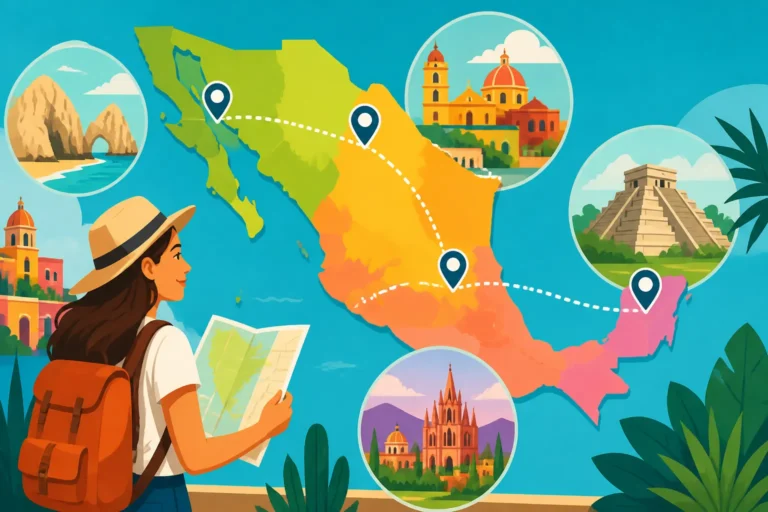
A more useful approach is to read the advisory, then drill down to the city, the neighborhood, and the specific route you plan to travel. If you’re building an itinerary across several regions, Mexico Travel Safety by Region: What to Know breaks down how conditions differ from the Yucatán to the northern border. I recommend reading it before you lock in your flights.
The Crimes Travelers Actually Encounter
The cartel violence that dominates international coverage mostly involves people inside that world. As a visitor, you’re far more likely to run into opportunistic crime. That means pickpocketing on a crowded Metro car, a phone snatched from a café table, card skimming at a dodgy ATM, or an inflated taxi fare. None of it is pleasant, but almost all of it is preventable with good habits.
Picture a typical scenario. You’re in the Centro Histórico of Mexico City, photographing the Zócalo with your phone held loosely at arm’s length, backpack unzipped. You’re not in danger in any dramatic sense, but you’ve made yourself the easiest target in the square. Shift the backpack to your front, keep the phone close, and step into a doorway to check maps. You’ve just removed most of your risk. The rest of this guide builds on that idea.
Choosing Where to Stay and Walk
Your accommodation choice probably does more for your safety than any other single decision. A well-located base means shorter rides at night, livelier streets on your walk home, and staff who can tell you which blocks to avoid.
Picking a Neighborhood Before You Book
In big cities, neighborhoods popular with visitors tend to have good lighting, foot traffic late into the evening, and plenty of open businesses. In Mexico City that usually means Roma Norte, Condesa, Polanco, or Coyoacán. In Guadalajara, people often pick Colonia Americana or Chapultepec. In Oaxaca City, most stay in Centro or nearby Jalatlaco. These areas aren’t crime-free, but they’re places where a visitor walking at dusk doesn’t stand out.
When you search on Booking.com, use the map view rather than the list. A cheap listing can turn out to be across a highway or beside a poorly lit industrial zone. Read the recent reviews and search for words like “street,” “walk,” “night,” and “noise.” Guests are often blunt about whether they felt comfortable returning after dark. For a city-by-city breakdown of what to look for, see How to Choose Safe Neighborhoods to Stay in Mexico.
Reading the Street Once You Arrive
Once you’ve checked in, spend your first afternoon walking a loop around your base in daylight. Notice where the pharmacies, OXXO convenience stores, and late-opening taquerías are, because those are the anchors of a safe evening walk. Also notice where the sidewalk suddenly empties out or the streetlights thin. In many Mexican cities, conditions can change within two or three blocks.
Ask the front desk or your host directly: “¿Es tranquilo caminar por aquí en la noche?” Locals generally give honest, specific answers. They might say the main avenue is fine but the side street by the market isn’t, or that you should take a car after midnight. That kind of local knowledge beats any online forum. Treat it as the final word for that neighborhood.
Getting Around Safely
Transport is where most visitors feel least in control. You’re tired, carrying luggage, and dealing with an unfamiliar system in a second language. A few rules of thumb make a huge difference.
Taxis, Ride-Hailing, and Airport Arrivals
The golden rule in Mexican cities is simple: don’t flag random taxis off the street, especially at night. Use an app or a sitio, which is an official taxi stand tied to a specific base. At airports, buy a ticket from the authorized taxi booths inside the terminal rather than accepting offers from people approaching you in arrivals. That approach is a classic setup for overcharging.
Ride-hailing apps are widely used in larger cities. They give you a driver’s name, plate number, and a GPS trail you can share with a friend. Always match the plate before getting in, and ask “¿Para quién?” (“Who’s it for?”) rather than offering your name first. For more detail, read How to Use Uber and Ride-Hailing Safely in Mexico and How to Stay Safe Taking Taxis in Mexico. Both cover the small checks that prevent most problems.
Long-Distance Buses and Domestic Routes
Mexico’s first-class and executive bus network is honestly one of the best ways to travel the country. Lines like ADO, ETN, and Primera Plus run comfortable coaches from terminal to terminal, with assigned seats, luggage tags, and passenger lists. These services generally take toll highways, which are better maintained and patrolled than the free roads.
If you’re unsure which companies serve your route, Busbud lets you compare operators and departure times in English and book ahead. That spares you from scrambling at a terminal ticket window late in the evening. Wherever possible, choose daytime departures for long routes, and keep valuables in a small bag on your lap rather than in the overhead rack. You’ll find more on the premium lines in Long-Distance Buses in Mexico: ADO and Premium Lines.
Driving and Road Trips
Road-tripping the Yucatán or Baja is a wonderful experience, but driving brings its own set of risks. These include topes (speed bumps that appear without warning), livestock on rural roads, potholes, and very limited help if you break down in the middle of nowhere. The most consistent advice from long-term residents is to stick to cuotas (toll roads) and avoid driving after dark outside cities.
Plan your fuel stops, download offline maps, and tell someone your expected arrival time. Stick to well-known PEMEX or branded stations and watch the pump being reset to zero. Is It Safe to Drive at Night in Mexico? Road Safety Tips for Expats goes deeper into why night driving is the one rule almost nobody here breaks.
| Transport Option | Safety Level for Visitors | Main Risks | Best Practice |
|---|---|---|---|
| Street-hailed taxi | Lower | Overcharging, unlicensed drivers | Avoid at night and use a sitio instead |
| Sitio or airport authorized taxi | Higher | Occasional fare disputes | Prepay at the official booth |
| Ride-hailing app | Higher | Wrong vehicle pickups | Match the plate and share your trip |
| First-class bus | Higher | Petty theft of unattended bags | Keep valuables on your lap and travel by day |
| Second-class bus | Moderate | Frequent stops, less security screening | Use for short daytime hops only |
| Rental car on toll roads | Moderate to higher | Topes, fatigue, breakdowns | Drive in daylight and carry offline maps |
| Rental car on free roads at night | Lower | Poor lighting, animals, limited help | Avoid whenever possible |
Money, Scams, and Your Documents
Most bad days that travelers have in Mexico come down to money or paperwork. That could be a drained account, a scam that costs an afternoon and some cash, or a lost passport two days before a flight home.
ATMs and Card Habits
Use ATMs located inside bank branches, shopping malls, or supermarkets rather than standalone machines on the street. They’re less likely to have skimmers attached, and you’re less exposed while you count your pesos. Withdraw during daylight. Wiggle the card slot before inserting your card, and cover the keypad with your hand as you type your PIN.
There’s also a quieter trap. When the screen offers to charge you “in your home currency,” decline it and choose pesos. That conversion offer almost always comes with a worse exchange rate. Dynamic Currency Conversion at Mexican ATMs: The ‘Charge in Dollars’ Trap explains exactly how it works. For the practical security steps at the machine itself, see How to Withdraw Pesos Safely From ATMs in Mexico.
Common Scams Aimed at Visitors
The scams here are rarely sophisticated, which is exactly why people fall for them. One is the “virtual kidnapping” phone call, where someone claims to be holding a relative or threatens you directly in your hotel room. Another is the friendly stranger who “helps” you at an ATM. There are also timeshare pitches disguised as free tours, and restaurants that bring a menu without prices and then a shocking bill.
The defense against all of these is to slow down. If a call or encounter creates sudden urgency, hang up or walk away, then verify independently. In crowded markets and on the Metro, keep your phone in a front pocket. Carry a small “decoy” amount of cash separate from your main stash. Read Avoiding Common Scams in Mexico before you land, and Street Safety: Tips for Avoiding Pickpockets and Scams in Mexico if you’ll be spending a lot of time in busy city centers.
Protecting Your Passport
You don’t need to carry your passport everywhere in most tourist areas. Lock it in your room safe and carry a clear photo of the photo page plus a copy of your entry record. Keep digital copies in your email or a cloud folder too, so you can access them from any device if your phone is stolen.
If the worst happens, the process is manageable but takes time. File a police report, contact your embassy or nearest consulate, and plan for possible changes to your travel dates. The step-by-step version is in What to Do If You Lose Your Passport in Mexico, and it’s worth skimming before you need it rather than after.
Nightlife, Beaches, and Tours
The best parts of a Mexico trip often happen after dark, in the water, or on a tour far from your hotel. They’re also where visitors tend to relax their guard.
Enjoying Bars and Clubs Without Trouble
Mexican nightlife is generous and friendly, but drink spiking does happen, particularly in party-heavy zones of Cancún, Playa del Carmen, and Tulum. Watch your drink being poured and never leave it unattended. Be cautious with very cheap open-bar promotions, where unregulated alcohol has caused serious illness in the past. Go out with at least one person you trust, and agree on a meeting point before the night starts.
Plan your ride home before you leave. Book an app ride from inside the venue, or ask staff to call a sitio. That’s far safer than wandering the street looking for a cab at closing time. Nightlife in Mexico: Tips for Expats on Enjoying Bars and Clubs Safely covers venue-specific advice for the major party cities.
Ocean, Cenote, and Outdoor Safety
The Pacific coast in particular has powerful rip currents, and plenty of beaches have no lifeguard on duty. Learn the colored flag system, and if locals aren’t swimming somewhere, take the hint. Cenotes are generally calm, but they can be deep, dark, and cold. Wear the life jacket when it’s offered, even if you’re a strong swimmer.
Sun and heat are underestimated risks too. A long day at Chichén Itzá or Teotihuacán with no shade can take more out of you than you’d expect. Carry water, wear a hat, and plan exposed visits for early morning. Before any coastal trip, read Beach Safety 101: How to Read Warning Flags and Stay Safe in the Ocean.
Booking Tours With Vetted Operators
Not every activity needs a guide, but some genuinely do. Remote ruins like Calakmul, boat trips, whale shark swims, and cave dives all involve logistics or conditions where a reputable operator matters. The warning signs of a bad operator include no visible insurance, no safety briefing, overloaded boats, and pressure to pay cash to a street vendor.
Platforms like Viator are useful because they show reviews from a large pool of past customers. They also lay out cancellation terms clearly, which matters during hurricane season. Read the recent one- and two-star reviews, not just the average, because they reveal recurring safety issues. Whether you book online or locally, Tour Safety in Mexico: Vetting Operators and Reading Reviews Properly walks you through what to check before handing over money.
When Something Goes Wrong
Even careful travelers sometimes need help. The goal is to know your first three moves in advance so you aren’t figuring them out in a panic.
Emergency Numbers and Who to Call
Mexico uses 911 as its national emergency number for police, fire, and medical calls. Operators in major tourist areas may speak some English, but don’t count on it. Learn a few key phrases, like “Necesito ayuda” (I need help) and “Hubo un accidente” (There’s been an accident), along with how to say the address of where you’re staying. Save your embassy’s phone number and your hotel’s direct line in your phone.
For a full list of services and how they operate, keep Emergency Numbers in Mexico: How to Call Police, Fire, or Ambulance bookmarked. On highways, the Green Angels roadside assistance service patrols major routes and can help with breakdowns. It’s useful to know about on a long road trip.
Handling a Police Stop
Most interactions with police are routine, especially if you’re driving a rental. Stay calm, keep your hands visible, and be polite. Ask what the violation is. If you’re issued a fine, you can usually ask to pay it at the station or through official channels rather than on the spot. Don’t hand over your original license if you can avoid it, and never escalate an argument at the roadside.
Requests for an informal on-the-spot payment do still happen in some places. How you respond affects both your safety and your wallet. What to Do If You’re Pulled Over by Police in Mexico explains your options in detail, including the phrases that tend to calm the situation down.
Building Your Personal Safety Routine
The travelers I know who never seem to have problems aren’t lucky. They follow the same small routine everywhere they go. Here’s the version I’ve refined over years of living here:
- Before booking, check the city and neighborhood rather than just the state, and read recent guest reviews about the walk home at night.
- On arrival, prepay an authorized airport taxi or book an app ride, and match the plate before you get in.
- On your first afternoon, walk a daylight loop around your accommodation and ask staff which streets to avoid.
- Lock your passport in the safe and carry a photo of it plus a small amount of cash in a separate pocket.
- Withdraw money only from ATMs inside banks or malls during daylight, and always choose to be charged in pesos.
- Book long-distance buses and tours ahead with established operators, favoring daytime departures.
- On nights out, watch your drink, stay with a friend, and arrange your ride home from inside the venue.
- Share your live location with someone at home whenever you travel between cities.
- Save 911, your embassy, and your hotel’s number in your phone, along with a few emergency phrases in Spanish.
Follow those steps and the Mexico you’ll experience is the one most of us who live here know. It’s warm, welcoming, a little chaotic, and far less frightening than the headlines suggest.
Disclaimer
This article is for general informational purposes only and does not constitute professional advice. Laws, prices and regulations vary by location and change over time. Consult a qualified professional for guidance on your specific situation.