Emergency Numbers in Mexico: How to Call Police, Fire, or Ambulance
I remember the paralyzing panic of hearing a gas leak hiss in my Oaxacan kitchen at 2 AM and realizing I had no idea who to call or if they would even speak English. It is a terrifying moment of vulnerability that nearly every newcomer faces when the honeymoon phase of moving abroad hits a wall. This guide ensures you are never caught off guard, providing the exact numbers and cultural context needed to handle medical, fire, or safety crises in Mexico.
Disclosure: This post may contain affiliate links. We may earn a commission at no extra cost to you if you make a purchase through these links. Read full disclosure.
Understanding the Unified 911 Emergency System in Mexico
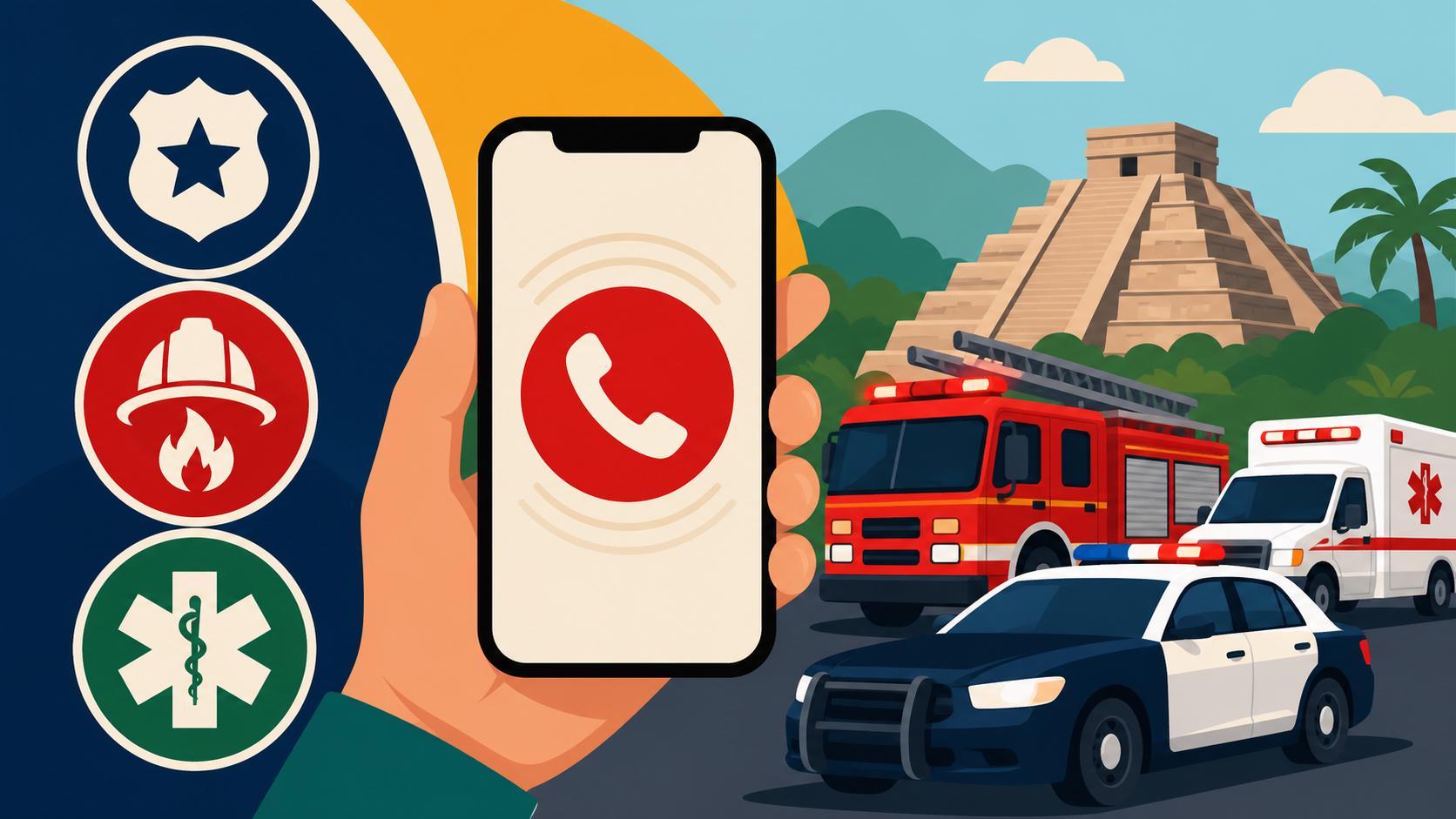
For a long time, Mexico operated on a fragmented system of emergency numbers that varied by state and service, which was a nightmare for both locals and expats. Fortunately, the country has transitioned to a unified 911 system, much like the one used in the United States and Canada. This was a massive administrative undertaking, and while the system is now standard nationwide, the experience of calling it can still be quite different from what you might expect back home.
When you dial 911 in Mexico, your call is routed to a C4 (Control, Command, Communication, and Computing) or C5 center. These are high-tech hubs where dispatchers coordinate with the police, the Red Cross, and the fire department. However, the efficiency of these centers can vary wildly depending on your location. In a major hub like Mexico City or Guadalajara, the technology is state-of-the-art. In a remote village in Chiapas, the response might rely more on local volunteers or municipal police who have limited resources.
One thing I learned the hard way is that your phone's connectivity matters immensely during a crisis. If you are using a roaming SIM from home, the network might struggle to pinpoint your location. I highly recommend using a local solution or a reliable e-SIM like Airalo to ensure you are hitting the local towers directly. This small technical detail can save precious minutes when a dispatcher is trying to find your coordinates in a city where street signs are often missing or obscured.
What to Expect When the Dispatcher Answers
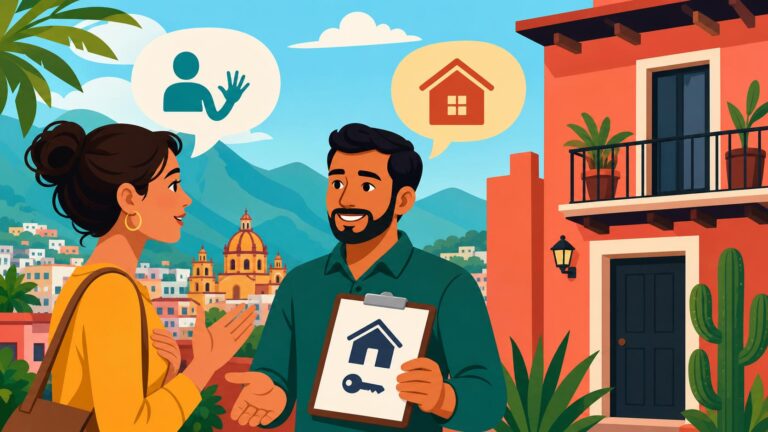
The dispatchers are trained to follow a specific protocol, asking for your location, the nature of the emergency, and your contact details. Do not be surprised if they ask you for the "colonia" (neighborhood) and the "entre calles" (the two streets your location is between). In Mexico, knowing your cross streets is often more important than knowing your exact house number because GPS mapping can be unreliable in older neighborhoods with convoluted layouts.
If your Spanish is still a work in progress, remain calm. While many 911 centers in tourist-heavy areas like Cancún or San Miguel de Allende have English-speaking operators, it is not a guarantee. If you are staying at a co-living space like Selina, the staff is usually very well-versed in local emergency protocols and can act as an intermediary. If you are alone, having a list of Overcoming Language Barriers at the Doctor: Tips for Expats nearby can help you stay focused on the essential vocabulary needed to describe your situation.
Navigating Specific Emergencies: Police, Fire, and Ambulance
While 911 is the umbrella number, understanding how individual services operate will help you manage your expectations. In Mexico, the "police" are not a single entity; they are a multi-layered system including Municipal, State, and Federal forces (now largely consolidated under the National Guard). This can be confusing when you see different uniforms and vehicle markings patrolling your street.
Contacting the Police and Reporting Crimes
For most immediate safety concerns, such as a break-in or a domestic disturbance, the municipal police will be the first responders. It is a harsh reality that Safety in Mexico: What Expats Need to Know About Staying Safe often involves understanding that police response times can be slow. In some areas, residents have formed "Vecinos Vigilantes" (Watchful Neighbors) groups on WhatsApp, which can sometimes be faster than calling the authorities.
If you are a victim of a crime that is not an active emergency—like a stolen phone or a dented car—you usually won't call 911. Instead, you must go to the "Ministerio Público" to file a "denuncia" (official report). This is a bureaucratic process that can take hours, but it is legally required for insurance claims or if you need to replace Lost Your FMM or Residency Card? Steps to Replace Lost Immigration Documents. I always suggest bringing a Spanish-speaking friend or a professional translator to ensure your statement is recorded accurately.
Fire Services and the Role of Bomberos
The "Bomberos" (firefighters) in Mexico are often heroic figures who work with significantly less funding than their international counterparts. In many cities, the fire department is a non-profit organization supported by "patronatos" (boards of donors) rather than being fully funded by taxes. When you call for a fire emergency, be prepared to provide very specific details about the type of fire (electrical, gas, or brush).
Because gas lines in Mexico are often external and use stationary tanks (tanques estacionarios) or cylinders, gas leaks are a common reason for calling the firefighters. If you smell gas, don't just call 911; turn off your main valve if it is safe to do so. I’ve found that many expats prefer to buy high-quality gas detectors on Amazon Mexico to catch these leaks before they become a 911-level event. Preventive tools like these are worth every peso for the peace of mind they provide in older Mexican homes.
Medical Emergencies and the Ambulance System
This is perhaps the most critical area for expats to understand. In Mexico, there are two types of ambulances: public (often run by the Cruz Roja or Red Cross) and private. When you dial 911, they will typically dispatch a Red Cross ambulance. These are generally free or "donation-based," but they are often overworked and may take a long time to arrive.
If you have Health Insurance in Mexico: How Expats Can Get Coverage (2027), your policy may include a private ambulance service. These are usually much faster and equipped with more advanced life-support technology. I keep the direct number of a private ambulance service taped to my fridge and saved in my phone. In a life-threatening situation, knowing Calling an Ambulance in Mexico: How Emergency Services Operate can be the difference between waiting forty minutes for a public unit or ten minutes for a private one.
| Service Type | Phone Number | Best For | Pro-Tip |
|---|---|---|---|
| General Emergency | 911 | Immediate danger to life or property | Say "Tengo una emergencia" (I have an emergency) immediately. |
| Roadside Assistance | 078 | Vehicle breakdowns on highways | This is the "Angeles Verdes" (Green Angels) service. |
| Red Cross | 065 | Medical transport (Public) | May be slower; expect to give a small donation if possible. |
| Tourist Assistance | 01 800 008 9090 | Legal or travel help for foreigners | Operated by SECTUR for tourist-related complaints or help. |
| Non-Emergency Police | Local Station | Filing reports or noise complaints | Look up your specific "Delegación" or "Módulo" number. |
Practical Tips for Communication and Response
When the adrenaline is pumping, your brain might forget every bit of Spanish you’ve learned. It’s helpful to have a "cheat sheet" in your wallet or on your phone's lock screen. Beyond just the numbers, you need to know how to describe where you are. In Mexico, addresses are structured differently. You will need to know your "Código Postal" (Zip Code) and the name of your "Municipio."
Essential Spanish Phrases for Emergencies
Don't worry about perfect grammar. The goal is to be understood as quickly as possible. Here are the phrases that have helped me and my friends during our years living here:
- "Necesito una ambulancia." (I need an ambulance.)
- "Hay un incendio." (There is a fire.)
- "Me están robando." (I am being robbed.)
- "Estoy en la calle [Name] entre [Street 1] y [Street 2]." (I am on [Name] street between [Street 1] and [Street 2].)
- "No hablo mucho español, ¿hay alguien que hable inglés?" (I don't speak much Spanish, is there someone who speaks English?)
If you are managing a Medical Emergencies in Mexico: What Expats Should Know and Prepare situation, you should also have your blood type and any major allergies written down in Spanish. I actually keep a small card in my phone case with my Cigna Global policy number and my emergency contact's info.
The Angeles Verdes: Mexico’s Highway Heroes
If you are a fan of Taking Road Trips in Mexico: Safety and Planning Tips, you absolutely must know about the "Angeles Verdes" (Green Angels). They are a fleet of green trucks operated by the Ministry of Tourism that patrol all major federal highways. They provide free mechanical assistance, basic first aid, and even fuel if you run out.
To reach them, you dial 078. They are a godsend if you get a flat tire or an overheated engine in the middle of a stretch of highway between cities. While their labor is free, you are expected to pay for any parts or fuel they provide. It’s one of those uniquely Mexican services that makes living here feel a bit more supported, despite the administrative hurdles we often complain about.
Regional Specifics and Secondary Numbers
While 911 is the gold standard, some cities have developed their own apps and secondary lines to improve response times. For example, in Mexico City, the "Mi Policía" app allows you to identify the specific police quadrant you are in and call the officer assigned to that exact block. This is often much faster than going through a central dispatcher.
Civil Protection and Natural Disasters
Mexico is a land of incredible beauty but also significant natural risks, including earthquakes and hurricanes. Earthquake Preparedness: Safety Tips for Expats in Seismic Zones is a mandatory topic if you live in places like CDMX, Oaxaca, or Guerrero. The "Protección Civil" (Civil Protection) is the agency in charge of disaster response. They don't just handle the aftermath; they also manage the seismic alert systems that give you those precious seconds to evacuate.
In coastal areas, you should also be aware of Hurricane Season Prep: Tips for Expats Living on the Coast. During these events, 911 lines can become overwhelmed. Local municipalities will often release temporary WhatsApp numbers or radio frequencies for emergency updates. Staying connected to local expat groups on social media can help you stay informed about these regional nuances.
Using Community Resources
One of the best parts of the expat lifestyle is the community. If you are staying at a Selina location or another organized hub, take advantage of their local knowledge. Ask the front desk for the "números locales." Sometimes, the local neighborhood association has a private security firm that is much more responsive than the city police for minor issues like Noisy Neighbors and Fireworks: Dealing with Noise in Mexico.
Lastly, always make sure your phone is charged and has credit. Using a service like Airalo ensures that even if your home-country carrier fails, you have data to use translation apps or VOIP calling. I also suggest keeping a backup power bank from Amazon Mexico in your "go-bag" or car. You never want to be in a situation where you need to call for help but your screen is black.
Emergency Numbers in Mexico Disclaimer
This guide is intended for informational purposes and reflects the personal experiences and research of the author living as an expat in Mexico. Emergency protocols, phone numbers, and response qualities can change without notice based on local government policies or infrastructure updates. While we strive for accuracy, always verify emergency contact information with your local municipality or embassy upon arrival in a new area. In a life-threatening situation, your first priority should always be to seek immediate help through the official 911 channel.