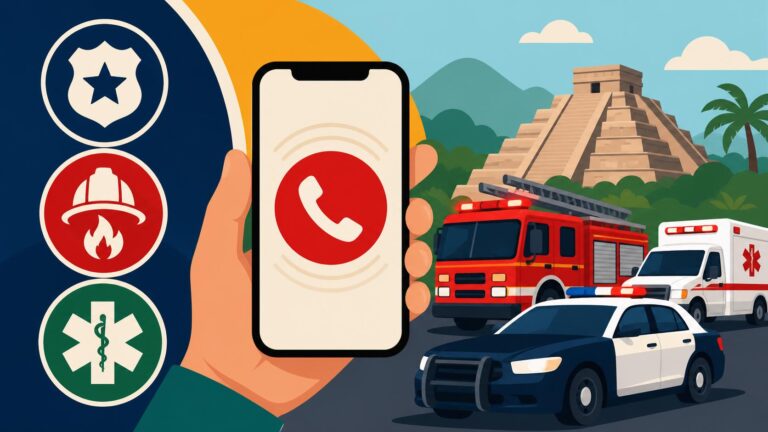
Safety in Mexico: What Expats Need to Know About Staying Safe
The cognitive dissonance between the media narrative of Mexico and the lived reality of an expat is staggering. However, dismissing the safety concerns entirely as “fake news” is just as dangerous as paralyzing paranoia. Mexico is a complex, massive, and developing nation. It demands respect, situational awareness, and a fundamental rewiring of your North American safety habits. This comprehensive guide strips away the clickbait and provides a candid, brutally honest, and deeply practical breakdown of safety in Mexico. From decoding the actual threat of cartel violence to avoiding the rampant “virtual kidnapping” scams and securing your physical home, here is the unvarnished truth about staying safe in your new country.
Disclosure: This post may contain affiliate links. We may earn a commission at no extra cost to you if you make a purchase through these links. Read full disclosure.
1. The Two Mexicos: Decoding the Cartel Narrative
To understand safety in Mexico, you must first understand that there is no single “Mexico.” The country is geographically immense, and safety levels vary wildly not just from state to state, but from neighborhood to neighborhood.
The Business of Organized Crime
The predominant fear for new arrivals is cartel violence. The reality is that the major transnational criminal organizations in Mexico are multi-billion-dollar logistics empires. They are fighting brutal, violent wars over multi-ton drug trafficking routes, extortion territories, and political influence.
You, as a mid-level digital nomad, a retiree in Lake Chapala, or a remote worker in Oaxaca, are not their target demographic. Kidnapping or harming a foreign national is generally viewed by organized crime as terrible for business. It brings the intense, unwanted heat of the federal government, the military, and international media directly to their doorstep.
Violence in Mexico is overwhelmingly targeted and localized. When you read about a horrific event in the news, it is almost exclusively violence between rival syndicates or clashes with the Mexican military.
How Expats Get in Trouble
When foreign nationals do fall victim to severe violence in Mexico, it is tragically almost always tied to one of three things:
- Buying or Selling Narcotics: If you move to Playa del Carmen or Tulum and attempt to buy cocaine from a street dealer, you are voluntarily entering the cartel ecosystem. You instantly forfeit your “expat immunity.”
- Involving Themselves in Illicit Business: Attempting to run underground businesses, engaging in localized prostitution, or getting involved in money laundering.
- Collateral Damage (Wrong Place, Wrong Time): This is the most legitimate fear. While rare, innocent bystanders have been caught in the crossfire of targeted hits in specific bars or nightclubs known for drug sales in coastal resort towns. Avoiding establishments known for heavy drug activity is your best defense.

2. The Real Threat: Crimes of Opportunity
If the cartel is not looking for you, who is? The primary threat to expats in Mexico is the exact same threat you face in Barcelona, Rome, or parts of San Francisco: crimes of opportunity.
Mexico has significant wealth inequality. When you walk down the street carrying a $1,200 iPhone, wearing a $500 smartwatch, and carrying a premium laptop in your backpack, you represent several months of a local working-class salary.
Pickpocketing and Snatch-and-Grabs
In major urban centers like Mexico City, Guadalajara, and the tourist corridors of Cancún, pickpocketing is a refined art. Crowded metro cars, busy markets (tianguis), and packed public buses are the prime hunting grounds.
Furthermore, “snatch-and-grabs” are incredibly common. If you are sitting at a sidewalk cafe with your phone resting casually on the edge of the table, or you are standing on a street corner oblivious to your surroundings while texting, a thief on a motorcycle or scooter can snatch the phone from your hand and disappear into traffic in under three seconds.
Street Smarts and “No Dar Papaya”
In Latin America, there is a famous phrase: “No dar papaya” (Don’t give papaya). It means: Do not make yourself an easy, tempting target.
- Leave the Flash at Home: Do not wear expensive, flashy jewelry, Rolex watches, or massive diamond engagement rings in public. Blend in.
- The “Dummy” Wallet: Some expats carry a secondary, cheap wallet with $20 USD equivalent in pesos and a canceled credit card. If ever confronted by a mugger, they hand over the dummy wallet and walk away safely.
- Walk with Purpose: Look like you know exactly where you are going. Do not stand on a busy street corner at night staring confusedly at Google Maps. Step into a convenience store or a hotel lobby if you need to orient yourself.
3. The “Soft Landing” and Secure Basecamps
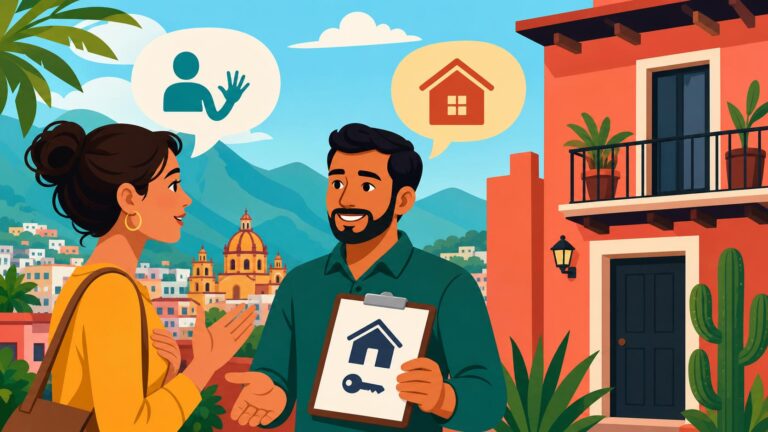
The most vulnerable time in your expat journey is your first month. You do not yet know which streets are safe, how the local taxis operate, or how to identify scams. The single greatest mistake new arrivals make is booking an unverified, cheap long-term rental in a neighborhood they have never physically visited, only to realize the area is entirely unsafe after dark.
The Basecamp Strategy
To mitigate this immense physical and financial risk, successful expats execute a “soft landing.” You should book temporary, highly secure accommodation for your first three to four weeks.
Utilizing a globally recognized co-living and co-working hub like Selina is the ultimate strategic move for your safety. Selina properties (located in prime hubs like CDMX, Oaxaca, Tulum, and Guadalajara) feature 24/7 front-desk security, keycard-restricted access to accommodations, and secure lockers.
More importantly, basing yourself at Selina provides an instant, built-in community. You can speak with the local bilingual staff and veteran expats to gather boots-on-the-ground intelligence. They will explicitly tell you which neighborhoods are safe to rent in, which blocks to avoid after 9:00 PM, and how to safely hail a ride in that specific city. Do not rush into a 12-month lease without leveraging the safety of a secure basecamp. For a broader look at establishing your initial footprint, review our Best Places to Live in Mexico for Expats (2027 Edition).
4. Digital Safety and Constant Connectivity
In Mexico, your smartphone is not just a tool for checking Instagram; it is your primary lifeline. If you find yourself in a sketchy neighborhood, your car breaks down on the highway, or you need to urgently contact emergency services, being disconnected is a massive safety hazard.
Day-One Connectivity
Attempting to navigate your first few days in Mexico by jumping from public Wi-Fi cafe to public Wi-Fi cafe is dangerous. You cannot order a secure Uber if you step outside the Wi-Fi zone.
To eliminate this vulnerability, smart expats download a digital eSIM from Airalo before their flight to Mexico even departs. With an Airalo Mexico data pack, your phone instantly connects to the local Telcel or AT&T network the exact second you land. You have immediate, uninterrupted access to WhatsApp, Google Maps, and ride-sharing apps, ensuring you can navigate securely from the airport to your accommodation without relying on aggressive, predatory airport taxi mafias.
The Virtual Kidnapping Scam (Secuestro Virtual)
Constant connectivity also protects you from one of the most terrifying and prevalent crimes in Mexico: the virtual kidnapping.
This is a psychological extortion scam. Criminals will call a family member (often back in the US or Canada) or even call you directly. They will scream into the phone, claiming they have kidnapped your loved one, playing audio of someone crying in the background, and demanding an immediate wire transfer to a convenience store (OXXO) to spare their life.
They do not have your family member. They have simply scraped social media or hotel registries to find names and phone numbers. The scam relies entirely on panic and the inability to reach the “victim.” If your family can instantly WhatsApp you, and you instantly reply because you are connected via Airalo, the scam immediately falls apart. You must educate your family back home about this specific scam before you move.
5. Securing Your Physical Home: The Fortress Mindset
When you begin touring local neighborhoods to rent a house, you will immediately notice a stark architectural difference compared to North American suburbs. Mexican homes often look like fortresses. They feature massive perimeter walls, steel gates, shattered glass cemented into the top of walls, electrified razor wire, and heavy iron bars (protecciones) on every single window.
Embracing the “Protecciones”
To a newcomer, this level of security feels terrifying. You might think, “If they need all these bars, this neighborhood must be a warzone.” You must flip this perspective.
In Mexico, physical home security is simply a cultural standard. Because local police response times can be slow or unreliable, Mexicans take property defense into their own hands. A house with heavy iron bars is not a sign of a bad neighborhood; it is a sign of a responsible homeowner. You should actively seek out rentals that feature robust protecciones.
Outfitting the “Naked House” for Security
When you rent an unfurnished home in Mexico, it is often stripped completely bare. While you must worry about buying a refrigerator and a stove, you must also prioritize outfitting the home’s security.
Navigating local hardware stores in broken Spanish to find reliable deadbolts or security cameras is frustrating. Seasoned expats heavily leverage Amazon Mexico to rapidly secure their new properties. Through Amazon’s robust domestic logistics network, you can order heavy-duty smart locks, Ring video doorbells, motion-sensor floodlights, and Wi-Fi-enabled interior security cameras directly to your new address. Utilizing Amazon Mexico allows you to upgrade your home’s physical perimeter and digital surveillance within 48 hours of signing your lease, providing immense peace of mind. We explore the logistics of leasing and furnishing empty homes in Renting a Home in Mexico: Complete Expat Guide to Leases, Deposits, and More.
Gated Communities (Cotos / Privadas)
If you want to bypass the need for heavy personal security entirely, you can rent a home in a coto or privada (a gated community). These neighborhoods feature 24/7 private security guards, controlled boom-gate access, and high perimeter walls. They are heavily favored by expat families and wealthy locals, though they carry a premium in monthly HOA (mantenimiento) fees.
6. Transportation Safety: The Rules of the Road
Navigating Mexico safely requires a strict adherence to local transit protocols. The rules of the road here are governed by different realities.
The Highway Rule: Never Drive at Night
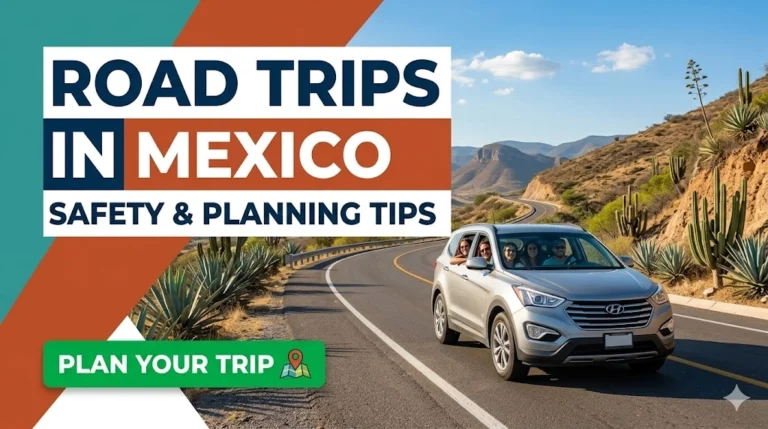
If you own a car, this is the most critical safety rule in Mexico: Never drive on inter-city highways after dark.
This is not just about cartels setting up fake checkpoints (though that is a risk in certain states). The primary dangers of night driving are infrastructural:
- Livestock: Cows, horses, and burros frequently wander onto the dark, unlit highways. Hitting a 1,000-pound animal at 70 mph is fatal.
- Vehicular Hazards: Brokendown delivery trucks often park in the middle of the active lane without hazard lights or flares.
- Potholes and Topes: Massive, vehicle-destroying potholes or unmarked, aggressive speed bumps (topes) are invisible at night.
If you must travel between cities, plan your journey so that you arrive at your destination well before the sun sets.
Cuotas vs. Libres
When navigating between cities, you will usually have two route options: the Cuota (toll road) or the Libre (free road).
Always take the Cuota. Toll roads in Mexico are generally world-class. They are well-paved, heavily patrolled by the Ángeles Verdes (Green Angels – a government-funded roadside assistance fleet), and heavily secured by the National Guard. The Libres are two-lane, poorly maintained roads that wind through small villages, taking twice as long and exposing you to significantly more risk. Keep physical pesos in your car to pay the toll booths.
Taxis vs. Ride-Sharing Apps
Hailing a random street taxi in major urban centers (especially Mexico City) is an unnecessary risk. “Express kidnappings”—where a taxi driver colludes with criminals who jump into the cab, force you to withdraw your daily maximum from an ATM, and then release you—are a known threat in unregistered cabs.
You should almost exclusively use ride-sharing apps like Uber or DiDi (which is often more popular than Uber in cities like Oaxaca). These apps track your GPS route, log the driver’s identification, and allow you to share your live trip status with a friend.
Note: In heavy resort towns like Cancún or Los Cabos, the local taxi mafias aggressively fight Uber drivers. Use discretion, do not sit in the front seat if asked to look like a friend, and avoid calling Ubers directly into massive hotel lobbies where taxi syndicates loiter.
7. Navigating the Police and Corruption (The “Mordida”)
One of the most anxiety-inducing aspects of moving to Mexico is understanding how to interact with local law enforcement. Police in Mexico are generally underpaid, leading to systemic, low-level corruption.
The Traffic Stop and the “Mordida”
If you are driving a car with foreign license plates, or simply driving a rental car in a tourist zone like Tulum, you may be pulled over for a completely fabricated traffic infraction (e.g., “speeding” or “running a yellow light”).
The officer will confidently state that they must confiscate your driver’s license or your license plate, and that you must go to the police station tomorrow to pay a massive fine to get it back. Then, they will offer a “solution.” They will suggest that you can simply pay the fine to them directly right now in cash to save you the trouble. This bribe is culturally known as La Mordida (The Bite).
How to Handle the Situation
Historically, expats simply handed over a $20 or $50 bill to make the problem go away. Do not do this. Paying bribes perpetuates the extortion of foreigners.
If you are pulled over and asked for a bribe, employ the following strategies:
- Play Dumb: Speak only English. Be excessively polite, smile, but pretend you absolutely do not understand that they are asking for cash. Often, the officer will get frustrated by the language barrier and wave you on.
- Call Their Bluff: Say, “Okay, please write me the official ticket (multa). I will go to the station to pay it.” In 90% of cases, they do not actually want to write the paperwork because there was no real infraction. They will let you go with a “warning.”
- The Article 152 Defense (Quintana Roo): If you are in the state of Quintana Roo (Cancún, Playa del Carmen, Tulum), it is officially illegal for transit police to confiscate a tourist’s driver’s license or plates for minor infractions (Article 152). Some expats carry a printed copy of this law in their glovebox to politely show aggressive officers.
Maintain your composure. Do not yell, do not act aggressively, and do not escalate the situation. Keep a dashcam in your car (which you can order easily via Amazon Mexico) as a visible deterrent.
8. Regional Safety Breakdown (2026 Perspective)
Safety is profoundly regional. Here is a brief, data-driven look at the expat map:
The Safe Havens
These regions boast safety metrics that rival or exceed major US and European cities. They are characterized by massive, integrated expat communities, heavy federal security presence, and mature infrastructure.
- Mérida (Yucatán): Consistently ranked as the safest city in Latin America. You can walk the streets at 2:00 AM without concern.
- Lake Chapala / Ajijic (Jalisco): A massive, tranquil retirement haven where the biggest threat is generally twisting an ankle on the cobblestones.
- Querétaro & San Miguel de Allende: The central highlands offer extreme security, heavy foreign investment, and a deeply peaceful lifestyle.
The “Situational Awareness” Zones
These are massive economic hubs or tourist zones where you can live an incredible, secure life, provided you exercise standard urban street smarts and avoid specific, known bad neighborhoods.
- Mexico City (CDMX): Neighborhoods like Roma, Condesa, Polanco, and Coyoacán are highly secure. However, crossing into areas like Tepito or certain parts of Ecatepec is dangerous.
- Puerto Vallarta & Los Cabos: The tourist and expat corridors are highly protected by the government because tourism is the economic lifeblood. Avoid the deep, unlit outskirts late at night.
- Guadalajara & Monterrey: Massive urban centers with premium, ultra-safe business districts, but surrounded by complex, working-class peripheries that require caution.
The “Do Not Travel” Zones
The US State Department issues regular travel advisories for Mexico. While sometimes overly broad, they correctly identify states suffering from severe, active cartel conflicts. Expats generally avoid settling in or driving through the following states unless absolutely necessary:
- Zacatecas
- Michoacán (outside of the monarch butterfly reserves)
- Tamaulipas (border regions)
- Colima
- Sinaloa
Conclusion: Trading Paranoia for Preparedness
Moving to Mexico requires a delicate balance. If you are paralyzed by the fear of the nightly news, you will trap yourself inside a gated community and miss the warmth, the magic, and the profound beauty of the country. If you act with the reckless, naive invincibility of a spring breaker, you will eventually become a cautionary tale.
Safety in Mexico is not guaranteed by the state; it is actively managed by you. It is a daily practice. By executing a smart soft landing using resources like Selina, maintaining ironclad digital connectivity through Airalo, fortifying your new home with gear from Amazon Mexico, and adhering strictly to the cultural rules of the road, you mitigate 99% of the risks.
You transition from a paranoid foreigner into a prepared, street-smart local. You will quickly find that the greatest danger in Mexico is not the cartels or the corruption—it is the very real possibility that you will fall so deeply in love with the culture, the people, and the lifestyle that you will never want to return home.
References
Primary Sources (Official)
- U.S. Department of State – Mexico Travel Advisory: The official, frequently updated government resource detailing safety metrics, kidnapping risks, and “Do Not Travel” zones by specific Mexican state. https://travel.state.gov/
- Secretaría de Seguridad y Protección Ciudadana (SSPC): The Mexican federal agency responsible for national public security, publishing localized crime statistics and national guard deployments. https://www.gob.mx/sspc
Other Helpful Sources
- Airalo: Global eSIM provider for securing immediate mobile connectivity upon landing, crucial for ordering secure transport, navigating GPS, and mitigating digital extortion scams. https://www.airalo.com/
- Amazon Mexico: Essential e-commerce platform for expats needing rapid, reliable delivery of home security systems, smart locks, and dashcams. https://www.amazon.com.mx/
Disclaimer
The information provided in this article is for educational and informational purposes only and does not constitute official legal, security, or travel advisory advice. Crime statistics, cartel dynamics, and localized safety conditions in Mexico are highly volatile and subject to rapid change. The safety strategies described are general guidelines, and individual experiences will vary significantly based on your specific location, behavior, and personal circumstances. Always consult current government travel advisories from your home country, exercise high situational awareness, and consult verified local relocation specialists regarding neighborhood safety before signing long-term leases or making significant international moves. Ensure that any services or platforms mentioned meet your specific individual requirements.