Can You Flush Toilet Paper in Mexico? Bathroom Etiquette Explained
One of the most confusing and potentially embarrassing adjustments for newcomers in Mexico is the silent rule regarding toilet paper disposal. I vividly remember the panic during my first month in Oaxaca when I realized the plumbing in my charming colonial apartment was losing a battle I didn't even know I was fighting. This guide provides the definitive answer to the "flush or trash" dilemma, saving you from costly repairs and awkward social moments.
Disclosure: This post may contain affiliate links. We may earn a commission at no extra cost to you if you make a purchase through these links. Read full disclosure.
The Great Debate: To Flush or Not to Flush
The question of whether you can flush toilet paper in Mexico does not have a single "yes" or "no" answer, which is exactly why it frustrates so many expats. It is a matter of infrastructure, geography, and age. In many parts of the world, we are conditioned to believe that toilet paper magically disappears into a robust sewage system, but in Mexico, the reality is often more delicate. Understanding the "why" behind the rules will help you navigate your new life without constantly worrying about a localized flood in your bathroom.
Understanding Mexico's Infrastructure Limitations
The primary reason why flushing toilet paper is discouraged in many areas is the diameter and material of the drainage pipes. In many older Mexican cities, the pipes are significantly narrower than what you might find in modern suburbs in the U.S. or Canada. These pipes were often installed decades ago and were never intended to handle the volume of paper and waste produced by a growing population. When you add the fact that water pressure in certain regions can be inconsistent, you have a recipe for immediate clogs.
Furthermore, Mexico’s sewage treatment capabilities vary wildly by municipality. In some coastal towns or rural villages, the system relies heavily on local septic tanks or gravity-fed lines that lead to communal processing areas. These systems are easily overwhelmed by cellulose fibers that don't break down quickly enough. If you are Living in Mexico: Cultural and Practical Guide for New Expats, you will soon realize that "infrastructure" is a relative term that changes every time you cross a state line.
The Waste Bin System Explained
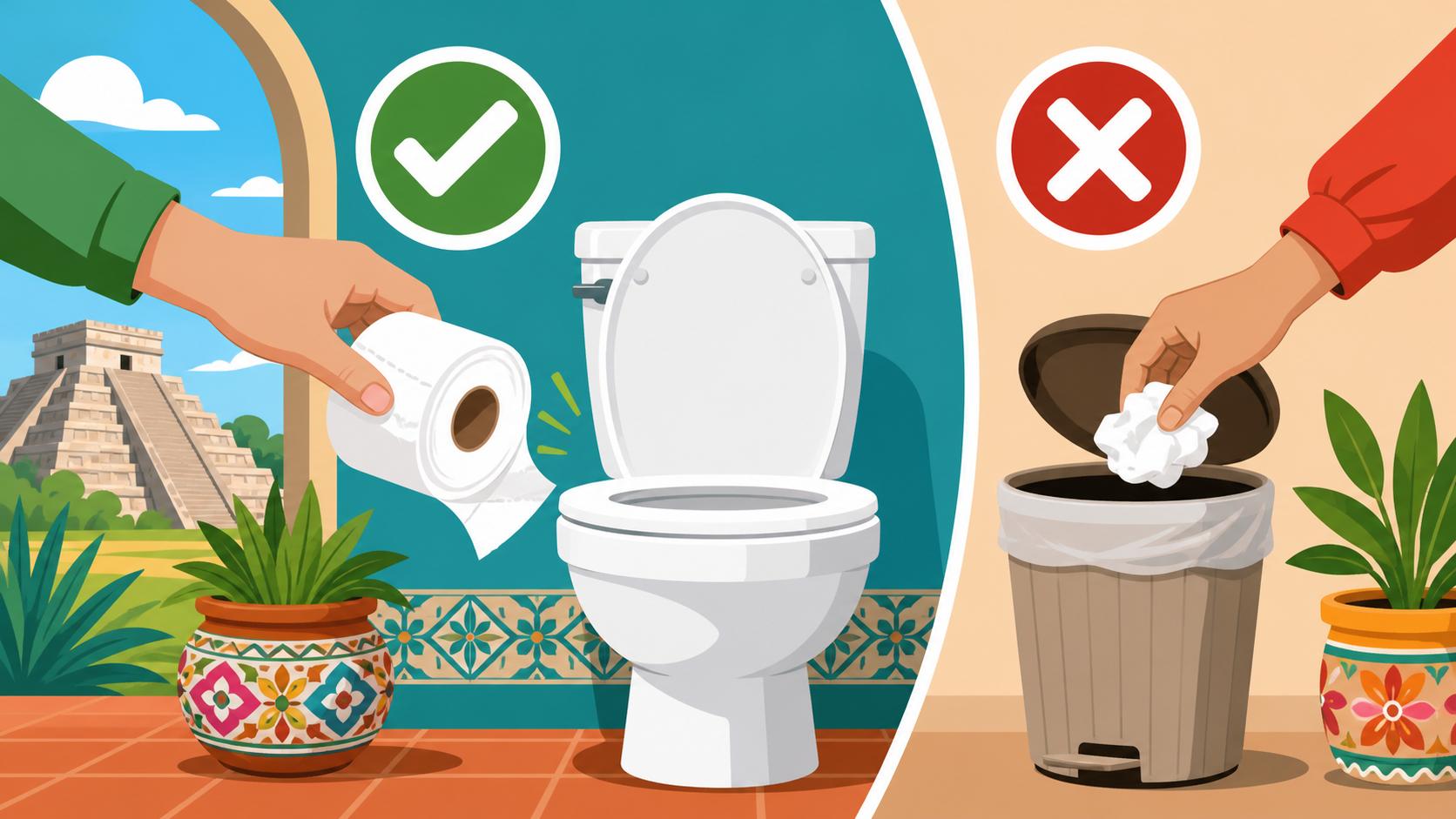
If you see a small trash can (un bote de basura) placed directly next to the toilet, that is your most important visual cue. In the vast majority of Mexican households, small businesses, and older restaurants, the rule is simple: toilet paper goes in the bin, not the bowl. While this may feel unhygienic or "gross" to those raised elsewhere, it is a deeply ingrained cultural and practical norm. To manage the hygiene aspect, these bins almost always have a plastic liner and a lid, and they are emptied daily.
This practice is so common that it is rarely discussed openly, but ignoring it can lead to serious social friction. If you are Renting a Home in Mexico: Complete Expat Guide to Leases, Deposits, and More, your landlord might not explicitly tell you to use the bin, assuming you already know. However, if the pipes burst or clog because you’ve been flushing "luxurious" thick paper down a 1950s drain, the repair bill will likely come out of your security deposit. It is better to adapt to the local rhythm than to fight against the plumbing.
Navigating Public and Private Bathrooms in Mexico
Once you leave the comfort of your own home, the "rules of the road" for Mexican bathrooms become even more diverse. Public facilities, from high-end shopping malls in Polanco to dusty roadside stops in Chiapas, each have their own expectations. Being observant is your best tool for avoiding a plumbing catastrophe.
Visual Cues and Signage to Look For
Most establishments that have sensitive plumbing will post signs. Look for phrases like "Por favor, no tire el papel en la taza" (Please do not throw paper in the toilet) or "Use el cesto para el papel" (Use the basket for the paper). Sometimes these signs are professionally printed, and other times they are handwritten notes taped to the back of the door. Regardless of the aesthetic, take them seriously. Even if the toilet looks modern, the pipes behind the wall might be ancient.
In more modern developments, such as a Selina co-living space or a high-end corporate tower, you might find that flushing is perfectly acceptable. These newer buildings are often constructed with wider PVC piping and more robust water systems designed to handle international standards. However, if you are ever in doubt, the presence of a bin with used paper in it is your "green light" to use the bin yourself. When in Rome—or Mexico City—do as the locals do.
Essential Supplies for the Prepared Expat
One thing veteran expats quickly learn is that public bathrooms in Mexico don't always provide toilet paper (papel higiénico). It is a common sight to see a central dispenser outside the stalls where you must grab what you need before entering, or worse, no paper at all. I always recommend carrying a small pack of tissues or a "travel roll" in your bag. If you find yourself in a bind, having a working smartphone with a local SIM or an Airalo eSIM can be a lifesaver for locating the nearest "premium" bathroom in a department store or hotel.
Additionally, the quality of paper varies. You can find high-end, multi-ply brands at major retailers, but these are often the most "dangerous" for Mexican plumbing because they don't dissolve easily. If you are shopping on Amazon Mexico for your household supplies, look for "septic-safe" or "biodegradable" options. They might be a bit thinner, but they will save you a massive headache in the long run.
| Location Type | Typical Rule | Recommendation |
|---|---|---|
| Modern Malls/Hotels | Usually Flushable | Check for a bin first; if empty or absent, flushing is likely okay. |
| Colonial/Older Homes | Use the Bin | Always use the wastebasket to avoid pipe damage. |
| Rural Areas/Small Towns | Use the Bin | Never flush; systems are often septic-based. |
| Modern Apartments (CDMX/Monterrey) | Depends | Ask the landlord or check the building's specific rules. |
| Roadside Gas Stations | Use the Bin | Expect to pay a few pesos for paper at the entrance. |
Practical Tips for Maintaining Your Own Plumbing
If you’ve decided to make the move and are researching the Best Places to Live in Mexico for Expats (2027 Edition), you need to prepare for the reality of maintaining a home. Mexican plumbing requires a slightly more "hands-on" approach than what you might be used to in Northern Europe or the US.
Dealing with Clogs and Septic Systems
If you do experience a clog, do not immediately reach for heavy chemical drain cleaners. Many Mexican homes, especially in areas like Tulum or Lake Chapala, use septic tanks or "biodigestores." These systems rely on healthy bacteria to break down waste. Pouring harsh acids down the drain can "kill" your septic tank, leading to odors and expensive pumping fees. Instead, a high-quality plunger (chupa-pompas) should be your first line of defense.
If the problem persists, you will need to call a "plomero." Finding reliable tradespeople often involves word-of-mouth recommendations in local Facebook groups or WhatsApp chats. Be prepared to explain the issue in Spanish; knowing the word for "clogged" (tapado) is essential. If you are Building a Home in Mexico: What Expats Need to Consider, make sure you insist on the widest possible drainage pipes and a proper venting system to avoid these issues from the start.
Bathroom Etiquette for Guests and Social Situations
When you host people in your Mexican home, it is polite to make the "rules" clear without being awkward. If your home cannot handle flushed paper, ensure the waste bin is clean, lined, and obvious. Most Mexican guests will instinctively use the bin. If you are hosting other foreigners, you might need to give them a gentle heads-up. A simple "Hey, the plumbing here is a bit old, so please use the bin for paper" is perfectly acceptable and appreciated.
Conversely, when you are a guest in someone else's home, never assume you can flush. I once made the mistake of flushing in a friend’s high-end condo in Guadalajara, thinking it was "modern enough." The resulting overflow was a lesson in humility I'll never forget. Now, I always look for that little basket. It is a small price to pay for the incredible Safety in Mexico: What Expats Need to Know About Staying Safe and comfort we enjoy living in such a beautiful country.
Mexican Bathroom Cultural Nuances Every Foreigner Should Know
Beyond the mechanics of flushing, there is a cultural layer to the Mexican bathroom experience that can surprise the uninitiated. From paid entry to "propina" culture, being prepared will save you from "deer in the headlights" moments.
The Role of the Baño Attendant
In many public markets, bus stations, and even some busy restaurants, you will encounter a bathroom attendant. Their job is to keep the facility clean and, often, to hand out toilet paper. Usually, there is a small fee (between 5 and 10 pesos) to enter. This fee often includes a small wad of paper. Even if there is no set fee, it is customary to leave a small "propina" (tip) in a jar near the sinks, especially if the bathroom is well-maintained.
This system ensures that public spaces remain functional despite heavy use. Don't view the fee as a nuisance; view it as a service charge that guarantees you a clean stall and a working sink. Always keep a few 5 and 10-peso coins in your pocket for this exact reason.
Common Spanish Phrases for Bathroom Emergencies
Communication is key when things go wrong. If you are Living in Mexico City: An Expat's Guide to Neighborhoods and Lifestyle, you'll find that while many people speak English, the staff in charge of maintenance likely will not. Here are a few phrases to keep in your back pocket:
- ¿Dónde está el baño? – Where is the bathroom?
- ¿Se puede tirar el papel en la taza? – Can the paper be thrown in the toilet?
- El baño está tapado. – The toilet is clogged.
- No hay papel. – There is no paper.
- ¿Tiene cambio? – Do you have change? (Useful for the entry fee).
Living here is an adventure that requires a sense of humor and a bit of flexibility. While the Cost of Living in Mexico: 2026 Comprehensive Guide shows how affordable life can be, "saving" on plumbing repairs by following the local rules is one of the smartest financial moves you can make. Whether you are Starting a Business in Mexico: Financial and Legal Basics for Foreigners or just enjoying a tacos al pastor at a street stall, remember: when in doubt, use the bin. Your pipes (and your landlord) will thank you.
Disclaimer
This guide is for informational purposes only and is based on personal experiences and general observations of infrastructure in Mexico. Plumbing standards can vary significantly by building, municipality, and state. Always follow the specific instructions provided by your landlord, building management, or posted signage in public facilities. The author and publisher are not responsible for any plumbing damage or legal issues resulting from the disposal of waste or paper.