Living in Puerto Vallarta: Coastal Living Guide for Expats
When you visualize moving to Puerto Vallarta, you likely picture sipping an ice-cold margarita on a sun-drenched balcony overlooking the Pacific Ocean. What the glossy retirement brochures deliberately omit is the reality of battling black mold on your favorite leather shoes during the August rainy season, or the shock of your first heavily inflated high-season electricity bill. This guide breaks down the physical, financial, and cultural realities of building a sustainable expat life in the heart of the Bay of Banderas.
Disclosure: This post may contain affiliate links. We may earn a commission at no extra cost to you if you make a purchase through these links. Read full disclosure.
The Geography and Climate Reality: Paradise and Perspiration
Before you can enjoy the legendary sunsets or the world-class culinary scene, you must confront the extreme physical environment of Puerto Vallarta (frequently abbreviated as PV). The city’s geography dictates your daily routine, your energy levels, and your overall health.
The Bay of Banderas and the Sierra Madre
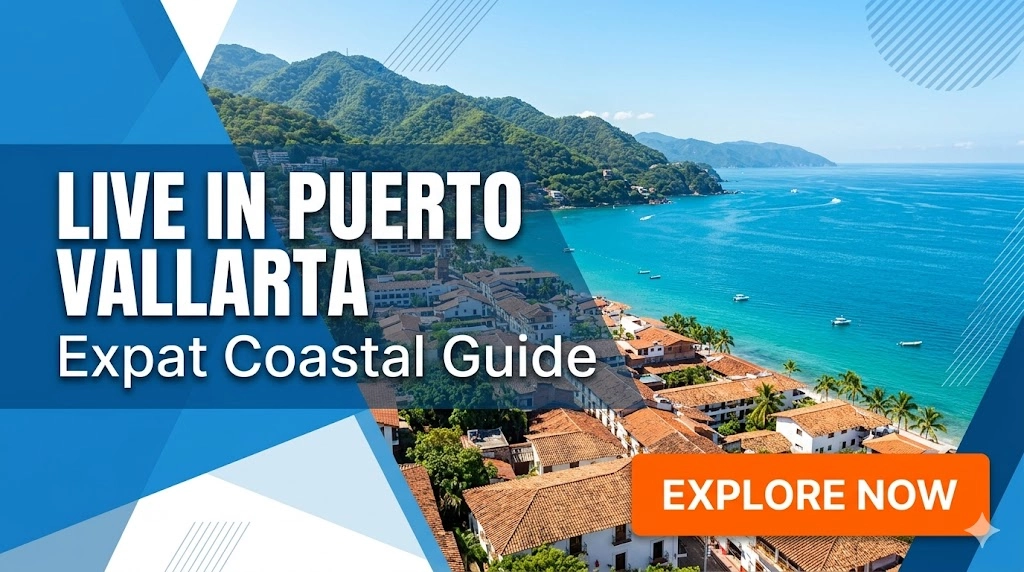
Puerto Vallarta is uniquely positioned. It wraps around the massive Bay of Banderas (Bahía de Banderas) and is immediately backed by the dense, towering jungle of the Sierra Madre mountains. This geography creates a stunning visual contrast—where the lush, green jungle literally crashes into the ocean.
However, this geographic bowl also creates a highly specific microclimate. From late May through October, the mountains trap the coastal humidity directly over the city, creating a powerful greenhouse effect. The summer heat is not a gentle, tropical warmth; it is a heavy, physical force. Daytime temperatures routinely push past 90°F (32°C), but the punishing humidity pushes the heat index well over 100°F (38°C). Stepping outside at 2:00 PM in August feels like walking into a wet, pressurized steam room. You will sweat through your clothes within ten minutes.
The Rainy Season and Infrastructure Strain
Accompanying the summer heat is the intense rainy season. Usually beginning in late June, spectacular, violent thunderstorms roll over the mountains in the late afternoons and evenings. While the lightning shows over the bay are breathtaking, the torrential downpours rapidly overwhelm the city’s drainage infrastructure.
The charming cobblestone streets in the downtown area transform into fast-moving rivers within minutes. The sudden influx of water also causes frequent power outages as the local electrical grid, managed by the CFE (Comisión Federal de Electricidad), buckles under the strain. If you are relocating here, you must physically prepare for this season. You cannot simply open a window to air out your house; the moisture will breed toxic black mold inside your apartment within days. You must invest heavily in air conditioning and commercial-grade dehumidifiers to protect your respiratory health and your belongings.
Conversely, from November through April, the weather is absolute perfection. The humidity breaks, the skies are endlessly blue, and the temperature hovers in the mid-70s to low-80s. It is this six-month window of paradise that draws hundreds of thousands of “snowbirds” from the US and Canada, fundamentally altering the local economy.
Decoding the Neighborhoods: Where to Anchor Yourself
Puerto Vallarta is not a single, monolithic beach town; it is a sprawling, diverse city. Choosing the right neighborhood (colonia) dictates your entire expat experience, determining your daily commute, your safety, and whether you are paying authentic local prices or heavily inflated foreigner premiums.
Zona Romántica (The Romantic Zone)
The Zona Romántica, located south of the Cuale River, is the undisputed epicenter of expat life and tourism in Puerto Vallarta. It is globally famous as one of the premier LGBTQ+ friendly destinations in the world. The neighborhood is incredibly dense, highly walkable, and absolutely packed with boutique hotels, world-class restaurants, massive nightclubs, and bustling beach clubs like Los Muertos.
Living here means you exist in an incredibly vibrant, highly convenient environment. However, this convenience comes with a profound cost. The noise pollution is staggering, relentless, and completely inescapable. Mega-clubs and rooftop bars actively pump heavy bass music until 5:00 AM every single night of the week. Furthermore, the explosive popularity of the Romantic Zone has caused real estate prices to skyrocket. A modern, one-bedroom condo here can easily rent for $2,000 to $3,500 USD a month during high season. It is a highly gentrified “expat bubble” that is visually stunning but logistically exhausting for full-time residents looking for peace and quiet.
Versalles and Fluvial: The Local Sweet Spots
For expats who want to escape the relentless noise and inflated prices of the tourist zone, the neighborhoods of Versalles and Fluvial Vallarta have emerged as the ultimate local sweet spots.
Versalles is currently experiencing a massive culinary renaissance. It is a highly walkable, deeply authentic Mexican neighborhood that has organically integrated a wave of young expats and digital nomads. The streets are lined with incredible cafes, independent bakeries, and high-end taco stands. The rents here are significantly more manageable, and the vibe is community-focused rather than party-focused.
Adjacent to Versalles is Fluvial Vallarta, a master-planned residential neighborhood characterized by wide, paved avenues (a rarity in PV), massive subterranean storm drains (which prevent flooding), and large, modern family homes. Fluvial is highly suburban, exceptionally safe, and heavily favored by expat families and long-term retirees who prioritize quiet nights and proximity to major supermarkets like Costco and La Comer.
Marina Vallarta
Located just south of the international airport, Marina Vallarta offers an upscale, highly manicured, resort-style living experience. The neighborhood circles a massive yacht marina and an 18-hole golf course. It is incredibly safe, highly walkable, and features a fantastic boardwalk lined with excellent restaurants and spas.
The demographic here skews toward older, wealthier retirees and seasonal snowbirds. It completely lacks the raw, authentic grit of downtown Vallarta, feeling much more like a wealthy coastal enclave in Florida or California. You must also be hyper-aware of your surroundings here; the Marina and the adjacent golf course are natural habitats for large, wild crocodiles, and you must adhere strictly to local warning signs.
| Neighborhood | Vibe and Lifestyle | Average Monthly Rent (2-Bed) | Noise Level |
| Zona Romántica | Party-centric, highly walkable, LGBTQ+ hub | $2,000 – $4,000+ USD | Extremely High |
| Versalles | Foodie haven, balanced expat/local mix | $1,000 – $1,800 USD | Moderate |
| Fluvial Vallarta | Suburban, modern infrastructure, family-focused | $1,200 – $2,200 USD | Low |
| Marina Vallarta | Upscale, quiet, resort-style, golf/yacht focused | $1,800 – $3,000 USD | Low |
| 5 de Diciembre | Traditional Mexican, steep hills, ocean views | $800 – $1,500 USD | Moderate to High |
The Real Estate Reality: The Unfurnished Trap
When you finally identify the perfect neighborhood and seek a long-term, 12-month lease to escape the exorbitant Airbnb markups, you must prepare for the brutal reality of the Mexican real estate market.
The Meaning of “Sin Amueblar”
In North America, an “unfurnished” apartment still generally includes a refrigerator, a stove, an oven, and built-in bedroom closets. In Mexico, renting a home sin amueblar often means you are renting bare concrete walls and absolutely nothing else. It is incredibly common to rent a home that lacks all major kitchen appliances, shelving, ceiling fans, and sometimes even light fixtures.
You are entirely responsible for outfitting the functional interior of the home from scratch. Doing this during your first week by fighting the infamous highway traffic to visit local big-box stores is an exhausting, spirit-breaking endeavor that often involves negotiating complex freight deliveries in rapid-fire Spanish.
To navigate this massive logistical headache, savvy expats digitize their household setup. Instead of hauling heavy appliances across town in the blistering heat, they order premium mattresses, microwaves, ergonomic office chairs, and specialized cookware directly through Amazon Mexico. Utilizing the localized Amazon Mexico platform allows you to bypass the chaotic local retail supply chain. The convenience of having heavy, specialized household items delivered reliably to your new, empty apartment allows you to focus your energy on cultural integration rather than retail trauma.
The Aval and Lease Negotiations
Beyond outfitting the home, securing the lease itself introduces the infamous Aval requirement. Because evicting a squatter in Mexico is a grueling, multi-year legal process, landlords fiercely protect their assets. They almost universally demand a local co-signer—an Aval—who owns debt-free property in the exact same state of Jalisco to guarantee your lease.
As a newly arrived foreigner, you will not have this. Bypassing this massive hurdle usually requires paying out of pocket for a specialized legal eviction policy (Póliza Jurídica) or offering to pay three to six months of rent upfront in cash. To understand how to legally protect yourself during these intense negotiations, you must thoroughly read Real Estate in Mexico: Renting vs Buying for Expats.
The Financial Realities and the Gringo Tax
Puerto Vallarta operates on an extreme, highly polarized seasonal economy. Understanding this cycle is the absolute key to maintaining your budget.
High Season Inflation
The months between November and April constitute the “high season,” when hundreds of thousands of North Americans flee their brutal winters to flood the Bay of Banderas. During this period, the local economy aggressively shifts to extract maximum capital from these temporary visitors.
Prices for short-term rent, restaurant meals, taxi fares, and basic services effectively double overnight. The “Gringo Tax”—the inflated, opportunistic pricing applied to foreigners—is applied mercilessly across the tourist zones. If you attempt to arrive in PV in December looking to sign a long-term lease, landlords will extort you, demanding high-season rates for a 12-month contract simply because the current market demand allows it.
To survive financially, you must time your relocation strategically. Smart expats arrive in August, September, or October during the sweltering “low season.” During these quiet, rainy months, landlords are desperate for stable tenants, and you can aggressively negotiate a fair, localized rate for a 12-month lease before the winter crowds arrive and artificially inflate the market. It is also vital to legally manage the income you are spending to sustain this lifestyle. To understand your complex global tax liabilities while operating in this economy, read Taxes in Mexico for Expats: A Complete Guide to Income Tax and More.
The Cost of Comfort: CFE and Air Conditioning
If there is one budget item that destroys the financial plans of new expats in Puerto Vallarta, it is the electricity bill. The federal power company, the CFE, utilizes a highly complex, tiered billing system designed to subsidize low-income households while heavily penalizing excessive users.
Because the summer heat requires you to run multiple air conditioning units daily, it is incredibly easy to accidentally cross the consumption threshold. If you breach this limit, you are permanently pushed into the DAC (High Consumption) tier. Once you hit DAC, you completely lose all government subsidies, and the rate per kilowatt-hour triples. An electricity bill that was a manageable $50 USD in January can violently explode to $400 USD in August. You must obsessively monitor your meter and learn to cool specific rooms rather than the entire house. For detailed guidance on navigating this, consult Setting Up Utilities in Mexico: Electricity, Water, and Internet.
Digital Connectivity and Remote Work Survival
For digital nomads and remote professionals, the reliability of your internet connection is a matter of absolute career survival. Puerto Vallarta presents a mix of high-tech infrastructure and developing-world fragility.
Fiber Optics vs. The Power Grid
In the central neighborhoods (Versalles, Fluvial, Marina, and Romántica), high-speed fiber-optic internet from providers like Telmex and Totalplay is the absolute standard. You can easily secure residential speeds of 200 to 500 Mbps, making heavy data transfers completely effortless.
The primary threat to your remote career is not the Wi-Fi bandwidth, but the fragile power grid. As mentioned, during the summer thunderstorms, intense lightning and heavy rains frequently knock out neighborhood power transformers. A ten-minute blackout will instantly kill your router and drop your client call. You must absolutely invest in an Uninterruptible Power Supply (UPS) battery backup for your modem to survive these rolling micro-outages.
Landing Safely: Co-Working and Mobile Data
If you are taking an Uber from the PVR international airport to a new apartment in the pouring rain, you cannot rely on spotty public Wi-Fi to communicate with your landlord or track your route. Relying on your home country’s free roaming plan is a dangerous gamble, as major carriers frequently throttle data speeds.
You must localize your cellular data the absolute second your plane lands. By downloading an eSIM profile through Airalo before you even cross the border, your phone instantly connects to Mexico’s robust Telcel network. Having a dedicated Airalo data package is the ultimate digital safety blanket, ensuring you can navigate unfamiliar streets safely or tether your laptop if your residential Wi-Fi fails on day one.
Furthermore, working remotely from a foreign apartment can quickly lead to intense isolation. To bridge your arrival and instantly tap into a vetted community, veteran expats heavily utilize transitional basecamps. Booking a private room or a dedicated desk at a Selina location is a strategic masterclass in relocation. Selina provides commercial-grade, redundant internet, built-in co-working spaces, and an inherently welcoming environment. You can walk downstairs and instantly network with other remote workers who can recommend safe neighborhoods and trustworthy local landlords. It acts as the perfect, low-risk anchor while you explore whether Puerto Vallarta is truly for you.
Healthcare: A Medical Tourism Powerhouse
Your physical health and ongoing medical maintenance are paramount to a successful relocation. Puerto Vallarta is a massive medical tourism destination, offering exceptional, world-class private healthcare that rivals any major global metropolis.
Elite Private Hospitals
Because millions of wealthy tourists and affluent retirees flow through the city annually, the private healthcare sector here is incredibly advanced and heavily funded. Elite facilities like Hospital Joya, Hospital San Javier, and CMQ Premiere operate with spectacular clinical standards.
They possess the latest diagnostic imaging machines, advanced cardiac units, and are heavily staffed by leading specialists who trained internationally and speak flawless English. If you live in PV and suffer a severe cardiac event, a scooter accident, or require complex orthopedic surgery, you have immediate access to life-saving, world-class intervention. To understand the massive divide in quality, wait times, and bedside manner between these elite private facilities and the underfunded, Spanish-only public IMSS system, you must review Healthcare in Mexico: Complete Guide for Expats Public vs Private.
Pharmacies and Routine Medical Needs
For routine care, such as a severe sinus infection, a minor scrape, or a tropical stomach bug, the city is incredibly easy to navigate. You can walk into small, impeccably clean clinics attached to major commercial pharmacies (like Farmacias del Ahorro) and see a licensed general practitioner for less than $4 USD, receiving your basic prescription on the spot.
However, if you require highly specialized care or ongoing maintenance medications for chronic conditions, communicating your complex needs requires effort. To learn how to locate vetted, bilingual specialists before an emergency strikes, utilize the strategies detailed in Finding English-Speaking Doctors and Specialists in Mexico. For the strict laws regarding importing your medications and understanding local chemical equivalents, consult Pharmacies in Mexico: How to Get Medications OTC vs Prescription.
Securing International Health Coverage
Do not be lulled into a false sense of security by the cheap pharmacy consultations. A major medical crisis in a premium private hospital in Puerto Vallarta will cost tens of thousands of dollars, and the administration will mercilessly demand a massive credit card deposit upfront—often between $3,000 and $5,000 USD—before they will even admit you to the emergency room to stabilize you.
Relying entirely on out-of-pocket cash for catastrophic medical events is financial suicide. You must secure robust international health coverage to guarantee you have VIP access to these elite hospitals without draining your life savings. A premium policy ensures you bypass the public clinics entirely and are transported directly to a facility equipped to handle complex trauma. To deeply understand the financial mechanics of this catastrophic medical protection, review Choosing Private Health Insurance: Local Mexican Plans vs International Coverage.
Bureaucracy, Visas, and Legal Integration
Navigating the Mexican administrative system is an endurance test designed to break your spirit. You must abandon your home-country expectations of efficiency and embrace the slow, heavily paper-reliant rhythm of local bureaucracy.
The End of the Perpetual Tourist
You cannot simply move to Puerto Vallarta and live long-term on a tourist visa anymore. The era of the “perpetual tourist” doing border runs every six months is completely dead. Immigration agents at the PVR airport use digital tracking and frequently hand out restricted 15-day or 30-day tourist stamps rather than the standard 180 days to anyone they suspect of living in the country illegally.
To legally rent a long-term home, buy a car, and open a bank account, you must secure a Temporary or Permanent Resident Visa based on economic solvency. This requires proving specific income or savings thresholds at a Mexican consulate in your home country before you move.
The process involves a consular interview abroad, followed by a strict 30-day window upon arriving in Puerto Vallarta to exchange your visa sticker for a physical plastic resident card at the local National Institute of Migration (INM) office. The INM office in PV is notoriously backlogged and strict regarding paperwork formats. To ensure your paperwork is flawless and you survive the initial bureaucratic gauntlet, strictly follow the steps outlined in How to Apply for Temporary Residency in Mexico: Step-by-Step and calculate your exact required thresholds in Mexico Immigration Fees and Costs: Budgeting for Your Residency.
Community Integration vs. The Expat Bubble
The greatest psychological threat to an expat in Puerto Vallarta is severe “expat burnout” caused by isolation within the tourist bubble. Because the city is a global destination, the population can be intensely transient. If you only socialize in the immediate coastal tourist zones or Americanized sports bars, you will find yourself constantly forging connections only to say goodbye to those new friends weeks later when their vacation ends.
To build a sustainable, fulfilling life, you must intentionally seek out the long-term community. You must commit to learning functional conversational Spanish. Being able to joke with the vendor at the local mercado, negotiate respectfully with a plumber, or simply greet your Mexican neighbors correctly transforms your entire existence. It shifts you from being viewed as a wealthy, passing tourist to a respected, integrated member of the community.
Furthermore, anchor yourself by giving back to the community that hosts you. Puerto Vallarta has an incredible network of non-profits, such as the SPCA, Corazón de Niña (a home for at-risk youth), and various environmental conservation groups. Volunteering your time with these organizations is the absolute fastest route to forging deep, lasting friendships with both established expats and local Mexicans, ensuring your life on the coast is not just a perpetual vacation, but a true home.
References
Primary sources (official)
- H. Ayuntamiento de Puerto Vallarta: The official municipal government site outlining local civic regulations, property tax payments (Predial), and urban development plans for the expanding neighborhoods. https://www.puertovallarta.gob.mx/
Other helpful sources
- U.S. Embassy & Consulates in Mexico: The official diplomatic portal offering crucial emergency contacts, notary services, and localized safety information for American expats in the Bay of Banderas region. https://mx.usembassy.gov/
- ExpatDen: An incredibly detailed, firsthand resource covering the cultural, financial, and logistical nuances of renting apartments and navigating the healthcare system as a foreigner on the Pacific coast. https://www.expatden.com/mexico/
Disclaimer
The information provided in this comprehensive guide is for educational, logistical, and informational purposes only and does not constitute formal immigration, legal, real estate, or medical advice. The cost of living, rental market prices, and public transit conditions in Puerto Vallarta are highly volatile and subject to rapid economic shifts and intense seasonal gentrification. Always consult with a certified bilingual Mexican attorney or a registered immigration facilitator before signing long-term leases, and thoroughly verify your international health insurance coverage networks before relocating abroad.