Living in Tijuana: Cross-Border Life for Expats in Baja
Living in Tijuana (colloquially known as TJ) is not a relaxed, tropical beach retirement; it is a fast-paced, gritty, and fiercely dynamic cross-border hustle. This comprehensive guide breaks down the unfiltered logistical, financial, and cultural realities of living on the busiest international border crossing in the western hemisphere.
Disclosure: This post may contain affiliate links. We may earn a commission at no extra cost to you if you make a purchase through these links. Read full disclosure.
The Cross-Border Commute: The Defining Reality
If you are moving to Tijuana but plan to maintain your job, social life, or frequent appointments in San Diego, your entire existence will revolve around the border. You must completely abandon the idea that crossing between these two cities is a seamless, predictable drive.
The Brutality of the Standard Lanes
The San Ysidro Port of Entry is the busiest land border crossing in the world, processing over a hundred thousand people daily. If you attempt to cross the border in a vehicle using the standard lanes during morning rush hour (from 4:00 AM to 9:00 AM), you will sit in your car for three to five agonizing hours.
The air quality in the border line is notoriously poor due to idling engines, and the mental exhaustion of inching forward while aggressively fending off cars trying to cut the line is a massive psychological drain. Even the “Ready Lane” (for those with RFID-enabled documents like a US Passport Card) routinely experiences two-hour waits. If you do not have a strategic border plan, the commute will rapidly destroy your mental health and negate any financial benefits of living in Mexico.
The SENTRI Pass Necessity
To survive the cross-border lifestyle, securing a SENTRI pass (Secure Electronic Network for Travelers Rapid Inspection) or Global Entry is an absolute, non-negotiable necessity. SENTRI provides access to dedicated, expedited vehicle and pedestrian lanes.
With SENTRI, a vehicle crossing that would normally take four hours can often be reduced to 15 to 45 minutes. However, securing this pass requires a rigorous background check by US Customs and Border Protection (CBP), an in-person interview, and a wait time that can currently span from several months to over a year. Furthermore, every single person in the vehicle must possess their own SENTRI card, and the specific vehicle you are driving must be registered and inspected by CBP. You cannot simply borrow a friend’s car to cross the SENTRI lane; doing so will result in the immediate revocation of your pass and potential vehicle confiscation.
Pedestrian Crossings and the Trolley
Many savvy expats bypass the vehicular nightmare entirely by adopting a hybrid pedestrian commute. By utilizing PedEast, PedWest, or the Otay Mesa pedestrian crossings, you can walk across the border and immediately board the San Diego MTS Trolley (the Blue Line), which connects directly from the border to downtown San Diego.
This strategy eliminates the need for Mexican auto insurance, protects your vehicle from the chaotic Tijuana traffic, and provides a much more predictable timeline. However, you must factor in the physical toll of walking across the massive border facility, sometimes in the blistering summer heat or winter rains, and the cost of maintaining a US-based vehicle parked in long-term lots on the San Ysidro side if you need a car in California.

Decoding Tijuana Neighborhoods: Where to Anchor Yourself
Tijuana is a massive, sprawling metropolis that stretches from the Pacific Ocean deep into the dusty, industrial hills. Choosing the right neighborhood (colonia) dictates your daily commute time, your safety, and your access to reliable infrastructure.
Playas de Tijuana: The Coastal Retreat
For expats desperately seeking the relaxed, beachfront lifestyle, Playas de Tijuana is the primary target. Located on the extreme western edge of the city where the border wall literally plunges into the Pacific Ocean, Playas operates almost like an independent town. It features a spectacular boardwalk (malecón), incredible seafood restaurants, surfing communities, and a distinctly laid-back, bohemian vibe.
The housing here ranges from older, charming beach cottages to ultra-modern, luxury high-rises overlooking the water. However, the primary drawback of Playas is the isolation. There is essentially only one main road connecting Playas to the rest of Tijuana and the San Ysidro border crossing. During rush hour, or if an accident occurs on the winding coastal highway, you are entirely trapped. The commute from Playas to the border can easily take 45 minutes to an hour before you even reach the border line.
Zona Río: The Corporate and Medical Hub
Zona Río is the polished, modern, commercial heart of Tijuana. If you value pristine infrastructure, absolute proximity to the border crossing, and a highly secure environment, this is where you belong.
Characterized by wide, tree-lined boulevards, towering medical complexes, luxury shopping malls (like Plaza Río), and high-end gastronomy, Zona Río feels very much like a bustling American business district. It is heavily patrolled by private security and municipal police, making it one of the safest areas in the city. The trade-off is the cost; real estate in Zona Río commands the highest premium in Tijuana, heavily targeting wealthy Mexican executives, medical tourists, and affluent expats.
Colonia Cacho and Madero: The Hipster Enclaves
If you want the walkability, trendy cafes, and leafy streets reminiscent of Mexico City’s Roma Norte, Colonia Cacho (officially Madero) is the undisputed cultural epicenter. It is located just south of downtown and is nestled on a hillside offering spectacular views of the city.
Cacho is dense with independent coffee roasters, craft beer tasting rooms, boutique fitness studios, and outstanding culinary fusion restaurants. It attracts a young, progressive demographic of digital nomads, dual-citizens, and creative professionals. It offers a spectacular quality of life, but it has experienced rapid gentrification, making affordable housing increasingly scarce.
Zona Centro and Zona Norte: The Gritty Reality
Downtown Tijuana (Zona Centro) and the adjacent Zona Norte (the infamous red-light district) are highly chaotic, overwhelmingly noisy, and culturally intense. While Avenida Revolución (La Revu) has experienced a massive renaissance with trendy craft breweries and restored historic arcades, the area remains gritty.
Living in Centro means dealing with relentless traffic, aggressive street vendors, heavy nightlife noise, and a higher rate of petty crime. While it is undeniably affordable and deeply authentic, it is generally too chaotic for expats seeking a peaceful, long-term residential anchor.
| Neighborhood | Vibe and Lifestyle | Commute to Border | Average Monthly Rent (2-Bed) |
| Zona Río | Corporate, pristine, highly secure, medical hub | 5 – 10 Mins | $1,500 – $2,500+ USD |
| Playas de Tijuana | Beachfront, relaxed, surf culture, isolated | 30 – 60 Mins | $1,000 – $1,800 USD |
| Colonia Cacho | Trendy, foodie, walkable, young professionals | 15 – 20 Mins | $1,200 – $2,000 USD |
| Zona Centro | Gritty, noisy, historic, intense nightlife | 10 – 15 Mins | $600 – $1,200 USD |
Cost of Living: The Real Baja Arbitrage
The singular driving force behind the massive expat migration to Tijuana is the profound housing crisis in Southern California. The cost of living arbitrage here is massive, but it requires navigating a unique, dollarized local economy.
Renting in a Dollarized Economy
Unlike cities deep in the interior of Mexico, the real estate market in Tijuana operates almost entirely in US Dollars. Landlords will quote rent in USD and frequently expect to be paid in USD.
While paying $1,500 USD for a modern, secure, two-bedroom apartment in Colonia Cacho might seem exorbitant compared to mainland Mexico, it is a staggering bargain compared to the $3,500+ USD you would pay for a smaller, older apartment a few miles north in San Diego. This massive rent differential allows cross-border commuters to pay off debt, save aggressively, or drastically increase their disposable income while maintaining their US salaries.
However, the application process here is uniquely hybridized. Because landlords are so accustomed to renting to Americans, they will frequently accept US credit reports, US pay stubs, and employment verification letters. Some may still demand the traditional Mexican Aval (a local co-signer with debt-free property), but many are willing to waive this requirement in exchange for an extra month’s security deposit from high-earning US citizens. To deeply understand the nuances of these contracts, you must review Real Estate in Mexico: Renting vs Buying for Expats.
Groceries and Daily Expenses
The cost of daily living in Tijuana offers incredible flexibility. For groceries, massive Mexican chains like Calimax and Soriana offer excellent, highly affordable local produce and basic staples. However, because of the proximity to the border, many expats maintain memberships at the Tijuana Costco, which stocks an incredible array of both Mexican and American bulk goods.
Interestingly, many expats still choose to cross the border to do specialized grocery shopping at Trader Joe’s or Whole Foods in San Diego, utilizing their SENTRI passes for a quick weekend run. When eating out, you can enjoy world-class, multi-course meals at restaurants in the culinary district for half the price of a comparable meal in California. To legally manage the income you are spending and understand your tax liabilities in this cross-border dynamic, read Taxes in Mexico for Expats: A Complete Guide to Income Tax and More.
Infrastructure and the Supply Chain Struggle
The modern gloss of luxury high-rises in Tijuana often masks the brutal reality of developing infrastructure. The city’s rapid expansion has outpaced its municipal capabilities, leading to frequent utility failures that expats must actively mitigate.
Water Rationing and Power Outages
Water scarcity is a severe, ongoing crisis in Baja California. During the hot summer months, the municipal government frequently initiates planned water rationing (tandeos). Entire neighborhoods will have their municipal water supply completely shut off for 24 to 48 hours to conserve resources.
To survive in Tijuana without losing your mind, your home or apartment building absolutely must have independent water storage—either a high-capacity rooftop water tank (tinaco) or a subterranean cistern (cisterna) equipped with a pressurized pump. Renting an older home without a tinaco is a massive logistical error that will leave you unable to flush toilets or shower during a shutoff.
Furthermore, the local electrical grid, managed by the CFE, is prone to sudden, localized power failures during winter rainstorms or extreme summer heatwaves. If you work from home, you must invest in an Uninterruptible Power Supply (UPS) battery backup to protect your electronics from voltage spikes and keep your modem running during brief blackouts. For detailed guidance on navigating this utility maze, consult Setting Up Utilities in Mexico: Electricity, Water, and Internet.
Outfitting the “Sin Amueblar” Apartment
When you secure your lease, you will likely encounter the Mexican standard of “unfurnished” (sin amueblar). This means you are renting bare concrete walls. There will be no refrigerator, no stove, no washer/dryer, and frequently no light fixtures or built-in closets.
Many expats assume they can simply buy appliances at a Best Buy in San Diego and drive them across the border into Tijuana. This is a highly risky strategy. Mexican customs officials (Aduana) aggressively patrol the southbound border lanes. If you are caught attempting to import heavy, expensive appliances or massive flat-screen televisions without declaring them and paying heavy import taxes (often 16% to 20% of the item’s value), your goods can be confiscated on the spot.
To bypass this chaotic border taxation and local retail supply chain frustration, veteran expats digitize their household setup. They rely entirely on Amazon Mexico to order premium mattresses, microwaves, heavy-duty dehumidifiers, and ergonomic office gear directly to their Tijuana doorsteps. Utilizing the localized Amazon Mexico platform allows you to completely bypass the stress of the border crossing and the aggressive customs agents, ensuring your heavy household items are delivered securely within the domestic Mexican logistics network.
Digital Connectivity and Remote Work Survival
For digital nomads and remote professionals who choose not to physically commute to San Diego, the reliability of your internet connection is a matter of absolute career survival.
Fiber Optics vs Local Topography
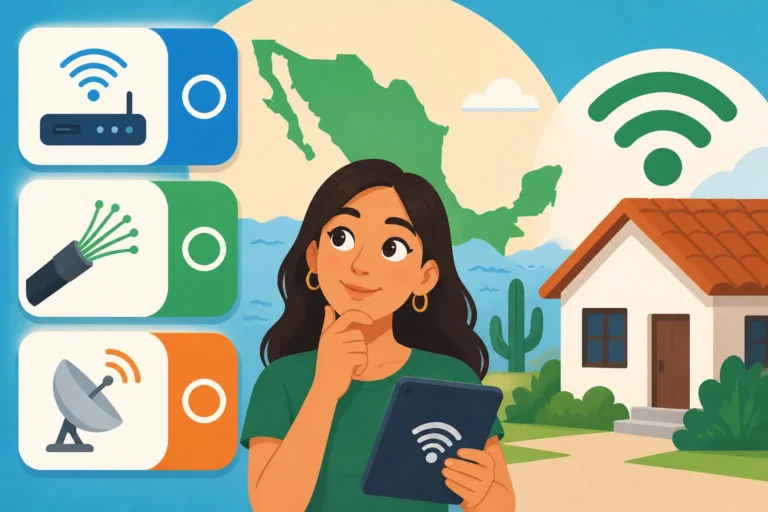
In the central, developed neighborhoods of Tijuana (Zona Río, Cacho, Playas), high-speed fiber-optic internet from providers like Telnor (Telmex) and Totalplay is the standard. You can easily secure residential speeds of 200 to 500 Mbps, making heavy data transfers completely effortless.
However, Tijuana’s topography is defined by steep, jagged canyons and massive concrete retaining walls. This physical environment creates massive cellular and Wi-Fi dead zones. Even with a blazing-fast fiber connection entering your living room, the signal might completely disappear the moment you walk into a bedroom surrounded by reinforced concrete. You will almost certainly need to invest in a heavy-duty mesh router system to push the signal throughout your home.
Mobile Data and Border Throttling
One of the most uniquely frustrating aspects of cross-border living is mobile data management. Because the physical border is arbitrary, your US cell phone carrier (like AT&T or Verizon) will constantly bounce between US towers and Mexican towers depending on which way the wind is blowing.
While many US plans advertise “free North American roaming,” the fine print is brutal. If your carrier detects that you are spending the majority of your time pinging Mexican cell towers, they will aggressively throttle your data speeds to an unusable crawl, or they will completely cancel your plan for violating their primary usage terms.
You must localize your cellular data to survive. The absolute best strategy is to download a localized eSIM profile through Airalo before you even cross the border. Having a dedicated Airalo data package allows your phone to instantly and securely connect to Mexico’s robust Telcel network. Utilizing Airalo provides the ultimate digital safety blanket; if your residential Wi-Fi drops mid-presentation due to a neighborhood power outage, you can instantly tether your laptop to your local cellular connection and save your workday without relying on throttled US roaming data.
Co Working and Transitional Landing Pads
Working remotely from an apartment in a new, chaotic city can quickly lead to intense isolation. Because Tijuana lacks the traditional “beach backpacker” vibe of other Mexican hubs, finding a community of focused professionals requires intentional effort.
To bridge your arrival and instantly tap into a vetted community, many expats utilize transitional housing in central urban zones. Utilizing a highly connected hub like a Selina location (often used as a launchpad in nearby Southern California or broader Mexico) provides an instant, plug-and-play community. A basecamp environment gives you commercial-grade internet and a built-in network of peers who can offer boots-on-the-ground advice about which specific landlords in Tijuana are trustworthy and which neighborhoods avoid the worst of the summer water shutoffs.
Healthcare: The Global Medical Tourism Epicenter
Your physical health and ongoing medical maintenance are paramount. Tijuana is not just a Mexican border town; it is arguably one of the most heavily trafficked medical tourism destinations on the entire planet.
Elite Private Medical Towers
Because millions of uninsured or under-insured Americans drive across the border annually seeking affordable care, the private healthcare sector in Tijuana is incredibly advanced, heavily funded, and highly sophisticated.
Massive, ultra-modern medical complexes like the NewCity Medical Plaza and Hospital Angeles operate with clinical standards that frequently surpass community hospitals in the United States. These facilities are heavily staffed by leading specialists, dentists, bariatric surgeons, and dermatologists who trained internationally and speak flawless English. If you live in Tijuana, you have immediate access to world-class medical, dental, and optical care at roughly 30% to 50% of the cost you would pay in California.
To understand the massive divide in quality, wait times, and bedside manner between these elite private facilities and the underfunded, overburdened Mexican public IMSS system, you must review Healthcare in Mexico: Complete Guide for Expats Public vs Private.
The Necessity of International Health Insurance
Do not be lulled into a false sense of security by the cheap, $50 USD dental cleanings or basic pharmacy consultations. A major, catastrophic medical crisis—such as a severe multi-car collision on the coastal highway or a cardiac event—requiring emergency admission to a premium private hospital in Zona Río will cost tens of thousands of dollars.
Private hospitals in Tijuana will mercilessly demand a massive credit card deposit upfront—often between $3,000 and $5,000 USD—before they will even admit you to the emergency room or stabilize you in an ICU. Relying entirely on out-of-pocket cash for catastrophic events is financial suicide.
You must secure robust international health coverage to guarantee you have VIP access to these elite hospitals without draining your life savings. A premium policy ensures you bypass the public clinics entirely and are transported directly to a facility equipped to handle complex trauma. To deeply understand the financial mechanics of this catastrophic medical protection, review Choosing Private Health Insurance: Local Mexican Plans vs International Coverage. To learn how to locate vetted specialists for ongoing care, utilize the strategies detailed in Finding English-Speaking Doctors and Specialists in Mexico.
Safety and Security: Fact vs. Everyday Fiction
Security in Tijuana is the most complex, nuanced, and frequently misunderstood aspect of living in the city. The media headlines are terrifying, but the reality on the ground for expats is entirely different.
The Cartel Reality vs. Expat Daily Life
It is an undeniable, statistical fact that Tijuana has one of the highest homicide rates in the world, largely driven by cartel conflicts over lucrative smuggling routes. However, this violence is highly targeted, intensely localized, and occurs almost exclusively within the criminal underworld in the deep, impoverished eastern peripheries of the city.
As a foreign expat living in secure neighborhoods like Zona Río, Cacho, or Playas de Tijuana, your risk of falling victim to cartel violence is statistically microscopic. Cartels are highly sophisticated organizations that actively avoid targeting wealthy foreigners, as drawing the attention of the US State Department and federal Mexican military is bad for their illicit businesses.
Situational Awareness and Everyday Risks
Your primary safety concerns in Tijuana are not cartels; they are petty theft, vehicular accidents, and police extortion. You must exercise strong, urban situational awareness. Do not walk alone at night in dimly lit areas of Zona Centro. Do not flash expensive jewelry or professional camera equipment in crowded tourist markets.
Furthermore, you must be extremely cautious when driving a vehicle with US license plates. Foreign plates are absolute magnets for corrupt local transit police looking for a fast bribe (a mordida). Officers may pull you over for fabricated infractions, knowing that foreigners are easily intimidated. The best defense is unwavering, polite patience, handing over only color photocopies of your license, and utilizing a dashboard camera to record the interaction, which frequently causes corrupt officers to issue a warning and walk away.
When moving around the city at night, absolutely avoid hailing unverified street taxis (Taxis Libres). You should rely entirely on ride-sharing applications like Uber or DiDi, which track your GPS route, provide driver identification, and process payments securely without the need to carry large amounts of cash.
Visas and Bureaucracy: Establishing Legal Residency
For decades, Americans lived in Tijuana semi-illegally, crossing the border daily on expired tourist visas without consequence. The Mexican government has modernized its tracking systems, and that era is completely, definitively dead.
The Death of the Perpetual Tourist
If you attempt to live in Tijuana and commute to San Diego while holding only a tourist visa (the FMM), you will eventually be flagged by Mexican immigration agents (INM). Border officials at the pedestrian and vehicular crossings are actively scrutinizing entry histories. If they suspect you are living in Mexico without formal residency, they can deny you entry, revoke your SENTRI pass, or issue you a heavily restricted 7-day stamp.
Securing Temporary Residency
To legally rent a long-term home, buy a Mexican-plated car, open a local bank account, and commute across the border without harassment, you must secure a Temporary or Permanent Resident Visa based on economic solvency.
This process requires proving specific monthly income (from a US employer, remote work, or savings) at a Mexican consulate in your home country—often the consulate right in San Diego or Los Angeles. Once the consulate approves your financials, you enter Mexico and begin a strict 30-day window to exchange your visa sticker for a physical plastic resident card at the highly backlogged local INM office in Tijuana.
To ensure your paperwork is flawless and you survive the initial bureaucratic gauntlet without facing massive fines, strictly follow the steps outlined in How to Apply for Temporary Residency in Mexico: Step-by-Step and calculate your exact required financial thresholds in Mexico Immigration Fees and Costs: Budgeting for Your Residency.
Living in Tijuana requires surrendering the illusion of a pristine, effortless coastal retirement. It is a city that demands resilience, deep cultural respect, and meticulous logistical preparation. By securing your border credentials, fortifying your digital and physical infrastructure, and embracing the intense, vibrant chaos of Baja California, you can build a highly lucrative, cross-cultural lifestyle that few other cities on earth can offer.
References
Primary sources (official)
- U.S. Customs and Border Protection (CBP): The official federal portal detailing the application process, background check requirements, and vehicle registration protocols for the SENTRI program. https://www.cbp.gov/travel/trusted-traveler-programs/sentri:
- Secretaría de Turismo de Baja California (SECTURE): The official state tourism and development portal providing data on regional infrastructure, medical tourism standards, and municipal safety initiatives. https://bajacalifornia.travel/
Other helpful sources
- U.S. Consulate General in Tijuana: The official diplomatic portal offering crucial emergency contacts, notary services, and localized safety information specifically dedicated to American expats residing in Baja California. https://mx.usembassy.gov/embassy-consulates/tijuana/
- ExpatDen: A comprehensive, firsthand expat resource breaking down the true cost of living, healthcare logistics, and cultural transitions required for navigating border life. https://www.expatden.com/mexico/
Disclaimer
The information provided in this comprehensive guide is for educational, logistical, and informational purposes only and does not constitute formal immigration, legal, real estate, or medical advice. The cost of living, rental market prices, and cross-border commute times in Tijuana are highly volatile and subject to rapid economic shifts and international border policies. Always consult with a certified bilingual Mexican attorney or a registered immigration facilitator before signing long-term leases, and thoroughly verify your international health insurance coverage networks before relocating abroad.