Coping with Heat and Humidity: Tips for Expats in Tropical Climates
Stepping off a plane in the Yucatán or arriving at a coastal town in Guerrero during August often feels like walking directly into a giant, damp hairdryer. I still vividly remember my first summer in Mérida, where I genuinely questioned if my lungs could actually process air that felt more like warm soup than oxygen. This guide breaks down the essential, hard-won survival strategies for managing Mexico’s intense heat and humidity so you can actually enjoy your tropical life.
Disclosure: This post may contain affiliate links. We may earn a commission at no extra cost to you if you make a purchase through these links. Read full disclosure.
Navigating the Different Flavors of Mexican Heat
Not all heat in Mexico is created equal, and understanding the nuances of your specific region is the first step toward successful acclimatization. While the central highlands, like Mexico City or San Miguel de Allende, enjoy a "perpetual spring," the coastal and southern regions operate under an entirely different set of rules. Before you commit to a move, it is worth researching the Best Places to Live in Mexico for Expats (2027 Edition) to see which climate profile aligns with your physical tolerance.
The Tropical Humidity of the Gulf and Caribbean
If you are Living in Mérida: The Expat Guide to Yucatán’s Colonial Gem, you are dealing with a specific beast: oppressive, jungle-style humidity. Here, the "real feel" temperature can easily sit 10 degrees Celsius above what the thermometer says. This humidity doesn't just make you sweat; it prevents sweat from evaporating, which is your body's natural cooling mechanism. This leads to a persistent "damp" feeling that affects everything from your skin to the salt in your shakers.
In places like Playa del Carmen or Veracruz, the humidity is a year-round companion. You’ll find that paper becomes limp, electronics can suffer from internal condensation, and laundry takes three days to air dry unless you have a dedicated strategy. For those Living in Puerto Vallarta: Coastal Living Guide for Expats, the humidity "wall" typically arrives in June and doesn't lift until late October, turning even a simple walk to the OXXO into a major physical exertion.
The Dry Heat of the Northern Deserts
Regions like Sonora, Baja California, and parts of Chihuahua offer a "dry heat" that many expats find more tolerable, but it presents its own dangers. In a dry climate, you might not feel yourself sweating because the moisture evaporates instantly. This makes it incredibly easy to become dehydrated without realizing it.
The strategy in the north is less about managing "dampness" and more about total sun avoidance. The solar radiation in the desert is piercing, and without proper shade, you can burn in minutes. Whether you are in the dry north or the humid south, you must prioritize Staying Healthy in Mexico: Essential Tips for Food, Water, and Preventive Care to ensure your body isn't working overtime just to maintain its core temperature.
Mastering Your Home Environment
Your home in Mexico is your primary sanctuary against the elements, but many expats make the mistake of trying to live exactly as they did in their home countries. Traditional Mexican architecture often uses high ceilings, thick stone walls, and cross-ventilation to manage heat naturally. However, if you are in a modern condo, you’ll need to be more proactive.
Strategic Air Conditioning and Ventilation
The most common rookie mistake is running the Air Conditioning (AC) at 18°C (64°F) all day long. Not only is this hard on your respiratory system, but it will also result in a CFE (Federal Electricity Commission) bill that could rival your rent. I recommend setting your AC to a comfortable 24°C or 25°C and using it in tandem with ceiling fans.
Ceiling fans in Mexico are non-negotiable. They should be running almost 24/7 during the summer months. Ensure they are rotating counter-clockwise to push cool air down. If you are looking for high-quality standing fans or specialized dehumidifiers to supplement your built-in systems, Amazon Mexico is a lifesaver, offering a wide range of products that can be delivered directly to your door, often with next-day service in major hubs.
Managing Humidity and the War on Mold
In the tropics, mold (or "moho") is an ever-present threat. When I first moved into a colonial house, I lost a leather jacket and two pairs of shoes to green fuzz within a single month. To prevent this, you must keep air moving. Never leave a room completely sealed and unventilated for days at a time.
Use "damprid" buckets or electric dehumidifiers in closets. If you have a room that stays particularly damp, consider a small dedicated AC unit just for moisture control. Managing your home environment correctly is a huge part of Home Utilities in Mexico: Setting Up Electricity, Water, Gas, and Internet, as your electricity consumption will fluctuate wildly between the "winter" and "summer" seasons.
The CFE Bill and Subsidies
In many hot regions, the Mexican government provides a "summer subsidy" to help with the cost of AC. However, if you exceed a certain threshold of kilowatt-hours, you can be bumped into the DAC (Domestic High Consumption) tariff, which removes all subsidies and can triple your bill overnight. To avoid this, use your AC strategically—cooling the bedroom an hour before sleep rather than cooling the whole house all day.
| Cooling Method | Pros | Cons | Ideal For |
|---|---|---|---|
| Ceiling Fans | Low cost, constant airflow | Doesn't lower temperature | Daytime living areas |
| Mini-Split AC | Precise cooling, dehumidifies | High electricity cost, dry air | Sleeping, mid-day heat |
| Dehumidifier | Prevents mold, makes air breathable | Can be noisy, produces heat | Closets, rainy season |
| Blackout Curtains | Blocks solar gain, keeps rooms dark | Limits natural light | South-facing windows |
Adjusting Your Daily Lifestyle and Routine
Surviving the heat isn't just about what you do to your house; it's about how you move through the world. The locals have perfected the art of "tropical living" over centuries, and the sooner you adopt their habits, the happier you will be.
The Cultural Wisdom of the Siesta
There is a reason why many Mexican towns seem to go quiet between 2:00 PM and 5:00 PM. This is the peak of the heat, where the sun is directly overhead and the humidity is at its most punishing. Instead of trying to run errands or go to the gym during these hours, do as the locals do: retreat to a cool space.
If you are a remote worker, this can be challenging. I often find that working in a dedicated coworking space like Selina is the best way to handle the afternoon slump. These spaces are designed for Digital Nomad Life in Mexico: Remote Work Living Guide, providing reliable high-speed internet and, most importantly, powerful industrial-grade air conditioning that allows you to stay productive while the world outside is melting.
Dressing for the Tropics
Forget polyester and heavy denim. In the Mexican tropics, natural fibers are your only friends. Linen and 100% cotton are essential. You’ll notice many local men wearing "Guayaberas"—traditional button-down shirts with pleats and pockets. These are designed to be worn untucked, allowing for maximum airflow around the torso.
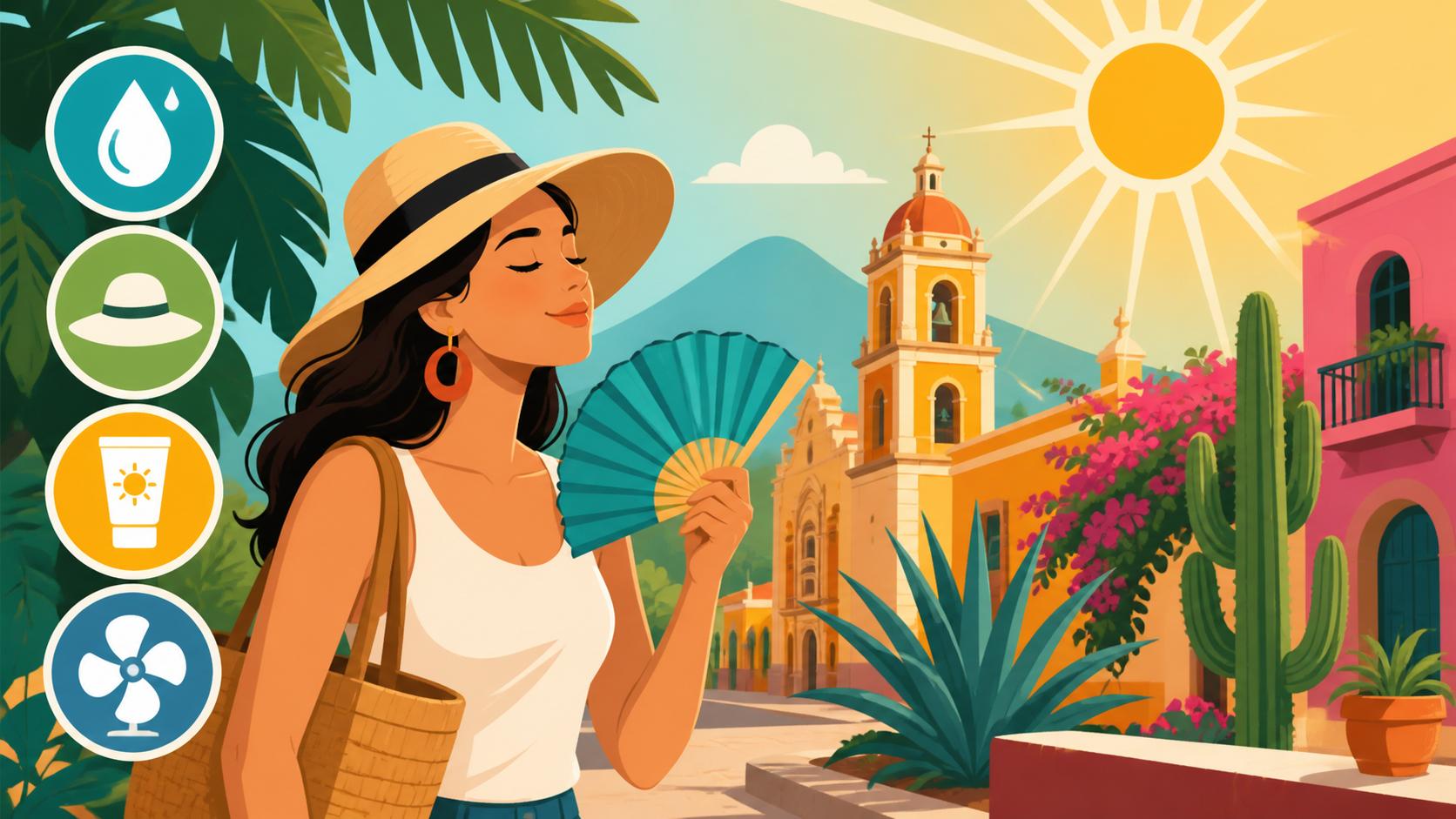
Don't be afraid to carry a "handkerchief" or a small towel. In places like Mérida, it is perfectly normal to see people dabbing their foreheads in public. It’s a practical reality of life here. Also, ensure you are wearing a wide-brimmed hat and high-SPF sunscreen every single time you step outside, as the UV index in Mexico is consistently higher than in most of North America or Europe.
Staying Healthy and Hydrated
The physical toll of heat is cumulative. You might feel fine on Monday, but by Thursday, you could find yourself suffering from "heat exhaustion" if you haven't been proactive. This is one of the most critical aspects of Medical Emergencies in Mexico: What Expats Should Know and Prepare.
Hydration Beyond Just Water
Drinking water is vital, but in extreme heat, you are also losing essential salts and minerals through sweat. Many expats make the mistake of drinking only purified water and ending up with an electrolyte imbalance. In Mexico, you can find "Suerox" or "Electrolit" in every pharmacy and convenience store. These are bottled electrolyte drinks that are much more effective than standard sports drinks.
If you find yourself feeling dizzy, getting a headache, or feeling unusually tired, don't ignore it. These are early signs of Heat Stroke and Sunburn: Preventative Care in Mexico’s Hot Climate. Sit in a cool room, drink an electrolyte solution, and rest. If symptoms persist, do not hesitate to seek help, as heat stroke can escalate quickly.
Water Safety and Availability
You already know the golden rule: don't drink the tap water. But in the heat, you'll be consuming much more than usual. Make sure you have a reliable "garrafón" (20-liter jug) delivery service set up at your home. For more on this, check out Is Tap Water Safe to Drink in Mexico? to understand how to manage your daily water needs safely.
Managing Connectivity and Logistics
When you are out and about in the heat, the last thing you want is to be stranded because you can't call a ride-share or check a map. High temperatures can drain phone batteries faster than usual. To stay connected without the stress of finding local SIM cards in the midday sun, I highly recommend using Airalo. It allows you to download an e-SIM before you even arrive, ensuring you have data the moment you land. Being able to quickly look up the nearest air-conditioned cafe or hospital is a safety essential in the tropics.
Navigating Hospitals and Clinics
Should the heat get the better of you, it’s important to know where to go. Mexico has an excellent network of private hospitals that are well-equipped to handle heat-related illnesses. If you're an expat, you should have your Health Insurance in Mexico: How Expats Can Get Coverage (2027) sorted out long before the summer peak.
Most major cities have "Clínicas" that offer 24-hour emergency services. For a deep dive into how these facilities work and what to expect in terms of payment and service, refer to Navigating Hospitals and Clinics in Mexico: An Expat’s Guide to Medical Care. Many doctors in these facilities speak excellent English, especially in expat-heavy areas like Puerto Vallarta or Cancún, which can be a huge relief during a medical crisis.
Summary of Survival Tips
- Embrace the early morning: Do your exercise and grocery shopping before 9:00 AM.
- The "Double Shower" technique: A lukewarm shower in the afternoon and another before bed can significantly lower your body temperature.
- Eat light: Heavy, greasy meals require more energy to digest, which generates internal heat. Stick to fresh fruits, ceviches, and salads.
- Acclimatize slowly: Don't expect your body to handle the heat perfectly in the first week. It usually takes 2–3 weeks for your sweat glands to become more efficient at cooling you down.
Living in a tropical climate is a trade-off. You get the palm trees, the stunning sunsets, and the vibrant outdoor culture, but you have to pay the "heat tax." By adjusting your home, your clothes, and your daily schedule, you’ll find that the Mexican summer isn't something to be feared, but a season that simply requires a different rhythm of life.
Disclaimer
This guide is for informational purposes only and is based on personal expat experiences and general climate data. Heat-related illnesses can be serious and life-threatening. Always consult with a medical professional regarding your personal health needs, and ensure you have appropriate insurance coverage while living in or visiting Mexico. The climate in 2026 continues to show significant variability; always check local weather advisories.