Mexican Breakfast and Meal Times Explained
One of the trickiest things about settling into life in Mexico, or even just visiting, is wrapping your head around the meal times. You might find yourself ravenously hungry at what feels like a perfectly normal lunch hour, only to discover most restaurants are empty, or worse, not even serving the main meal yet! This guide is here to demystify the rich, sometimes confusing, world of Mexican breakfast and meal times, helping you eat like a local and avoid those awkward hunger pangs.
Disclosure: This post may contain affiliate links. We may earn a commission at no extra cost to you if you make a purchase through these links. Read full disclosure.
The Rhythmic Flow of Mexican Eating: More Than Just Three Squares
Forget everything you think you know about three square meals a day. Mexican meal times operate on a different, more fluid rhythm, one deeply rooted in history, climate, and a profound appreciation for food and community. It’s not just about sustenance; it’s about connection, tradition, and savoring the moments.
Why Meal Times Are Different Here
The distinct timing of meals in Mexico isn't just a quirky cultural difference; it’s a tapestry woven from historical influences, climate, and the practicalities of daily life. Historically, Mexico's agricultural past meant workers needed a quick, light bite before heading to the fields, followed by a substantial meal once the sun was high and the hardest work was done. This pattern allowed for a long, replenishing break during the hottest part of the day.
Even today, in bustling cities like Mexico City or Guadalajara, you'll notice a slower pace around midday. Many businesses still close, or at least slow down, for a couple of hours as people head home or to a local fonda for their main meal. This is a stark contrast to the grab-and-go lunch culture prevalent in many Western countries. The climate plays a huge role too; a heavy meal in the scorching midday sun of, say, Mérida, isn't always appealing. Instead, you save the big feast for when the heat mellows a bit, often followed by a siesta or a more relaxed afternoon.
The Importance of Family and Social Connection
In Mexico, meals are rarely solitary affairs. They are deeply communal events, especially comida, the midday meal. It's a time for families to gather, for friends to reconnect, and for colleagues to bond. There’s a palpable sense of warmth and conversation around the table. Children might come home from school, workers from their jobs, all converging to share stories and a hearty meal prepared with love.
This focus on shared experience influences not only when people eat but also what they eat. Dishes are often designed to be passed around, with large platters of rice, beans, tortillas, and various stews at the center of the table. Even when dining out, you'll observe groups lingering over their food, enjoying the company as much as the flavors. This social aspect is something truly special to embrace as an expat or tourist. Don't be surprised if your Mexican friends invite you for "lunch" at 3 PM and you don't leave until 5 PM! It’s all part of the charm and the integral role food plays in Mexican social life. If you're looking to dive deeper into this, consider checking out a local cooking class or food tour, which you can often find through services like Viator, to truly appreciate the culinary traditions and the community built around them.
Desayuno: The Mexican Breakfast Experience
When you hear "Mexican breakfast," you might immediately think of elaborate, spicy dishes. And while those exist, the reality is a spectrum, from quick bites to indulgent spreads. Mexico's breakfast scene caters to every morning mood and schedule.
Light and Quick: Desayuno Ligero
For many Mexicans, especially on a weekday, breakfast is a light, efficient affair. It’s often consumed at home before heading out to tackle the day's tasks. Think of it as fueling up without weighing yourself down.
A typical desayuno ligero might consist of a strong, aromatic cup of café de olla, often sweetened with piloncillo and spiced with cinnamon, or simply black coffee. Alongside, you’ll usually find some pan dulce, which are sweet breads in a dazzling array of shapes and flavors – conchas, orejas, cuernos, you name it. These aren’t overly sweet like a donut; they’re more subtle and perfect for dipping in coffee. Fresh fruit, sliced or in a small fruit salad, is another popular choice, offering a refreshing start to the day. You might also see a licuado (a fruit smoothie, often made with milk or water) or a jugo (freshly squeezed juice, like orange or grapefruit). It’s about getting something in your system quickly to kickstart the metabolism.
Hearty and Satisfying: Desayuno Fuerte
Now, if you have the time, particularly on a leisurely weekend or if you’re planning a day of heavy activity, the desayuno fuerte is where Mexico truly shines. This is a full-on feast, rich in flavors and often a bit spicy, designed to keep you satisfied for hours.
Dishes like chilaquiles are a quintessential hearty breakfast. Imagine fried tortilla pieces simmered in red or green salsa, topped with cheese, cream, onion, and often shredded chicken or a fried egg. It’s a flavor explosion that perfectly balances heat and comfort. Then there are huevos rancheros, two fried eggs served on crispy tortillas, drenched in a fresh, tangy ranchera sauce, often accompanied by refried beans. Enfrijoladas, tortillas dipped in a flavorful black bean sauce and filled with cheese or chicken, are another delicious option. You'll also find tamales, steamed masa dough filled with savory or sweet fillings, wrapped in corn husks or banana leaves. These are seriously filling and utterly delicious. To explore more of these incredible dishes, check out our guide on what are the must-try foods in Mexico?
Where to Find Breakfast: From Street Stalls to Cafeterias
The beauty of breakfast in Mexico is its accessibility. For a quick desayuno ligero, you can often grab pan dulce from any local panadería (bakery) and coffee from a corner store or even a Starbucks-like establishment. For tamales, look for street vendors with large, steaming pots early in the morning – their presence is a sure sign of fresh, authentic deliciousness.
For a desayuno fuerte, dedicated breakfast restaurants (often called desayunaderos or just restaurantes) are plentiful, especially in cities. These places usually open early, around 7 or 8 AM, and serve breakfast until noon or even later. Many hotel restaurants also offer extensive breakfast buffets that include both light and hearty options. Don't overlook the smaller, family-run cafeterías or fondas; these often serve up the most authentic and comforting breakfast dishes at very reasonable prices.
Almuerzo and Comida: The Midday Feast
This is where the typical North American or European eating schedule truly diverges from Mexico's. What you might call "lunch" is often split into two distinct, and very important, meal periods in Mexico.
Almuerzo: The Mid-Morning Snack or Second Breakfast
For those who started their day with a desayuno ligero, the almuerzo steps in to bridge the gap before the main midday meal. It's usually a more substantial snack than a light breakfast, designed to ward off hunger and keep energy levels up until comida. It's typically consumed between 10 AM and 1 PM.
Think of almuerzo as a "second breakfast" or a robust mid-morning snack. It could be a fresh fruit cup with chili powder and lime, a torta (a Mexican sandwich, often overflowing with fillings like ham, cheese, avocado, or even stewed meats), a couple of street tacos, or a generous portion of birria or barbacoa if you're in the right region. It’s less formal than desayuno fuerte and often eaten on the go or at a casual eatery. This meal is particularly common for those who start work very early or who engage in physically demanding jobs. If you find yourself in a local market, you’ll see plenty of stalls serving up these kinds of satisfying bites. Our guide to Mexican markets and food halls for visitors can help you navigate these vibrant culinary spaces.
Comida: The Main Event
This is it. The big one. Comida is the undisputed king of Mexican meals, traditionally served much later than what many foreigners consider "lunchtime," typically between 2 PM and 4 PM, sometimes even pushing to 5 PM. If you're looking for a full dining experience, this is when you want to plan your restaurant visits.
Comida is often a multi-course affair, especially in a traditional setting or at a good restaurant. It usually starts with a light soup (sopa), which could be a comforting chicken broth or a creamy vegetable soup. This is often followed by a "dry soup" (sopa seca), which isn't soup at all but usually rice, pasta, or sometimes an enchilada. Then comes the main course (plato fuerte), which is the star of the show – a generous portion of meat (chicken, beef, pork, or fish) prepared in a rich sauce, perhaps with vegetables, and always accompanied by warm tortillas. Expect complex flavors, slow-cooked meats, and vibrant salsas. Finally, there's a simple dessert (postre), like flan or fresh fruit, and an agua fresca (fresh fruit water) to wash it all down.
Many restaurants, particularly smaller, local fondas and cocinas económicas, offer a "comida corrida." This is a set menu, often with a few choices for each course, and it's incredibly economical and delicious. It's a fantastic way to experience authentic home-style cooking. The ambiance is usually relaxed, designed for lingering and conversation, reflecting the deep social importance of this meal. You can usually find these bustling spots by mid-afternoon, packed with locals.
Finding the Best Comida: Restaurants, Fondas, and Mercados
When it's time for comida, your options are abundant. For a sit-down, multi-course experience, look for established restaurants that cater to the local crowd. Many tourist-oriented spots might serve "lunch" earlier, but for the true comida experience, seek out places that start getting busy around 2:30 or 3 PM.
Fondas and cocinas económicas are your best friends for authentic and budget-friendly comida corrida. These are often unassuming establishments, sometimes tucked away on side streets or within markets, but they consistently deliver incredible flavors. Just follow the scent of delicious cooking and the sounds of lively chatter. Speaking of markets, the food stalls within them are also fantastic for comida, offering a huge variety of dishes, from pozole to pancita to guisados (stews). It’s a truly immersive culinary experience. You might even find some excellent options through Booking.com if you look for hotels with highly-rated on-site restaurants serving traditional Mexican meals.
Merienda and Cena: Winding Down the Day
As the day winds down, the Mexican meal schedule shifts again, often becoming lighter and more flexible. It’s a gentle descent from the midday feast, perfectly suited for relaxation and quiet reflection.
Merienda: The Afternoon Pick-Me-Up
The merienda is a lovely tradition, a light snack or beverage typically enjoyed in the late afternoon, usually between 5 PM and 7 PM. It’s not meant to be a full meal, but rather a small pause to recharge before the evening.
Often, a merienda consists of another cup of coffee or hot chocolate, perhaps accompanied by more pan dulce. You might also see atole, a warm, thick, corn-based drink, especially during colder months. Sometimes, it’s a small plate of cookies or a piece of fruit. For children, it’s a common ritual after school, offering a comforting treat. It's a moment of quiet indulgence, a chance to unwind and maybe catch up with a friend or family member before the final meal of the day.
Cena: The Evening Meal
The cena, or dinner, is typically the lightest meal of the day in Mexico, and it’s often eaten quite late, usually after 8 PM, and sometimes even as late as 10 PM. For many, especially after a substantial comida, cena might be skipped entirely or consist of something very minimal.
When people do eat cena, it's usually much lighter than comida. Think small, comforting dishes. Sopes, thick tortillas topped with beans, cheese, and salsa, are a popular choice. Quesadillas (especially simple ones with just cheese), tacos dorados (fried tacos), or a simple bowl of soup might also feature. It's rarely a heavy, multi-course affair. The idea is to have something warm and satisfying, but not so much that it interferes with sleep. If you're out and about, you'll find plenty of casual restaurants and street food vendors catering to the cena crowd.
Late Night Bites: Antojitos and Street Food
If cena was light or skipped, or if you simply find yourself out late and craving a bite, Mexico’s vibrant antojito (literally "little cravings") and street food scene comes alive. This is when the streets really begin to sizzle, especially in popular areas.
From late evening until the wee hours, you can find vendors selling everything from tacos al pastor (a must-try, available late into the night) to elotes (corn on the cob or in a cup with mayonnaise, cheese, chili, and lime) to gorditas and sopes. These are perfect for satisfying those late-night munchies. The beauty of Mexican street food is its freshness and incredible flavor, making it a fantastic option for a casual, late dinner. Just be sure to read up on staying healthy in Mexico: essential tips for food, water, and preventive care, especially when trying street food for the first time. For the adventurous foodie, exploring the nocturnal street food scene is an essential part of the Mexican experience. Our guide on how to eat tacos like a local in Mexico will certainly come in handy.
Navigating Mexican Meal Times as an Expat or Tourist
Adjusting to Mexico's eating schedule can take a little getting used to, but once you embrace it, you'll find it adds a wonderful dimension to your daily life. It’s all about flexibility and knowing what to expect.
Adjusting Your Internal Clock
One of the biggest hurdles for newcomers is simply getting their body to adapt to the later main meal. If you’re used to a substantial lunch at 12 PM or 1 PM, waiting until 3 PM or 4 PM for your comida can feel like an eternity. My advice? Embrace the almuerzo! Don't feel guilty about having a more significant "second breakfast" around 11 AM if you had a light desayuno. A small plate of tacos or a torta can be a lifesaver.
Another tip is to adjust your dinner expectations. Don't plan a huge, heavy cena if you've just had a big comida a few hours prior. Often, a simple fruit salad, some yogurt, or a light sandwich is all you need. You'll quickly learn to listen to your body and adapt.
Restaurant Hours and Expectations
Understanding typical restaurant hours is key to avoiding frustration. While many tourist-centric restaurants might cater to earlier Western schedules, traditional Mexican eateries and fondas often have specific hours for each meal.
- Breakfast/Desayuno: Typically served from 7 AM or 8 AM until around 12 PM or 1 PM.
- Comida (Lunch/Main Meal): The prime time is usually 2 PM to 4 PM, with many places staying open until 5 PM or 6 PM. If you arrive at 1 PM, you might be the only one there.
- Cena (Dinner): Don't expect a lot of options before 7 PM or 8 PM for a proper sit-down dinner. Street food and casual spots pick up later in the evening.
It's always a good idea to check opening hours if you have a specific restaurant in mind. If you’re traveling between cities to experience regional cuisines, services like Busbud can help you plan your journey, ensuring you arrive in time for the appropriate meal!
Dealing with Hunger Pangs Between Meals
Those gaps between the light breakfast and late comida, or between comida and the late cena, can be challenging. Here’s how to manage:
- Embrace the Snacks (Botanas): Mexico is a snack paradise! Fresh fruit vendors are everywhere, offering mango, jicama, cucumber, and watermelon with chili powder and lime. You’ll also find cacahuates (peanuts), chicharrones (fried pork rinds), and various chips.
- Carry a Small Snack: Keep some granola bars or nuts in your bag, especially if you’re out exploring all day.
- Hydrate: Sometimes thirst can be mistaken for hunger. Keep an agua fresca or bottled water handy.
- Coffee & Pan Dulce: A mid-morning coffee break with a sweet pastry is a perfectly acceptable way to tide yourself over.
- Street Food as a Bridge: Don't hesitate to grab a couple of tacos or a small elote as a bridge between meals. It’s part of the culinary adventure!
Learning Spanish in Mexico: Top Tips and Resources for Expats can also help you confidently order snacks and meals, making your culinary journey much smoother. And remember, when you're dining out, a little politeness and knowing about tipping in Mexico (propina): when and how much goes a long way.
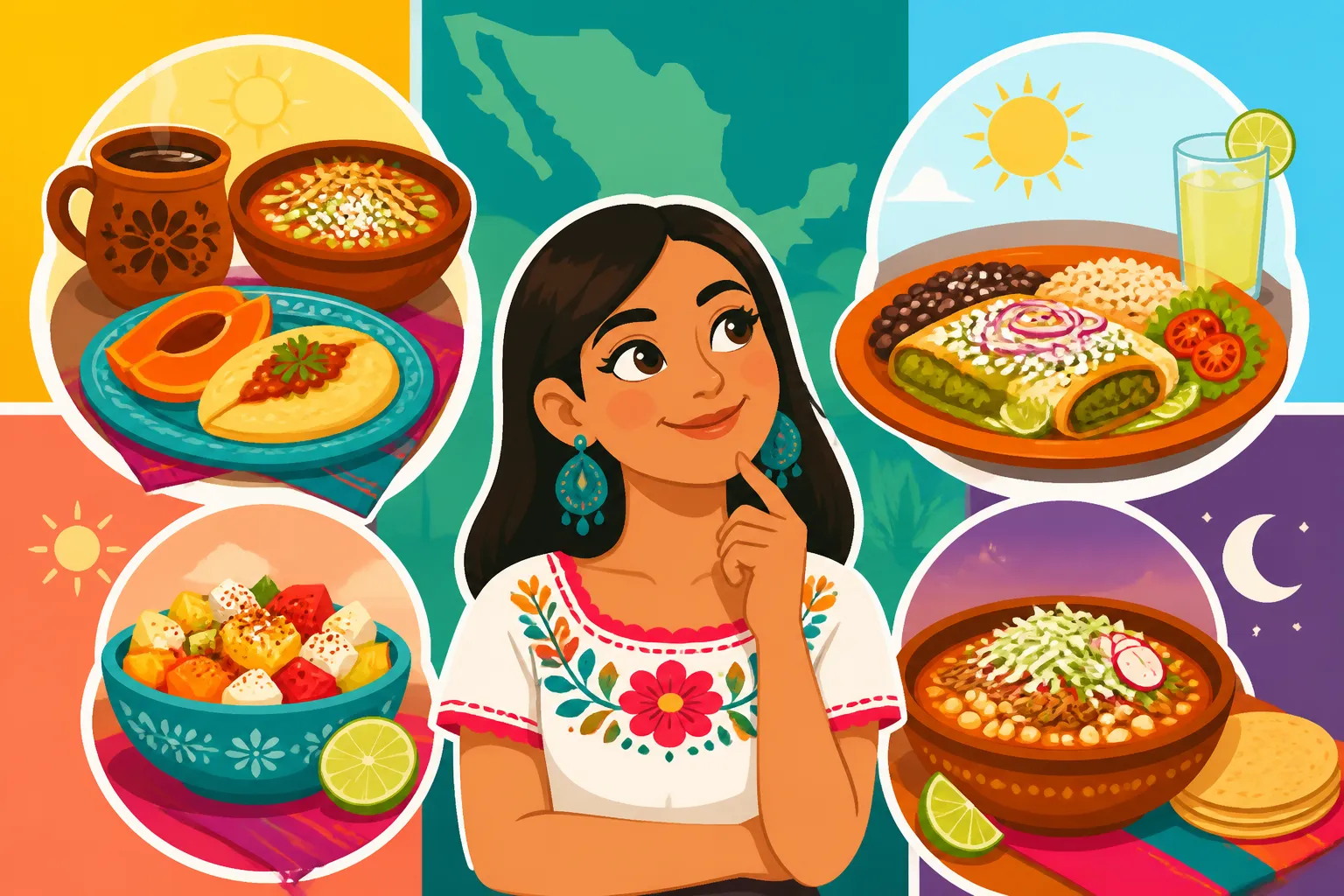
Mexican Meal Times Compared
To give you a clearer picture, here’s a rough comparison of traditional Mexican meal times versus what many people might be used to in North America or Europe. Keep in mind these are generalizations, and individual habits can vary greatly.
| Meal Name (Mexico) | Typical Time (Mexico) | Common Dishes (Mexico) | Equivalent (Western) | Typical Time (Western) | Common Dishes (Western) |
|---|---|---|---|---|---|
| Desayuno | 7:00 AM – 10:00 AM | Coffee, Pan Dulce, Fruit (Ligero) | Breakfast | 7:00 AM – 9:00 AM | Coffee, Toast, Cereal |
| Desayuno Fuerte | 8:00 AM – 12:00 PM | Chilaquiles, Huevos Rancheros, Tamales | Brunch / Hearty Breakfast | 9:00 AM – 12:00 PM | Pancakes, Eggs Benedict, Omelets |
| Almuerzo | 10:00 AM – 1:00 PM | Tacos, Tortas, Fruit cups, Birria (often "second breakfast") | Mid-morning Snack | 10:00 AM – 11:00 AM | Coffee, Pastry, Granola Bar |
| Comida | 2:00 PM – 4:00 PM | Multi-course meal: Soup, Main, Dessert, Agua Fresca | Lunch / Dinner (Main Meal) | 12:00 PM – 2:00 PM | Sandwich, Salad, Lighter Entree |
| Merienda | 5:00 PM – 7:00 PM | Coffee, Hot Chocolate, Pan Dulce, Atole | Afternoon Snack / Tea | 3:00 PM – 4:00 PM | Tea, Biscuits, Fruit |
| Cena | 8:00 PM – 10:00 PM | Sopes, Quesadillas, Light Soup, Tacos | Dinner / Supper (Lighter) | 6:00 PM – 8:00 PM | Pasta, Stir-fry, Pizza |
| Antojitos | Late Evening | Tacos al Pastor, Elotes, Esquites, Gorditas | Late-Night Snacking | 9:00 PM onwards | Pizza, Burgers, Bar Snacks |
This table highlights the significant shift, especially in the midday, where the comida takes on the role of the most substantial meal, pushing everything else later in the day. Embrace this unique culinary rhythm, and you'll find yourself enjoying Mexico's food culture even more deeply.
Disclaimer
The information provided in this guide is for general informational purposes only and is based on typical cultural practices and observations. Meal times and culinary habits can vary by region, family, and individual preferences within Mexico. Always be respectful of local customs and current health guidelines.