How to Withdraw Pesos Safely From ATMs in Mexico
Ah, the ATM in Mexico. It’s a love-hate relationship, isn't it? On one hand, you absolutely need pesos for all those amazing street tacos, local markets, and even just to tip the lovely people who make your life here so much better. On the other hand, standing in front of that machine can feel like a high-stakes gamble, fraught with worries about fees, scams, and just plain getting your card eaten. This guide is here to cut through the anxiety, offering practical, street-smart advice from someone who’s been there, done that, and still occasionally talks to the ATM machine in Spanish when it tries to charge me too much. We'll dive deep into how to withdraw pesos safely and smartly in Mexico, making sure your money stays in your pocket and your peace of mind intact.
Disclosure: This post may contain affiliate links. We may earn a commission at no extra cost to you if you make a purchase through these links. Read full disclosure.
Why Getting Cash is Still Important in Mexico and the ATM Dilemma
Let’s be real: as much as we love the convenience of plastic, Mexico still runs significantly on cash. You might have arrived thinking your credit card would be your best friend, only to find yourself scrambling for pesos more often than you anticipated. This isn't just about small transactions; it's about navigating daily life and participating fully in the local economy.
The Enduring Cash Culture
Despite advances in digital payments, cash remains king in many aspects of Mexican life. From the bustling mercados where you haggle for fresh produce and beautiful handicrafts, to the charming fondas serving up incredible, authentic meals, cash is often the only accepted form of payment. Imagine finding the perfect, unique souvenir or a mouth-watering plate of enchiladas from a street vendor, only to realize your card is useless. It’s a frustrating scenario many of us have faced, leaving us feeling unprepared and a little out of sync.
Beyond these everyday transactions, cash is also crucial for things like paying tolls on major highways, which might not accept cards or have digital payment options for foreign vehicles. And, of course, there’s the tipping culture. Whether it’s your waiter, the gas station attendant, the person bagging your groceries, or the friendly folks who help you with your luggage, a few pesos here and there go a long way in showing appreciation and are often expected. Trying to navigate these situations with only a card can be awkward and limits your ability to engage with the local community in a meaningful way. This is why having some crisp pesos in your wallet isn't just a convenience; it's often a necessity for a smooth and respectful experience. For a deeper dive into why cash is so important, check out our guide on Cash Culture in Mexico: When You Still Need Pesos.
Understanding ATM Scams and Risks
Now, about that feeling of dread at the ATM. It's not entirely unfounded. While Mexico is generally safe, especially in tourist and expat-heavy areas, ATMs can sometimes be targets for less-than-scrupulous individuals. The primary concern is often "skimming," where devices are secretly installed on card readers to steal your card information. Another risk is distraction theft, where someone tries to divert your attention while you're at the machine, or even outright robbery, though this is less common at well-chosen locations.
I remember one time in a smaller town, I needed cash desperately for a bus ticket. The only ATM was outside a tiny, dimly lit store. My gut screamed, "No!" but the bus was leaving soon. I reluctantly went for it, carefully checking the card slot and keypad. Everything looked fine, but my heart was pounding the entire time. That feeling of vulnerability, even when nothing actually happens, is real and can really put a damper on your day. The goal isn't to live in fear, but to be aware and take precautions. We’ll get into how to spot suspicious elements and protect yourself, so you don't have to rely on a racing pulse for your security alerts. Taking a few moments to understand these risks can save you a lot of hassle and stress, allowing you to enjoy your Mexican adventure without unnecessary financial worries.
Choosing Your ATM Wisely: Banks, Locations, and Security
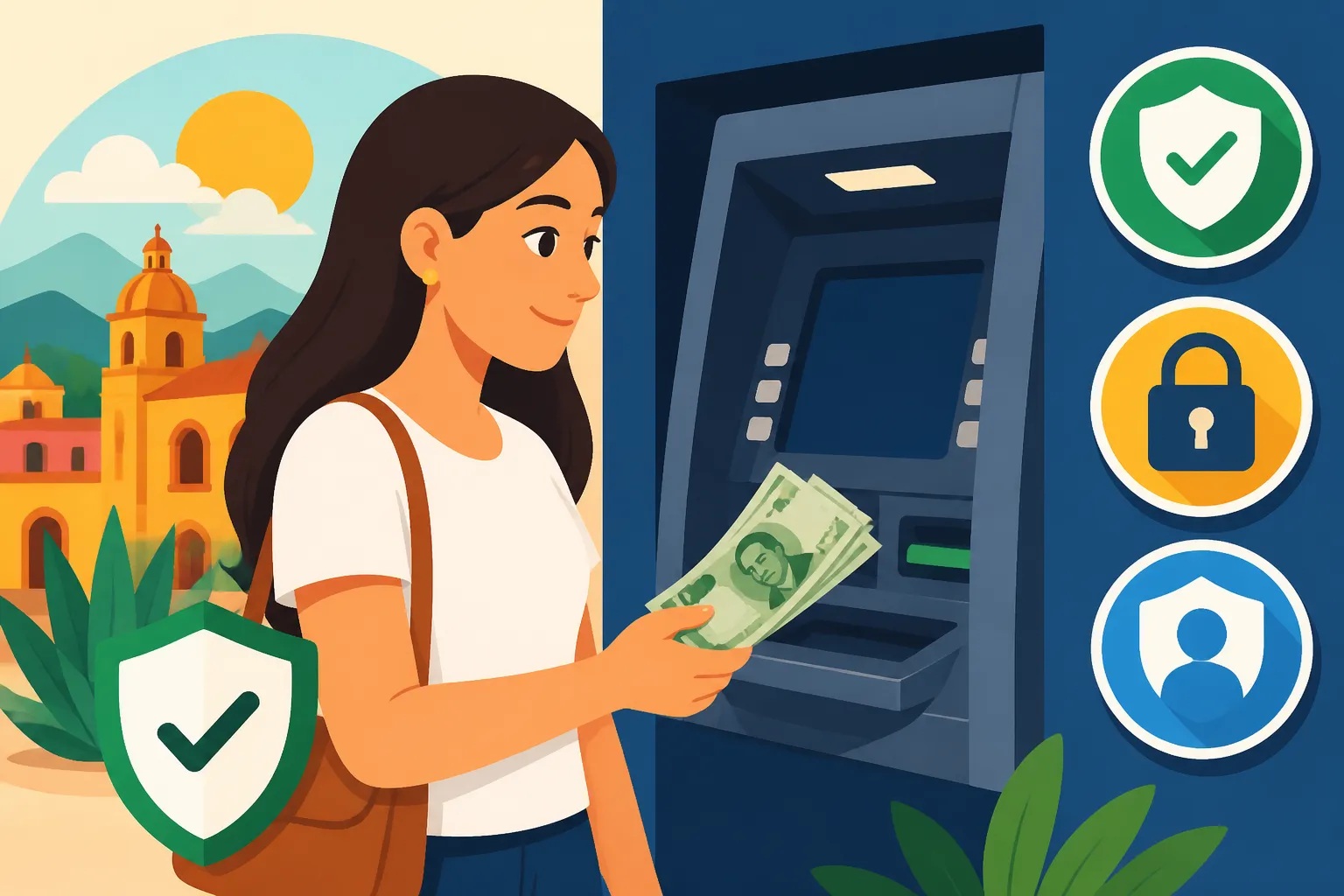
The first and most crucial step to safely withdrawing cash in Mexico is selecting the right ATM. This isn't just about finding any machine that spits out pesos; it's about strategically choosing one that minimizes your risk and maximizes your peace of mind.
Stick to Reputable Bank ATMs
When it comes to ATMs in Mexico, brand matters. Always, and I mean always, prioritize ATMs directly affiliated with major, well-known banks. Think BBVA, Banorte, Santander, Citibanamex, HSBC, and Scotiabank. These institutions invest heavily in security measures, making their machines less susceptible to tampering and fraud. You'll find their ATMs in branches, and often in major shopping centers or airports.
Why is this so important? Well, these banks have dedicated security teams and regular maintenance schedules. A standalone, generic ATM in a convenience store, for instance, might not have the same level of oversight or security features. While they might seem convenient, the risk of encountering a compromised machine with a card skimmer or a hidden camera is significantly higher. I've heard too many stories from fellow expats who used a "quick-stop" ATM only to find fraudulent charges on their bank statement days later. It's a real pain to deal with, especially when you're trying to enjoy your time here. Sticking to the major players is like choosing a well-lit, busy street over a dark alley; it just makes good sense. When you need cash for things like medicines, which you often purchase at a local pharmacy, choosing a safe ATM helps ensure your funds are secure for these essential needs. For more on getting necessary supplies, you can refer to Pharmacies in Mexico: How to Get Medications (OTC vs Prescription).
Strategic ATM Locations
Beyond the bank itself, the location of the ATM is paramount. The safest places to withdraw cash are generally:
- Inside bank branches during business hours: This is the gold standard. You have bank staff nearby, and usually, a security guard is present. Plus, the environment is controlled and monitored.
- Inside large, busy supermarkets or shopping malls: These locations are typically well-lit, have surveillance cameras, and a constant flow of people, which deters potential criminals. Think places like Walmart, Soriana, or Liverpool.
- At airports: While they might have slightly higher fees (more on that later), airport ATMs are usually secure, well-monitored, and convenient upon arrival.
Avoid ATMs that are isolated, on quiet streets, or in dimly lit areas, especially at night. These locations offer perfect opportunities for criminals to install skimming devices undetected or to target unsuspecting individuals. It's easy to get complacent, especially if you're in a familiar neighborhood, but a moment of inattention can lead to problems. Always trust your gut feeling – if an ATM location feels off or too quiet, walk away. There's always another, safer option just around the corner. Remember, maintaining situational awareness in all your daily activities, including ATM withdrawals, is a cornerstone of Safety in Mexico: What Expats Need to Know About Staying Safe.
Visual Inspection and Physical Security Checks
Before you even insert your card, take a moment to be a detective. This isn't paranoia; it's smart prevention.
- Check the card slot: Wiggle it. Does it feel loose? Are there any odd attachments or pieces that don't look like they belong? Skimming devices are often designed to look like part of the machine, but they might protrude slightly or feel flimsy. Compare it to the card slots on other ATMs if possible.
- Examine the keypad: Is it raised or spongy? Does it feel different from the rest of the machine? False keypads can be placed over legitimate ones to record your PIN.
- Look for tiny cameras: These can be hidden above the screen, on the side panel, or even in the receipt slot, aimed at capturing your PIN.
- Check mirrors and surroundings: While some ATMs have convex mirrors for your safety, be wary of anything that seems out of place or could be used to peek over your shoulder.
Once you’ve done your visual inspection and are ready to enter your PIN, always, always cover the keypad with your other hand. This simple act blocks any potential hidden cameras from recording your digits. It's a habit that will protect you whether you're in Mexico or back home. Taking these extra seconds might feel tedious, but it's a small price to pay for securing your financial information.
Navigating the Transaction: Fees, Limits, and Currency Exchange
So, you've found a safe ATM at a reputable bank in a good location. Excellent! Now, let's talk about the actual transaction – how to get the most pesos for your money and avoid those sneaky charges.
Understanding ATM Fees and Dynamic Currency Conversion (DCC)
This is where many expats get caught off guard. When you use an ATM in Mexico with a foreign card, you'll generally face two types of fees:
- The Mexican bank's ATM fee: This is a charge from the bank whose machine you're using. It typically ranges from 30 to 50 pesos (about $1.50 to $3.00 USD), though it can sometimes be higher, especially at airport ATMs. This fee will be displayed on the screen, and you'll have to accept it before proceeding.
- Your home bank's foreign transaction fee: This is a fee charged by your bank for using your card internationally. It can be a percentage of the withdrawal amount (e.g., 1-3%) or a flat fee, or both. Check with your bank before traveling to understand their specific charges.
Now, for the most important tip regarding currency exchange: Dynamic Currency Conversion (DCC). When you withdraw money, the ATM screen will often ask if you want to be charged in Mexican Pesos (MXN) or your home currency (e.g., USD, CAD, GBP). Always choose to be charged in MXN (pesos)! If you choose your home currency, the Mexican bank or the ATM operator will perform the currency conversion at their own, often unfavorable, exchange rate. By choosing MXN, your home bank does the conversion, and they typically offer a much better, closer-to-market rate. This small choice can save you a significant amount over time. I learned this the hard way, losing out on valuable pesos simply because I didn't understand the "helpful" option to see the charge in my home currency. Trust me, it's a common mistake, but an easy one to avoid once you know the trick! For more comprehensive advice on maximizing your money, explore our guide on Currency Exchange in Mexico: Getting the Best Rates on Pesos.
Here's a quick comparison of the difference choosing MXN vs. USD might make:
| Scenario | Exchange Rate Applied | Result for 5,000 MXN Withdrawal (Example) | Recommendation |
|---|---|---|---|
| Choose MXN | Your home bank's rate (typically better) | Closer to market rate | ALWAYS CHOOSE THIS |
| Choose USD (DCC) | Mexican ATM operator's rate (typically worse) | Higher cost in your home currency | AVOID THIS |
Withdrawal Limits and Planning Your Cash Needs
Mexican ATMs, and your home bank, will have daily withdrawal limits. Typically, Mexican bank ATMs might allow you to withdraw anywhere from 5,000 to 9,000 pesos per transaction, sometimes even up to 10,000 pesos (approx. $300-$600 USD). However, your home bank might have its own, possibly lower, daily limit. It’s crucial to know both.
Because of these limits, and for security reasons, it’s generally not a good idea to withdraw a massive sum of cash all at once. If you need, say, 15,000 pesos for a specific expense, consider making two smaller withdrawals on different days or from different ATMs, rather than one large one that depletes your account and leaves you carrying a lot of cash. Plan your cash needs. If you know you're heading to a remote area or a market where only cash is accepted, make your withdrawals in a city or town with secure ATMs beforehand. It might feel like a hassle, but it's part of being a savvy expat or traveler. And if you're wondering how much cash you really need for everyday expenses, our article How Much Cash Should You Carry When Traveling in Mexico? offers some excellent guidelines.
Notifying Your Bank and Card Management
This step is absolutely critical and often overlooked by excited travelers. Before you even set foot in Mexico, contact your home bank and credit card companies to inform them of your travel dates and destinations. If you don't, they might flag your international ATM withdrawals or purchases as suspicious activity and temporarily block your card, leaving you in a very inconvenient situation without access to your funds.
Also, consider having a backup card. Keep it separate from your primary wallet. If your main card gets lost, stolen, or eaten by an ATM (yes, it happens!), you won't be completely stranded. Some expats find it useful to have both a debit card for cash withdrawals and a credit card for larger, more secure purchases. Always monitor your bank statements closely for any unusual activity. If you spot anything suspicious, contact your bank immediately. Understanding how to use your cards wisely is key, and our guide Using Credit and Debit Cards in Mexico: What Expats Need to Know provides further valuable insights. While there are sometimes charges associated with using your cards abroad, proactive measures like notifying your bank and understanding the fee structure can help minimize these. For a deeper dive into these costs, read about Bank Fees in Mexico: Tips to Avoid Unnecessary Charges.
Post-Withdrawal Safety and Best Practices
You've successfully navigated the ATM, the cash is in hand, and you’ve hopefully avoided exorbitant fees. But the job isn't quite done yet! The moments immediately following an ATM transaction are crucial for maintaining your security.
Immediate Safety Measures
The minute the machine dispenses your cash, your primary focus should be on securing it and then quickly moving away from the ATM. Resist the urge to count your money or organize your wallet right there in front of the machine. This is when you are most vulnerable, as you’re distracted and displaying your cash.
Instead:
- Put the cash away immediately and discreetly. Fold it, slip it into a secure, inner pocket, or into your bag before you step away from the ATM. Don't flash large sums of money.
- Be aware of your surroundings. As you walk away, glance around to ensure no one is following you or paying undue attention to you. If you were with a companion, they could keep an eye out for you while you completed your transaction.
- Walk confidently and with purpose. Appearing lost or vulnerable can make you a target. Head straight to your next destination, whether it's back into the safety of a bank, a busy store, or your accommodation.
These seem like small steps, but they drastically reduce your risk of becoming a target for petty theft. It’s better to be overly cautious than to regret it later.
Tracking Your Transactions
Even with all the precautions, it’s vital to keep a close eye on your financial activity.
- Keep your ATM receipts. While often faded and hard to read, these can be useful if there's a discrepancy with your bank statement. Snap a photo of them if you're worried about fading.
- Regularly check your bank statements. Online banking makes this incredibly easy. Log in every few days to review your transactions. Look for any unfamiliar charges, even small ones, as these can sometimes be test charges by fraudsters.
- Know what to do if you suspect fraud. If you see anything suspicious, contact your bank immediately. Most banks have a dedicated fraud hotline that operates 24/7. The faster you report it, the better your chances of recovering your funds and preventing further unauthorized transactions.
Being proactive with your financial monitoring is one of the best defenses against fraud. You don't want to discover an issue months later when it's harder to dispute. Our guide on Avoiding Financial Scams: Common Tricks Targeting Expats provides more details on recognizing and reacting to various financial threats.
Alternatives to Traditional ATM Withdrawals
While ATMs are necessary, they aren't your only option for accessing funds in Mexico. Sometimes, alternative methods can be safer or more convenient, especially for larger amounts.
- Money Transfer Services: Services like Wise (formerly TransferWise) or Western Union allow you to send money from your home bank account to yourself in Mexico for cash pickup at various locations like Elektra, Coppel, or specific bank branches. This can be a more secure way to get a larger sum of cash, as you’re not dealing with an ATM and you pick up funds from a teller. Just make sure to bring proper ID (your passport or residency card, like your What to Do If You Lose Your Passport in Mexico is crucial here). For a detailed look at these options, consult Transferring Money Internationally: Best Ways to Send Money to/from Mexico.
- Credit Card Purchases: Whenever possible, use your credit card for larger purchases, especially at reputable stores, restaurants, or hotels. Credit cards often offer better fraud protection than debit cards, and you won’t incur ATM withdrawal fees. Just ensure you're still choosing to be charged in MXN to avoid those unfavorable DCC rates!
- Local Bank Account: If you plan on living in Mexico long-term, opening a Mexican bank account can streamline your finances significantly. You can transfer larger sums from your home account into your Mexican account, then withdraw cash from local ATMs without foreign transaction fees, or simply use your Mexican debit card for local purchases. This gives you greater control and often better rates. Read more about this process in Do You Need a Mexican Bank Account or Can You Rely on Your Home Bank? and How to Open a Bank Account in Mexico: Requirements and Tips.
By diversifying how you access your money, you create a more robust financial strategy for living in or visiting Mexico, reducing your reliance on any single method and enhancing your overall security.
Disclaimer
Please note: The information provided in this guide is intended for general informational purposes only and does not constitute financial or legal advice. Regulations, fees, and security risks can change. Always consult with your financial institution for the most up-to-date information regarding your specific accounts and seek professional advice as needed. Your safety is paramount, so always exercise caution and use common sense when handling money in any foreign country.