Deposits and Pre-Authorisations at Mexican Hotels: What Gets Held
Picture this. You’ve just checked into a lovely hotel in Tulum, and you open your banking app to find a chunk of your vacation money “pending,” even though you prepaid the room weeks ago. That frozen money is a hold, and it can wreck a tight travel budget. This guide explains what Mexican hotels hold, why they do it, and how to see it coming when you book on Booking.com.
Disclosure: This post may contain affiliate links. We may earn a commission at no extra cost to you if you make a purchase through these links. Read full disclosure.
What Mexican Hotels Actually Hold on Your Card
I’ve checked into everything from beachfront resorts in Cancún to family-run posadas in San Cristóbal de las Casas. The deposit conversation at the front desk almost never goes the same way twice. Some places swipe your card and say nothing. Others ask for cash. A few hand you a little paper slip that you are supposed to guard with your life until checkout. Once you understand the categories, the whole thing gets far less stressful.
Pre-Authorisation Versus a Real Charge
A pre-authorisation, which Mexican staff usually call a preautorización or garantía, is not a payment. The hotel asks your card issuer to set aside a certain amount. That money leaves your available balance, but it never reaches the hotel’s account unless they later “capture” it. Think of it as the hotel reserving a seat at your financial table, just in case.
A real charge, or cargo, is money that actually moves. When you pay for your room at check-in, or settle your minibar and restaurant tab at checkout, those are charges. The confusing moment comes when a hotel does both. They pre-authorise an amount at check-in, then run a separate final charge at checkout. For a few days your statement can look like you paid twice.
I learned this the hard way in Mérida. A boutique hotel on Paseo de Montejo pre-authorised my card for the whole stay plus incidentals. Then, at checkout, it charged me the actual total as a fresh transaction. For nearly a week my banking app showed both. Nothing was wrong, and the pre-authorisation eventually vanished. But I spent two evenings convinced I’d been double-billed, and that is exactly the anxiety this guide is meant to spare you.
The Main Types of Holds You Will Meet
Across Mexico, holds tend to fall into a handful of patterns. Knowing which one you’re facing tells you what to ask and when to expect the money back.
| Type of hold | Where you usually see it | When it is placed | What it covers | How it ends |
|---|---|---|---|---|
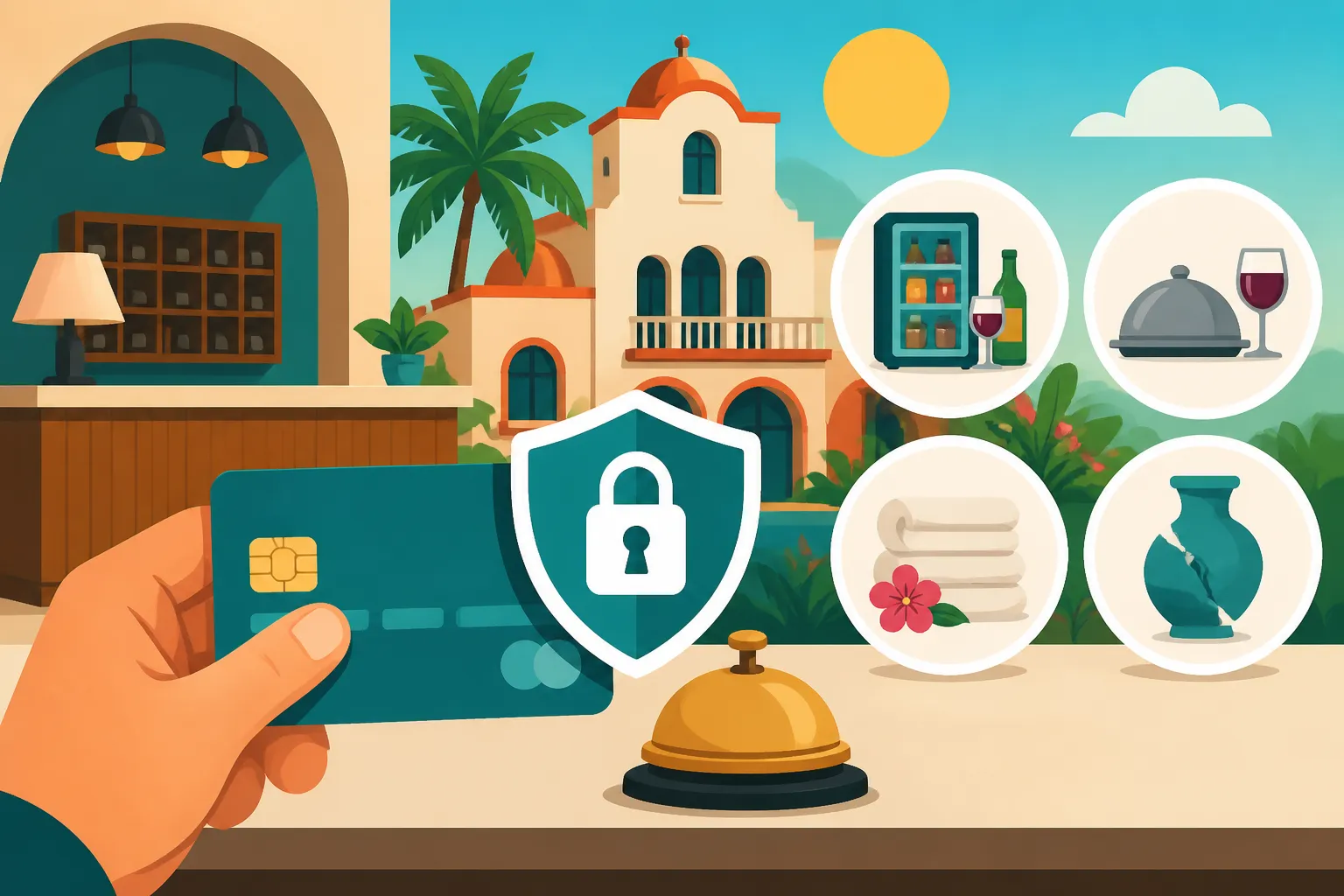
| Incidentals pre-authorisation | City hotels, chains, boutique hotels | At check-in | Minibar, room service, damage, extra guests | Released after checkout if nothing is owed |
| Full-stay guarantee | Pay-at-property bookings | At check-in, sometimes days before arrival | The room cost itself, until you pay | Replaced by a final charge or released |
| Resort incidentals hold | All-inclusive resorts in Quintana Roo, Los Cabos, Riviera Nayarit | At check-in | Premium drinks, spa, à la carte extras, damage | Released after the folio is closed |
| Damage deposit | Vacation rentals, apartments, villas | Before or at arrival | Breakages, cleaning issues, lost keys | Refunded by card, transfer, or cash after inspection |
| Cash deposit | Posadas, hostels, small family hotels | At check-in | Keys, towels, remote controls, damage | Handed back in cash at checkout |
| Prepayment charge | Non-refundable or prepaid rates | At booking or a set date before arrival | The room cost | Not a hold; it is a completed payment |
Why Mexican Properties Lean on Holds
It’s easy to feel accused when a hotel asks for a guarantee. But from the property’s side, the logic is simple. Mexican hotels deal with a lot of international guests on foreign cards. Chasing a disputed minibar charge across borders is almost impossible once you’ve flown home. A hold is their insurance.
Resorts have an extra reason. In an all-inclusive, most of what you consume is already paid for. But top-shelf bottles, couples’ massages, and the private dinner on the beach are not. The front desk has no way of knowing whether you’ll spend nothing extra or run up a spectacular spa bill. So they set aside a buffer.
Small posadas often prefer cash for a more practical reason. Card terminals cost them money and connections can be patchy in mountain towns. A cash deposit keeps things simple. If you’re wondering why so many smaller businesses here prefer pesos in hand, see Cash vs Card in Mexico: What Visitors Should Know.
Reading the Hold Before You Book on Booking.com
The single best way to avoid a nasty surprise is to read the deposit terms before you hit reserve. This is where Booking.com genuinely earns its place in my travel routine. Each listing sets out its payment and deposit rules in a fairly standard layout, so I’m not hunting through a hotel’s Spanish-only website or waiting days for an email reply.
Where the Deposit Rules Live in a Listing
On a Booking.com property page, the details you want are spread across a few areas. Scroll past the photos and room descriptions to the house rules and the fine print. That’s where properties typically explain whether they pre-authorise cards, whether they take a damage deposit, and how and when it comes back. Some listings also show a damage deposit line right in the room or price summary.
Then, once you’ve selected a room, read the conditions attached to that specific rate. Two rates for the same room can carry very different payment terms. One might say you’ll pay at the property. Another might say you’ll be charged in advance. That difference changes everything about what lands on your card and when.
My personal rule: if the fine print mentions a deposit but doesn’t say how much, how it’s taken, or when it’s returned, I treat that as a question to ask before booking. Vague terms are where frustration lives. For help decoding the jargon in these sections, including bed types and rate labels, see Reading Mexican Hotel Listings: Room Types, Bed Sizes, and Terms Decoded.
Prepayment, Pay at the Property, and Damage Deposits
These three ideas get blurred together, so let me separate them.
- Prepayment means the room cost is charged before you arrive, either at booking or on a date set by the property. That’s a completed payment, not a hold. You may still get an incidentals pre-authorisation at check-in on top of it.
- Pay at the property means you settle the room when you arrive or leave. The hotel may still validate your card before arrival, and it will very likely pre-authorise at check-in to guarantee the stay.
- Damage deposit is separate from the room cost entirely. It’s most common with apartments and villas. The listing should say whether it’s taken by card, transfer, or cash, and how long after checkout it’s returned.
Which rate you choose has a big effect on your available funds during the trip. With a prepaid rate, the room cost leaves your account early and your hold at the desk is usually smaller. With pay-at-property, the hold can be larger because it covers the room as well. If you’re weighing the trade-off between flexibility and price, see Refundable vs Non-Refundable Rates in Mexico: When the Discount Is Worth It.
Booking.com also lets you filter and compare properties side by side. I often shortlist three hotels in a neighbourhood and open each one’s fine print in a separate tab. It takes ten minutes and tells me which place will tie up the least money on arrival. That matters a lot if you’re travelling on a debit card.
Questions to Send the Property Before Arrival
Booking.com gives you a messaging channel to the property after you reserve. Use it. Front desk teams in tourist areas usually reply in English, and in smaller towns they’ll answer in Spanish, which a translation app handles fine. Having the answer in writing also helps if there’s a disagreement later.
Here are the questions I send, in both languages:
- How much will you pre-authorise at check-in, and is it per stay or per night? ¿Cuánto es la preautorización al hacer el check-in, y es por estancia o por noche?
- Is the deposit taken by card or in cash? ¿El depósito se toma con tarjeta o en efectivo?
- In what currency is the hold made? ¿En qué moneda se hace la retención?
- When do you release the pre-authorisation after checkout? ¿Cuándo liberan la preautorización después del check-out?
- Do you accept debit cards for the guarantee? ¿Aceptan tarjeta de débito como garantía?
If you’re booking for someone else, or your card is in a different name from the guest, sort that out in the same message. Mexican front desks can be strict about matching names. See Booking Mexican Hotels From Abroad: Cards, Names, and Passport Matching for how to handle that cleanly.
At the Front Desk: Check-In and Check-Out Step by Step
You’ve booked, you’ve read the fine print, you’ve asked your questions. Now you’re standing in a breezy lobby in Puerto Vallarta, sweaty from the airport, being handed a welcome drink. This is where a little routine pays off.
Credit Card Versus Debit Card Holds
The card you hand over matters more than almost anything else. Both work for holds at most Mexican hotels, but they behave very differently in your wallet.
| Factor | Credit card | Debit card |
|---|---|---|
| What the hold reduces | Your available credit | Your actual cash balance |
| Impact during the trip | Usually minor unless your limit is tight | Can freeze money you need for meals, tours, and taxis |
| Acceptance for guarantees | Widely accepted | Accepted at many hotels, refused by some |
| Release experience | Credit simply reappears | Funds return to your account, sometimes slowly |
| Overlap with final charge | Hold and charge may both show briefly | Hold and charge may both drain your balance briefly |
| Dispute options | Generally stronger protections through the issuer | Depends heavily on your bank |
My advice is blunt: use a credit card for the guarantee if you have one. A friend of mine stayed at a resort near Playa del Carmen on a debit card. The hold plus the final charge overlapped for several days after checkout, and she found herself short at the airport. She wasn’t overcharged. Her money was just in two places at once.
If debit is all you have, plan for it. Keep a second card or some pesos in reserve, and ask the desk to run the room payment and the incidentals hold in a way that avoids duplication. For a broader look at which cards hurt least on a Mexico trip, see Which Card to Use in Mexico: Fee Comparison Across a Month of Real Spending.
A Check-In Routine That Protects Your Balance
Here is the routine I follow every single time, whether it’s a chain hotel in Monterrey or a hacienda in the Yucatán.
- Confirm what you’ve already paid. Show your Booking.com confirmation on your phone and point to whether the stay is prepaid or pay-at-property. This prevents the desk from pre-authorising the room cost again.
- Ask how much they’re holding and in which currency before you hand over your card. ¿Cuánto van a retener y en qué moneda?
- If the terminal offers to charge you in your home currency rather than pesos, think twice. Hotels and terminals may apply their own exchange rate. See Paying in Pesos vs Dollars at Mexican Hotels: Which Rate You Actually Get for how to choose.
- Keep the pre-authorisation slip, the váucher. Snap a photo of it straight away. It carries the authorisation code you’ll need if anything goes wrong.
- Ask when the hold will be released and write the answer down.
- At checkout, review the folio line by line. Minibar items, a second round of beach towels, or a late checkout fee can sneak in. Early or late timing rules differ by property, so see Early Check-In and Late Check-Out in Mexico: Who Actually Offers It before you count on extra hours.
- Ask the desk to cancel the pre-authorisation in front of you, ¿Me pueden cancelar la preautorización, por favor?, and request a cancellation slip, a comprobante de cancelación.
- Photograph the final receipt and the cancellation slip together, then keep them until the money is fully back.
Steps seven and eight are the ones that make the biggest difference in my experience. When a hotel actively cancels the pre-authorisation, it often clears faster than if you simply wait for it to lapse.
One more thing to check on that final folio: taxes. Mexican states add their own lodging tax, and some properties collect it at the desk rather than including it in the online price. That can raise your final charge above what you expected. See Mexico’s Lodging Tax by State: What You Pay on Top of the Room Rate so it doesn’t look like a hold that never came off.
Cash Deposits at Posadas and Small Hotels
Small family hotels play by their own gentle rules. In Oaxaca, I once stayed at a courtyard posada where the owner’s son took a cash deposit for the room key and the TV remote, wrote it in a notebook, and handed the exact notes back to me on the last morning with a big smile. No card terminal, no banking app, no waiting.
That simplicity is lovely, but protect yourself:
- Ask for a handwritten receipt, a recibo, showing the amount and the date.
- Count the deposit back at checkout before you walk away.
- Return keys and remotes to the person who took the deposit, or to the desk, never just leave them in the room.
- Keep small denominations on hand. Change can be scarce first thing in the morning at a tiny front desk.
If a cash deposit feels uncomfortable, the Booking.com listing will usually flag it in the house rules, so you can pick a different property in the same street.
When the Hold Does Not Come Off
Even with a perfect routine, sometimes the money just sits there. Before you panic, it helps to understand who actually controls the release.
How Release Timing Works
When a hotel cancels or simply stops using a pre-authorisation, the release has to travel back through the payment network to your card issuer. The hotel can send the instruction, but your bank decides when the funds reappear in your available balance. That’s why two guests at the same hotel, on the same morning, can see their holds vanish at different speeds.
If the hotel never actively cancels the hold, it usually expires on its own after a period set by your card issuer. That’s the slow route. It’s also why I push for an active cancellation at checkout.
All-inclusive resorts add a twist. They often keep the folio open until every outlet, from the swim-up bar to the spa, has posted its charges. Only then is the incidentals hold released. If you’re deciding whether a resort’s included extras justify the hassle, see All-Inclusive Resorts in Mexico: When They Actually Save Money.
Currency Differences on Released Holds
Here’s a quirk that confuses a lot of people. Say a hotel in Los Cabos holds an amount in pesos on your foreign card. Your bank converts it at one exchange rate when the hold is placed. When it’s released days later, the rate has moved. The amount returned to your available balance, in your home currency, may differ slightly from what was originally frozen.
Nothing has been taken. The peso amount was the same in both directions. It’s simply the exchange rate shifting under your feet. Choosing a card without heavy foreign transaction fees keeps these differences small, and asking for the hold in pesos rather than your home currency keeps the hotel’s own conversion out of the picture.
Escalating a Stuck Hold
If the agreed release window has passed and the money still hasn’t returned, work through these steps in order. Patience first, then paperwork.
- Check your statement carefully. Confirm whether you’re looking at a lingering pre-authorisation or an actual completed charge. They’re labelled differently in most banking apps, often as “pending” versus “posted.”
- Message the hotel through Booking.com. Include your reservation number, the dates, the amount and the authorisation code from your váucher photo. Ask them to confirm the pre-authorisation was cancelled and to send the cancellation reference.
- If they confirm cancellation, take that reference to your card issuer. With proof the merchant released it, your bank can often clear it on their side.
- If the hotel doesn’t respond, contact Booking.com customer service through the help centre in the app. They can reach the property on your behalf, and having the conversation logged in one place makes the next step easier.
- If the hold has turned into a charge you didn’t agree to, raise a dispute with your card issuer. Supply your confirmation, final receipt, cancellation slip and the message history.
I’ve only had to go past step two once, at a beach hotel in Huatulco where the night manager forgot to cancel the hold. A polite message with my photo of the váucher sorted it within a day. Having the booking and the messages all in Booking.com meant I didn’t have to dig through emails or explain the stay from scratch.
If disputes and weather disruptions worry you, flexible booking helps. Hurricane season can force sudden changes of plan on the coasts, and knowing your cancellation and payment terms ahead of time is half the battle. See Hurricane Season in Mexico: Refundable Rates and Booking Strategy.
And if you’re torn between booking through a platform or calling the hotel directly to negotiate deposit terms, there are cases where a phone call wins. Some family-run places will waive or reduce a hold if you ask nicely in Spanish. See Booking Platforms vs Direct Booking in Mexico: When Calling the Hotel Wins for when that’s worth trying.
For most trips, though, my process is the same. I search on Booking.com, read the fine print on every shortlisted property, message the hotel with my deposit questions, and pick the place whose payment terms fit my cards and budget. It turns the front desk from a moment of anxiety into a two-minute formality, and leaves your money where it belongs: on tacos, cenotes and the occasional very good mezcal. Before your next trip, open Booking.com, pull up the fine print for your top picks, and send those five questions. You’ll arrive knowing exactly what will be held, and exactly when it comes back.
Disclaimer
This article is for general informational purposes only and does not constitute professional advice. Laws, prices and regulations vary by location and change over time. Consult a qualified professional for guidance on your specific situation.