How to Visit Mezcal Palenques in Oaxaca
You land in Oaxaca City wanting to see mezcal being made, but every flyer pushes the same packaged tour, and you can’t tell whether a roadside palenque welcomes visitors or whether you’ll be standing in someone’s yard. This guide covers how to find working palenques, get there without driving after tastings, behave once you arrive, and bring good mezcal home.
Disclosure: This post may contain affiliate links. We may earn a commission at no extra cost to you if you make a purchase through these links. Read full disclosure.
Understanding What a Palenque Actually Is
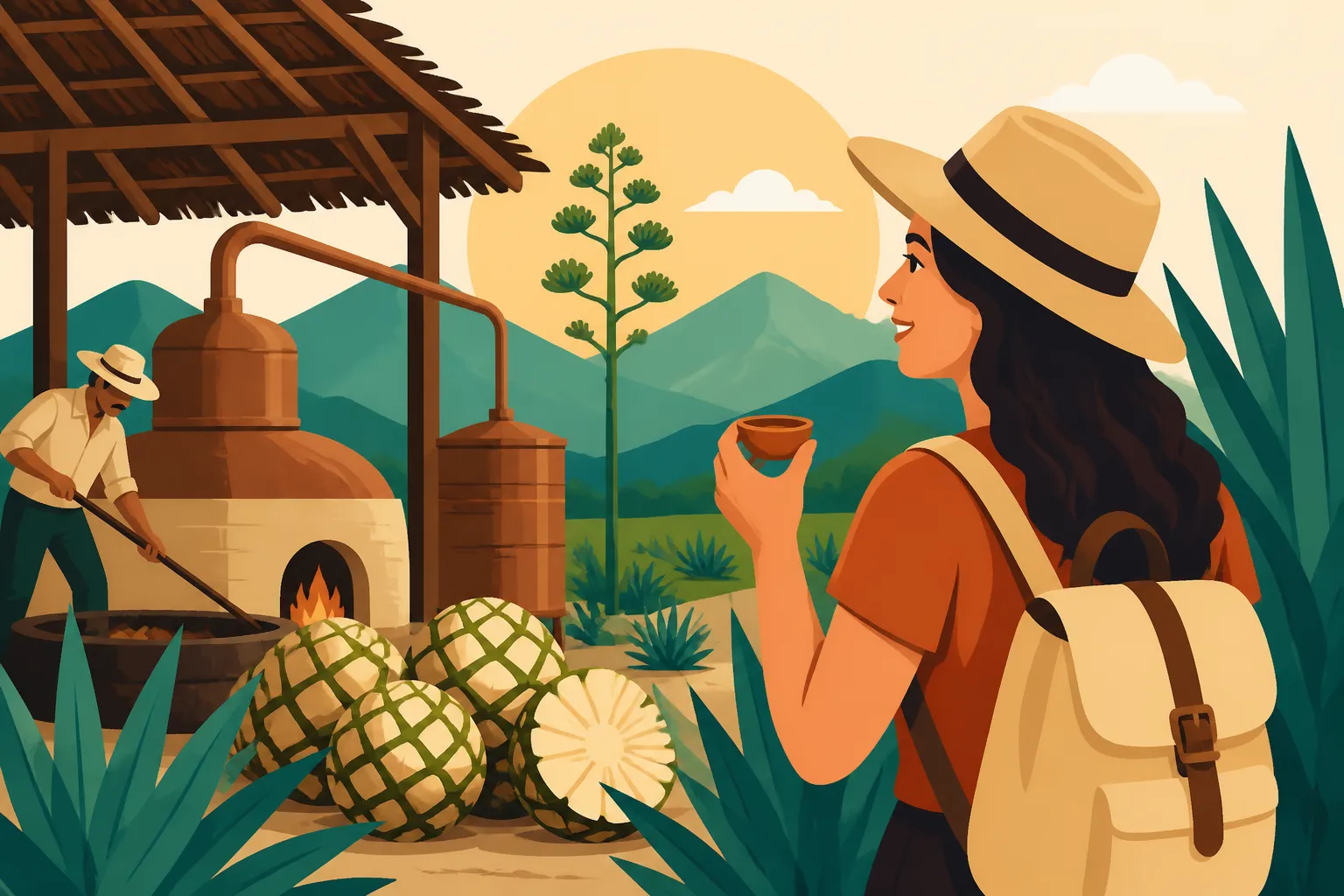
I made the mistake of treating my first palenque visit like a winery tour. I expected a tasting room, a gift shop, and a scripted talk. What I got was a family compound off Highway 190, a horse walking slow circles around a stone wheel, smoke from a pit in the ground, and a grandmother who handed me a jícara of mezcal before I had said anything. That is the real thing, and knowing what to expect makes the visit much better.
The Difference Between a Palenque and a Mezcal Brand
A palenque is the physical place where mezcal is produced. It is usually small, rustic, and family-run, often in the same yard where people live. A mezcal brand is a label, and many well-known brands buy from several palenques instead of owning one. When you visit a palenque you are meeting the producer, called the mezcalero or maestro mezcalero, rather than a marketing team.
This matters for your expectations. Some palenques near Santiago Matatlán have built tasting areas, signage, and bilingual staff because tour vans stop there daily. Others in villages like San Baltazar Chichicápam or Santa Catarina Minas are working operations where a visit depends on whether someone is home and willing. Neither is better. They are different experiences, and the second kind usually needs either a guide or some Spanish.
If you’re still sorting out what makes mezcal distinct, read What Is the Difference Between Tequila and Mezcal? before you go. You’ll get far more out of the conversation at the still.
The Production Steps You Will Actually See
Every palenque follows roughly the same process, but which step you see depends on the day you arrive. Here is the sequence:
- The jima, where mature agave plants, called maguey locally, are harvested and their leaves cut away to leave the heart, or piña.
- Cooking, where the piñas are roasted for several days in an underground pit oven lined with hot rocks and covered with earth. This is where the smoky flavour comes from.
- Crushing, traditionally done with a tahona, a heavy stone wheel pulled by a horse or mule, or by hand with wooden mallets in more ancestral operations.
- Fermentation, where the crushed fibres and juice sit in wooden vats with water and wild yeasts for days, sometimes longer depending on the weather.
- Distillation, in copper stills or, in villages like Santa Catarina Minas, in clay pots, which give a very different texture.
- Resting and bottling, often into large plastic or glass containers before any formal labelling.
On a quiet day you may see only fermentation tanks bubbling. On a busy day you might watch the oven being opened, which is loud, hot, and smells like caramelised squash. Ask what stage they are at when you arrive so you know where to look.
Agave Varieties Worth Asking About
Espadín is the workhorse agave and makes up most of what you’ll taste. It is cultivated, matures relatively quickly, and is perfectly good. The fun starts with wild or semi-wild varieties such as tobalá, tepeztate, arroqueño, cuishe, and madrecuishe. These take much longer to mature, yield less, and taste dramatically different from each other.
A good palenque visit usually includes tasting several varieties side by side. Don’t be shy about asking which ones are wild and how long the plant took to grow. Mezcaleros generally enjoy that question, and it signals you’re interested in the craft rather than just a free drink.
Choosing How to Get to the Palenques
This is where most of the frustration happens. The best palenques are scattered across the Central Valleys, the roads are fine but the signage is not, and the whole point of the trip involves drinking. Your transport choice shapes the entire day.
Comparing Your Main Options
| Option | Flexibility | Can Everyone Drink | Cost Shape | Best For |
|---|---|---|---|---|
| Group tour | Low, fixed stops | Yes | Single per-person fee, often bundled with other sites | First-timers, solo travellers |
| Private driver or guide | High | Yes | Day rate split among your group | Couples, small groups, serious mezcal fans |
| Colectivo and taxi | Medium | Yes | Lowest, paid per ride in cash | Budget travellers with some Spanish |
| Rental car | High | No, one person must stay sober | Daily rental plus insurance and fuel | Multi-day trips with a committed non-drinker |
Group Tours and Private Guides
Group tours leave Oaxaca City most mornings and usually combine one palenque with stops like the Árbol del Tule, the weaving village of Teotitlán del Valle, Mitla, and sometimes Hierve el Agua. You can book through hotel desks, agencies along the pedestrian street Macedonio Alcalá, or online through platforms like Viator, which is handy when you want to read reviews and lock in a date before arrival. The trade-off is that the palenque stop is often a high-volume one and short.
If mezcal is the main reason you’re going, a private guide is worth considering. A good guide knows which families are distilling that week, can take you to two or three palenques instead of one, and translates the conversation so you actually learn something. For a breakdown of operator styles and what each tier tends to include, see Booking a Mezcal Tasting Tour: Operator Options and Price Tiers. For a broader look at the tasting scene, Mezcal in Oaxaca: Tours and Tastings covers city mezcalerías too.
When comparing a group tour against a private day, ask three questions: how many palenques are included, whether the guide speaks directly with the producer, and how long you’ll spend at each stop. A tour that lists six sites in a day probably gives the palenque twenty minutes.
Going Independently by Colectivo
This is how I usually go now, and it’s very doable. Shared taxis called colectivos run east along Highway 190 toward Tlacolula and Mitla from stops on the eastern side of Oaxaca City, around the area near the baseball stadium and along the main roads heading out of town. Ask your host where the current pickup point is, because stops shift. Tell the driver you’re going to Matatlán or ask to be dropped at Tlacolula and change there.
Santiago Matatlán calls itself the world capital of mezcal, and you’ll see the arch over the road announcing it. Palenques line the highway and the village streets, and many are open to walk-in visitors. From Matatlán, mototaxis can take you to palenques further into the village. Bring small bills and coins, because drivers rarely carry change for large notes. Cash vs Card in Mexico: What Visitors Should Know explains why cash dominates in these villages.
Getting back is the part to plan. Colectivos thin out in the late afternoon, so start early and head back while there’s still traffic on the highway. Standing on the roadside slightly tipsy as it gets dark is not the moment to discover the last car has gone.
Driving Yourself
Renting a car gives you access to more remote producers in places like Sola de Vega, Miahuatlán, or San Dionisio Ocotepec, where public transport is thin. The roads through the Central Valleys are manageable, though you’ll meet topes, the speed bumps that appear without warning, and livestock on rural stretches.
The obvious problem is drinking. Mezcal is strong, and tasting even small pours at three palenques adds up. If you drive, one person needs to commit to not drinking at all, and that person should say so at each palenque. Producers are used to it and will often let the driver smell the mezcal or take a small bottle to try later.
Your Palenque Visit, Step by Step
Once you know how you’re getting there, the visit itself has a rhythm. Here’s how I approach an independent day, refined over many Sunday trips.
Planning the Day
- Pick a base. Most people stay in Oaxaca City and day-trip. If you want an early start or a slower pace, a night in Tlacolula or Mitla puts you closer. Booking.com lists guesthouses in both towns as well as in the city, and Where to Stay in Oaxaca City: Centro, Jalatlaco, and Xochimilco helps you choose a neighbourhood that’s convenient for heading east.
- Choose your day. Sunday is market day in Tlacolula, one of the biggest traditional markets in the valleys, so combining the market with afternoon palenque visits makes a full day. Be aware that some palenques slow down on Sundays.
- Eat a proper breakfast. This sounds obvious until you’re on your third tasting with an empty stomach. Grab tamales or a tlayuda before you start, and buy snacks at the market.
- Leave early. Mornings are cooler, distilling activity is often livelier, and transport is more frequent.
- Plan two or three palenques, not six. Quality of conversation beats quantity.
- Set a return time and stick to it.
Etiquette at the Palenque
Walk-in visits at roadside palenques are normal, but remember you’re entering a workplace and often a home. Greet whoever you see first with a clear “Buenos días” in the morning or “Buenas tardes” after midday. Ask before you wander toward the oven or the still, and ask before photographing people.
Tastings are usually offered in small cups, jícaras made from gourds, or halved bamboo. The local advice is to sip slowly and “kiss” the mezcal rather than shoot it. You may be offered orange slices with sal de gusano, a salt mixed with ground agave worm and chilli. Taste the mezcal on its own first so you understand what you’re buying.
Tasting is often free or included, but it’s generous hospitality, not an obligation-free bar. If you taste several varieties and enjoyed the time, buy a bottle, leave a tip, or both. Families in these villages depend on that income. How to Be a Respectful Tourist in Indigenous Communities in Mexico goes deeper into Zapotec community etiquette, which applies in much of the valley.
Useful Spanish for the Visit
A little Spanish transforms these visits. Many mezcaleros speak only Spanish or Zapotec, and even a few phrases change the tone:
- “Buenos días, ¿se puede visitar el palenque?” Good morning, can we visit the palenque?
- “¿Qué maguey es este?” Which agave is this?
- “¿Es silvestre o cultivado?” Is it wild or cultivated?
- “¿Cuántos años tardó en madurar?” How many years did it take to mature?
- “¿Puedo probar?” May I taste?
- “¿Cuánto cuesta el litro?” How much is a litre?
- “Muchas gracias, está delicioso.” Thank you very much, it’s delicious.
For a broader phrase toolkit, Survival Spanish for Travelers in Mexico: Key Phrases is worth loading onto your phone before the trip.
Buying Mezcal and Planning Around Your Trip
The best souvenir from a palenque is mezcal you can’t find at home, bought from the person who made it. A bit of planning keeps that bottle intact and legal on the way back.
Buying Directly From Producers
Palenques often sell mezcal by the litre, poured from a big container into whatever bottle they have, sometimes plastic. Prices vary hugely depending on the agave variety, how wild it is, and the production method, so ask the price before they pour. Wild varieties cost noticeably more than espadín, and that reflects years of plant growth rather than tourist markup.
Ask whether they have glass bottles and whether the cap seals well. Unlabelled mezcal in a plastic bottle is perfectly authentic, but it’s more fragile in luggage. Some buyers bring their own clean glass bottles from the city to fill. Write the village, producer’s name, and agave variety on the bottle with a marker, because after three palenques you’ll forget which was which.
Getting Mezcal Home
If you’re flying out, wrap each bottle in clothing, seal it in a zip bag, and pack it in checked luggage in the centre of your suitcase. Rules on how much alcohol you can carry and how much you can import duty-free depend on your airline and your destination country, so check both before you buy a lot. Unlabelled mezcal sometimes draws questions at customs, so keep it obviously sealed and be ready to declare it.
Fitting Palenques Into a Wider Oaxaca Trip
Palenque visits pair naturally with other sites along the same highway. Mitla’s archaeological zone, the rug workshops in Teotitlán del Valle, and the mineral pools at Hierve el Agua are all east of the city. For practical routes there, see How to Visit Hierve el Agua From Oaxaca, and for more ideas, Best Day Trips From Oaxaca City lays out options by direction and travel time.
If you’re arriving overland, the long-distance bus from Mexico City to Oaxaca is a common route, and Busbud is useful for comparing schedules and classes across companies before you commit. How to Travel Between Cities in Mexico by Bus covers the terminals and what to expect on board.
Finally, if you want to understand mezcal within the bigger picture of Mexican drinking traditions, from pulque to cantina culture, Tequila, Mezcal, and Mexican Drinking Culture is the place to start. The more context you bring to the palenque, the more the mezcalero will want to share with you, and that conversation, smoke in the air and a jícara in hand, is the part of Oaxaca you’ll remember longest.
Disclaimer
This article is for general informational purposes only and does not constitute professional advice. Laws, prices and regulations vary by location and change over time. Consult a qualified professional for guidance on your specific situation.