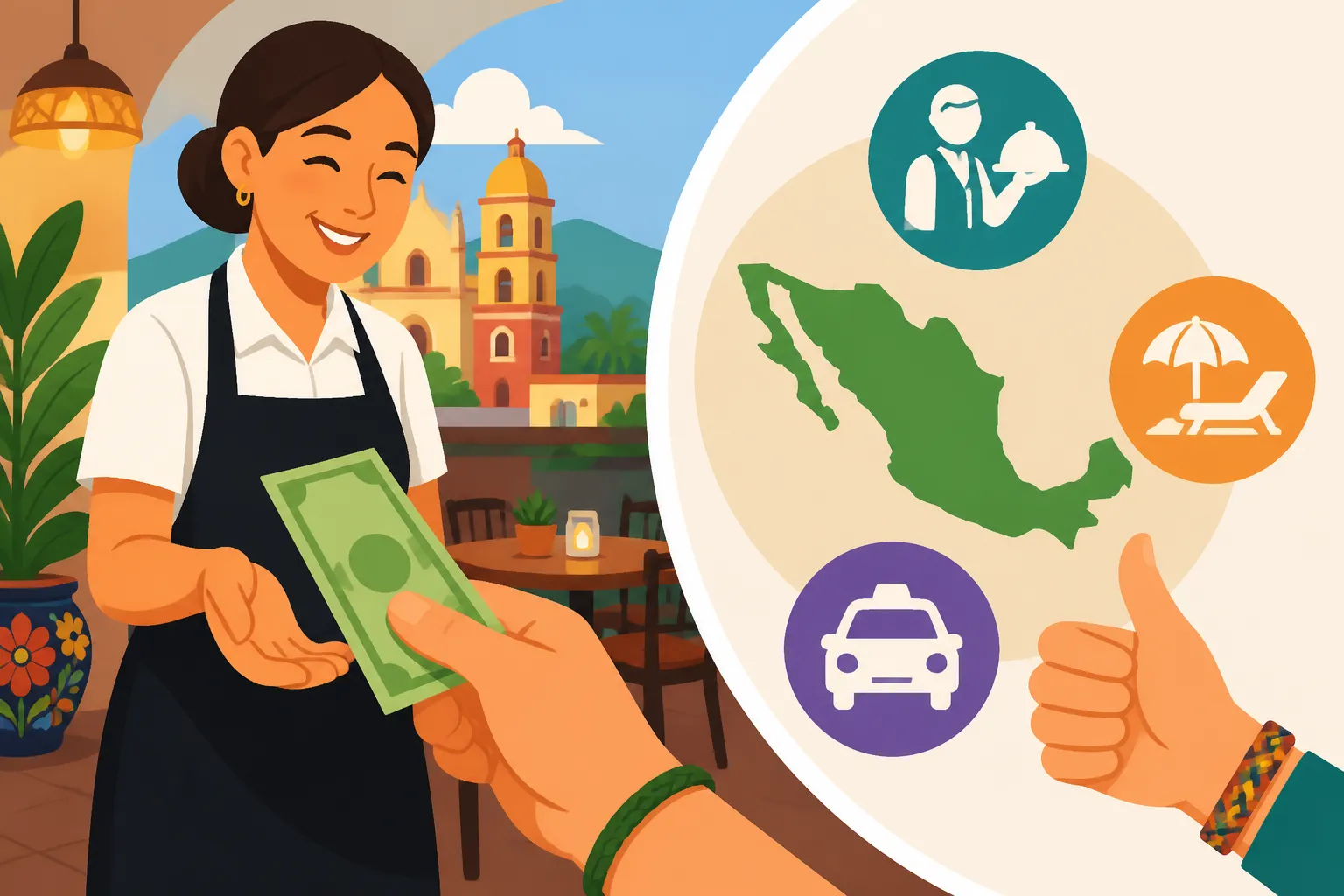
Tipping in Mexico (Propina): When and How Much
Okay, let's talk about propina – tipping. When you first move to or visit a new country like Mexico, one of the things that can cause immediate anxiety is figuring out the local customs around tipping. You want to be respectful, fair, and not offend anyone, but the rules often feel like a secret handshake. This guide is here to pull back the curtain on Mexico's tipping culture, helping you understand when, where, and how much to tip, so you can navigate interactions with confidence and show your appreciation authentically.
Disclosure: This post may contain affiliate links. We may earn a commission at no extra cost to you if you make a purchase through these links. Read full disclosure.
Understanding "Propina": The Heart of Mexican Tipping Culture
Tipping in Mexico isn't just a bonus; for many, it's a critical component of their livelihood. It’s a deeply ingrained practice that reflects both appreciation for service and the economic realities of daily life here.
Why Tipping Matters in Mexico
From a server in a bustling Mexico City restaurant to the young person bagging your groceries at the supermarket, many service industry workers in Mexico earn a minimum wage that is simply not designed to cover all their living expenses. This is a tough reality that often surprises foreigners who are used to higher base salaries in their home countries. Tips, or propinas, are not merely extra income; they are often the difference between struggling to make ends meet and being able to provide for their families. This fundamental difference is crucial to grasp. When you choose to live or travel here, understanding this context helps you participate in a system that genuinely supports the local economy and its people. For more on the broader financial picture, you might find our guide on the Cost of Living in Mexico: 2026 Comprehensive Guide helpful.
The expectation for tips can vary widely, but a good rule of thumb is that if someone is performing a service for you directly, whether it's carrying your luggage, cleaning your room, or serving your meal, a tip is generally anticipated and deeply appreciated. Failing to tip can be seen as disrespectful, not just an oversight, because it signals a lack of understanding or disregard for their hard work and economic situation. This isn't to say you should feel pressured, but rather to highlight the importance of factoring propina into your daily budget.
Key Differences from Home Countries
Coming from places like the United States, Canada, or Europe, you'll find some nuances in Mexican tipping culture that can be a bit of a curveball. For instance, in the U.S. and Canada, a 15-20% tip is often a baseline for sit-down restaurant service, whereas in many parts of Mexico, 10-15% is standard for good service, though 20% for truly exceptional service is certainly welcome. But beyond percentages, the types of services for which tipping is customary also differ.
For example, you'll encounter grocery store baggers (often older individuals or students) who don't work for the store but rely entirely on the small tips they receive. This is a concept virtually unheard of in many other countries. Another significant difference is the common practice of tipping at gas stations for pump attendants, who will often clean your windshield or check your tires. These small, often overlooked interactions are where local knowledge really comes in handy, and where many foreigners initially feel a bit lost. It’s also important to note that while credit cards are widely accepted, especially in larger establishments, adding a tip to a credit card bill doesn't always guarantee it goes directly to your server. Cash tips are almost always preferred and ensure the money goes straight into the pocket of the person who earned it. Our article on Cash vs Card in Mexico: What Visitors Should Know delves deeper into payment preferences.
When and How Much to Tip for Everyday Services
Let’s get down to the brass tacks: who do you tip, and how much? This is where many expats often stumble, so let’s walk through the most common scenarios.
Restaurants and Bars
This is perhaps the most common tipping scenario and often the source of the most confusion. In a sit-down restaurant, the standard tip for good service is typically 10-15% of the total bill. If the service was truly outstanding, or if you had a particularly complex order or stayed for a long time, then 20% is a wonderful gesture and will be very much appreciated.
Here's a critical tip (pun intended): Always try to leave your tip in cash, directly to your server if possible, even if you paid the bill with a credit card. While many restaurants now have a line on the credit card receipt for "propina," there's no guarantee the full amount, or even any amount, will make it to your server. Sometimes it goes into a general pot, is split unevenly, or even absorbed by management. Handing cash directly ensures your appreciation lands where it’s intended.
For quick cafes, coffee shops, or fast-casual eateries, if there’s a tip jar, a few pesos (5-10 pesos per drink/item, or rounding up) is customary. If it’s a full-service bar, bartenders typically receive 10-15% of the drink total, or 10-20 pesos per round, especially for good service. If you're dining out frequently, our Dining Out in Mexico: Restaurant Etiquette and Tipping Guide has even more nuanced advice.
Taxis, Ride-Shares, and Other Transportation
This area can be particularly perplexing because the rules vary significantly depending on the mode of transport.
For traditional street taxis, especially in smaller towns, tipping is generally not expected. The common practice is to round up to the nearest convenient amount if you want to be generous, but don't feel obligated. For instance, if a ride is 47 pesos, offering 50 pesos is fine. However, if a taxi driver goes above and beyond – perhaps helping with heavy luggage, waiting for you, or giving you local recommendations – a small tip of 20-50 pesos would be a kind gesture.
When it comes to ride-sharing apps like Uber or DiDi, the system is much more aligned with international norms. You can typically add a tip through the app after your ride is complete. A tip of 10-15% is standard for good service, especially if the driver was polite, the car was clean, and the ride was smooth. This in-app tipping is reliable, as the companies handle the distribution to the driver. Check out our guide on Using Uber and Ride-Sharing Apps: A Guide for Expats in Mexico for more details on these services.
For airport porters or bellhops at bus stations who help with your luggage, 20-50 pesos per bag (depending on size and weight) is a good standard. For shuttle drivers who take you to and from airports or bus terminals, 50-100 pesos is appreciated, especially if they assist with bags.
Hotel Services
Hotels are another realm where various staff members rely on tips. It's a busy environment with many hands helping you have a comfortable stay.
Housekeeping: This is one of the most important people to tip, and often the most overlooked. A standard tip for housekeeping is around 30-50 pesos per night, left daily under a note (like "Gracias por su excelente servicio!") to ensure it goes to the person cleaning your room that day, rather than being collected at the end of your stay and potentially split. For longer stays, you might increase this slightly.
Bellhops/Porters: For carrying luggage to your room, 20-50 pesos per bag is a good rule of thumb, especially for larger or heavier items.
Concierge: If you’ve used the concierge for significant help – making restaurant reservations, booking tours, or providing extensive recommendations – a tip of 50-100 pesos (or more for truly exceptional service) is appropriate. You don't need to tip for simply asking a quick question.
Room Service: If the tip isn't already included in the bill (check carefully!), a 10-15% tip is standard for the person delivering your food.
Valet Parking: For the valet, a tip of 20-50 pesos when they retrieve your car is customary.
Remember, these are general guidelines, and it's always good to have a stash of small bills on hand for these services. For a deeper dive into hotel amenities and what to expect, our article on Expat Housing in Mexico: Navigating Neighborhoods, Utilities, and Services can offer context on service expectations.
Tipping for Tourism and Personal Services
Beyond daily necessities, many expats and tourists engage in activities that involve specialized services. Knowing how to tip here can enhance your experience and ensure you're showing proper respect.
Tour Guides and Drivers
When you're exploring the rich history or natural beauty of Mexico, tour guides and drivers are often the unsung heroes of your adventures. Their knowledge, enthusiasm, and efforts greatly shape your experience.
For a standard day tour, whether it's exploring ancient ruins or visiting a Pueblo Mágico, a tip of 100-200 pesos per person is a good starting point for a knowledgeable and engaging guide. If the tour was exceptional, perhaps a full-day excursion with a lot of walking and detailed explanations, you might consider 250-300 pesos per person. For drivers on these tours, a separate tip of 50-100 pesos per person is appropriate if they were safe, punctual, and helpful.
For multi-day tours, the expectations are higher, reflecting the extended service. A common practice is to tip guides 200-400 pesos per person per day, and drivers 100-200 pesos per person per day. Remember, if you're part of a private tour, the total tip might be higher, as the guide's attention is solely on your group. When booking tours, whether it's a bustling group trip or a specialized private excursion, platforms like Viator often provide information on expected tipping, which can be a helpful benchmark.
Spa Services, Hair Salons, and Barbers
Just like back home, personal care services in Mexico warrant a tip for good service. This is particularly true in tourist areas where many expats seek out these services.
For massages, facials, manicures, pedicures, and other spa treatments, a tip of 15-20% of the service cost is customary for good service. If you had an exceptional experience, perhaps with a therapist who went above and beyond, don't hesitate to lean towards the higher end.
At hair salons and barbershops, a 10-15% tip for the stylist or barber is standard. If someone else washes your hair, a small additional tip of 20-30 pesos directly to them is a nice gesture. In high-end establishments, the expectations might align more with what you'd find in major international cities, so adjust accordingly.
Grocery Store Baggers and Gas Station Attendants
These are two services that often catch newcomers off guard but are a crucial part of the Mexican tipping landscape.
Grocery Store Baggers (Empacadores): You'll often find these individuals at the end of the checkout line in supermarkets like Chedraui, Soriana, or Walmart. Many are seniors or young students, and they work solely for tips – they are not employees of the grocery store. For bagging your groceries, a tip of 5-10 pesos is standard for a small order, and 10-20 pesos for a larger cart full of items. If they help you carry bags to your car, a bit more is always appreciated. It’s a small amount that makes a real difference to them. Our guide to Grocery Shopping in Mexico: Supermarkets vs Local Markets can help you prepare for these interactions.
Gas Station Attendants (Gasolineros): Unlike self-service gas stations in many other countries, attendants pump your gas for you in Mexico. They will also often clean your windshield, check your oil, or check tire pressure. For their service, a tip of 10-20 pesos is customary, especially if they do more than just pump gas. If they're particularly thorough with the windshield or provide other services, 30-50 pesos is a generous tip. Always confirm the amount of gas pumped and the total cost before handing over money, and keep an eye on the pump.
Navigating Tricky Tipping Situations
Not every tipping scenario is straightforward, and sometimes you’ll encounter situations that leave you wondering what the right move is. Let’s tackle some of those trickier spots.
When "Service Charge Included" (Servicio Incluido)
This phrase, servicio incluido, is a bit of a red herring in Mexico. Unlike some European countries where a service charge genuinely means a tip is incorporated into the bill, in Mexico, it's quite rare for a true "service charge" to be included that actually goes to the staff as a tip. If you see this on a bill, it usually refers to an administrative fee or a cover charge, and not a gratuity for your server.
Therefore, even if you see "servicio incluido" on a bill, it’s almost always expected that you will still leave a separate tip for your server, following the standard 10-15% guideline. If you're unsure, you can politely ask, "Is the propina included for the server?" (¿Está la propina incluida para el mesero?). But generally, it's safer and more respectful to assume it is not and tip accordingly. It’s better to over-tip slightly than to accidentally leave nothing for someone who relies on those earnings.
Language Barriers and Tipping Etiquette
Communicating about money and expectations can be tough when there’s a language barrier. This is where a few key Spanish phrases can be immensely helpful, along with a bit of common sense and preparation.
Always carry small denominations of pesos (20, 50, and 100 peso notes are your best friends). This avoids the awkward situation of trying to tip with a large bill and expecting change, which can sometimes put the service provider in a difficult spot if they don’t have it.
If you want to confirm if a tip is expected or if you want to explicitly state your intention to tip, you can say:
- "¿Cuánto es la propina normal?" (How much is the normal tip?) – though this might make them uncomfortable.
- "Esto es para ti." (This is for you.) – when handing a tip directly.
- "Gracias por tu excelente servicio." (Thank you for your excellent service.) – as you hand the tip.
When in doubt, observe what locals are doing, or err on the side of generosity, particularly for services where the economic dependence on tips is high. Even a little Spanish goes a long way in these interactions; for more helpful phrases, check out Survival Spanish for Travelers in Mexico: Key Phrases.
Tipping for Deliveries and Special Requests
The gig economy has taken off in Mexico, and with it, new tipping considerations have emerged, especially for delivery services.
Food Delivery (Uber Eats, Rappi, Didi Food): Similar to ride-sharing apps, these services allow you to tip directly through the app. A 10-15% tip is standard for food delivery. If the weather is bad, the order is large, or the delivery person goes out of their way, consider adding a little extra cash in person if you can.
Grocery Delivery: For services like Cornershop or specific supermarket delivery, a tip of 50-100 pesos is appreciated, especially if they’ve handled heavy bags or made multiple trips. Again, cash is often best here.
Other Special Requests/Favors: Sometimes, locals will go out of their way to help you with something – maybe a neighbor helps you move a heavy item, or a local guides you to a hard-to-find spot. While not a formal service, a small gesture of appreciation, perhaps 20-50 pesos or a small gift, is a wonderful way to say gracias. This is part of the warm, communal culture you’ll often find here. For more insights into local customs, our article on Mexican Etiquette and Customs: Do's and Don'ts for New Expats is a must-read.
The Unspoken Rules and Local Insights
Beyond the numbers, there are some cultural nuances and practical tips that seasoned expats learn over time. These "unspoken rules" can make a huge difference in your interactions.
The Importance of Small Bills (Cambio)
I cannot stress this enough: always carry small bills (billetes pequeños) and coins (monedas). This is perhaps the single most important piece of advice for successful tipping in Mexico. You absolutely need 20, 50, and 100 peso notes, and even some 10 or 5 peso coins.
Why is this so crucial?
- Direct Tipping: As mentioned, cash tips are almost always preferred, especially for individual service providers like baggers, gas station attendants, and housekeepers.
- Lack of Change: Many smaller businesses, street vendors, and even taxi drivers might genuinely not have change for a 500 peso note, let alone a 1000 peso note. Handing a server a 500 peso bill for a 20 peso tip can be incredibly awkward and inconvenient for everyone.
- Convenience: It’s much easier to quickly hand over the exact tip amount when you have the right denominations, making transactions smoother and quicker for both parties.
So, how do you get cambio (change)? Make small purchases at OXXO or convenience stores, or break larger bills at banks or formal supermarkets when you're paying for a significant purchase. Never rely on the person you’re tipping to make change for you. This simple act of preparation will save you countless headaches.
Tipping in Different Regions (Tourist vs. Local Areas)
Mexico is a vast and diverse country, and tipping expectations can subtly shift depending on where you are.
In highly tourist-centric areas like Cancún, Playa del Carmen, Tulum, Puerto Vallarta, or San Miguel de Allende, tipping expectations often align more closely with North American standards, sometimes even a bit higher, simply because many visitors come from cultures with higher tipping norms. Service providers in these areas are accustomed to larger tips and often cater specifically to an international clientele. You might find some establishments even suggest a tip amount on the bill, which can be a helpful guide. Our guides on specific cities like Living in Cancún: Expat Life in a Tourist Paradise or Living in San Miguel de Allende: A Cultural Haven for Expat Retirees can give you a feel for local norms.
However, once you venture into more local, less touristed cities or rural areas, the expectations might be slightly more modest. A 10% tip at a local fonda might be perfectly acceptable, whereas in a fancy restaurant in a tourist zone, it would be considered too low. The key here is sensitivity and observation. If you’re truly unsure, a 10-15% tip for good service is almost always a safe and appreciated gesture, regardless of location. The most important thing is showing respect and appreciation for the service provided.
Here’s a quick reference table for common tipping scenarios:
| Service Category | When to Tip | Suggested Amount/Percentage | Notes |
|---|---|---|---|
| Restaurants & Bars | Sit-down meals, full-service bars | 10-15% for good service; 20% for excellent. 10-20 pesos per round at bars. | Cash tip to server/bartender is always preferred. Check for "servicio incluido" (rarely an actual tip). |
| Cafes & Quick Bites | Counter service, coffee shops | 5-10 pesos per item, or round up. Tip jar. | Small change is perfect. |
| Taxis (Street/Sitio) | Local rides | Generally not expected, but rounding up 5-10 pesos for convenience. 20-50 pesos for extra help (luggage). | Negotiate fare upfront if possible. Have small bills. |
| Ride-Share (Uber/DiDi) | App-based transportation | 10-15% through the app. | Convenient and reliable. |
| Hotel Housekeeping | Daily room cleaning | 30-50 pesos per night, left daily. | Leave a small note ("Gracias") with the cash. |
| Hotel Bellhop/Porter | Luggage assistance | 20-50 pesos per bag. | For assistance with heavy or multiple bags. |
| Hotel Concierge | Significant assistance (reservations, tours) | 50-100+ pesos for exceptional help. | Not necessary for simple questions. |
| Tour Guides | Day tours (group) | 100-200 pesos per person. | More for private or exceptional multi-day tours. (Consider Viator for tour bookings). |
| Tour Drivers | Day tours | 50-100 pesos per person. | If separate from the guide and provides good service. (Consider Busbud for inter-city travel, though not directly tipping for tours, for context). |
| Spa/Salon/Barber | Massages, haircuts, nails | 15-20% of service cost. 20-30 pesos for shampoo/assistants. | For direct service providers. |
| Grocery Baggers | Supermarket bagging | 5-10 pesos for small orders; 10-20 pesos for large orders. | These individuals rely solely on tips. |
| Gas Station Attendants | Pumping gas, cleaning windshield | 10-20 pesos for basic service; 30-50 pesos for extra services (tire check, thorough cleaning). | Watch the pump carefully. |
| Food/Grocery Delivery | App-based delivery | 10-15% via app. Extra cash for bad weather or large orders. | Apps like Uber Eats, Rappi, Didi Food. |
| Special Favors | Informal help from locals | 20-50 pesos or a small gift. | A kind gesture for unexpected assistance. |
Ultimately, tipping in Mexico is a way to show respect and gratitude for the services you receive, acknowledging the hard work and reliance on these gestures by many. By keeping these guidelines in mind and always having small bills on hand, you'll navigate Mexico's tipping culture like a seasoned pro! If you are planning longer stays and need accommodations, Booking.com can be a helpful resource, where reviews sometimes mention local service expectations.
Disclaimer
The information provided in this guide is for general informational purposes only and is based on common practices and current observations. Tipping customs can vary by region, establishment, and individual experience. While we strive to provide accurate and up-to-date advice, it should not be considered legal or financial counsel. Always use your best judgment and consider the specific context of your situation.