eSIM for Cruise Passengers Docking in Mexican Ports
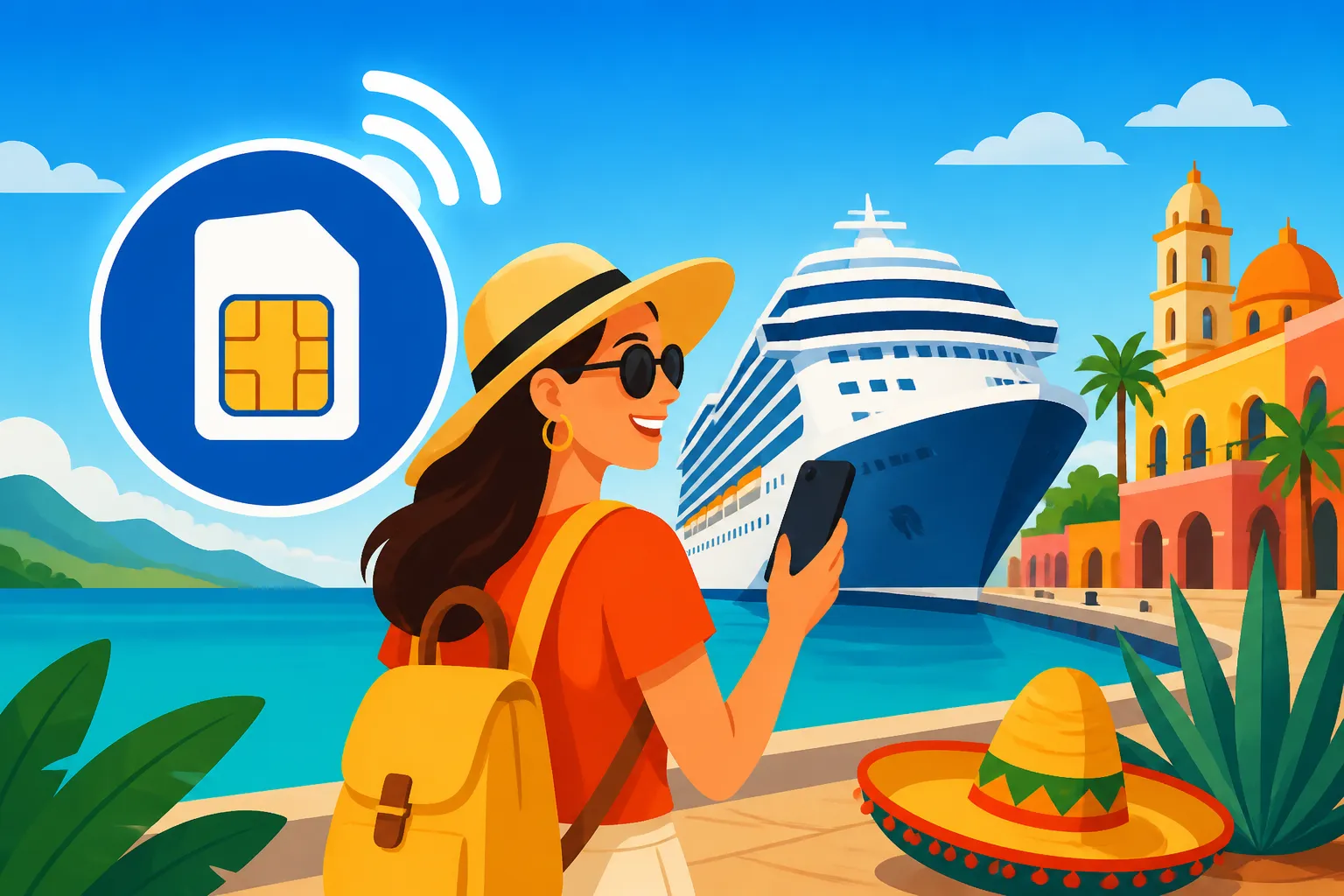
Oh, the joy of a Mexican cruise! The turquoise waters, the vibrant culture, the incredible food… it’s truly a dream. But then, you pull into port, and the magic gets a little fuzzy when you think about your phone. How do you share that stunning photo of Chichen Itza or navigate to the best taco stand in Cozumel without racking up a bill that costs more than your shore excursion? For cruise passengers, staying connected in Mexican ports without breaking the bank is a common headache. This guide is all about cutting through that confusion, showing you how an eSIM, specifically one from Airalo, can be your best friend for seamless, affordable connectivity during your brief but precious time on Mexican soil.
Disclosure: This post may contain affiliate links. We may earn a commission at no extra cost to you if you make a purchase through these links. Read full disclosure.
Why Traditional Connectivity Fails Cruise Passengers in Mexico
Let's be real, the moment your cruise ship docks in a place like Cabo San Lucas or Puerto Vallarta, your phone suddenly becomes a very expensive brick if you're not careful. The traditional ways of staying connected as a temporary visitor often come with significant downsides that just aren't worth the hassle or the cost.
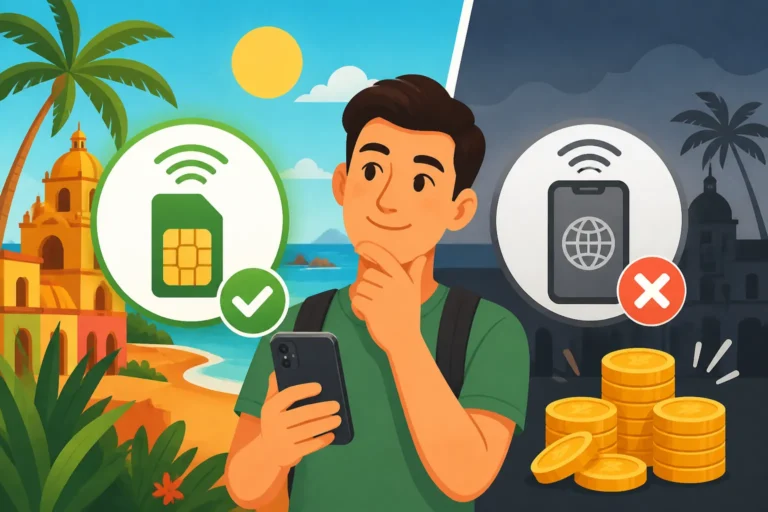
The Nightmare of Roaming Charges
Before moving to Mexico, I can't tell you how many times I heard horror stories, or even experienced minor ones myself, of people coming home to phone bills with hundreds, even thousands, of dollars in roaming charges. Your home country's mobile provider sees Mexico as an opportunity to charge you exorbitant rates per minute, per text, and especially per megabyte of data. Just checking Google Maps for five minutes or uploading a quick video to Instagram could cost you more than a delicious meal at a local restaurant.
Many carriers offer "international plans," but often these are still pricey, provide limited data, and might not even work reliably in all areas you visit. Imagine trying to coordinate with your family about where to meet after a shopping spree in Ensenada, only for your expensive roaming plan to fail you, leaving you stranded and frustrated. It’s a recurring pain point that makes many simply turn off their data and rely on spotty, insecure public Wi-Fi, essentially missing out on the full freedom of their port calls.
Onboard Wi-Fi: Pricey and Unreliable
"Don't worry," the cruise line says, "we have Wi-Fi packages available!" And while it's true that most modern cruise ships offer internet access, the reality can often be a letdown. These packages are notoriously expensive, with costs adding up rapidly, especially if you need enough bandwidth for more than basic messaging. Beyond the price tag, the speed and reliability of onboard Wi-Fi can be incredibly frustrating. You're sharing a satellite connection with thousands of other passengers, which means buffering videos, slow downloads, and dropped calls are the norm.
When you're docked, this problem often persists. The ship's Wi-Fi might still be your only "official" option, but why pay premium prices for a sluggish connection when you could have fast, personal data on shore? Relying solely on ship Wi-Fi when you're exploring a bustling market in Progreso or looking up facts about the Maya ruins in Costa Maya can be a major disadvantage, disconnecting you from immediate information and communication when you need it most. It's a compromise that often leaves you feeling more constrained than connected.
The Hassle of Local SIM Cards on a Short Stop
For longer stays, grabbing a local Mexican SIM card from a provider like Telcel or AT&T Mexico is absolutely the way to go for expats and digital nomads. It’s affordable and gives you a local number. However, for a cruise passenger, it’s often more trouble than it’s worth. Think about it: you dock for just a few hours, maybe a day. Do you really want to spend precious sightseeing time finding a phone store, navigating a language barrier to explain what you need, showing your passport, getting the card activated, and then possibly dealing with a physical SIM swap?
On top of that, you’d have to keep track of your original SIM card, and then swap it back when you get back on the ship. If you're visiting multiple countries or even multiple ports in Mexico, this process has to be repeated or you have to find an international SIM card, adding even more complexity. It’s a logistical nightmare that eats into your vacation time and energy, all for a temporary connection. This is precisely why a more streamlined solution is needed, especially when time is of the essence during a port visit.
Understanding eSIMs and Why They're Perfect for Cruise Stops
This is where eSIM technology swoops in like a hero, especially for those quick port calls in Mexico. It’s a game-changer for international travelers, and once you try it, you'll wonder how you ever managed without it.
What Exactly is an eSIM?
An eSIM, or "embedded SIM," is essentially a digital SIM card. Instead of a tiny plastic chip you physically insert into your phone, the eSIM is built directly into your device's hardware. This means you can download and activate cellular plans digitally, without ever needing a physical card. Think of it like streaming a movie instead of buying a DVD; the content is the same, but the delivery mechanism is entirely digital and much more convenient. Most modern smartphones, including recent iPhone models (iPhone XR and newer), Google Pixels, and many Samsung Galaxy devices, are eSIM compatible. It’s always smart to check your device's compatibility before you travel, but the list of supported phones grows constantly.
This technology allows you to have multiple phone plans stored on your device at once, switching between them with a few taps in your phone's settings. You can keep your home number active for calls and texts (though roaming charges for these may still apply unless on Wi-Fi), while using the eSIM for all your data needs when you're on the ground in Mexico. This dual-SIM capability is a godsend for international travel.
Benefits for Short Stays and Multiple Destinations
For cruise passengers, the advantages of an eSIM are crystal clear. Firstly, there's no physical SIM card to buy, swap, or lose. This eliminates the need to hunt down a phone store in Mazatlán or worry about losing your tiny home SIM card. You can purchase and activate your eSIM plan before you even leave your home country or while you’re enjoying a sea day on the cruise. The moment your ship sails into a Mexican port, your phone is ready to connect, instantly.
Secondly, eSIMs are incredibly flexible for multi-country cruises. If your itinerary includes stops in, say, both Mexico and the Caribbean, you can buy separate eSIMs for each region, or even a regional eSIM that covers multiple countries. This means seamless connectivity as you move from one port to another, without the need for multiple physical SIMs or dealing with different carriers. It simplifies everything, allowing you to focus on enjoying your trip rather than managing phone logistics. It’s particularly useful for those who might be crossing borders frequently or traveling extensively, as outlined in our guide on Travel Logistics in Mexico: Safety, Money, and Connectivity.
How Airalo Makes it Easy
When it comes to eSIM providers, Airalo truly stands out as the go-to solution for travelers, especially cruise passengers making short stops in Mexico. What makes Airalo so fantastic is its user-friendly app and extensive global coverage. You can download the Airalo app, browse available plans for Mexico (or any other country), purchase one that suits your data needs and duration, and install it on your device in minutes. They offer various data packages, from small gigs for a day trip to larger ones for longer stays, ensuring there’s a plan for every type of port call.
The installation process is incredibly straightforward, often just involving scanning a QR code or following a few simple steps in the app. Once installed, you simply toggle on the Airalo eSIM in your phone's settings when you arrive in port, and off you go! No fuss, no queues, no language barriers. Airalo connects you to local networks, giving you reliable and fast data at local rates, bypassing those nasty roaming charges entirely. It really takes the stress out of staying connected abroad. For those quick visits to cities like La Paz, where every minute counts, having Airalo ready to go is invaluable.
Getting Your Airalo eSIM Set Up for Your Mexican Port Call
Setting up your Airalo eSIM is a surprisingly simple process, but a little preparation goes a long way to ensure a smooth connection the moment you step off the gangplank.
Checking Device Compatibility
First things first, you need to confirm that your phone is compatible with eSIM technology and is unlocked. Most modern smartphones from the past few years are eSIM-compatible. This includes:
- iPhones: iPhone XR, XS, XS Max, and all newer models (iPhone 11, 12, 13, 14, 15 series). Note that some iPhone 14 models sold in the US might be eSIM-only, meaning they don't have a physical SIM tray.
- Google Pixel: Pixel 3 and newer models.
- Samsung Galaxy: S20 and newer models, as well as some Note and Fold series.
You can usually find this information in your phone's settings under "Cellular" or "Mobile Data," or by doing a quick search online for your specific model. Just as important is ensuring your phone is unlocked. If you bought your phone directly from a carrier and it's still under contract, it might be "locked" to that network, preventing you from using other SIMs or eSIMs. If it is, you'll need to contact your carrier to unlock it before your trip. Trust me, it’s a much smoother process to deal with this before you’re trying to connect in a new country.
Purchasing and Installing Your eSIM Data Plan
Once you've confirmed compatibility, the next step is to head over to the Airalo website or download their app. The app is incredibly intuitive. You'll simply:
- Search for "Mexico" or the specific Mexican region you'll be visiting if an regional plan is available.
- Browse the available data packages. Airalo offers various options, usually based on data amount (e.g., 1GB, 3GB, 5GB) and validity period (e.g., 7 days, 15 days, 30 days). For a typical cruise port stop, a smaller data package with a shorter validity period might be perfect. If your cruise includes multiple Mexican ports or you plan to take longer excursions, you might opt for a larger package. Consider your data usage habits. Do you just need maps and WhatsApp, or do you plan on heavy social media uploads?
- Purchase your chosen plan. This is done securely within the app using a credit card or other payment methods.
- Install the eSIM. Airalo provides clear, step-by-step instructions. Often, it involves scanning a QR code with your phone's camera (make sure you do this from a different device, or take a screenshot if installing on the same phone), or manually entering a few details into your phone's cellular settings. This entire process can be done while you're still at home or safely on the ship before you reach port. Just ensure you have a stable Wi-Fi connection for the download.
Activating and Managing Your Connection
After installation, the Airalo eSIM will appear in your phone's cellular settings alongside your primary plan. It won't be active yet, but it's ready to go.
- Activation: Once your ship docks and you're ready to head ashore, simply go into your phone's cellular settings. Find the Airalo eSIM (it will likely have a name you assigned, like "Mexico Data" or "Travel eSIM"). Turn it on and set it as your preferred line for mobile data. You'll want to keep your primary SIM active for calls and texts, but make sure it’s not set for data to avoid roaming charges.
- Monitoring Usage: The Airalo app allows you to track your data usage in real-time, which is incredibly helpful for managing your plan during a short visit. If you find yourself running low, you can easily top up your data directly through the app, often without needing to uninstall or reinstall anything.
- Troubleshooting: Should you encounter any issues (which is rare), Airalo has excellent customer support available through the app. Often, simply restarting your phone or checking that "Data Roaming" is enabled for your eSIM line (this is often necessary for eSIMs to connect to local networks, but critically, NOT for your home line!) will resolve common connectivity glitches. Being able to access maps, translate phrases, or even just call an Uber quickly makes exploring places like San Miguel de Allende, if you ever return for a longer stay, much easier, as detailed in our guide on Living in San Miguel de Allende: A Cultural Haven for Expat Retirees.
Here's a quick comparison of connectivity options for cruise passengers:
| Feature | Ship Wi-Fi Package | Local Physical SIM Card | International Roaming Plan | eSIM (e.g., Airalo) |
|---|---|---|---|---|
| Cost | High, per day/data pack | Low (local rates) | Very High | Low (local rates) |
| Convenience | Onboard, but often slow | Requires physical purchase/swap | Automatic (but expensive) | Digital purchase/install |
| Reliability | Variable, often slow | Good (local network) | Good (but costly) | Excellent (local network) |
| Setup Time | Instant, but needs purchase | Can be time-consuming in port | None (but pre-pay required) | Fast (digital, pre-trip) |
| Data Tracking | Via cruise portal | Manual or carrier app | Carrier app | Easy via eSIM app |
| Multi-country | Separate plans needed | Multiple SIMs needed | Usually included (expensive) | Easy with multiple eSIMs |
| Physical SIM? | No | Yes | No | No |
Maximizing Your Connectivity in Mexican Ports with Airalo (and Beyond)
Having your Airalo eSIM ready to go when you step off the ship means you can truly make the most of your time in port, blending safety, convenience, and exploration.
Practical Tips for Using Your eSIM
Once your Airalo eSIM is active, here are a few pointers to enhance your experience:
- Download Offline Maps: Even with reliable data, it's always a good idea to download Google Maps for the specific port city offline. This acts as a backup in case you lose signal in a very remote area, and it can save data.
- Use Messaging Apps: Rely on WhatsApp, iMessage, or other data-based messaging apps for communication. They use minimal data and allow you to stay in touch with travel companions or family back home without incurring traditional call or text charges on your home number.
- Check Data-Heavy Apps: Be mindful of apps that consume a lot of data, like video streaming or large file downloads. Save those for when you're back on the ship with a Wi-Fi plan, or if your Airalo plan is generously sized.
- Know Your Emergency Numbers: While your phone will connect to local networks, always have Mexico's emergency number (911) handy. Staying connected with a reliable service like Airalo is a key component of Medical Emergencies in Mexico: What Expats Should Know and Prepare.
- Portable Charger: Data usage can drain your battery faster. Carry a portable power bank so your phone stays charged throughout your shore excursion. You don't want to run out of juice halfway through exploring the vibrant streets of Oaxaca City, should you decide to visit inland.
Exploring Popular Mexican Cruise Ports with Confidence
With Airalo providing dependable data, you can confidently explore some of Mexico's most popular cruise destinations:
- Cozumel & Riviera Maya: Docking here means you're close to stunning beaches, ancient Mayan ruins like Tulum, and incredible cenotes. Your Airalo eSIM will allow you to quickly book last-minute excursions, navigate to local eateries for authentic tacos, or share live updates of your snorkeling adventures. Whether you're interested in The Yucatán Peninsula: Beaches, Ruins, and Cenotes or looking for a Cenote Day Trips in the Yucatán, having reliable data makes all the difference.
- Cabo San Lucas & Ensenada (Baja California): On the Pacific side, you might be admiring El Arco in Cabo or sampling wine in Ensenada. Use your eSIM to find the best whale-watching tours, look up restaurant reviews, or coordinate transport. The convenience of using a ride-share app (where available) or quickly translating a menu will enhance your experience immensely. Our guide to Los Cabos and Baja's Beach Towns can give you even more insights.
- Puerto Vallarta & Mazatlán: These vibrant coastal cities offer everything from historical centers to bustling markets. Your Airalo eSIM lets you share your mariachi experience, find hidden artisan shops, or stay connected while enjoying the beautiful beaches of Puerto Vallarta and the Riviera Nayarit. You'll be able to quickly look up local etiquette, like Tipping in Mexico (Propina): When and How Much, or brush up on Mexican Social Etiquette for Visitors: Greetings and Warmth.
- Progreso & Costa Maya: These ports are gateways to archaeological sites and eco-parks. With your Airalo eSIM, you can easily access information about the Mayan ruins, check opening hours, or arrange transport back to your ship without stress.
Beyond Airalo: Other Connectivity Considerations
While Airalo offers the most practical and cost-effective data solution for cruise passengers in Mexico, it’s also good to know a few other general connectivity tips. Always be cautious when using public Wi-Fi networks in cafes or restaurants, as they can be less secure. For quick, simple tasks, they might be fine, but avoid sensitive transactions. And remember, while your eSIM handles data, if you need to make traditional phone calls or send SMS messages using your home number, those will still incur roaming charges from your primary carrier, unless you're specifically using a Wi-Fi calling feature through your home plan and connected to a Wi-Fi network. For most cruise stops, the seamless data provided by Airalo is more than enough for navigation, messaging, and sharing your amazing Mexican adventure.
Using an eSIM from a trusted provider like Airalo is truly the smartest way for cruise passengers to stay connected when exploring the captivating shores of Mexico. It saves you money, time, and a whole lot of frustration, letting you immerse yourself fully in the experience.
Disclaimer
The information provided in this guide is for general informational purposes only and does not constitute professional advice. While we strive to keep the information up-to-date and accurate, policies and regulations in Mexico, as well as specific service offerings from providers like Airalo, can change without notice. Always verify current requirements and terms directly with the relevant authorities or service providers.