Cenote Day Trips in the Yucatán
Navigating thousands of natural sinkholes scattered across the jungle can turn a dream holiday into a stressful logistical puzzle. Between dodging commercial tour traps, figuring out rural transportation, and choosing between open-air swimming holes and pitch-black caverns, planning can quickly feel overwhelming. This guide breaks down the best regional hubs, transit options, packing essentials, and insider strategies to help you execute flawless cenote day trips across the Yucatán Peninsula.
Disclosure: This post may contain affiliate links. We may earn a commission at no extra cost to you if you make a purchase through these links. Read full disclosure.
Understanding Yucatán Cenotes and Choosing Your Experience
When I first arrived in southeastern Mexico, I assumed a cenote was simply a deep hole filled with freshwater. It did not take long to realize that no two sinkholes are remotely alike. Formed over thousands of years as underground limestone bedrock collapsed to expose flooded cave networks, these natural formations vary wildly in structure, depth, light levels, and swimming conditions. Before you set out on a day trip, understanding the fundamental geological categories will help you curate an itinerary that matches your personal comfort zone and adventure expectations.
For a broader perspective on how these natural wonders fit into regional travel, check out The Yucatán Peninsula: Beaches, Ruins, and Cenotes to plan your broader journey across the state lines of Quintana Roo, Yucatán, and Campeche.
Open, Semi-Open, and Cavern Cenotes
Geologists generally divide sinkholes into three primary stages of natural evolution: open, semi-open, and cavernous. Open cenotes resemble lush, vertical ponds or lakes framed by high rock walls, often draped in long, trailing tree roots reaching down for moisture. Because they receive direct sunlight throughout the day, the water tends to be warmer and supports abundant aquatic plant life and small fish species. These open sites are ideal for casual swimmers, families with children, and sunbathers who enjoy floating in open air surrounded by jungle foliage.
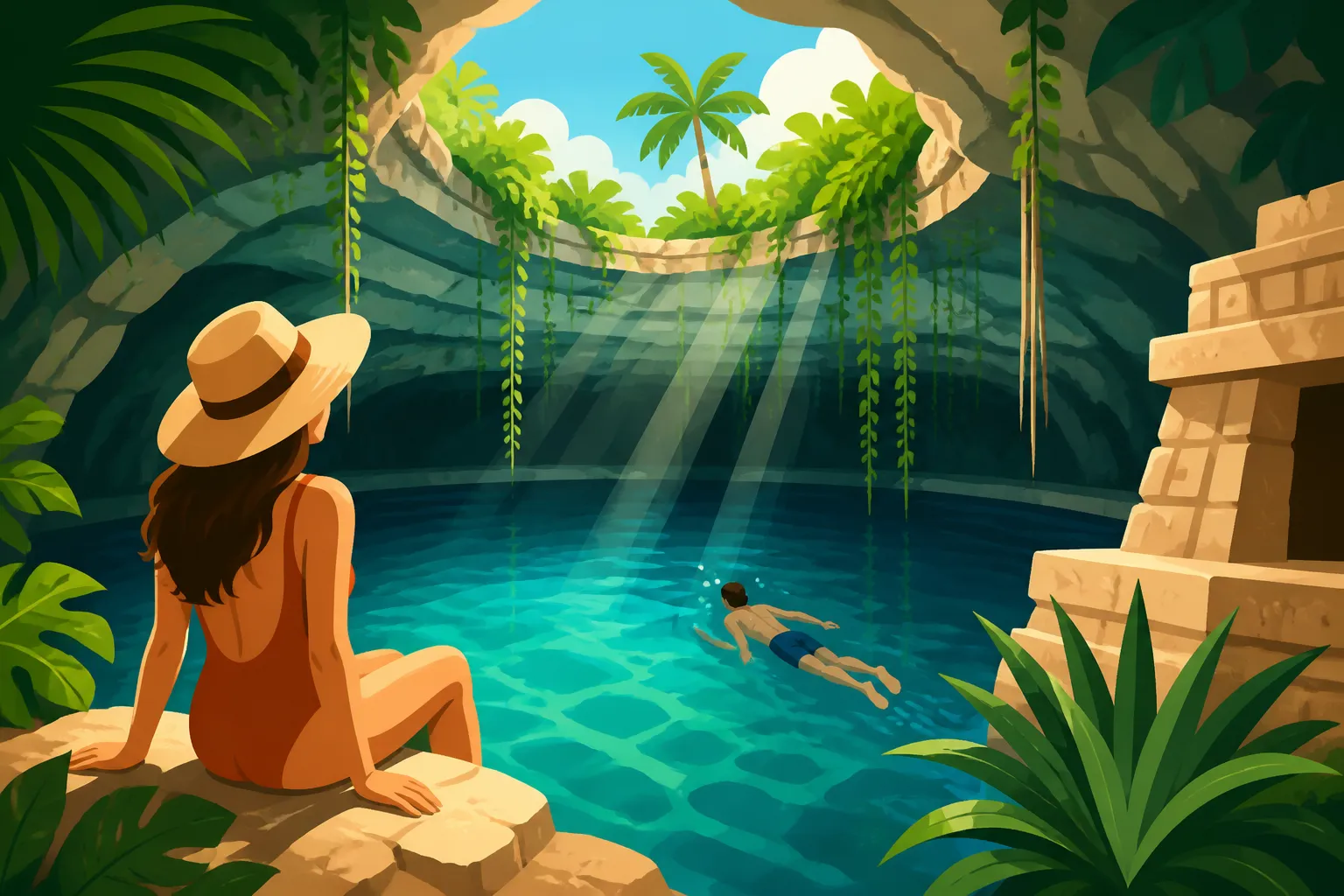
Semi-open cenotes represent a middle ground, featuring a collapsed roof structure with a defined dome overhead and a central skylight aperture. Sunlight shoots through this overhead opening in brilliant, beam-like shafts, illuminating crystal-clear turquoise waters below. These sites offer a dramatic visual contrast, making them extremely popular among photographers. Cavern cenotes, by contrast, are entirely underground systems accessed through narrow staircases, natural clefts in the rock, or metal ladders. Inside, dramatic stalactites hang from limestone ceilings, while subterranean freshwater remains perpetually cool and sheltered from the tropical heat outside.
Understanding these classifications is crucial when deciding where to invest your time and entry fees. If you suffer from claustrophobia, a fully enclosed cavern system with restricted headroom might leave you feeling anxious. Conversely, if you are visiting during the peak heat of the afternoon, descend into a cool cave cenote to escape the blazingly hot sun while swimming through ancient rock formations. To learn more about the geological origins and cultural history of these sites, read Cenotes in Mexico: What They Are and Where to Swim.
Matching Cenotes to Your Travel Style and Skill Level
Selecting the right sinkhole requires evaluating your group’s swimming ability, mobility, and tolerance for rustic conditions. Many popular semi-open and open cenotes feature well-built wooden platforms, concrete staircases, sturdy handrails, and life-jacket rental stations, making them accessible to casual visitors and non-swimmers alike. Some commercial parks have transformed their natural pools into full-service recreational areas with paved pathways, on-site restaurants, lockboxes, and tiled shower facilities.
However, if you crave raw exploration away from commercial infrastructure, rustic cenotes located on small family farms or within municipal reserves present a completely different reality. Accessing these hidden gems often involves descending steep, slippery wooden ladders, squeezing through tight rock openings, or walking down dimly lit spiral stairways carved into wet rock. Non-swimmers must remain mindful, as subterranean waters drop off instantly to extreme depths without shallow wading ledges.
For certified scuba enthusiasts, cavern systems offer entry into world-class cave diving networks. Deep inside systems like Dos Ojos or El Pit, experienced divers float through submerged chambers with hundreds of feet of horizontal visibility. Always honest assessment of your physical limits and comfort levels in enclosed spaces before booking specialized excursions, as subterranean conditions leave little room for error once you drop beneath the surface.
Environmental Etiquette and Protection Rules
The freshwater networks running through the limestone bedrock form the primary drinking water aquifer for the entire region, while feeding fragile coastal ecosystems and mangrove forests. As tourism has expanded, maintaining water purity and preserving delicate mineral formations has become a top environmental priority for local communities and municipal authorities. When visiting any site, adhering strictly to local conservation guidelines preserves these sacred Mayan water sources for future generations.
The single most critical rule enforced across all reputable sites is the absolute prohibition of chemical sunscreens, bug sprays, and skin lotions before entering the water. Even products labeled as biodegradable leave an oily film that disrupts delicate microbial balance and harms native marine life. Every established site provides compulsory freshwater rinse showers near the entrance. Visitors are required to wash off skin oils and synthetic products thoroughly before stepping onto the water access platforms.
Additionally, touch nothing beneath or above the water line. Mineral formations like stalactites and stalagmites take thousands of years to develop; touch from human hands transfers oils that stop rock growth entirely. When swimming, maintain horizontal body position and avoid kicking up floor silt or scraping against cave walls with fins. Never hang from exposed roots, throw trash into rock crevices, or leave behind single-use plastics anywhere on the grounds.
| Cenote Category | Natural Light Level | Typical Access Style | Best For |
|---|---|---|---|
| Open Cenote | Full Sunlight | Wooden Docks, Steps | Families, Sunbathers |
| Semi-Open Cenote | Skylight Shafts | Staircases, Platforms | Photographers |
| Cavern Cenote | Ambient / Artificial | Ladders, Cave Entrances | Snorkelers, Divers |
Top Regional Bases for Cenote Day Trips
Deciding where to establish your base camp will dramatically influence the style of day trips you can undertake. The peninsula contains distinct regional clusters, each offering a unique atmosphere, varying levels of tourism development, and different logistical approaches. Choosing the right city or town as your home base saves hours of highway driving and ensures easy access to the exact style of sinkhole you want to explore.
If you are trying to craft a smooth itinerary, consulting a dedicated breakdown like How to Take a Cenote Day Trip in the Yucatán will help align your transit options with regional clusters.
The Valladolid Hub and the Central Yucatán Cluster
Nestled in the interior of Yucatán state, the charming colonial city of Valladolid serves as arguably the absolute best strategic jumping-off point for cenote enthusiasts. The town itself is built directly above underground water channels, with the massive semi-open Cenote Zací located right in the heart of downtown. Staying in Valladolid puts you within a 20- to 30-minute radius of dozens of iconic, high-ceiling sinkholes surrounded by tranquil countryside.
Operating out of Valladolid allows you to easily outpace the massive tour buses coming from coastal resort cities like Cancún and Playa del Carmen. By departing your hotel early, you can reach famous sites like Oxman, Suytun, or Zací right as the gates open, enjoying tranquil waters before the afternoon crowds arrive. Valladolid also features exceptional local culinary traditions, beautiful historic architecture, and budget-friendly boutique accommodations.
When arranging your stay in Valladolid or nearby colonial towns, using online booking engines like Booking.com provides direct access to small family-run guesthouses, historic haciendas, and eco-lodges situated directly on rural properties.
The Riviera Maya Corridor from Tulum to Playa del Carmen
Running along the Caribbean coastline of Quintana Roo, the Riviera Maya corridor houses some of the most world-renowned subterranean systems, famous for blindingly blue water and vast underground cave networks. The area surrounding Tulum, in particular, is densely packed with spectacular sites tucked just off the main coastal highway, making them easy to access via car, bicycle, or local public vans (colectivos).
The sinkholes along this coastal stretch cater heavily to eco-tourists, certified cave divers, and thrill-seekers. Sites like Gran Cenote, Cenote Calavera, and the Dos Ojos Park offer well-maintained facilities, gear rentals, and on-site guides. However, because this region sits directly along the primary tourist belt, entry fees along the Riviera Maya tend to be significantly higher than those in interior states, and major sites grow crowded by mid-morning.
To narrow down your choices along the coast, review What Are the Best Cenotes Near Tulum? to evaluate individual sites based on location, crowd levels, and entry costs.
The Mérida Ring of Cenotes and Homún Circuit
For travelers who prefer raw adventure, deep culture, and off-the-beaten-path discovery, the capital city of Mérida and its surrounding countryside present an incredible opportunity. The region surrounding Mérida contains the highest density of natural sinkholes on the planet, concentrated along the boundary of the ancient Chicxulub asteroid impact crater, known locally as the Ring of Cenotes (Anillo de Cenotes).
The most famous day-trip destination within this ring is the rural municipality of Homún, located roughly an hour southeast of Mérida. Homún is a quiet village where local agricultural co-ops operate dozens of rustic, pristine sinkholes scattered across vast citrus orchards and low scrub jungle. Rather than paved parking lots and commercial gift shops, exploring Homún involves hiring local drivers to transport you down dusty dirt tracks from one hidden cavern to another.
Mérida itself serves as a vibrant cultural hub with world-class museums, traditional music performances, and fantastic regional gastronomy. Using Mérida as your urban home base gives you easy access to rural sinkholes during the daytime while allowing you to enjoy vibrant colonial city life every evening.
Practical Logistics for Planning a Cenote Day Trip
A successful day trip requires smooth logistics. The peninsula’s public transit network is generally reliable, but rural roads, variable entrance fees, and inconsistent mobile cell service mean you need a clear operational plan before heading out.
| Transit Mode | Flexibility Level | Average Cost Level | Ideal Traveler Type |
|---|---|---|---|
| Rental Car | High | Moderate to High | Groups, Early Risers |
| Public Colectivo | Moderate | Low | Solo, Budget Travelers |
| Organized Excursion | Low | High | First-Timers, Divers |
Self-Driving vs Public Transit vs Guided Tours
Selecting your mode of transportation depends heavily on your budget, party size, and desire for independence. Renting a vehicle provides ultimate flexibility, allowing you to build a custom itinerary, visit multiple remote sites in a single afternoon, and arrive at popular locations well before commercial tour buses arrive. Driving across Yucatán state is generally straightforward, with flat terrain, clear signage, and low traffic volumes outside major cities.
If you choose to drive yourself, stay vigilant regarding local traffic regulations, toll roads (cuotas), and speed bumps (topes). Speed bumps are often unmarked and situated at the entrance of small rural villages; hitting one at full speed can cause severe damage to rental vehicles. To ensure you navigate vehicle agreements and insurance requirements safely, consult Renting a Car in Mexico: Insurance and Driving Tips.
For budget travelers and solo explorers, public transit offers a cheap, highly authentic alternative. In coastal Quintana Roo, shared passenger vans known as colectivos run constantly along Highway 307 between Cancún, Playa del Carmen, and Tulum. You can simply flag down a driver, tell them which site entrance you want, and pay a small fare in pesos upon exiting. For intercity transit between major regional hubs like Cancún, Valladolid, and Mérida, services like Busbud make it simple to review timetables, compare routes, and secure seats on comfortable ADO express buses in advance.
If you prefer to leave navigational stress behind entirely, booking a guided day tour is a great stress-free option. Major travel platforms like Viator offer curated group or private excursions that combine cenote swims with visits to ancient Maya archaeological sites, traditional cooking demonstrations, and private transportation. Check out How to Visit Chichén Itzá as a Visitor to see how many travelers combine world-famous Maya ruins with a cool dip in a neighboring sinkhole on a single seamless itinerary.
What to Pack for a Full Day at the Sinkholes
Packing appropriately for a day trip to rural water sites requires balancing comfort, environmental compliance, and security. Because you will be stepping in and out of subterranean water, high-humidity caves, and hot tropical sun throughout the day, having the right gear in your daypack makes a huge difference.
- Waterproof Dry Bag: A durable 10L or 20L roll-top dry bag keeps your phone, dry clothes, cash, and camera gear safe from water splashes on slippery wooden platforms or inside damp caves.
- Microfiber Towel: Standard cotton hotel towels are bulky, slow to dry, and absorb heavy humidity. Light microfiber towels dry quickly in the sun and pack down to a fraction of the size.
- Quality Water Shoes: Slippery, moss-covered limestone steps, submerged rocks, and rough wooden ladders can easily cause slips or cut bare feet. Sturdy water shoes with high-traction rubber soles are vastly superior to loose flip-flops.
- Snorkel Mask and Snorkel: While many commercial sites rent gear on-site, bringing your own sanitized, well-fitting mask guarantees crystal-clear underwater visibility without leaky seals.
- Reusable Water Bottle: Staying hydrated in tropical heat is vital, but single-use plastic bottles create immense waste problems in rural areas. Bring an insulated stainless-steel bottle filled with purified water.
- Light Cover-Up or Rashguard: Because chemical sunscreen is forbidden prior to swimming, wearing a long-sleeve UPF-rated rashguard protects your skin from sunburn while keeping local ecosystems free from harmful residues.
Budgeting and Cash Management on the Ground
One of the most common pitfalls facing first-time travelers in the region is over-relying on credit or debit cards. While large eco-parks and upscale coastal venues accept card payments, the vast majority of independent, community-owned, and rural cenotes operate strictly on a cash-only basis in Mexican Pesos (MXN).
Card terminals require reliable cellular internet signals, which are virtually non-existent once you step off main highways into scrub jungle. Furthermore, even if an entrance gate accepts cards, secondary services like locker rentals, life-jacket rentals, local mototaxi transfers, snack stands, and tip boxes for local guides are universally cash-only.
Always withdraw sufficient cash from official bank ATMs located inside major cities before setting out into rural districts. Break large 500-peso banknotes into smaller 20, 50, and 100-peso bills at convenience stores or supermarkets, as rural site operators rarely have sufficient change for large bills early in the morning. Keep cash secure inside your dry bag or a concealed travel belt.
Step-by-Step Itineraries for Unforgettable Day Trips
To maximize your time on the ground and avoid long transit delays, structuring your day trip around focused geographical zones is essential. Below are three tested itineraries designed for different travel styles, region bases, and personal interests.
The Early Bird Valladolid Culture and Cenote Loop
- Base Location: Valladolid
- Primary Highlights: Cenote Oxman, Cenote Suytun, Historic City Center, Cenote Zací
- Transportation: Rental Car, Scooter, or Local Taxi
Begin your morning at 7:30 AM to arrive at Cenote Oxman right as the gates open at 8:00 AM. Located on the grounds of a historic hacienda, Oxman is a breathtaking open-air sinkhole featuring dramatic vertical rock walls, long hanging vines, and a popular rope swing. Arriving early guarantees you can enjoy quiet swims and snap clear photos without hundreds of visitors splashing in the background.
By 10:00 AM, drive 15 minutes east toward Cenote Suytun, famous worldwide for its concrete walkway extending directly into the center of a cavern pool beneath a natural roof aperture. When the sun reaches mid-morning height, a beam of light strikes the circular platform, creating an iconic scene. Spend an hour swimming through the cool subterranean waters and viewing stalactites before tourist buses arrive around noon.
Head back into central Valladolid for a relaxed afternoon. Enjoy a traditional lunch featuring regional dishes like pibil pork or lomitos de Valladolid at a colonial restaurant surrounding the central plaza. Finish your afternoon with a walk to Cenote Zací, located right within the urban center, where you can walk carved stone pathways along massive cliff edges before relaxing at a shaded café.
The Off-the-Beaten-Path Homún Mototaxi Adventure
- Base Location: Mérida
- Primary Highlights: Ring of Cenotes, Homún Village, Local Mototaxi Cave Tour
- Transportation: Intercity Bus/Colectivo from Mérida, followed by Local Mototaxi
Depart Mérida early via colectivo or regional bus, arriving in the small village of Homún around 8:30 AM. Upon arrival in the central square, local independent guides operating motorized three-wheeled rickshaws (mototaxis) will approach you to offer guided day tours. Negotiate a fair day rate for the driver to take you through private farm tracks to visit three to four distinct community-managed sinkholes.
Your driver will navigate bumpy dirt trails through dense tropical forest, bringing you to hidden gems like Cenote Santa Bárbara, Cenote Tza Ujun Kat, or Cenote Yaxbacaltun. Each site offers a totally different structural experience, ranging from deep dark caverns accessed via vertical wooden ladders to brightly lit semi-open swimming holes filled with small fish.
Enjoy lunch at a local village eatery run by community co-op members, sampling freshly made tortillas, handmade empanadas, and cold agua de chaya (a refreshing local herbal drink). After a full day of swimming and exploring rustic underground caverns, your mototaxi driver will return you safely to the village center to catch your evening return transit back to Mérida.
The Coastal Cave and Jungle Explorer Route
- Base Location: Tulum or Playa del Carmen
- Primary Highlights: Dos Ojos Park, Gran Cenote, Puerto Morelos Ruta de los Cenotes
- Transportation: Shared Highway Colectivo or Rental Car
If you are staying along the Riviera Maya, board a north-bound highway colectivo early in the morning and request a stop at Dos Ojos Park. This massive protected reserve houses multiple sinkholes connected by vast underground cave systems. Spend your morning snorkeling through crystal-clear waters, admiring complex stalactite and stalagmites fields under the guidance of a local cavern guide.
In the early afternoon, head north toward Puerto Morelos to access the famous Ruta de los Cenotes, a paved jungle road stretching inland from the coast. This corridor features dozens of eco-parks combining subterranean swimming holes with zip-line courses, ATV trails, and jungle suspension bridges. Sites like Cenote Verde Lucero or Cenote Boca del Pozo offer high-altitude cliff jumps into deep open pools, perfect for adrenaline seekers.
End your afternoon relaxing at a shaded jungle palapa, enjoying fresh fruit smoothies and grilled fish tacos before taking a brief colectivo ride back to your coastal hotel.
Navigating Local Challenges and Insider Safety Tips
While swimming in clear freshwater sinkholes is generally a safe and memorable experience, visiting semi-remote natural sites presents unique physical and environmental challenges that require common sense and advance preparation.
| Risk / Challenge | Cause / Context | Mitigation Strategy |
|---|---|---|
| Slippery Surfaces | Wet Moss on Limestone Steps | Wear Rubber-Soled Water Shoes |
| Extreme Water Depth | Vertical Walls, No Shallow Ledges | Wear Required Life Jackets (Chalecos) |
| Scams / Overcharging | Unofficial Roadside Guides | Pay Only at Official Entry Booths |
Managing Wildlife, Water Depth, and Physical Demands
It is important to remember that sinkholes are wild, natural ecosystems, not controlled swimming pools. The subterranean waters are home to native catfish (bagres), tiny freshwater shrimp, and small harmless fish that may gently nibble at your feet if you stand still. Above the water line, cave ceilings host colonies of insect-eating bats, while bright green motmot birds nest along rock crevices. None of these creatures pose a threat to humans, but staying calm and respecting their natural habitat is essential.
Water depth inside sinkholes can drop rapidly from shallow rocky ledges to dark depths exceeding 100 feet (30 meters). Even strong, confident swimmers can experience sudden leg cramps due to cool water temperatures or physical exertion. Nearly all site operators require or strongly encourage visitors to wear coast-guard-approved life jackets (chalecos salvavidas), which are typically included with entry or rented for a nominal fee. Always wear your life vest properly secured; it allows you to float effortlessly while looking down into deep cave passages.
Be realistic about physical mobility constraints when selecting sites. Reaching water platforms frequently requires descending dozens of steep, narrow, and wet stone steps or climbing down vertical wooden ladders without modern landings. If anyone in your travel group suffers from severe knee pain, balance issues, or reduced mobility, research accessible open-air sites with wide, gradual wooden boardwalks before setting out.
Avoiding Common Tourist Pitfalls and Overpriced Packages
As popularity has surged across Quintana Roo and Yucatán, opportunistic sales tactics and unofficial operators have become common along major highway routes leading to famous sites. Staying informed prevents unnecessary spending and ensures your money directly supports local land owners and legitimate municipal co-ops.
When driving toward major destinations like Chichén Itzá or Valladolid, you will likely encounter individuals standing along the road waving flags, wearing high-visibility vests, or signaling you to pull over into private parking lots. These are unofficial sales agents claiming to operate official ticket booths or mandatory check-in points. In reality, they are attempting to sell marked-up tour packages, expensive private guide services, or unwanted souvenir bundles.
Ignore roadside solicitors and drive straight to the official, clearly marked entrance gates and parking lots of the specific site you intend to visit. Purchase entry tickets directly at official brick-and-mortar ticket windows (taquillas). For detailed advice on identifying local sales tricks, navigating highway stops, and protecting your budget, read How to Avoid Common Scams in Mexico.
Finally, keep track of changing municipal guidelines and entry requirements. Some high-traffic coastal sites now enforce strict capacity limits or require advance reservations during peak holiday seasons like Christmas, Easter (Semana Santa), and mid-summer. Checking official municipal pages or consulting local expat forums prior to departure ensures a seamless, stress-free day trip into the heart of the peninsula’s magical underground world.
Disclaimer
This article is for general informational purposes only and does not constitute professional advice. Laws, prices and regulations vary by location and change over time. Consult a qualified professional for guidance on your specific situation.