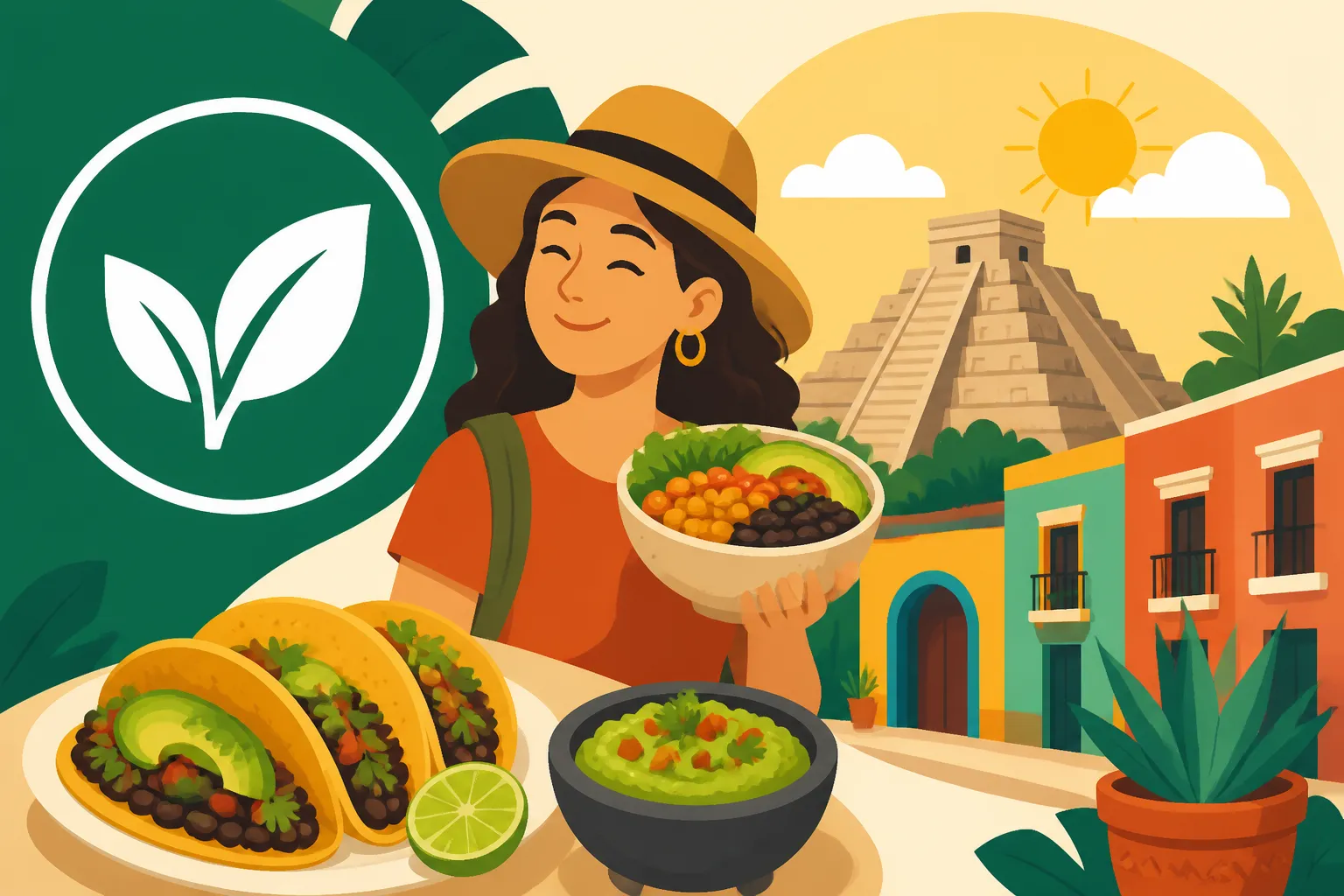
How to Find Vegetarian and Vegan Food in Mexico
Disclosure: This article contains affiliate links. If you buy through them, we may earn a commission at no extra cost to you. Read our full disclosure.
Many travelers arriving in Mexico fear they will be relegated to a monotonous diet of plain rice and beans, or worse, accidentally consume lard-laden tortillas. The cultural emphasis on carnitas and al pastor can make meat-free living feel like an uphill battle. This guide provides the tactical knowledge needed to find vibrant, authentic, and safe vegetarian and vegan food across Mexico.
The Hidden Challenges of Plant-Based Living in Mexico
When you first land in a place like Mexico City or Guadalajara, the sensory overload of sizzling meats is inescapable. It is worth noting that the biggest hurdle isn't a lack of vegetables—Mexico has some of the best produce on the planet—it is the cultural definition of what constitutes a "meal." In many traditional circles, a dish isn't considered complete without animal protein. You might ask if a soup has meat, and the waiter will say "no," only for you to find out later it was simmered with chicken bones or seasoned with powdered chicken bouillon.
The Lard and Stock Dilemma
The two most common "hidden" ingredients you will encounter are manteca (pork lard) and caldo de pollo (chicken stock). Traditionally, black beans and pinto beans are fried in lard to give them that creamy, rich texture everyone loves. Similarly, Mexican red rice is almost always toasted in oil and then simmered in chicken stock. If you are strictly vegan, you have to be specific and inquisitive. It isn't that the cook is trying to trick you; it is simply that these ingredients are seen as foundational seasonings rather than "meat."
When you are Staying Healthy in Mexico: Essential Tips for Food, Water, and Preventive Care, understanding these nuances is vital. Always ask, "Are the beans prepared with lard?" (¿Los frijoles tienen manteca?) and "Is the rice made with chicken stock?" (¿El arroz tiene caldo de pollo?). In more modern or tourist-heavy areas, staff are increasingly aware of these preferences, but in a local fonda (a small, family-run eatery), you may need to explain that you don't eat animal derivatives at all.
Essential Phrases for the Non-Meat Eater
Communication is your strongest tool. While "soy vegetariano" (I am vegetarian) or "soy vegano" (I am vegan) is a starting point, it doesn't always cover the bases. Many locals might think a vegetarian still eats chicken or fish. To be safe, use the phrase "No como nada de carne, ni pollo, ni pescado" (I don't eat any meat, nor chicken, nor fish).
If you are vegan, you must emphasize "nada de productos lácteos o huevo" (no dairy products or egg). One of the most helpful things you can do is learn to describe what you can eat. Instead of focusing on the negative, point to the abundance of hongos (mushrooms), calabacitas (zucchini), and nopales (cactus). This shifts the conversation from a restrictive "I can't eat that" to a creative "Can we make a taco with these vegetables?" Most Mexican cooks are incredibly proud of their skills and will happily whip up something off-menu if you approach them with kindness and a few key Spanish words.
Traditional Dishes That Are Naturally or Easily Vegetarian
The irony of the struggle for plant-based food in Mexico is that the pre-Hispanic diet was largely centered around the "Holy Trinity" of Mesoamerican agriculture: corn, beans, and squash. If you look past the modern obsession with beef and pork, you will find a deep well of ancient recipes that are inherently vegetarian. Exploring Mexican Food Culture: Eating and Drinking as a Visitor reveals that many of the most complex flavors in the country actually come from chilies, seeds, and herbs rather than the meat itself.
The Glory of the Mushroom and the Squash Blossom
In central Mexico, particularly in the highlands around Mexico City and Puebla, you will find an incredible variety of forest mushrooms. Quesadillas de hongos (mushroom quesadillas) are a staple of street food. If you are vegan, you simply ask for them sin queso (without cheese). The mushrooms are often sautéed with epazote, a pungent herb that gives them an earthy, authentic Mexican kick.
Another superstar is the flor de calabaza (squash blossom). These bright orange flowers are delicate, slightly sweet, and delicious when stuffed into a corn tortilla. For a more adventurous palate, look for huitlacoche, often called "Mexican truffle." It is a corn fungus that looks intimidatingly black and inky but tastes like a sophisticated, smoky mushroom. These ingredients are standard at almost any street stall that makes handmade tortillas, making it easy to find high-quality Vegetarian and Vegan Food in Mexico without searching for a specialty health food store.
Market Survival: The Tianguis Strategy
If you really want to eat like a king on a budget, you need to head to the mercado or the tianguis (open-air market). When you are How to Find Authentic Restaurants in Mexico (Not Tourist Traps), the market is your best friend. Look for the stands selling antojitos (little cravings). You can almost always find tlacoyos—thick, oval-shaped corn cakes stuffed with fava beans or mashed peas and topped with cactus salad, onions, cilantro, and salsa.
Markets are also where you will find the freshest fruit you have ever tasted. A massive cup of papaya, mango, and pineapple topped with lime and chili is a standard breakfast for locals and a safe, vegan-friendly way to start your day. If you are staying in a neighborhood like Roma or Coyoacán, which you might find while browsing options on Booking.com, you will likely be within walking distance of one of these culinary goldmines.
Regional Hotspots for Vegan and Vegetarian Travelers
Mexico is a massive country, and the ease of finding plant-based food varies wildly by region. While the north is famous for its "carne asada" culture and can be a bit more challenging, the center and south are a paradise for vegetable lovers. When you are moving between these regions using a service like Busbud, you will notice how the local ingredients shift from the cactus and corn of the high plateau to the tropical fruits and complex moles of the south.
Mexico City: The Plant-Based Capital
Mexico City (CDMX) is currently undergoing a vegan revolution. In neighborhoods like Condesa, Roma Norte, and Juárez, you can find everything from high-end vegan fine dining to "veggie-fied" street food. There are entire taquerías dedicated to vegan versions of classic tacos. You can have "suadero" made from soy or "al pastor" made from marinated wheat gluten that tastes shockingly close to the original.
For those interested in Mexico City for First-Time Visitors: Neighborhoods and Highlights, make sure to visit "Por Siempre Vegana Taquería." It is a legendary street stand that serves up some of the best plant-based tacos in the world. If you prefer a seated experience, places like "La Pitahaya Vegana" offer beautiful, pink-hued corn tortillas colored with beet juice, filled with creative vegetable concoctions. The city's density of options makes Managing Food Allergies and Special Diets in Mexico significantly easier than in the rural interior.
Coastal Areas and the Yucatán
In the Yucatán Peninsula, the flavor profile changes entirely. Here, the star of the show is often achiote (annatto seed) and citrus. While cochinita pibil (slow-roasted pork) is the regional king, the same marination techniques can be applied to vegetables. If you find yourself in the white city, checking out a Mérida City Guide: Colonial Charm in the Yucatán will lead you to restaurants that serve papadzul—corn tortillas stuffed with hard-boiled eggs and covered in a creamy pumpkin seed sauce. It is a vegetarian masterpiece that dates back centuries.
On the coasts, such as Puerto Vallarta or Sayulita, the "hippie-chic" influence has brought a wave of smoothie bowls, avocado toasts, and vegan ceviches made with coconut meat or hearts of palm. These areas are very accustomed to foreign dietary requirements, so you will rarely have to explain yourself.
Practical Tips for Stress-Free Dining
Even with the best intentions, navigating a foreign food landscape can be tiring. One of the most important things is to manage your expectations and be prepared. If you are going on a long day trip—perhaps booked through Viator—to see ruins or remote waterfalls, don't assume there will be vegan options at the site's cafeteria.
Using Technology and Local Apps
The "HappyCow" app is indispensable in Mexico's larger cities. It will point you to dedicated vegan cafes that might be tucked away in residential courtyards. Additionally, don't overlook the power of "Uber Eats" or "Rappi" when you are tired. These apps allow you to filter for vegetarian and vegan options, and the menus are often translated, which helps avoid any "lost in translation" lard accidents.
When you are Is Street Food Safe? How to Enjoy Mexican Street Eats Without Worry, the same rules apply to vegetarians as they do to meat-eaters: look for high turnover and a clean workstation. A busy stand selling esquites (corn in a cup) is usually a safe bet, provided you ask them to skip the mayonnaise and cheese and stick to lime, chili, and salt.
| Common Dish | Standard Ingredients | Vegetarian/Vegan Modification |
|---|---|---|
| Enchiladas | Tortillas, chicken, salsa, cheese, cream | Ask for enchiladas de vegetales or hongos without cheese/cream. |
| Tacos al Pastor | Marinated pork, pineapple, onion, cilantro | Look for pastor de soya or pastor de setas (oyster mushrooms). |
| Guacamole | Avocado, onion, chili, cilantro, tomato | Usually naturally vegan, but always check for added cheese shavings. |
| Chiles Rellenos | Poblano chili, cheese or meat, egg batter | Ensure it is stuffed with cheese only; note the batter contains egg. |
| Sopa de Lima | Chicken, lime, tortillas, broth | Almost always made with chicken stock; difficult to modify. |
| Tlacoyos | Corn dough, beans or fava, toppings | Naturally vegetarian; ask for no cheese to make it vegan. |
| Tamales | Corn masa, meat filling, lard | Hard to find vegan/veg unless specified de dulce or de rajas (without lard). |
Navigating Social Situations and Invitations
As an expat, you will eventually be invited to a Mexican home for a meal. This is a high honor, but it can be stressful for those on a strict diet. Mexicans express love through food, and turning down a dish can sometimes be perceived as a rejection of their hospitality. The best approach is to mention your diet early and offer to bring a dish to share.
If you are Finding Familiar Products: An Expat Shopping Guide (Walmart, Costco, etc.), you can easily find ingredients to make a massive salad or a vegan pasta that everyone will enjoy. Most hosts are incredibly accommodating once they understand your needs. They might even get excited about showing you a regional vegetable dish you haven't tried yet.
If you are exploring the culinary heart of the country, such as during a stay in the south, following an Oaxaca City Guide: Markets, Mezcal, and Art will show you that even the most traditional places are starting to embrace the plant-based movement. From vegan mole to dairy-free hot chocolate made with water instead of milk, the options are expanding every day.
Disclaimer
The information provided in this guide is for educational and informational purposes only. While every effort has been made to ensure the accuracy of the cultural and culinary tips provided, food preparation practices can change, and cross-contamination is always a risk in kitchens that handle animal products. Always use your own judgment and communicate clearly with food providers regarding any allergies or strict dietary requirements.