What’s the Best Time to Visit the Yucatán?
If you’re trying to pin down the best time to visit the Yucatán, you’ve probably seen conflicting advice: one friend swears by winter, another says summer was empty and magical, and then someone mentions hurricanes. This guide sorts out the peninsula’s seasons month by month so you can choose dates that suit your budget, your heat tolerance, and what you want to see.
Disclosure: This post may contain affiliate links. We may earn a commission at no extra cost to you if you make a purchase through these links. Read full disclosure.
I’ve lived through Mérida’s May heat, an October rainy season in Valladolid, and more than one January when Tulum felt like a busy shopping mall. No single month is perfect. The right month depends on what you care about most, and the rest of this guide helps you work that out.
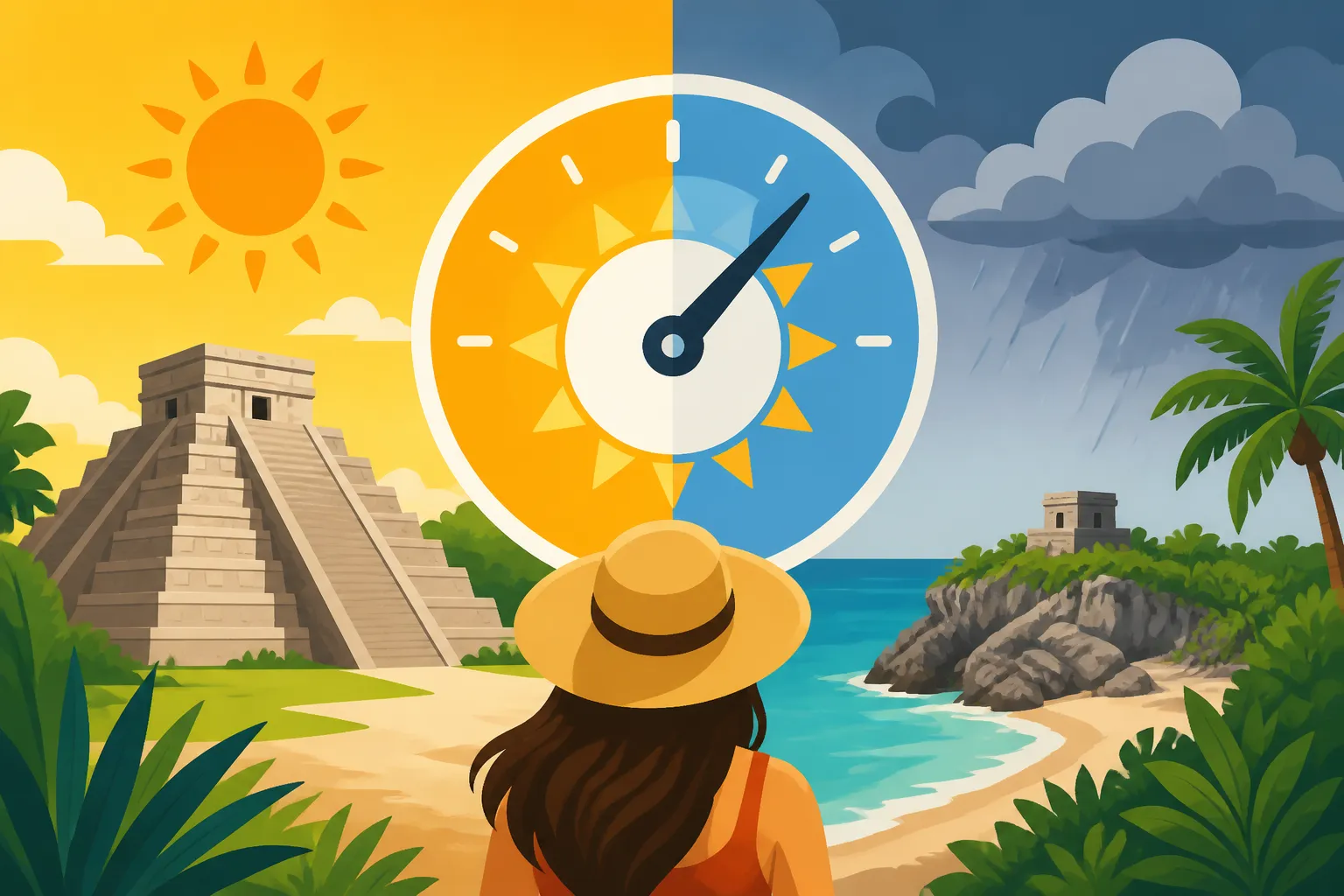
Understanding the Yucatán’s Seasons Before You Book
The Yucatán Peninsula covers three states: Yucatán, Quintana Roo and Campeche. It is flat, low-lying limestone with almost no rivers above ground. All its water moves underground through cenotes, and that geography shapes the weather. There are no mountains to cool you down and no altitude to escape to. The heat on the inland plains around Mérida is very different from the breezy Caribbean coast around Cancún and Playa del Carmen.
It helps to stop thinking in terms of four seasons. Locals talk about two main ones, the dry season and the rainy season. Visitors then add a third layer on top: the tourist calendar of holidays and peak travel weeks, which drives prices.
The Peak Dry Season: Mid-December Through Easter
This is the period most people picture when they imagine the Yucatán. Mornings can feel close to cool, especially in January, when a norte (a cold front from the Gulf) blows through. Humidity drops, skies are mostly clear, and walking around Chichén Itzá at midday is tiring rather than punishing.
The catch is that everyone else knows this too. North American and European winter travelers arrive in force, spring breakers fill Cancún in March, and Mexican families travel at Christmas and during Semana Santa. Hotel rates climb, rental cars get scarce, and the famous cenotes near Tulum can feel like public swimming pools by late morning.
Picture a couple arriving in Playa del Carmen the week after Christmas without a booking. They’re likely to find a few overpriced rooms left and a lot of “sold out” notices. If you choose this window, book early. On platforms like Booking.com, filter for free cancellation so you can lock in a room now and keep the option to change plans if a better deal or a different route comes up.
The Hot Season: After Easter Through May
Once Semana Santa ends, the crowds thin out quickly. The heat, meanwhile, keeps building. Late April and May are usually the hottest weeks of the year in the interior. Mérida in May is legendary among residents: the air feels heavy by mid-morning, the pavement radiates heat into the evening, and many locals plan errands for early morning and after sunset.
There are real advantages, though. It is still the dry season, so rain rarely ruins plans. Prices fall after the holiday rush. You’ll often have cenotes and smaller ruins like Ek Balam or Mayapán nearly to yourself if you go early. The coast stays more bearable than the interior thanks to sea breezes.
My honest advice: if you’re sensitive to heat, older, traveling with small children, or planning long days walking archaeological sites, May is the month to avoid. If you’re a confident heat-handler planning a beach-and-cenote trip, it can be a great value window. For practical tips on handling the conditions, see Coping with Heat and Humidity: Tips for Expats in Tropical Climates.
The Rainy Season and Hurricane Window: June Through November
Rain usually arrives around June. It rarely falls all day. A typical rainy-season day starts bright and steamy, clouds build after lunch, a dramatic downpour hits for an hour or so, and then the evening clears and freshens. The jungle turns very green, cenote water levels rise, and the heat feels slightly less brutal than in May, though humidity jumps.
Atlantic hurricane season officially runs from June through November, and the riskiest stretch for the Caribbean coast is usually late summer into autumn, roughly August through October. That doesn’t mean storms hit every year, or that your week will be affected. It does mean you should plan with more flexibility: refundable bookings, travel insurance that covers weather disruption, and an itinerary that can shift inland if a storm threatens the coast. For a fuller look at the risk, see Is Hurricane Season a Problem for Visiting Mexico?.
The Best Time to Visit the Yucatán, Month by Month
Here is the full calendar in one place. “Peak” means highest demand and rates, “hot” means dry and fierce, “rainy” means afternoon storms with hurricane exposure, and “shoulder” means the quieter weeks between the rains ending and the holiday rush beginning.
| Month | Season | Weather Feel | Crowds and Rates | Notable Events and Nature |
|---|---|---|---|---|
| January | Peak dry | Pleasant, occasional cool nortes | High, easing after the first week | Mérida Fest around the city’s founding anniversary |
| February | Peak dry | Warm days, comfortable nights | High | Carnaval in Mérida, falling in February or March depending on when Lent begins |
| March | Peak dry | Warming up, still dry | Very high, with spring breakers on the coast | Spring equinox serpent shadow at Chichén Itzá; Semana Santa may fall in March |
| April | Peak dry until Easter, then hot | Hot and dry | Very high during Semana Santa, then dropping | Semana Santa processions; quieter weeks after Easter |
| May | Hot | Hottest month inland | Low to moderate | Empty ruins early in the morning, intense afternoons |
| June | Rainy | Heat with the first storms | Low | Whale shark season begins off Holbox and Isla Mujeres; hurricane season opens |
| July | Rainy | Humid, afternoon downpours | Moderate, as Mexican school holidays bring domestic travelers | Whale sharks; lush jungle |
| August | Rainy | Humid, frequent storms | Moderate early, lower late | Whale sharks; hurricane risk rising |
| September | Rainy | Wettest feel, very green | Lowest of the year | Autumn equinox at Chichén Itzá; highest storm exposure |
| October | Rainy, tapering | Humid, storms easing toward month’s end | Low | Rates still near the year’s low; Hanal Pixán preparations begin |
| November | Shoulder | Drier, more comfortable | Moderate | Hanal Pixán in early November; the official end of hurricane season |
| December | Shoulder, then peak | Pleasant and dry | Moderate early, very high from mid-month | Guadalupe celebrations on December 12; Christmas crowds arrive |
Why I Recommend November and Early December
If someone asks me for one window, I tell them November through the first half of December. The rains have mostly stopped, the jungle is still green from summer, cenotes are full and clear, and the punishing heat of May is months away. Hotels haven’t switched to their Christmas rates yet, and you can walk into most restaurants in Mérida’s Centro without waiting.
Early November also brings Hanal Pixán, the Yucatecan Maya version of Day of the Dead. It feels quite different from the celebrations in central Mexico. Families prepare mucbipollo, a large tamale baked underground in a pib (earth oven). Altars appear in homes and public squares, and Mérida holds a nighttime procession of souls from the General Cemetery toward the Ermita de Santa Isabel. If you plan to be in Mérida for it, rooms near the Centro go fast. The timing advice in Dia de Muertos Accommodation: How Early Rooms Sell Out and What They Cost applies here too.
The only real caveat is that November sits at the very end of hurricane season. Late storms are uncommon but possible, so keep your bookings flexible during the first part of the month.
Why January and February Still Win for Many Travelers
For first-time visitors who want the most comfortable weather and don’t mind sharing it, January and February are hard to beat. After the New Year rush clears, mid-January can be calmer than people expect. Days are warm enough for the beach, nights are pleasant enough for a long dinner on Calle 60 in Mérida, and the dry air makes long ruin days easy.
Carnaval in Mérida usually falls in February or March, depending on when Lent begins, so it always lands squarely in peak season. Parades run along Paseo de Montejo, costumes and comparsas (dance troupes) fill the streets, and the atmosphere is family-friendly. If Carnaval is on your list, check the dates for your year as soon as you start planning, because hotels nearby fill up and the parade route changes traffic for days.
The Case for September and October
September and October are the off-season of the off-season, and that suits a certain kind of traveler. Rates drop to their lowest, archaeological sites are close to empty, and the landscape is at its greenest. The autumn equinox at Chichén Itzá brings the same serpent-of-light effect as the spring equinox, with a fraction of the crowd.
The trade-offs are real. These months carry the highest hurricane exposure. Some beach clubs and smaller restaurants in Tulum and Bacalar close for a few weeks of staff vacation or renovation. Afternoon storms can cancel boat trips. If you’re flexible, enjoy rain, and like having places to yourself, these months can be wonderful. For a strict, unchangeable itinerary, they are risky. To compare value across the whole country, see When Is the Cheapest Time to Visit Mexico?.
Matching Your Travel Style to the Right Season
The calendar only gets you halfway. The other half is what you want from the trip. A ruins-focused traveler, a beach lover and a wildlife enthusiast might each pick a completely different month.
For Ruins and Culture Lovers
If Chichén Itzá, Uxmal, Ek Balam, Cobá and the colonial cities are your priority, aim for December through early April, or November. You’ll spend hours on foot on exposed limestone with little shade, and cooler months make a huge difference. At Uxmal, the evening light-and-sound show and the climb-free Puuc Route sites like Kabah and Labná are far more enjoyable in the dry season.
Timing within the day matters as much as the month. Get to Chichén Itzá when the gates open and the site is calm and cool. By late morning the tour buses from Cancún and the Riviera Maya roll in. If you don’t have a car, an early-entry tour booked through Viator gets you there before the crowds, and the reviews help you avoid operators that rush you through. For more strategies, see How to Visit Chichén Itzá Without the Crowds.
The spring equinox around March 21 deserves a special warning. The serpent shadow descending El Castillo’s staircase draws huge crowds, and the effect is visible for several days on either side. If you want the spectacle without the crush, aim for a day or two before or after the equinox itself.
For Beach and Cenote Seekers
For the Caribbean coast, the decision is less about rain and more about sargassum. This brown seaweed arrives in waves along the Riviera Maya and tends to be heavier during the warmer months, roughly spring through summer, though it varies a lot from year to year. Winter usually brings cleaner beaches, but there’s no guarantee.
The good news is that sargassum doesn’t affect cenotes, the island beaches on the western side of Isla Mujeres, or the lagoon at Bacalar. If your trip falls in a heavy year, you can shift your water time inland. Cenotes are actually at their best in the rainy months, when water levels are high and the surrounding jungle is lush. For practical tactics, see How to Avoid Sargassum Seaweed on Mexico’s Caribbean Coast.
Cenote circuits around Valladolid, Homún and the Ruta de los Cenotes near Puerto Morelos work year-round. Just go early to avoid tour groups, especially in peak season. For a full plan, see How to Take a Cenote Day Trip in the Yucatán.
For Wildlife and Nature Enthusiasts
Wildlife timing can override every other factor. Whale sharks gather off Isla Holbox and Isla Mujeres roughly from June through September. That means visiting in rainy season, accepting the humidity, and keeping an eye on the hurricane forecast. Operators set the exact season start and end each year, so check with them before you commit. For more on how these trips work, see How to See Whale Sharks Near Cancún or La Paz.
Flamingos are easier to plan around. You can see them in Celestún and Río Lagartos throughout the year, with large winter flocks around Celestún and nesting activity further east later in the year. Sea turtles nest along the Riviera Maya beaches in the summer months, and hatchlings appear later in the season. For bird and wildlife routes, see How to See Flamingos and Wildlife in the Yucatán.
For Budget Travelers and Long-Stay Visitors
If your main goal is stretching money, aim for the hot season after Easter or the rainy months of late August through October. In those windows you can often negotiate weekly or monthly rates directly with guesthouses in Mérida and Valladolid, and hostels and small hotels compete hard for the few travelers around.
Getting around by bus keeps costs down in any month. ADO and its premium lines connect Cancún, Playa del Carmen, Tulum, Valladolid, Mérida, Campeche and Bacalar with comfortable, air-conditioned coaches. Comparing schedules on Busbud before you go makes it easy to see the route options side by side, then book the legs that fit your itinerary.
If you’re basing yourself in Mérida for a while, the neighborhood you pick shapes your experience in every season. Shade, walkability and access to the Sunday events in the Plaza Grande matter more when it’s hot. For a breakdown of the options, see Where to Stay in Merida: Centro, Santa Ana, and the North.
Planning Your Yucatán Trip Around the Calendar
Once you’ve picked a season, a few practical decisions will make or break the trip. Here’s how I approach planning for friends who ask.
A Step-by-Step Approach to Choosing Your Dates
- Write down your top three experiences, for example Chichén Itzá, swimming with whale sharks, and a week of beach time.
- Check whether any of them are tied to a season. Whale sharks fix you to summer, while the equinox and Hanal Pixán each lock you to specific dates.
- Be honest about your heat tolerance. If you struggle above warm and humid, rule out late April through September for inland travel.
- Look up the dates of Semana Santa, Mexican school holidays and Christmas for your year, and decide whether you want to join the crowds or avoid them.
- Decide how much risk you can handle. If your dates are fixed and non-refundable, steer clear of August through October.
- Book flights first, then accommodation with free cancellation, then tours and buses once your route is settled.
- Recheck the weather outlook and sargassum reports about a week before departure and adjust your coast-versus-inland balance if needed.
For more on working around national holidays, see How to Plan Travel Around Mexican Holidays.
How Long to Stay and How to Sequence Your Route
The season also affects how you order your stops. In the hot or rainy months, I like to start inland in Mérida and Valladolid, do the ruins early in the trip while energy is high, and finish on the coast where the breeze makes afternoons bearable. In peak season, you can reverse it. Start on the busy coast, then retreat inland to the quieter colonial towns.
A loop of ten days to two weeks covers the highlights comfortably without constant packing and unpacking. Shorter trips work too if you pick a single base and do day trips. For help sizing your trip, see How Many Days Do You Need in the Yucatán?. If you plan to drive, read How to Plan a Yucatán Road Trip, since rainy-season road conditions and early sunsets in winter both affect how far you can comfortably drive in a day.
Packing and Preparing for Your Chosen Season
What you bring should match the month. For the dry season, pack a light sweater or jacket for nortes and air-conditioned buses, plus sun protection for ruin days. For the hot season, choose loose breathable clothing, a wide-brimmed hat, electrolyte sachets, and a refillable water bottle you’ll actually use. In the rainy months, add a compact umbrella or light rain jacket, quick-dry clothing, sandals that can handle puddles, and insect repellent for dusk around cenotes and jungle sites.
Whatever the season, use biodegradable sunscreen or skip sunscreen before swimming in cenotes. Many cenotes ask you to shower before entering to protect the water, and some won’t let you in wearing regular sunscreen. Bring cash in pesos for smaller cenotes, village restaurants and colectivo vans, since card readers can be unreliable outside the cities, especially after rainy-season storms knock out connections.
Final Thoughts From Someone Who Has Sweated Through Every Season
After years on the peninsula, I can tell you there is no wrong month, just trade-offs you should know about before you book. Winter gives you easy weather and full prices. May gives you empty ruins and fierce heat. Summer gives you whale sharks, green jungle and afternoon storms. Autumn gives you the lowest rates and the most risk. November and early December give you a little of everything good.
Pick the trade-off that suits you, book flexibly, and get up early wherever you go. Early mornings at the ruins and cenotes are worth it in every season.
Disclaimer
This article is for general informational purposes only and does not constitute professional advice. Laws, prices and regulations vary by location and change over time. Consult a qualified professional for guidance on your specific situation.