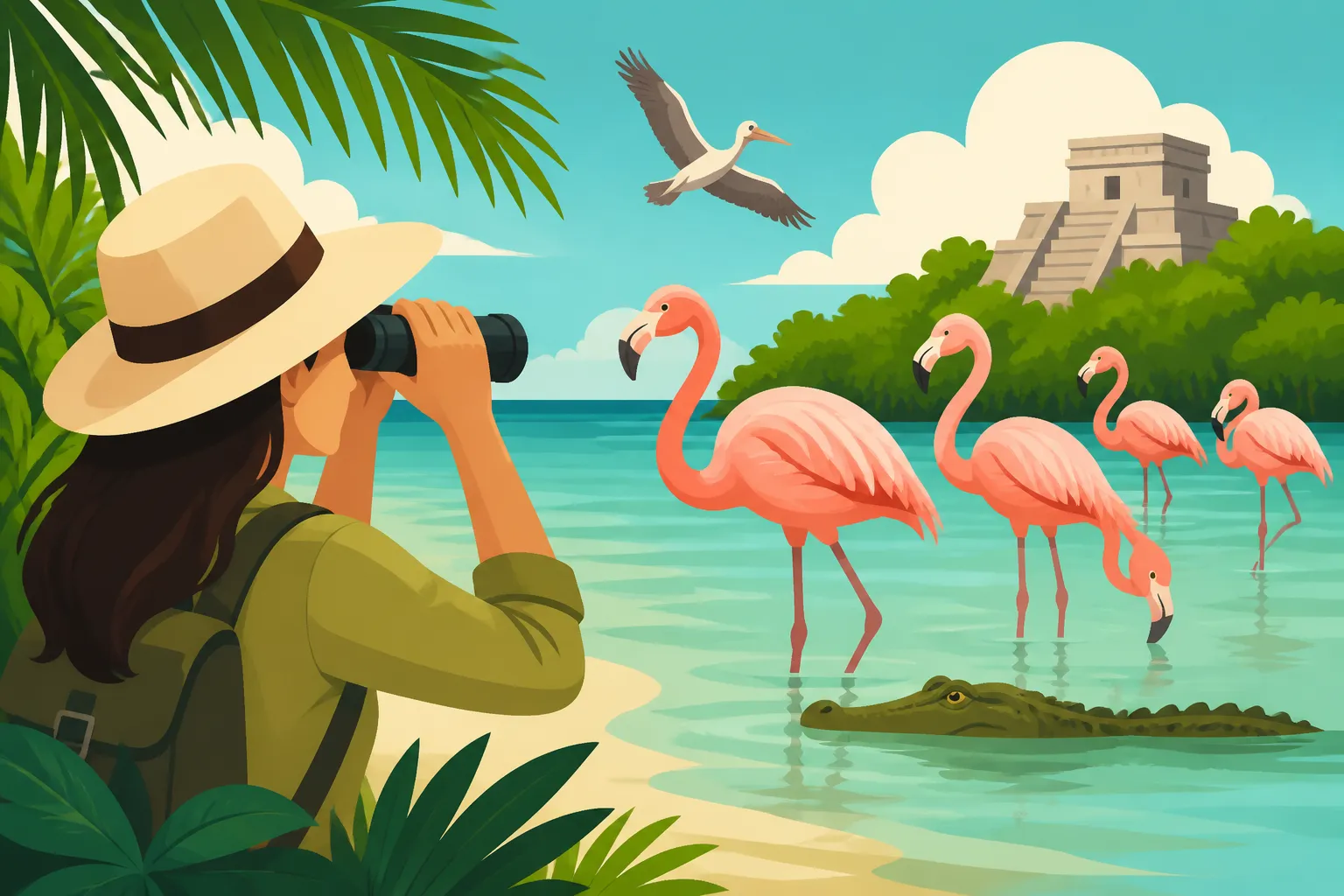
How to See Flamingos and Wildlife in the Yucatán
One of the absolute highlights of living in or visiting the Yucatán Peninsula is the chance to witness its incredible, vibrant wildlife, especially the majestic flamingos. Forget those picture-perfect postcards; seeing thousands of these rosy-hued birds feeding in their natural habitat is an experience that will stay with you long after you’ve left, but knowing where to go and how to do it respectfully is key to making the most of this unique adventure. This guide is all about helping you unlock those magical moments.
Disclosure: This post may contain affiliate links. We may earn a commission at no extra cost to you if you make a purchase through these links. Read full disclosure.
The Allure of Yucatán's Flamingos: A Spectacle You Can't Miss
When I first heard about flamingos in Mexico, I pictured a few scattered birds, maybe a small flock. Oh, how wrong I was! The sight of thousands of Caribbean flamingos painting the horizon pink and red in the Yucatán is truly one of nature's most breathtaking displays. It's not just the color, but the sheer number, the synchronized feeding, and the gentle squawking that creates an unforgettable sensory experience. It's one of those things you have to see to believe, a truly wild spectacle.
Why the Yucatán is a Flamingo Paradise
The Yucatán Peninsula isn't just a pretty place; it's a critical ecosystem perfectly tailored for the American Flamingo, also known as the Caribbean Flamingo (Phoenicopterus ruber). These aren't your typical backyard birds; they thrive in the region's unique blend of shallow, hypersaline lagoons and estuaries. The water here is salty, sometimes even pink due to the micro-organisms, and it’s teeming with the tiny brine shrimp and algae that make up the bulk of a flamingo’s diet. It’s this specific diet, rich in carotenoid pigments, that gives them their iconic, vibrant pink and red plumage. Without these specific conditions, the flamingos wouldn't have their food or their color, making the Yucatán a true haven for them.
These coastal wetlands, protected as biosphere reserves, offer not only a year-round buffet but also safe nesting grounds. The quiet, undisturbed nature of these areas allows them to breed and raise their young away from major human interference. It's a delicate balance, and the health of these lagoons is directly tied to the survival of these magnificent birds. When you see them, you're not just seeing a pretty bird; you're witnessing a perfect example of an ecosystem supporting a species in a profound way.
Best Time of Year to See Flamingos
Timing your visit can make a huge difference in the number of flamingos you’ll see. While flamingos are present in the Yucatán year-round, certain seasons offer more concentrated and spectacular sightings. Generally, the dry season, from November to May, is considered prime time. During these months, the water levels in the lagoons are often lower, which concentrates the food sources and, consequently, the flamingos. This is when you're most likely to see massive flocks gathered together, making for incredible photos and an even more incredible experience.
The breeding season, typically from April to August, can also be fantastic as the birds are particularly active, engaged in elaborate courtship rituals, and later, tending to their chicks. However, during the height of the rainy season (June to October), while still present, the birds might be more dispersed as food becomes more widely available due to increased water levels. The heat and humidity can also be more intense during these months. My personal recommendation? Aim for February to April if you can manage it. The weather is generally pleasant, and the flamingo numbers are usually very high before the summer heat truly kicks in.
Ethical Wildlife Viewing: Do's and Don'ts
As someone who lives here, I’ve seen my share of tourists who, with the best intentions, sometimes forget that they're guests in a wild animal's home. Ethical wildlife viewing is absolutely crucial to ensure these beautiful birds continue to thrive. The goal is to observe, not to interact or interfere.
- Do Keep Your Distance: Most tours will take you to a respectful distance. If you're observing from land, use binoculars or a telephoto lens. Never approach the birds directly on foot or in a kayak if they haven't been specifically sanctioned for wildlife viewing, as this can stress them and disrupt their feeding or nesting.
- Do Be Quiet: Loud noises, shouting, or sudden movements can easily startle flamingos and other wildlife. Keep your voice down, especially during boat tours, and turn off flash photography.
- Don't Feed Them: This might seem obvious, but sometimes people think they're helping. Wild animals have specific diets, and human food can be harmful. It also habituates them to humans, which isn't good for their long-term survival.
- Do Follow Your Guide's Instructions: If you're on a boat tour, your local guide is an expert on the area and the animals. They know how to navigate without causing disturbance. Trust their judgment and adhere to any rules they set.
- Do Pack Out What You Pack In: Leave no trace. Any trash, even biodegradable items, can disrupt the ecosystem. This applies to all nature reserves you visit.
- Do Use Reef-Safe Sunscreen: Many of these reserves connect to delicate marine or estuarine environments. Regular sunscreens contain chemicals that can harm aquatic life. Look for biodegradable or "reef-safe" options.
By adhering to these simple guidelines, you're not just seeing flamingos; you're actively contributing to their conservation and ensuring future visitors can enjoy the same breathtaking experience.
Top Spots for Flamingo and Wildlife Encounters
The Yucatán Peninsula boasts a couple of world-renowned spots where you can get up close (but not too close, remember!) with these stunning birds. Each offers a slightly different experience, but both are absolutely worth the journey.
Ría Celestún Biosphere Reserve
Celestún is probably the most famous and accessible spot for flamingo viewing, especially if you're coming from Mérida. Located on the western coast of the Yucatán, about a 1.5 to 2-hour drive from Mérida, this biosphere reserve is a sprawling network of mangroves, estuaries, and wetlands that are a haven for migratory and resident birds.
Getting there from Mérida is quite straightforward. You can rent a car, which gives you the flexibility to explore at your own pace, or take an ADO bus from Mérida's main bus terminal directly to Celestún town. The bus journey is comfortable and affordable, though you'll still need to arrange a boat tour once you arrive. Many people opt for an organized tour from Mérida that handles transportation and the boat tour, often combining it with other local attractions. You can find options on platforms like Viator that include transportation and guided tours.
Once in Celestún, head to the main dock (parador turístico) where you'll find a cooperative of local boat operators. They run tours primarily focused on the flamingos, usually lasting about 1.5 to 2 hours. These tours typically navigate through the estuary, taking you to areas where the flamingos gather. Beyond the flamingos, keep your eyes peeled for crocodiles sunning themselves on mangrove roots, various heron species, pelicans, and cormorants. The boat often makes a stop at a freshwater spring (ojo de agua) for a quick swim (or just a photo op) and may take you through a mangrove tunnel, which is a surprisingly tranquil experience.
Expect to pay around 2,500 MXN for a private boat (which can hold up to 6-8 people), or you can join a shared boat for a per-person fee, usually around 300-400 MXN. It's always best to have cash for these tours. The town of Celestún itself is a charming, laid-back fishing village. After your tour, grab some fresh seafood at one of the palapa restaurants along the beach – the pescado frito (fried fish) is legendary! For more ideas on exploring the region, check out our guide on Best Day Trips From Mérida.
Ría Lagartos Biosphere Reserve and Las Coloradas
On the northern coast, about 3 hours from Cancún and 2 hours from Valladolid, lies the Ría Lagartos Biosphere Reserve. This area is equally stunning and offers a different flavor of flamingo viewing. Ría Lagartos is a larger, more rugged reserve, known for its extensive salt flats and a slightly more "off-the-beaten-path" feel compared to Celestún.
To reach Ría Lagartos, renting a car is a popular option, giving you the freedom to explore the entire area, including the famous Las Coloradas. You can also take a second-class bus or colectivo from Valladolid. Similar to Celestún, boat tours are the primary way to see the flamingos and other wildlife here. Local cooperatives operate from the main dock in the town of Río Lagartos. These tours typically take you through the estuary to see flamingos, and often include stops to spot crocodiles, various migratory birds, and even a visit to the incredible pink lakes of Las Coloradas.
Las Coloradas is an active salt production facility where the water turns a surreal pink hue due to a high concentration of brine shrimp and other microorganisms that thrive in the incredibly saline environment. While you can't swim in the lakes (and shouldn't, to protect the ecosystem and your skin!), it makes for an amazing backdrop for photos and a fascinating insight into local industry. The pink lakes are also a feeding ground for flamingos, although you typically see more of them in the estuary itself.
The boat tours in Ría Lagartos are usually priced similarly to Celestún, around 2,500 MXN for a private boat or 300-400 MXN per person for a shared tour. Many tours also include a "Mayan mud bath" where you cover yourself in mineral-rich mud from the estuary – a fun, if a bit messy, experience! For those based on the Riviera Maya, combining a trip here with other stops makes for a fantastic long day out. Learn more about regional excursions in our Best Day Trips From Cancún and the Riviera Maya guide.
Comparison of Celestún vs. Ría Lagartos:
| Feature | Ría Celestún Biosphere Reserve | Ría Lagartos Biosphere Reserve |
|---|---|---|
| Primary Base Town | Celestún | Río Lagartos |
| Closest Major City | Mérida (approx. 1.5-2 hrs) | Valladolid (approx. 2 hrs), Cancún (approx. 3 hrs) |
| Flamingo Quantity | Often very high, can see massive flocks concentrated. | Also high, excellent sightings, sometimes more spread out. |
| Other Wildlife | Crocodiles, pelicans, herons, cormorants, various wading birds. | Crocodiles, sea turtles (seasonal), varied migratory birds, raptors. |
| Unique Feature | Mangrove tunnels, freshwater springs (Ojos de Agua). | Las Coloradas (pink lakes), Mayan mud baths. |
| Accessibility | Easily reached by car or ADO bus from Mérida. | Best with a rental car, or bus/colectivo from Valladolid/Cancún. |
| Vibe | Laid-back fishing village, more tourist infrastructure. | More rustic, authentic fishing village feel. |
El Cuyo: A Lesser-Known Gem
If you’re craving an even quieter, more off-the-beaten-path experience, consider El Cuyo. This charming, rustic beach town on the eastern tip of the Yucatán coast, close to the border of Quintana Roo, is known more for kitesurfing and its untouched natural beauty than for organized flamingo tours. However, that’s precisely its charm.
While you won't find dedicated "flamingo tours" here like in Celestún or Ría Lagartos, the expansive, undeveloped coastline and surrounding lagoons do attract flamingos, especially during peak season. You might spot smaller flocks wading in the shallows along the road leading into town, or if you ask local fishermen, they might be able to take you out in a small boat to some quieter spots. It’s a much more serendipitous experience, perfect for those who enjoy slow travel and discovering wildlife on their own terms.
Beyond flamingos, El Cuyo is a fantastic spot for general birdwatching. The relative lack of development means the area is teeming with diverse avian life. It’s also a nesting ground for sea turtles, and if you visit during the right season (May to September), you might be lucky enough to see tracks on the beach or even nesting activity. The atmosphere is incredibly relaxed, with sandy streets and colorful wooden houses. It's a place to disconnect, enjoy fresh seafood, and immerse yourself in the natural tranquility of the Yucatán. If this sounds like your kind of adventure, you might want to explore our deeper dive into The Yucatán Peninsula: Beaches, Ruins, and Cenotes to plan your wider trip.
Beyond Flamingos: Other Incredible Yucatán Wildlife
While the flamingos are undoubtedly the stars of the show, the Yucatán Peninsula is a biodiverse wonderland bursting with other incredible creatures, both on land and in its crystal-clear waters. Don't let your eyes glaze over after the pink spectacle, because there's so much more to see if you're patient and adventurous.
Marine Life: Sea Turtles and Whale Sharks
The turquoise waters off the Yucatán coast are teeming with marine life. One of the most beloved residents is the sea turtle. Several species, including green, loggerhead, and hawksbill turtles, nest on the peninsula's beaches, particularly along the Riviera Maya. Akumal, known as "Place of the Turtles," is famous for its bay where you can often snorkel alongside these gentle giants. Nesting season generally runs from May to October, with hatchlings emerging later in the season. Remember, if you encounter a nesting turtle or hatchlings, keep your distance, do not use flash photography, and never interfere with their natural process. It's a privilege to witness.
Even more spectacular, and certainly larger, are the whale sharks. These gentle giants, the largest fish in the ocean, congregate in the waters off Holbox and Isla Mujeres from roughly May to September. Swimming with whale sharks is a bucket-list experience for many. Ethical tour operators, many of whom you can find and book through platforms like Viator, ensure strict guidelines are followed, limiting the number of swimmers at one time and maintaining respectful distances. It's truly humbling to share the ocean with these magnificent creatures. For a deeper dive into these aquatic encounters, check out our guide on Whale Watching and Marine Wildlife in Mexico.
Jungle & Forest Creatures: Monkeys, Coatis, and Birds
Step away from the coast, and the Yucatán's dense jungle and dry forest ecosystems reveal a different set of inhabitants. Keep an eye out for spider monkeys, especially if you visit reserves like Punta Laguna near Cobá. These highly intelligent primates swing through the canopy, often accompanied by their playful young. They're usually quite shy, so spotting them takes a keen eye and a bit of luck.
Another common sight, especially in archaeological zones like Tulum or Calakmul, or even in some suburban areas, are coatis (related to raccoons). These curious, long-nosed creatures with banded tails often forage in groups, digging for insects and fruit. They're often quite bold, but please resist the urge to feed them, as it's not good for their health or their wild instincts.
And then there are the birds! Beyond the flamingos, the Yucatán is a birder's paradise. From vibrant motmots and toucans in the deeper jungles to a myriad of smaller songbirds, herons, and egrets in the wetlands, there's always something to spot. Grab a good bird identification guide and a pair of binoculars. Many of the natural areas within Mexico are protected as National Parks and Nature Reserves in Mexico, offering sanctuary to these diverse species.
Underground Wonders: Cenotes and Cave Dwellers
The Yucatán is famous for its thousands of cenotes, natural sinkholes that expose ancient underground river systems. These aren't just for swimming; they are unique ecosystems in themselves, supporting specialized wildlife. In the clearer waters, you might spot small freshwater fish, and if you venture into the darker, less disturbed cenotes or caves, you could encounter bats, which play a crucial role in the ecosystem as pollinators and insect controllers. Some cenotes also host small, unique species of crustaceans and cave-dwelling fish adapted to the dark. Exploring these subterranean worlds offers a glimpse into a hidden side of Yucatán's biodiversity. For a unique experience, consider visiting a few of them; our guide to Cenotes in Mexico: What They Are and Where to Swim has some great suggestions.
Planning Your Wildlife Adventure in the Yucatán
Embarking on a wildlife adventure in the Yucatán is an incredible experience, but a little planning goes a long way. This isn't like visiting a zoo; these are wild animals in their natural habitats, and preparation ensures a smoother, more enjoyable trip for everyone.
Transportation: Getting to the Reserves
Getting to the major flamingo reserves like Celestún and Ría Lagartos requires a bit of thought, depending on your starting point and preferred travel style.
- Rental Car: This is often the most flexible option, especially if you want to combine a flamingo tour with other sightseeing or simply prefer to travel at your own pace. Roads to both Celestún and Río Lagartos are generally well-maintained. Just remember to factor in insurance costs and understand local driving etiquette. For detailed advice, our guide on Renting a Car in Mexico: Insurance and Driving Tips is a must-read.
- Public Buses: Mexico has an excellent long-distance bus system. You can take an ADO bus from Mérida to Celestún, or from Cancún or Mérida to Valladolid, then transfer to a local bus or colectivo to Río Lagartos. Websites like Busbud are very useful for checking schedules and booking tickets online. It's an economical and often very comfortable way to travel, though it might take a bit longer and require more transfers. You can find more information in our guide on Long-Distance Buses in Mexico: ADO and Premium Lines.
- Organized Tours: For many, particularly those without a rental car or limited Spanish, an organized tour is the most convenient option. These tours typically include round-trip transportation from major cities like Mérida, Cancún, or Playa del Carmen, often with a guided boat tour already arranged. This takes all the guesswork out of the logistics, and many also combine the flamingo viewing with other activities, like a visit to Las Coloradas or a nearby archaeological site.
Accommodation and Tour Booking Tips
When planning your trip, consider where you want to base yourself.
- Accommodation: For Celestún, staying a night or two in Celestún town itself offers a truly immersive, relaxed fishing village experience. In Río Lagartos, the town is smaller and simpler, but charming. If you prefer more amenities and dining options, Mérida (for Celestún) or Valladolid/Cancún (for Ría Lagartos) make excellent base cities for day trips. You can find a range of options, from budget-friendly guesthouses to more upscale hotels, on platforms like Booking.com. For more general advice on finding a place to stay, check out Accommodation in Mexico: Hotels, Hostels, and Rentals.
- Booking Tours: For boat tours in Celestún and Río Lagartos, you can usually just show up at the main dock (parador turístico) and find a boat. They operate on a cooperative system, so prices are generally standardized. If you want to guarantee a spot or prefer a private tour, some local operators allow advance booking via WhatsApp or email. For organized tours that handle transport, booking through reputable online platforms or local travel agencies is a good idea. Always confirm what's included in the price (e.g., entrance fees to reserves, bottled water, lunch).
What to Pack for Your Wildlife Excursion
Packing smart will significantly enhance your experience. You’ll be out in the elements, likely on a boat, so preparation is key.
- Binoculars and Camera: Absolutely essential for getting good views of the flamingos and other shy wildlife. A telephoto lens for your camera will be your best friend.
- Hat and Sunglasses: The sun in the Yucatán is intense, even on cloudy days. Protect yourself.
- Reef-Safe Sunscreen: Crucial for protecting the delicate aquatic ecosystems. Look for mineral-based sunscreens without oxybenzone and octinoxate.
- Insect Repellent: Especially important if you're visiting during the rainy season or venturing into mangrove areas.
- Water Bottle: Stay hydrated! It gets hot out there.
- Light, Quick-Drying Clothing: Long sleeves and pants can protect you from both sun and bugs.
- Comfortable Shoes: For walking around the docks or any stops on land.
- Cash (Pesos): Many local tour operators and small restaurants operate on a cash-only basis.
- Small Backpack: To carry all your essentials.
Being prepared means you can relax and truly soak in the natural beauty without worrying about sunburn, bites, or hydration.
Embracing the Natural Beauty and Local Culture
Experiencing the wildlife of the Yucatán is more than just checking off a bucket list item; it's an opportunity to connect with nature and the local communities that protect it.
Supporting Local Communities Through Ecotourism
When you choose to visit these biosphere reserves and take tours with local guides, you're directly contributing to the local economy and empowering communities to continue their conservation efforts. These reserves are often managed with the help of local cooperatives, and your tourism dollars help provide livelihoods that are directly tied to protecting the environment.
- Choose Local Guides: Opt for boat tours operated by local cooperatives rather than large, external tour companies if you can. These guides often have generations of knowledge about the ecosystem and the wildlife, and their families depend on sustainable tourism.
- Eat Local: After your tour, skip the chain restaurants and dine at a local lonchería or cocina económica. You'll taste authentic Yucatecan flavors, and your money will directly support local families. Mexican Food Culture: Eating and Drinking as a Visitor is a great resource for what to try.
- Buy Local Crafts: If there are local artisan stalls, consider buying a small souvenir. This helps support individual artists and keeps traditional crafts alive. Our guide on Mexican Markets and Food Halls for Visitors can give you a taste of what to expect.
By making conscious choices, you become part of the solution, helping to ensure that the flamingos and other wildlife continue to thrive for years to come.
Beyond the Wildlife: Exploring Local Towns
Don't just rush in for the flamingos and then rush out! The towns surrounding these natural treasures have their own unique charm and offer a wonderful glimpse into authentic Yucatecan life.
- Celestún: This sleepy fishing village is a delight. Walk along the beach, watch the fishermen bring in their catch, and enjoy a slow-paced afternoon. The fresh seafood is exceptional.
- Río Lagartos: Another authentic fishing community, Río Lagartos has a very relaxed atmosphere. Stroll the waterfront, observe local life, and perhaps try some regional specialties at a family-run restaurant.
- Valladolid: If you're using Río Lagartos as a day trip from Valladolid, make sure to explore this beautiful colonial city. Its colorful streets, historic churches, and vibrant central park are worth more than a quick glance. It's a fantastic base for exploring the wider region.
- Tizimín: A larger, more bustling Yucatecan town not far from Río Lagartos, Tizimín offers a look at a more commercial, yet still very traditional, part of the peninsula. It's famous for its Three Kings' Fair in January.
These towns offer a stark contrast to the bustling tourist hubs of the Riviera Maya. Here, you'll find a slower pace, genuine hospitality, and a chance to experience Mexico beyond the resorts. Embrace the local rhythms, practice your Spanish, and simply enjoy being present.
Disclaimer
Please note that while we strive to provide the most accurate and up-to-date information, circumstances in Mexico can change rapidly. Immigration policies, local regulations, and availability of services can vary. Always double-check current requirements and local conditions before making any significant decisions. This guide is for informational purposes only and does not constitute legal or professional advice.