How to Learn Enough Spanish for a Two-Week Trip to Mexico
Landing at Benito Juárez International Airport or Los Cabos without a lick of Spanish can feel like being submerged underwater. You see the signs, you hear the rapid-fire chatter, and suddenly that two-week vacation feels a lot more intimidating. This guide is designed to strip away the fluff and give you the high-impact "survival kit" of Spanish needed to navigate Mexico with confidence.
Disclosure: This post may contain affiliate links. We may earn a commission at no extra cost to you if you make a purchase through these links. Read full disclosure.
The Cultural Foundation of Mexican Spanish
Before we even get to the words, you have to understand that Mexico is a deeply polite and formal society. When I first moved here, I used to just bark out my order or my question, thinking I was being efficient. I quickly realized I was being perceived as rude. In Mexico, you don't just ask for a coffee; you acknowledge the human being in front of you first. This cultural nuance is why Spanish Language and Everyday Communication for Visitors is more about etiquette than just grammar.
The three most important phrases in your arsenal aren't "where is the bathroom" or "how much." They are buenos días (good morning), buenas tardes (good afternoon), and buenas noches (good evening). You should say these to every taxi driver, every hotel clerk at Booking.com properties, and every person you pass on a narrow sidewalk in a Pueblo Mágico. It acts as a social lubricant. Without it, the person you are speaking to might be less inclined to help you find your way.
Another vital term is disculpe. This is your "excuse me" for getting someone's attention. If you need to interrupt a waiter or ask someone on the street a question, start with disculpe. Following that with ¿me puede ayudar? (can you help me?) transforms you from a demanding tourist into a guest seeking assistance. This approach changes the entire energy of the interaction. If you are worried about your accent, don't be. Mexicans are generally incredibly patient and appreciative when they see a foreigner putting in the effort to speak their language.
Navigating Transportation and Logistical Hurdles
One of the biggest stressors for a two-week traveler is simply getting from point A to point B. Whether you are navigating the chaotic terminals of Mexico City or trying to find your bus in Oaxaca, the language of logistics is specific. For long-distance travel, I always recommend using Busbud to see schedules and prices ahead of time, but you will still need to talk to the agents at the terminal. You need to know the difference between sencillo (one-way) and redondo (round trip).
When you are at the bus station, keep your ears open for the word andén, which means the platform number. If you are lost, simply showing your ticket and asking ¿de qué andén sale este bus? will get you pointed in the right direction. For local travel, if you are using ride-sharing apps, the language barrier is lower, but if you hail a traditional street taxi, you must negotiate the price before you get in. Ask, ¿cuánto cuesta al centro? (how much to the center?). If the price sounds too high, you can try to negotiate, but often it’s better to just know the Survival Spanish for Travelers in Mexico: Key Phrases to ensure you aren't being overcharged.
If you have booked a guided excursion through Viator, your guide will likely speak English, but getting to the meeting point might require some Spanish. Phrases like a la derecha (to the right), a la izquierda (to the left), and derecho (straight ahead) are non-negotiable. It is incredibly easy to get turned around in the grid-like streets of colonial cities like Mérida or San Miguel de Allende. Always carry a physical or digital map, but knowing how to ask ¿dónde está…? (where is…?) will save you blocks of unnecessary walking in the midday heat.
The Dining Experience: From Taquerías to Formal Restaurants
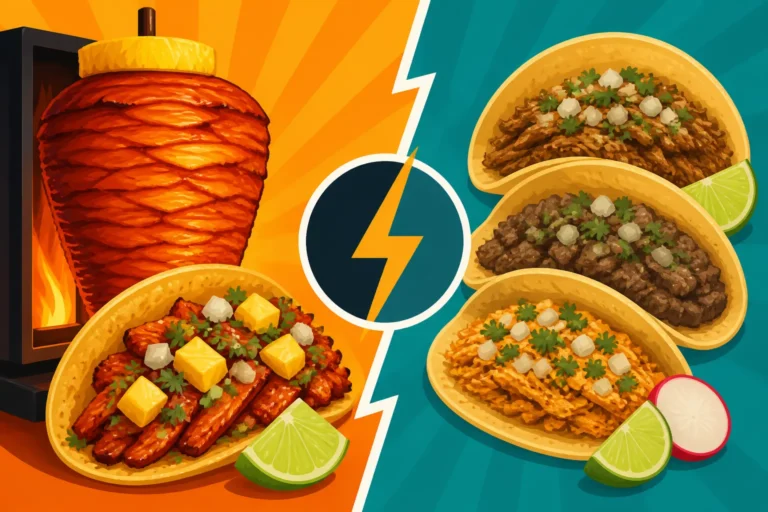
Eating is arguably the best part of any trip to Mexico, but it can also be the most linguistically challenging. Menus can be long and full of regional terms that even a seasoned Spanish student might not know. To start, you should learn How to Order Food in Spanish in Mexico Without Stress so you don't feel pressured when the waiter arrives. A simple quisiera (I would like) or para mí, los tacos de pastor (for me, the pastor tacos) is all you need to sound natural.
One word that confuses many is picante. In Mexico, people often ask if food is "spicy" without using the word picante. They ask ¿pica? (does it sting/bite?). If you have a low tolerance for heat, your mantra should be sin chile, por favor. However, be warned: even when a waiter tells you a salsa no pica, they are speaking from a Mexican perspective. To them, it might be mild; to you, it might be fire. If you are adventurous, check out this guide on Is Street Food Safe to Eat in Mexico? to balance your culinary curiosity with caution.
Finally, there is the matter of the bill. In Mexico, it is considered rude for a waiter to bring the check without you asking for it. They don't want to make you feel rushed. When you are ready to leave, you need to catch their eye and say la cuenta, por favor. Regarding payment, you should always ask ¿aceptan tarjetas? (do you accept cards?) before you sit down, as many smaller places are cash-only. Knowing Cash vs Card in Mexico: What Visitors Should Know is vital for budgeting your two weeks. Once the bill arrives, remember that a 10% to 15% tip is standard. For a deeper dive, read about Tipping in Mexico (Propina): When and How Much to avoid any awkwardness at the end of a great meal.
Practical Strategies for Fast Learning
You don't need to be fluent to have a successful trip, but you do need a strategy. Don't waste your time learning how to say "the apple is red" on a generic language app. Instead, focus on "functional Spanish." Spend your two weeks before the trip labeling your house with the Spanish words for things you will encounter: baño, agua, llave, calle. This passive immersion builds a mental map of the vocabulary you'll actually use.
I highly recommend downloading the Google Translate offline dictionary for Spanish. Even in remote areas where your signal drops, you can use the camera feature to translate menus or signs. It is a lifesaver, but don't rely on it as a crutch. Use it to learn, not just to bypass the conversation. We have a detailed breakdown on How to Use a Translation App Offline in Mexico that explains the best settings for travelers. Another great tip is to create a "cheat sheet" in the Notes app of your phone with your hotel address, your emergency contact, and phrases for Ordering Food and Drinks in Spanish in Mexico.
If you find yourself in a situation where you are completely stuck, look for the younger generation. English proficiency is much higher among Mexicans under the age of 30. However, always start the conversation in Spanish. Even a mangled ¿habla inglés? is better than just starting in English. It shows respect for the local culture and usually results in a much friendlier interaction. If you are staying at a place booked via Booking.com, the concierge is usually a great resource for practicing these phrases in a low-stakes environment.
Survival Spanish vs. Fluent Spanish Comparison
| Scenario | What a Beginner Needs (Survival) | What a Fluent Speaker Uses | Why It Matters |
|---|---|---|---|
| Arrival | Tengo una reservación. | Buenas tardes, me gustaría hacer el check-in a nombre de… | Gets you into your room quickly without confusion. |
| Transport | ¿A qué hora sale el bus? | Disculpe, ¿este autobús hace paradas intermedias antes de llegar? | Ensures you don't miss your connection on Busbud. |
| Dining | La cuenta, por favor. | Estuvo todo delicioso, ¿me podría traer la cuenta y decirme si aceptan Visa? | Essential for leaving the restaurant politely. |
| Directions | ¿Dónde está el baño? | Perdone la molestia, ¿sabe si hay un baño público cerca de la plaza? | A basic human necessity that requires zero delay. |
| Shopping | ¿Cuánto cuesta? | ¿Es el mejor precio que me puede dar por la artesanía? | Prevents you from paying the "tourist tax" at markets. |
| Emergencies | Necesito un médico. | Me siento muy mal y creo que necesito ir a urgencias de inmediato. | Crucial for safety and quick medical intervention. |
Mastering the Nuances of Everyday Life
Beyond the vocabulary, there are specific sounds and "fillers" that will make you sound less like a textbook and more like a person. The word ahorita is the most famous example. Literally, it means "right now," but in Mexico, it can mean anything from "in five seconds" to "never." If a waiter says ahorita le traigo su café, don't expect it immediately. Just nod and say gracias. Understanding these quirks is part of the fun of the trip.
Another useful word is bueno. When answering the phone, Mexicans don't say hola; they say bueno. You might also hear mande, which is a polite way of saying "What?" or "Excuse me?" if someone didn't hear you. Instead of saying ¿qué?, which can sound a bit sharp, try using mande. It’s a small change that makes you sound much more culturally attuned. When you book a tour on Viator, listen to how the locals interact with each other; you’ll pick up more in four hours of observation than in four weeks of solo study.
Don't forget the power of non-verbal communication. In Mexico, a "thumbs up" is universal, but a small "shh-shh" sound or a finger wag can mean "no" in a specific context. If you are at a market and someone is trying to sell you something you don't want, a polite no, gracias accompanied by a gentle hand gesture is usually enough. You don't need a complex sentence to decline an offer. Just stay smiling, stay polite, and use the core phrases you've practiced. Your two-week trip is a journey of discovery, and every "por favor" you say is a bridge built between you and the local community.
Disclaimer
The information provided in this guide is for educational and informational purposes only. While every effort has been made to ensure accuracy, language nuances and cultural norms can vary significantly by region within Mexico. Travelers should always exercise common sense and remain aware of their surroundings. This guide does not constitute legal or professional advice.