Ordering Food and Drinks in Spanish in Mexico
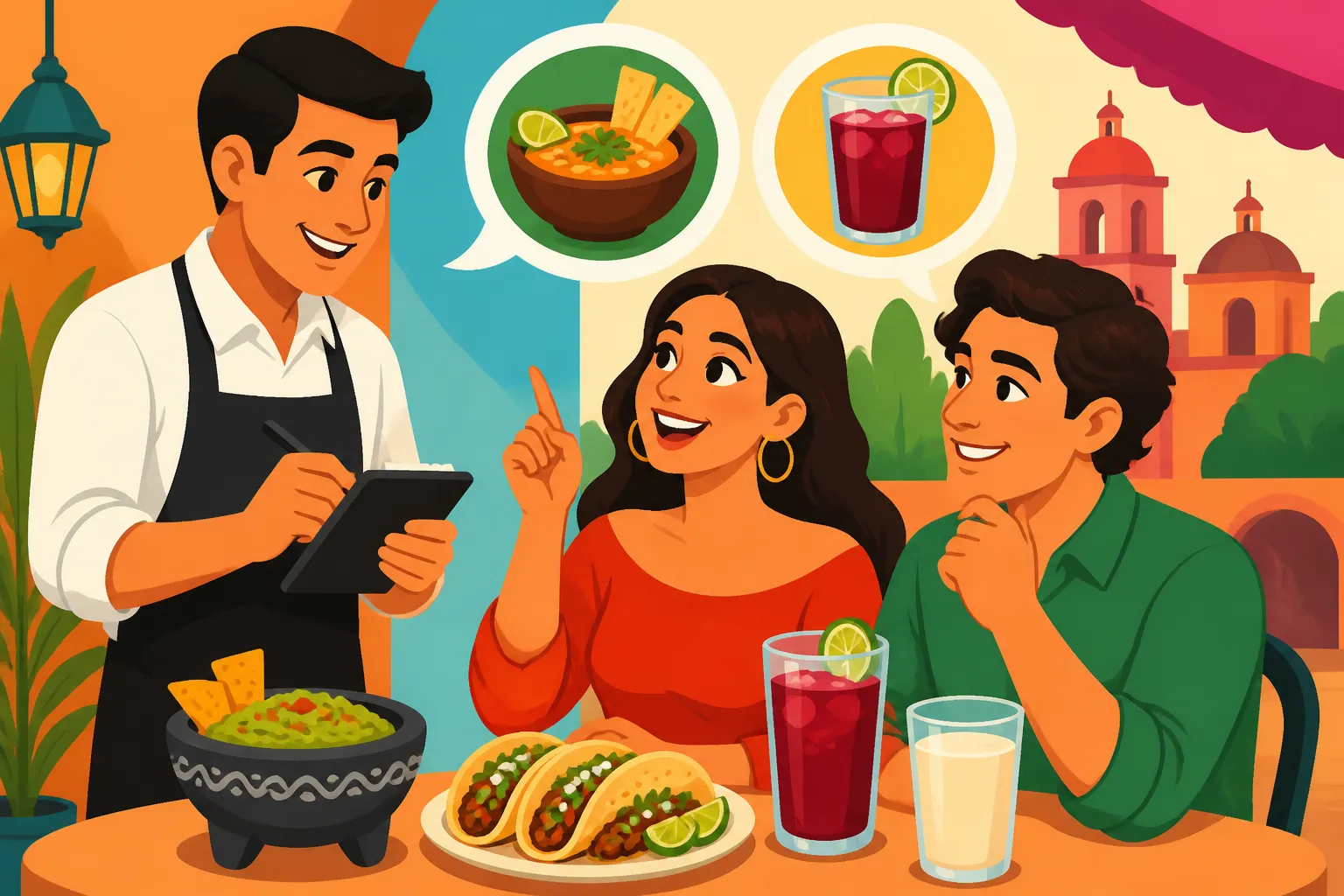
Walking into a bustling fonda or a lively taquería in Mexico, the air thick with the aroma of spices and sizzling meats, can be both exhilarating and a little intimidating when your Spanish isn't quite up to par. The thought of confidently ordering your favorite tacos or a refreshing agua fresca shouldn't be a source of anxiety, but for many expats and tourists, the language barrier can feel like an invisible wall between them and a truly authentic culinary experience. This guide is designed to empower you with the essential phrases and cultural insights you need to confidently navigate Mexican menus and order food and drinks like a seasoned local.
Disclosure: This post may contain affiliate links. We may earn a commission at no extra cost to you if you make a purchase through these links. Read full disclosure.
The First Bite: Essential Phrases for Restaurant & Cafe Basics
Stepping into a Mexican eatery, whether it's a cozy cafe or a lively restaurant, often kicks off with that initial interaction. It’s not just about the food; it’s about the whole experience, and being able to communicate from the moment you walk in the door sets the tone. Trust me, the sheer relief of not having to awkwardly point and gesture will make your meal all the more enjoyable.
Getting Seated and Asking for the Menu
Unlike some places where you wait to be seated at a host stand, in many casual Mexican restaurants, especially smaller, family-run spots or fondas, you might simply find an available table. However, it's always polite to make eye contact with a server if one is present, or to ask. Don't be shy; a little effort goes a long way here.
If you’re walking in and there’s a clear host or a line, you’ll want to initiate the conversation. A simple "¡Hola!" or "¡Buenas tardes!" (hello/good afternoon) is a great start. Then, you can ask for a table. For two people, you'd say:
- "Una mesa para dos, por favor." (A table for two, please.)
If you have a larger group, just swap out "dos" for the correct number: "una mesa para tres," "una mesa para cuatro," and so on. Sometimes, they might ask "¿Cuántos?" (How many?), to which you'd respond with your number. Don't be surprised if they lead you to a mesita, a smaller table, which is perfectly normal and cozy.
Once seated, the next crucial step is getting your hands on that menu. Often, it will be brought to you promptly, but if a few minutes pass and you're still menu-less, a polite request is perfectly acceptable. You can catch a server's eye and ask:
- "¿Me puede traer el menú, por favor?" (Can you bring me the menu, please?)
- "¿Tienen un menú en inglés?" (Do you have a menu in English?) – This is a valid question, especially in more touristy areas, but don't rely on it! Embracing the Spanish menu is part of the adventure.
Remember, a "por favor" (please) and a "gracias" (thank you) after every interaction makes a huge difference in how you're perceived. It shows respect and appreciation, which are highly valued in Mexican culture.
Understanding the Menu: Key Categories and Dishes
Now for the fun, and sometimes daunting, part: the menu itself. Mexican menus can look a bit overwhelming at first glance, but once you understand the basic categories and common dishes, you'll feel much more at ease. Most menus follow a logical structure, similar to what you might find back home, just in a different language.
You'll typically see sections like:
- Entradas: These are appetizers or starters. Think guacamole, sopa de tortilla, queso fundido, or elote (corn on the cob or in a cup).
- Platos Fuertes: The main courses. This is where you'll find the heartier dishes like enchiladas, mole, carne asada, chiles rellenos, and birria. Each region of Mexico boasts its own specialties, so don't be afraid to try something new!
- Acompañamientos: Side dishes. Expect things like arroz (rice), frijoles (beans – often refried, frijoles refritos), or nopales (cactus paddles).
- Bebidas: Drinks, which we'll dive into more later.
- Postres: Desserts, the sweet ending to your meal.
When you see dish names, try to break them down. For example, "tacos al pastor" means tacos with shepherd-style marinated pork, typically cooked on a vertical spit. "Enchiladas suizas" are enchiladas, often with chicken, covered in a creamy green sauce, not necessarily Swiss! The name sometimes refers to the perceived richness or "Swissness" of the cream sauce. If you're really stuck, a quick photo search on your phone can often give you a visual idea of what a dish looks like. This is where your smartphone can be your best friend – a quick Google search for "pictures of [dish name]" is an invaluable tool for deciphering unfamiliar items.
Remember that Mexican food is incredibly diverse, much more so than the Tex-Mex many of us are familiar with. Embrace the regional variations! What you find in Oaxaca, like its famous mole sauces, will be very different from the seafood-focused dishes of the Yucatán Peninsula, or the hearty stews of central Mexico. It's a culinary journey in itself. If you're interested in really delving into the local gastronomy, consider exploring the various facets of Mexican Food Culture: Eating and Drinking as a Visitor.
Making Your Order: Specifics and Customizations
Once you've perused the menu and (hopefully) settled on something delicious, it's time to actually place your order. This is where a little preparation goes a long way, not just in making yourself understood, but in getting exactly what you want, especially if you have specific preferences or dietary needs.
Ordering Your Meal: Clear and Confident
When the server approaches, a friendly nod or "Listo, gracias" (Ready, thank you) signals you're prepared. There are a few polite ways to order, all of which are perfectly acceptable:
- "Quisiera…" (I would like…) – This is a very polite and common way to order. "Quisiera los tacos al pastor, por favor."
- "Me gustaría…" (I would like…) – Similar to "quisiera," also very polite. "Me gustaría la sopa de tortilla."
- "Para mí…" (For me…) – Often used when ordering in a group. "Para mí, la carne asada."
- "Voy a pedir…" (I'm going to order…) – A more direct, but still polite, option. "Voy a pedir las enchiladas."
If you're ordering for multiple people or clarifying what you want, don't hesitate to point to the menu item while saying its name. This visual aid can be incredibly helpful. For example, if you want three tacos, you'd say: "Tres tacos al pastor, por favor." If they ask "¿De qué?" (Of what?), be ready to specify your choice of meat or filling. For a deeper dive into how to truly enjoy this staple, check out our guide on How to Eat Tacos Like a Local in Mexico.
A common scenario might involve ordering a set meal or an item with choices. For instance, if you order enchiladas, they might ask "¿Rojas o verdes?" (Red or green sauce?), or "¿De pollo o de queso?" (Chicken or cheese?). Just respond with your preference: "Rojas, por favor," or "De pollo."
Dietary Needs and Special Requests
This is often where expats run into the most frustration. Trying to explain a complex allergy or dietary restriction in a foreign language can feel like performing a high-wire act. Mexican food, while delicious, can be heavy on dairy, meat, and sometimes, cilantro! And the spice level? Oh boy, that's a whole other ballgame.
Here are some phrases that will become your lifelines:
- "Soy vegetariano/a." (I am vegetarian – male/female.)
- "Soy vegano/a." (I am vegan – male/female.)
- "Soy alérgico/a a…" (I am allergic to…)
- "…el gluten." (gluten)
- "…los cacahuates." (peanuts)
- "…los frutos secos." (nuts)
- "…la leche/los lácteos." (milk/dairy)
- "Sin cilantro, por favor." (Without cilantro, please.) – A common request for those who find it tastes like soap.
- "Sin cebolla, por favor." (Without onion, please.)
- "Sin crema, por favor." (Without cream, please.)
Now, about the spice. Mexican people often have a much higher tolerance for picante (spicy) than many foreigners. When you ask for something "no picante," it might still have a kick by your standards. It’s a good idea to clarify. You can try:
- "¿Es muy picante?" (Is it very spicy?)
- "Un poco picante, por favor." (A little spicy, please.)
- "No picante, por favor." (Not spicy, please.) – Be aware, "no picante" might still mean a mild warmth. If you truly want zero spice, sometimes "sin chile" (without chili) or "absolutamente no picante" is necessary, but even then, cross-contamination or inherent spice in ingredients can be a factor.
Don't be afraid to gently ask the server for guidance, especially regarding spice levels. They often understand that foreigners have different preferences. A great way to manage this is to ask for the salsas (sauces) on the side: "Las salsas aparte, por favor." This allows you to control how much heat you add to your dish. Patience and a good-natured smile are your best tools when navigating these conversations.
Drinks, Desserts, and the Bill
The meal isn't just about the main course; it's also about enjoying refreshing beverages, perhaps a sweet treat afterward, and, inevitably, settling up. Knowing these phrases will ensure a smooth experience from start to finish.
Quenching Your Thirst: Ordering Beverages
Mexico offers a fantastic array of beverages beyond just soda. Aguas frescas are a must-try – refreshing fruit-infused waters. Then there's beer, coffee, and even some local wines.
When ordering drinks, here are some phrases:
- "Una cerveza, por favor." (A beer, please.) – They'll likely ask "¿Cuál?" (Which one?), so be ready with the brand name like Corona, Pacifico, Modelo, or a local craft beer.
- "Un agua fresca de jamaica/horchata/tamarindo." (A hibiscus/horchata/tamarind flavored water.)
- "Un refresco de cola." (A Coke/soda.)
- "¿Tienen agua purificada?" (Do you have purified water?) – This is crucial. Always ask for agua purificada or agua embotellada (bottled water). Never assume tap water (agua de la llave) is safe to drink, especially if you're not used to it.
- "Sin hielo, por favor." (Without ice, please.) – Many expats opt for this to avoid any potential stomach issues, as ice can sometimes be made from unpurified water, though most reputable restaurants use purified ice.
- "Un café con leche." (A coffee with milk.)
- "Un espresso." (An espresso.)
Mexico’s coffee culture is vibrant, particularly in regions like Oaxaca and Chiapas, which are renowned for their beans. You can explore a variety of traditional and modern coffee preparations. And when it comes to non-alcoholic options, the sheer variety of Aguas Frescas, Coffee, and Non-Alcoholic Drinks in Mexico is incredible. Don't be afraid to try new flavors!
Sweet Endings and Settling Up
After a satisfying meal, you might be tempted by a postre (dessert). Mexican desserts often feature rich flavors, caramel, and fruits.
To ask about desserts:
- "¿Qué postres tienen?" (What desserts do you have?)
- "Me gustaría el flan." (I would like the flan.)
- "Un churro, por favor." (A churro, please.)
Finally, the moment arrives to pay the bill. In Mexico, it's generally considered impolite to bring the bill before it's requested. You'll need to catch your server's eye.
- "La cuenta, por favor." (The bill, please.)
- "¿Puedo pagar con tarjeta?" (Can I pay with card?) – Always good to ask this before ordering if you’re unsure, especially in smaller establishments. Some places are cash-only.
- "¿Puedo pagar en efectivo?" (Can I pay with cash?)
- "¿Aceptan American Express/Visa/MasterCard?" (Do you accept American Express/Visa/MasterCard?)
When it comes to tipping (propina), the standard in Mexico is generally 10-15% for good service, sometimes up to 20% in high-end restaurants or for exceptional service. Leaving a tip is expected. You can often say "Está bien así" (It's fine like this) if you're paying cash and want them to keep the change as a tip, or simply hand them the money and say "Gracias." For more detailed guidance, our article on Tipping in Mexico (Propina): When and How Much provides comprehensive insights.
Navigating Different Dining Experiences
Mexico's culinary landscape isn't just about sit-down restaurants. From bustling street carts to charming cafes, each dining environment comes with its own set of rules and nuances for ordering. Adapting your approach will ensure you get the most out of every delicious opportunity.
Street Food Stalls (Puestos) and Markets (Mercados)
This is where Mexico truly shines for many food lovers. The vibrant street food scene and the incredible bounty of local markets are an absolute must-experience. Ordering at these spots is often less formal, faster-paced, and usually requires simpler Spanish.
At a puesto (stall) or carro (cart), you might just point to what you want. The cook or vendor will often be quick to ask you questions.
- "¿De qué?" (Of what?) – Asking what filling or type of taco you want.
- "¿Con todo?" (With everything?) – Meaning all the standard toppings like onion, cilantro, and salsa. You can say "Sí, con todo" or specify "Sin cebolla," "Sin cilantro."
- "¿Picante?" (Spicy?) – They'll ask if you want salsa picante. "Sí, por favor" or "No, gracias."
- "Cuánto cuesta?" (How much does it cost?) – This is your go-to for prices.
- "Para llevar." (To go.)
- "Aquí." (For here/eat here.)
At a mercado (market), the experience can be even more immersive. You might wander through aisles of fresh produce, spices, and prepared foods. Many markets have small food counters or kitchens (fondas) where you can sit and eat. It’s a sensory overload in the best possible way. The rules for ordering are similar to street stalls – simple, direct, and often with lots of pointing and smiles. You can discover the rich tapestry of these vibrant places through our guide on Mexican Markets and Food Halls for Visitors. When exploring a new city, consider browsing local food tours on platforms like Viator, which often include visits to markets or street food areas, offering a guided way to navigate and sample.
Here's a quick comparison of ordering styles:
| Setting | Typical Interaction | Key Phrases | Payment Expectation |
|---|---|---|---|
| Sit-down Restaurant | Polite, structured, server interaction. | "Quisiera…", "¿La cuenta, por favor?", "¿Aceptan tarjeta?" | Card & Cash accepted |
| Street Food Stall | Fast, direct, often pointing. | "¿De qué?", "¿Con todo?", "¿Cuánto cuesta?" | Cash preferred |
| Market Fonda | Friendly, direct, often family-run. | Similar to street food. | Cash preferred |
| Cafe/Bakery | Similar to sit-down, but often self-service counter. | "Para llevar," "Aquí," "Un café con leche." | Card & Cash accepted |
Coffee Shops (Cafeterías) and Bakeries (Panaderías)
Mexican coffee shops range from trendy modern cafes to traditional, old-school spots. Bakeries are an integral part of daily life, offering a delightful array of pan dulce (sweet bread).
Ordering coffee is fairly straightforward:
- "Un café americano." (A regular black coffee.)
- "Un capuchino." (A cappuccino.)
- "Un latte." (A latte.)
- "¿Con azúcar o sin azúcar?" (With sugar or without sugar?) – They might ask.
- "¿Para aquí o para llevar?" (For here or to go?) – A very common question.
In panaderías, the process is often self-service. You grab a tray and tongs, pick out your desired pan dulce from the overflowing shelves, and then take your tray to the counter to pay. The cashier will quickly tally up your choices. You can always ask for recommendations: "¿Cuál es su pan favorito?" (Which is your favorite bread?). Many hotels found on Booking.com often offer complimentary breakfast, which can be a great way to sample local baked goods without the stress of ordering.
Overcoming Language Barriers and Common Frustrations
Even with a pocketful of phrases, there will be moments when you simply don't understand, or when your perfectly enunciated Spanish is met with a blank stare. It happens to everyone! The key is to manage these situations with grace and a bit of humor.
Essential Communication Strategies
The biggest frustration often comes from feeling misunderstood or not understanding a response. Mexican people are generally very patient and appreciative of foreigners trying to speak Spanish, so don't let a few hiccups deter you.
Here are some strategies:
- Speak Slowly and Clearly: Don't rush your words. Enunciate each syllable.
- Use Gestures and Pointing: When ordering, point to the item on the menu. If describing something, use your hands!
- Keep it Simple: Avoid complex sentences. Stick to basic nouns and verbs.
- The Power of a Question: If you don't understand, don't just nod.
- "Más despacio, por favor." (Slower, please.) – This is a lifesaver.
- "No entiendo." (I don't understand.)
- "¿Puede repetir, por favor?" (Can you repeat, please?)
- "¿Qué significa…?" (What does… mean?) – Pointing to a word on the menu.
- Translation Apps: Google Translate or similar apps are incredibly useful. You can type in what you want to say, or even use the voice translation feature. Just be mindful that they aren't always perfect, but they can bridge significant gaps.
- Write it Down: If it’s a complicated order or allergy, sometimes writing it down can help, or showing a pre-written card in Spanish.
Remember, every time you try, you're not just getting food; you're learning and growing. These moments are part of the expat experience, and they help you build confidence. If you've ever had to navigate complex medical conversations, you know how crucial these communication tactics are. In fact, many of the strategies for Overcoming Language Barriers at the Doctor: Tips for Expats can be applied directly to daily interactions like ordering food.
Tipping Etiquette and Social Cues
Beyond the verbal communication, understanding subtle social cues and local etiquette will make your dining experience even smoother. Mexicans are generally warm and hospitable, and being aware of these unwritten rules shows respect for their culture.
- "Buen Provecho!": If someone passes your table and says "¡Buen provecho!", it means "enjoy your meal!" It's polite to respond with "Gracias!"
- Eye Contact and Politeness: Maintain polite eye contact with your server. Avoid waving your hands frantically to get attention. A subtle nod or a raised hand usually suffices.
- Don't Rush: Dining in Mexico is often a relaxed affair. Don't expect things to move at a super-fast pace, especially in smaller towns. Take your time, enjoy your company, and savor the meal.
- Leaving the Table: It's common for tables to be wiped down quickly after you leave, ready for the next diners. Don't linger excessively if the place is busy, though you also won't be rushed out.
- Splitting the Bill: While some places accommodate splitting the bill, in very casual spots, it might be easier to pay together and sort out the individual amounts among yourselves.
Understanding these unspoken rules, along with the spoken language, is part of becoming a truly integrated expat. It's similar to learning general Mexican Etiquette and Customs: Do's and Don'ts for New Expats that apply across various social situations. These small gestures of cultural understanding are always appreciated.
Practical Tools and Resources for Expats
Living in Mexico means constantly learning and adapting, and getting comfortable with ordering food is a big part of that. Thankfully, there are many tools and resources available to help you along the way.
Recommended Apps and Online Tools
In this digital age, technology is your best friend when navigating a new language and culture.
- Google Translate: I've mentioned it already, but it bears repeating. Download the offline Spanish dictionary, so you can use it even without internet access. Its camera feature, which translates text in real-time, is fantastic for menus!
- Picture Dictionaries: Apps or even physical books that show pictures of food items with their Spanish names can be incredibly helpful for visual learners and when words fail you.
- Duolingo, Babbel, Memrise: These language-learning apps are excellent for building your foundational Spanish vocabulary and grammar. Consistent practice, even for 10-15 minutes a day, will significantly boost your confidence for ordering food and much more.
- SpanishDict: This is a comprehensive dictionary and translator that provides conjugations and example sentences, which can be useful for understanding how words are used in context.
Don't be afraid to pull out your phone at the table. While it's polite to put it away when conversing, using a translation app to understand a menu item or clarify an ingredient is perfectly acceptable and often appreciated by servers who want to ensure you have a good experience.
Language Learning Tips for Dining Out
Learning a new language is a journey, not a destination. And the best way to learn is to immerse yourself and practice, practice, practice! Dining out offers a perfect, low-pressure environment to do just that.
- Start Small: Don't try to memorize the entire dictionary before your first meal out. Focus on a few key phrases like "Hello," "Please," "Thank you," "The bill," and "I would like…"
- Listen Actively: Pay attention to how locals order, how servers respond, and the common phrases used. You'll pick up a lot just by observing.
- Be Brave, Make Mistakes: You will make mistakes. You will mispronounce words. Your order might occasionally be wrong. It's all part of the process! Most Mexicans will find your effort endearing, not annoying. A smile and a "¡Lo siento, mi español no es muy bueno!" (I'm sorry, my Spanish isn't very good!) goes a long way.
- Practice with Your Server: They're a captive audience! If you have a friendly server, try to use your Spanish. Ask "¿Qué me recomienda?" (What do you recommend?). Even if you just manage a few words, it's progress.
- Use Visuals: Point to the menu. Show a picture of what you mean. The more ways you can communicate, the better your chances of being understood.
Learning Spanish for daily life, including ordering food, is an ongoing adventure. It's a key part of truly enjoying your expat experience. If you're serious about taking your language skills to the next level, our guide on Learning Spanish in Mexico: Top Tips and Resources for Expats offers excellent advice to help you become more fluent, not just in restaurants, but in all aspects of your life here. And for those planning adventures, remember that sites like Busbud can help you explore different regions of Mexico, each with its unique culinary traditions, giving you more opportunities to practice your newfound ordering skills!
Ultimately, ordering food and drinks in Spanish in Mexico should be an exciting part of your journey. With these phrases, a little patience, and a willingness to learn, you'll soon be confidently navigating menus and savoring every delicious bite. ¡Buen provecho!
Disclaimer
The information provided in this guide is for general informational purposes only and does not constitute professional advice. While we strive to provide accurate and up-to-date information, circumstances and regulations in Mexico can change. Always verify specific details with local authorities or experts as needed. We are not responsible for any outcomes based on the use of this information.