How to Eat Tacos Like a Local in Mexico
Oh, the humble taco! When you first arrive in Mexico, you might think you know tacos from back home, but let me tell you, that assumption is about to be gloriously shattered. The sheer variety and cultural significance of tacos here can be utterly overwhelming, making you feel like a bewildered tourist trying to navigate a culinary labyrinth. Don't worry, my friend, you're not alone. This guide is here to cut through the confusion and teach you how to embrace the true Mexican taco experience, helping you order, eat, and savor tacos like a seasoned local.
Disclosure: This post may contain affiliate links. We may earn a commission at no extra cost to you if you make a purchase through these links. Read full disclosure.
Understanding the Taco Universe
Before we even get to the eating, let's talk about what a taco truly is in Mexico. Forget any preconceived notions you might have from chain restaurants; this is the real deal, a culinary art form deeply ingrained in daily life. Tacos aren't just a meal; they're a way of life, a social ritual, and a source of immense national pride.
More Than Just a Tortilla
At its heart, a taco is deceptively simple: a warm tortilla cradling a savory filling, usually topped with salsa and fresh garnishes. But the magic, my friends, is in the details, the subtle nuances that elevate this simple concept into something truly extraordinary.
The tortilla itself is paramount. In Mexico, you’ll primarily encounter soft corn tortillas, though flour tortillas make an appearance, especially in the north and for specific types like gringas or burritos (which are a different beast altogether). A good corn tortilla should be soft, pliable, and have that distinct, earthy aroma of freshly ground masa. It's often warmed on a comal (a flat griddle) right before serving, giving it that perfect texture. You'll frequently find street vendors using two tortillas per taco, not because one isn't enough, but for structural integrity and to better absorb the delicious juices from the filling. Trust me, you'll thank them for it when you're halfway through a particularly juicy carnitas taco.
Then there's the filling, the star of the show. This is where the culinary landscape explodes with creativity. From succulent slow-cooked meats to grilled seafood, stewed vegetables, and even fried insects (for the adventurous!), the options are endless. Each filling tells a story, often tied to regional traditions and cooking methods passed down through generations.
Finally, the salsa and garnishes complete the masterpiece. This isn't just an afterthought; it's an integral component, offering contrast, heat, and freshness. We'll dive deep into salsas later, but know that a taco without its proper adornments is like a fiesta without music – it's just not right.
The Sheer Variety of Tacos
To say there are many types of tacos in Mexico is like saying there’s a little bit of heat – it's a massive understatement! Each region, each city, even each taquería can have its own specialties. This can be overwhelming, I know. You might walk up to a busy stand, see a dozen different meats simmering away, and freeze, not knowing where to begin. That's perfectly normal.
Think of it this way: the taco is a canvas, and the fillings are the vibrant colors painted upon it. You have your famous tacos al pastor, with their spit-roasted pork shaved right onto your tortilla, and then you have tacos de canasta, steamed for tenderness and sold from bicycles. You'll find hearty tacos de barbacoa on Sundays, traditionally cooked in an underground pit, and succulent tacos de carnitas, pork slowly cooked in its own fat until impossibly tender. This vast array is what makes taco exploration so exciting, but also a bit daunting for the uninitiated. Don't feel pressured to try everything at once; it's a journey, not a sprint. This journey is one of the most rewarding aspects of immersing yourself in Mexican culture, right alongside exploring the local markets or even trying to get your residency paperwork sorted at the INM.
Finding Your Perfect Taquería
Okay, so you’re ready to dive in. But how do you spot the good taco spots from the ones that are just… there? This is crucial for an authentic and, frankly, safe experience. You don't want your first taste of Mexico's national dish to be a bland, overpriced tourist trap, do you?
Look for the Locals
This is probably the single most important piece of advice I can give you: follow the crowd. If there’s a line, especially one composed mostly of Mexicans, you’ve likely found a gem. Locals know best. They know which spots consistently deliver fresh, delicious food, and they’re not afraid to wait for it.
Here’s what to look for beyond just a crowd:
- Specific Hours: Many street taquerías specialize. Some are breakfast spots, others are lunch, and many come alive in the evening. If a place is only open for a few hours, it often means they’re mastering a particular type of taco or dish, and that limited window ensures freshness and high turnover.
- The Setup: For al pastor, you want to see the vertical spit (the trompo) slowly roasting the marinated pork, with a pineapple on top. For carnitas, a huge copper pot (a cazo) bubbling with pork is a good sign. If you see these dedicated setups, it’s a sign of a place that takes its craft seriously.
- Cleanliness (Mexican Style): Now, "cleanliness" on the street might look different than what you're used to. You might not see sparkling white tiles. However, look for common sense indicators: Is the cooking surface actively being cleaned? Are the salsas covered? Is the staff handling food with appropriate tools (tongs, gloves)? High turnover of food is often the best indicator of freshness and safety, as ingredients aren't sitting around for long.
Street Stalls vs. Established Restaurants
Both have their place in the Mexican taco landscape, and each offers a distinct experience.
Street Stalls (Puestos de Tacos): These are the heart and soul of Mexican taco culture. You'll find them on almost every corner, especially in the evenings.
- Pros: Authenticity, incredible flavor, often the freshest ingredients (due to high volume), super affordable, and a vibrant, communal atmosphere. Eating street tacos is an immersion into local life.
- Cons: Limited seating (often standing room only, or a few plastic stools), sometimes a language barrier, and for some, perceived hygiene concerns (though usually unwarranted if you pick a busy spot).
- Experience: Fast-paced, bustling, noisy, and wonderfully chaotic. You often eat right next to the comal, watching your tacos being made. This is where you'll find the most regional and unique variations. Many of my best taco memories are from tiny street stands.
Established Taquerías (Taquerías Fijas): These are brick-and-mortar restaurants that specialize in tacos.
- Pros: More comfortable seating, often a wider menu (beyond just tacos), sometimes air conditioning, and a more predictable experience. They can be a great entry point if you're nervous about street food.
- Cons: Can be slightly more expensive than street stalls, and sometimes the authenticity or flavor can be a touch less intense than a truly excellent street vendor. However, many established taquerías are fantastic and have been around for decades.
- Experience: More relaxed, often family-friendly. Great for when you want to sit down and enjoy a longer meal with friends. Places like El Califa or Tacos Don Manolito in Mexico City are famous examples that started small and grew into full-fledged, beloved institutions.
Hygiene Habits: What to Watch For
This is a common concern for many expats, and it’s valid to be cautious. But let me assure you, most reputable street food vendors are incredibly careful because their livelihood depends on it. A bad reputation spreads like wildfire.
Here’s what I personally look for, beyond the crowd:
- Running Water: Does the vendor have access to running water or at least large jugs of water for washing hands and equipment?
- Clean Utensils: Are they using separate utensils for raw and cooked meat? Are they regularly cleaning their cutting boards?
- Freshness of Ingredients: Are the vegetables bright and crisp? Does the meat look recently cooked, not sitting out for hours? High turnover is your best friend here.
- Bottled Water/Drinks: Most vendors will offer bottled drinks, ensuring you're not consuming tap water. If you see them serving aguas frescas, check if they are made with purified water. When in doubt, stick to bottled options.
- Common Sense: If a place looks truly filthy, the food has flies swarming it, or the vendor appears ill, trust your gut and move on. There are plenty of other amazing tacos to be found!
Mastering the Art of Ordering
Walking up to a taquería, especially a bustling one, can feel like approaching a performance where you don't quite know your lines. But with a few pointers, you'll be ordering like a pro in no time.
Decoding the Menu (or Lack Thereof)
Many of the best street taquerías don't have a written menu, or if they do, it's a simple board listing the guisados (stews) or carnes (meats) available. This can be intimidating.
- Observe and Point: My go-to strategy when unsure is to simply observe what others are ordering. See a taco that looks incredible? Point to it and say, "¿Me da uno de esos, por favor?" (May I have one of those, please?).
- Know the Basics: Familiarize yourself with the most common taco types (we'll cover these shortly). If you know you want al pastor, just say, "Unos tacos al pastor, por favor." If you want two, say "Dos tacos al pastor."
- The Size Question: Most tacos are small, designed to be eaten in a few bites. It's common to order 2-3 to start and then order more if you're still hungry. Don't be shy about ordering one more at a time – it ensures they're freshly prepared.
The Importance of "Con Todo" or "Sin Nada"
When you order, the taquero (taco maker) might ask you, "¿Con todo?" (With everything?) or something similar. This is your cue regarding garnishes.
- "Con Todo": This generally means your taco will come with the standard toppings for that particular filling. This almost always includes a sprinkle of chopped onion (cebolla picada) and cilantro (cilantro picado). For some tacos, like al pastor, it might also include a slice of pineapple. For others, it might be a specific pickled onion or a dollop of guacamole. If you're open to the authentic experience, always say "¡Sí, con todo!"
- "Sin Nada" / "Sin Cebolla" / "Sin Cilantro": If you have a strong aversion to certain ingredients, this is when you speak up.
- "Sin nada, por favor" (Without anything, please) – Your taco will come plain, allowing you to add only salsa.
- "Sin cebolla, por favor" (Without onion, please)
- "Sin cilantro, por favor" (Without cilantro, please)
- A Word on Limón: Limes (limones) are almost always offered separately, either on the counter or in a squeeze bottle. You almost always want to add a good squeeze of lime juice; it brightens the flavors immensely.
Language Barrier Love
Even if your Spanish is limited to "hola" and "gracias," you can still successfully order tacos. People generally appreciate the effort.
- Key Phrases:
- "Hola, buenos días/tardes/noches." (Hello, good morning/afternoon/evening.)
- "Me da un/dos/tres tacos de [filling], por favor." (May I have one/two/three tacos of [filling], please.)
- "¿Cuánto es?" (How much is it?) – Often asked at the end when you're ready to pay.
- "Gracias." (Thank you.)
- "Delicioso." (Delicious.)
- Practice: Don't be afraid to try! Most taqueros are used to tourists and will be patient. A smile goes a long way. You might even find some who speak a bit of English, especially in more touristy areas. If you're looking to brush up on your conversational skills before your trip, there are fantastic resources for Learning Spanish in Mexico: Top Tips and Resources for Expats. Knowing a few key phrases can significantly enhance your experience, whether you're ordering tacos or asking for directions to the nearest ADO bus station.
The Essential Taco Types You Must Try
Now for the fun part: delving into the specific types of tacos that will become your new obsessions. Each has its own personality, history, and optimal preparation.
Tacos al Pastor: The King of the Street
If there's one taco that embodies the vibrant street food scene of Central Mexico, it's the taco al pastor. It's a culinary fusion, a delicious legacy of Lebanese immigrants who brought their spit-roasting techniques to Mexico, where pork was substituted for lamb and a marinade of chiles, achiote, and spices was added.
- Origin and Preparation: The meat, typically thinly sliced pork marinated in that signature red blend, is stacked on a vertical spit called a trompo, similar to a Middle Eastern shawarma. As it slowly rotates and cooks, the taquero shaves off crispy, flavorful slivers of pork directly onto your tortilla. A slice of pineapple, often roasted on top of the trompo, is added for a sweet and tangy counterpoint.
- How to Identify a Good One: Look for a busy trompo that's actively rotating and being shaved. The pork should have crispy, caramelized edges and be juicy inside. The pineapple should be warm and slightly caramelized. A good al pastor taco is a symphony of savory, sweet, and spicy. These are particularly popular in Mexico City, where the taco scene is legendary, offering an incredible array of choices alongside other amazing Street Food in Mexico: Tacos, Tamales, and More.
Suadero, Carnitas, and Barbacoa: Meat Lover's Delight
These are the rich, slow-cooked champions of the taco world, each offering a distinct texture and depth of flavor.
- Tacos de Suadero: A Mexico City specialty. Suadero is a cut of beef, often from the brisket area, that's slowly simmered in its own fat (or sometimes in a mixture of oil and lard) until incredibly tender. The meat is then finely chopped and often crisped up on the comal before serving. It's rich, meaty, and wonderfully unctuous.
- Tacos de Carnitas: Hailing from Michoacán, carnitas are perhaps the most famous slow-cooked pork tacos. Pork shoulder and other cuts are slowly braised in huge copper pots (cazos) of lard with a variety of seasonings (often orange peel, milk, herbs) until fork-tender and deeply flavored. The result is a medley of textures: crispy edges, tender interior, and succulent fat. You'll often be asked if you want maciza (lean meat), surtida (a mix including some fat and skin), or even more adventurous cuts like buche (stomach) or nana (uterus) – be brave and try surtida for the full experience! If you find yourself in the heartland of carnitas, consider using services like Busbud to explore the regional culinary delights; it's a great way to travel between cities to savor these dishes firsthand.
- Tacos de Barbacoa: Traditionally a Sunday morning ritual, barbacoa refers to meat (usually lamb, goat, or beef) slowly cooked in an underground pit lined with agave leaves, resulting in incredibly moist, smoky, and tender meat that simply falls apart. The cooking process can take many hours, often overnight. The broth collected during cooking, consomé, is usually served alongside, perfect for dipping your tacos or sipping on its own. While you might find barbacoa tacos in various places, the central highlands, particularly Hidalgo, are renowned for their authentic preparation.
Carne Asada, Chorizo, and Birria: Everyday Favorites
These tacos are widely popular and represent different facets of Mexican cuisine, from grilled simplicity to spicy stews.
- Tacos de Carne Asada: A staple, especially in northern Mexico, where grilling is king. Carne asada literally means "grilled meat," typically thinly sliced beef (often sirloin or flank steak) that's seasoned and grilled over charcoal or a hot griddle. It's straightforward, smoky, and delicious, often served with grilled onions, guacamole, and a spicy salsa. Simple, yet profoundly satisfying.
- Tacos de Chorizo: Mexican chorizo is vastly different from its Spanish counterpart. It's a fresh, uncured sausage, usually made from ground pork and heavily seasoned with red chiles and spices, giving it a distinctive reddish color and fiery flavor. It's typically crumbled and fried until crispy, then served in tortillas. It's rich, savory, and often quite greasy (in a good way!).
- Tacos de Birria: Originating from Jalisco, birria is a flavorful stew traditionally made with goat meat (though beef birria is now very common). The meat is slow-cooked until tender in a rich, deeply spiced broth made with dried chiles, tomatoes, and various aromatics. The meat is then shredded and served in tortillas, often dipped in the consomé (the cooking broth) before being griddled to create a crispy, cheesy quesabirria taco. These have exploded in popularity globally in recent years, but tasting them in Guadalajara, their birthplace, is an experience you won't forget. While in Guadalajara, be sure to explore the vibrant culture beyond just food; check out our Guadalajara City Guide: Culture, Food, and Mariachi.
Beyond Meat: Rajas, Hongos, and More
Don't think tacos are just for meat-eaters! Mexican cuisine offers a fantastic array of vegetarian and even vegan fillings that are equally delicious and authentic.
- Tacos de Rajas con Crema: Strips of roasted poblano peppers (rajas) cooked with cream (crema) and often corn kernels. It’s a mild, smoky, and creamy filling that’s incredibly comforting.
- Tacos de Hongos: Mushrooms (hongos) sautéed with garlic, onion, and epazote (a pungent Mexican herb) make for a savory and satisfying vegetarian option.
- Tacos de Papa: Simple, yet delicious, these are mashed potatoes, often spiced, sometimes with cheese, and usually fried in the tortilla until crispy. A fantastic budget-friendly choice.
- Tacos de Flor de Calabaza: During squash blossom season, these delicate, flavorful blossoms are lightly sautéed, often with cheese, for a truly seasonal treat.
- Tacos de Pescado/Camarón: Fish (pescado) and shrimp (camarón) tacos are staples in coastal regions, especially Baja California. Typically battered and fried, served with a creamy sauce, shredded cabbage, and a squeeze of lime. Absolutely essential if you're near the ocean.
Here’s a quick overview of some popular taco types:
| Taco Type | Main Ingredient | Key Characteristics | Common Region |
|---|---|---|---|
| Al Pastor | Marinated Pork, Pineapple | Spit-roasted, savory, sweet, tangy, often spicy. | Central Mexico (Mexico City) |
| Carnitas | Slow-cooked Pork | Braised in lard until tender, crispy edges, rich flavor. | Michoacán, Central Mexico |
| Barbacoa | Slow-cooked Lamb/Goat/Beef | Pit-cooked, smoky, incredibly tender, served with consomé. | Central Highlands (Hidalgo, CDMX) |
| Suadero | Beef (brisket-like cut) | Slowly confited in fat, tender, rich, often crisped on comal. | Mexico City |
| Carne Asada | Grilled Beef | Grilled, smoky, simple, often with guacamole and onion. | Northern Mexico |
| Chorizo | Mexican Chorizo Sausage | Spicy, crumbled, greasy (in a good way!), intensely flavored. | Widely Available |
| Birria | Braised Goat/Beef | Rich, spicy stewed meat, often served with consomé for dipping. | Jalisco |
| Pescado/Camarón | Fried Fish/Shrimp | Battered and fried, with cabbage, crema, and lime. | Coastal Regions (Baja, Pacific) |
| Rajas con Crema | Poblano Peppers, Cream, Corn | Mild, smoky, creamy, vegetarian. | Central Mexico |
Salsa and Condiments: The Soul of the Taco
Think of salsa and condiments as the personality of your taco. Without them, it’s just a delicious foundation; with them, it’s a vibrant, unforgettable character. Approach the salsa bar with respect, and a little caution!
Understanding the Salsa Spectrum
At most taquerías, you’ll find an array of salsas, ranging from mild and tangy to eye-wateringly spicy. It’s a common mistake for newcomers to spoon on a generous dollop of every salsa, only to discover too late that they’ve just ignited a five-alarm fire in their mouth.
- Color is Not Always an Indicator: Don't assume green is mild and red is hot. Some of the most innocent-looking green salsas (often made with chile serrano or chile de árbol) can pack a serious punch, and some deep red salsas (like a mild chile guajillo or pasilla based one) can be quite mellow.
- Taste Test (Carefully!): If you're unsure, do a tiny taste test on the corner of your tortilla or a chip if available. A tiny drop on your finger is also acceptable. This helps you gauge the heat level.
- Common Salsa Types:
- Salsa Roja: A general term for red salsa, often tomato-based with various red chiles. Can range from mild to very spicy.
- Salsa Verde: Green salsa, typically made with tomatillos (Mexican husk tomatoes) and green chiles like serrano or jalapeño. Again, heat varies wildly.
- Salsa Habanero: Often bright orange or red, this one is almost guaranteed to be very hot. Use with extreme caution.
- Salsa Morita/Chipotle: Made with smoked jalapeños, these salsas have a deep, smoky flavor and a moderate to hot spice level.
- Pico de Gallo: A fresh, chunky salsa made with diced tomatoes, onion, cilantro, and usually jalapeño. It's generally on the milder side and offers a refreshing crunch.
- Guacamole: While not technically a salsa, many places will offer a scoop of fresh guacamole or a thinner, more liquid avocado salsa. This is almost always a safe, delicious bet and a great way to cool down a spicy bite.
Essential Toppings: Limón, Cebolla, Cilantro
These fresh additions are non-negotiable for an authentic taco experience. They provide balance and cut through the richness of the fillings.
- Limón (Lime): Always squeeze fresh lime juice over your tacos. It’s an absolute game-changer, brightening the flavors and adding a crucial acidic zing. You'll find half-limes or lime juice in squeeze bottles on every table or counter.
- Cebolla Picada (Diced Onion): Finely diced white onion provides a sharp, pungent bite that contrasts beautifully with savory meats.
- Cilantro Picado (Chopped Cilantro): The fresh, herbaceous notes of cilantro are essential. If you're one of those people who finds cilantro tastes like soap, then by all means, ask for "sin cilantro." Otherwise, embrace it!
Don't Forget the Radishes and Cucumbers
Beyond the main trio, you'll often find other delightful additions that enhance your taco.
- Rábanos (Radishes): Sliced radishes offer a peppery crunch and a refreshing counterpoint, particularly good with rich meats like carnitas or barbacoa.
- Pepino (Cucumber): Sliced cucumbers provide a cooling, hydrating element, especially helpful when you've hit a particularly spicy salsa.
- Chiles Toreados: These are whole serrano or jalapeño peppers that have been blistered on the comal. They are often quite hot but have a lovely smoky flavor. Be careful if you bite into one!
- Pickled Onions: Sometimes you'll find thin slices of red onion pickled in lime juice, often with a hint of habanero. These add a fantastic tangy kick.
Taco Etiquette and Experience
Eating tacos like a local isn't just about what you order; it's about how you eat and interact within the taquería environment. It’s part of the charming chaos of Mexican life, like navigating Mexico City's bustling streets or enjoying a casual evening stroll through a Pueblos Mágicos: Mexico's Magic Towns Explained.
The Proper Way to Hold a Taco
This might sound silly, but there's an art to it. Mexican street tacos are designed to be eaten quickly, often standing up, and with minimal fuss.
- The Two-Tortilla Method: As mentioned, many street tacos come with two tortillas. This is not for extra carbs; it's for structural integrity. The inner tortilla holds the filling, and the outer one provides support, catching any delicious drips. Don't try to separate them unless you really want a mess.
- The Grip: Hold your taco firmly with your thumb on top and your other fingers underneath. Angle it slightly to catch any falling bits.
- The Lean: If you're standing, a slight lean forward (the "taco stance") helps prevent drips from landing on your clothes. Embrace it; everyone does it.
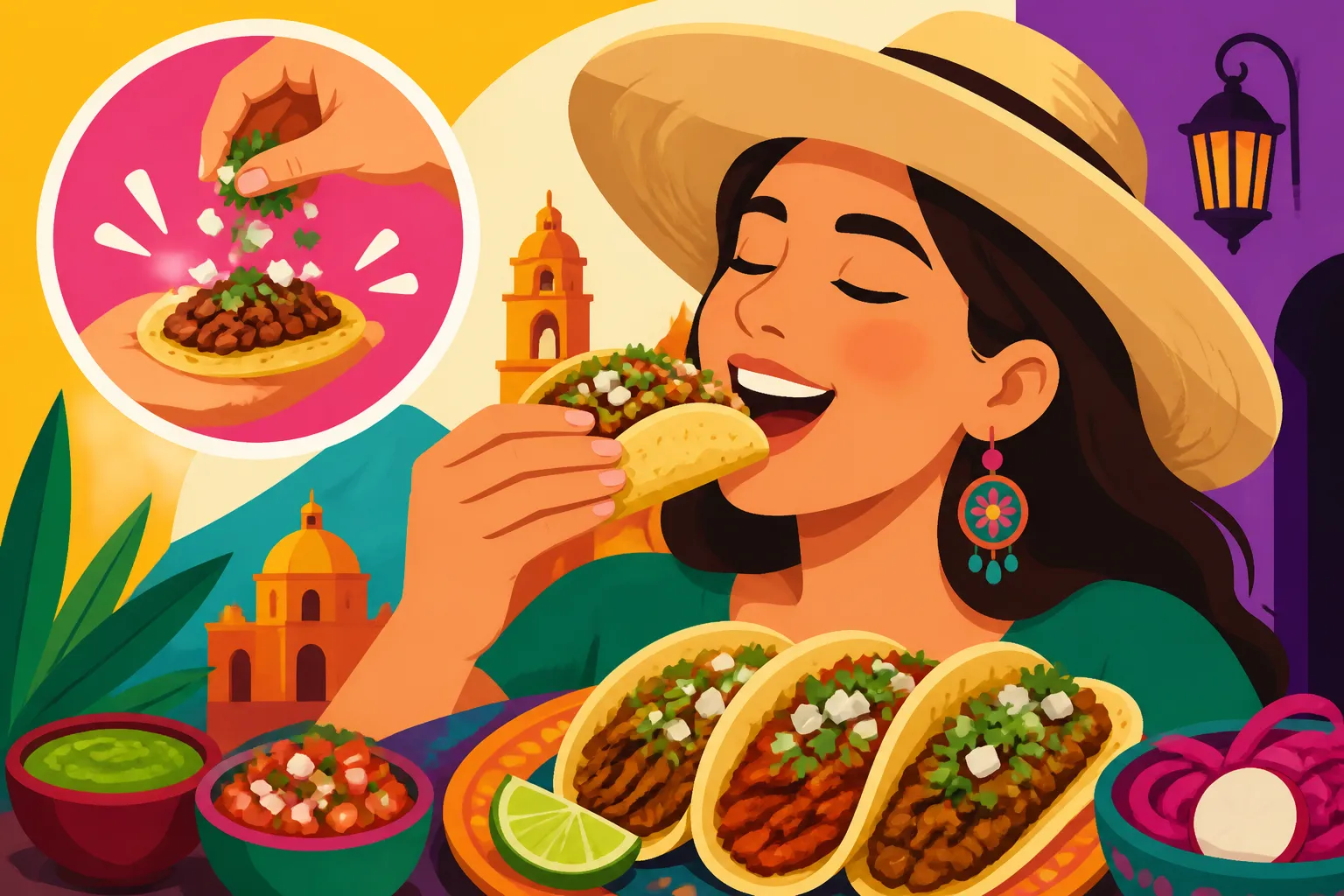
- Multiple Bites: Tacos are typically small. Take two or three deliberate bites to finish one. Don't attempt to shove the whole thing in your mouth at once; it's just messy and less enjoyable.
Paying the Bill (La Cuenta)
Paying at a taquería can be a little different from what you're used to, especially at busy street stalls.
- At Street Stalls: Often, you'll pay the person who served you directly, or sometimes there's a dedicated cashier. Keep track of what you've ordered. When you're done, simply say, "¿Cuánto es, por favor?" (How much is it, please?). They'll usually tally it up quickly. It's often cash only, so make sure you have small bills and coins. For more on navigating local payments, read our guide on Cash vs Card in Mexico: What Visitors Should Know.
- At Established Taquerías: You might get a ticket on your table that the server marks, or they might just keep a mental tab. When you're ready, ask for "La cuenta, por favor." (The bill, please.)
- Tipping (Propina): Tipping is customary. At a street stall, a few pesos (10-20 pesos per person for a casual meal) is appreciated. At an established taquería, 10-15% is standard, or 20% for exceptional service. Don't overthink it, but do make sure you acknowledge the service. For a detailed breakdown, check out Tipping in Mexico (Propina): When and How Much.
Embracing the Mess: It's Part of the Fun
Let's be real: eating a truly good, juicy taco is a messy business. You're going to get salsa on your fingers, maybe some meat juice on your chin, and possibly a stray piece of cilantro on your shirt. And that, my friends, is perfectly okay.
- Napkins Are Your Friend: Most taquerías will have plenty of thin paper napkins (servilletas) available. Use them liberally.
- No Forks!: Unless you're in a very upscale, fusion-style restaurant, you're expected to eat tacos with your hands. It's part of the tactile, sensory experience.
- Enjoy the Moment: Don't stress about being perfect. Laugh at the mess, savor the flavors, and immerse yourself in the lively atmosphere. It's all part of the authentic Mexican taco journey, one that is truly a highlight of experiencing Mexican Food Culture: Eating and Drinking as a Visitor. This isn't just about filling your stomach; it's about connecting with a fundamental part of Mexican culture, history, and community. So go forth, my expat friends, and eat tacos like the locals do!
Disclaimer
Please remember that while this guide provides extensive information, personal experiences with street food and local establishments can vary. Always exercise your best judgment regarding hygiene and safety, and be mindful of your personal dietary needs and restrictions. Local customs and regulations may also change.