What’s the Difference Between Tacos al Pastor and Other Tacos?
Walking through the humid streets of Mexico City at midnight, you’ll likely find your senses hijacked by a glowing red tower of meat spinning slowly on a vertical spit. For many newcomers, this is the first introduction to the complexity of Mexican street food. This guide demystifies the iconic Al Pastor and explains how it differs from the dozens of other taco varieties you’ll encounter on your expat journey.
Disclosure: This post may contain affiliate links. We may earn a commission at no extra cost to you if you make a purchase through these links. Read full disclosure.
The Vertical Revolution: What Sets Al Pastor Apart
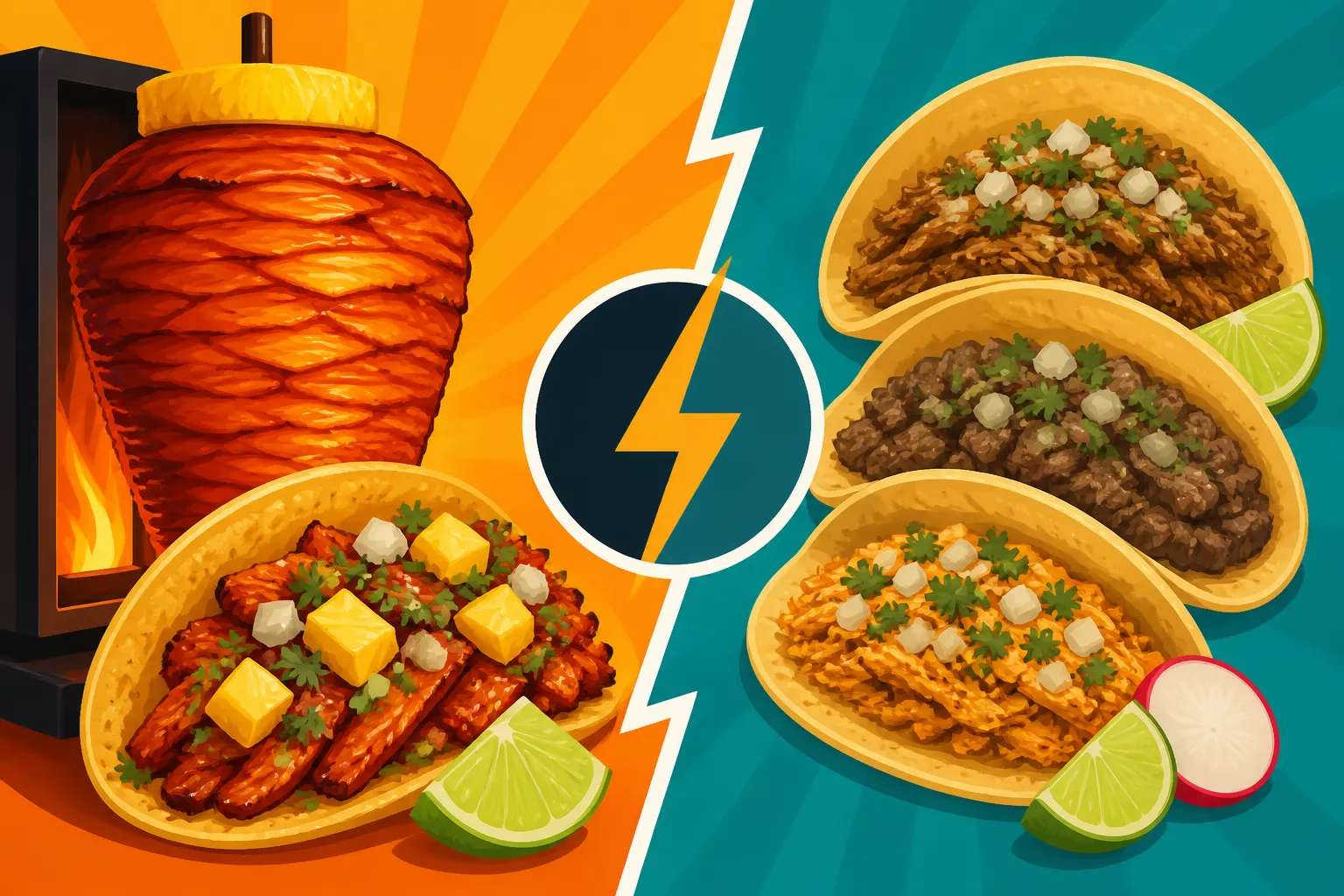
To understand Al Pastor, you have to understand that it isn't actually "traditionally" Mexican in the way we often think of pre-Hispanic food. I remember the first time I stood at a street corner in Roma Norte, watching a taquero deftly slice a sliver of pineapple from the top of the spit and catch it in the taco below. It felt like watching a performance. That vertical spit, known as a trompo (spinning top), is the defining characteristic of Al Pastor.
The history of this taco is a fascinating tale of migration. In the early 20th century, Lebanese immigrants arrived in Mexico, bringing with them the tradition of shawarma—lamb cooked on a vertical rotisserie. Over time, the local population adapted this technique. They swapped lamb for pork, which was more widely available and beloved in Mexico, and traded Middle Eastern spices for a deep, earthy marinade of achiote, dried chilies, and pineapple juice. This cultural fusion created something entirely unique to the Mexican Food Culture: Eating and Drinking as a Visitor.
The flavor profile of Al Pastor is a delicate balance of sweet, smoky, and savory. The pork is thinly sliced and stacked onto the spit, then slowly roasted by an open flame. As the meat cooks, the fat renders and drips down, self-basting the tower. The pineapple perched at the very top isn't just for show; the enzymes in the fruit juice help tenderize the meat as it trickles down. When you order "con todo" (with everything), you get that charred, marinated pork topped with cilantro, onion, and that essential sliver of warm pineapple. If you're feeling overwhelmed by the choices, booking a street food tour through Viator can be a great way to see these masters at work without the "first-timer" anxiety.
Regional Rivals: Comparing Al Pastor to Other Heavy Hitters
While Al Pastor might be the "poster child" for tacos in the capital, it has some serious competition depending on where you are in the country. One of the most common mistakes I see expats make is assuming that "a taco is a taco." In reality, the differences in preparation and meat selection are vast. If you are traveling between regions, perhaps using Busbud to navigate from the high plateaus to the coast, you’ll notice the taco landscape changes every few hundred miles.
The most direct rival to Al Pastor is the northern king: Carne Asada. Unlike the marinated, slow-roasted pork of Al Pastor, Carne Asada is all about the quality of the beef and the smoke of the grill. In states like Sonora or Nuevo León, the meat is usually charcoal-grilled and served on flour tortillas rather than the corn tortillas preferred in the south. The flavor is much more minimalist—focused on salt, fire, and the natural richness of the beef.
Then you have Carnitas, which is a completely different beast. Originating from Michoacán, Carnitas consists of pork simmered in its own lard for hours until it is incredibly tender. While Al Pastor is lean and charred, Carnitas is rich, confit-style meat that melts in your mouth. You’ll often find yourself choosing between different parts of the pig—maciza (lean meat), buche (stomach), or cuerito (skin). It’s a heavier, more indulgent experience that is usually a daytime affair. Many expats find that What Are the Must-Try Foods in Mexico often starts with a Saturday morning trip to a Carnitas stall.
The Comparison Table: Taco Varieties at a Glance
| Taco Type | Primary Meat | Cooking Method | Key Flavor Note | Typical Region |
|---|---|---|---|---|
| Al Pastor | Pork | Vertical Spit (Trompo) | Achiote & Pineapple | Mexico City / Central |
| Carne Asada | Beef | Charcoal Grill | Smoky & Salty | Northern Mexico |
| Carnitas | Pork | Lard Confit | Rich & Savory | Michoacán / Central |
| Barbacoa | Lamb/Goat | Underground Pit | Earthy & Gamey | Hidalgo / State of Mexico |
| Canasta | Various | Steamed in a Basket | Soft & Oily | Mexico City (Street) |
The Art of the Slow Cook: Barbacoa and Suadero
If Al Pastor represents the fast-paced, high-heat energy of the city, Barbacoa represents the soul of the Mexican countryside. Traditionally, Barbacoa is made by wrapping lamb or goat in agave leaves and slow-cooking it in an underground pit for 12 to 14 hours. The result is meat so tender it practically falls apart when touched. It is almost exclusively a weekend tradition. If you’ve spent the night in a hotel booked via Booking.com in a colonial town, you’ll likely wake up Sunday morning to the smell of Barbacoa wafting through the plaza.
The "liquid gold" that comes with Barbacoa is the consomé—a rich broth made from the drippings of the meat, chickpeas, and carrots. You dip your taco into the broth, adding a layer of depth that Al Pastor simply doesn't have. It’s a restorative meal, often used by locals to cure a hangover after a night of mezcal. Understanding these nuances is a key part of Mexican Regional Cuisine: How Food Changes Across Mexico.
Then there is Suadero, which is often found at the same stands as Al Pastor but cooked in a very different way. Suadero is a thin cut of beef (similar to brisket) that is confit-cooked in a large, circular metal vat called a comal. It sits in a pool of fat and meat juices, slowly simmering until it reaches a state of crispy-yet-tender perfection. Suadero is the ultimate "late-night" taco. It doesn't have the bright, citrusy notes of Al Pastor; instead, it is deep, beefy, and incredibly satisfying after a long day.
Anatomy of a Taco Experience: Texture, Marinades, and Salsa Logic
One of the steepest learning curves for any expat is realizing that the meat is only half the battle. The difference between a good taco and a life-changing taco often lies in the "accoutrements." With Al Pastor, the marinade (the recado) is built on achiote paste, which gives it that signature orange-red hue. It isn’t necessarily spicy, but it is highly aromatic. This is a sharp contrast to How to Try Mole and Oaxacan Cuisine, where the flavors are derived from dozens of toasted nuts, seeds, and dried chilies.
Salsa logic is another area where you need to keep your wits about you. At an Al Pastor stand, you will almost always be offered two main salsas: a green (usually tomatillo-based) and a red (usually dried chili-based). A common rookie mistake is assuming the green salsa is mild. In many Al Pastor stands, the "Salsa Verde" is actually a creamy, emulsified habanero or serrano blend that packs a serious punch. Always do a "drop test" on your thumb before dousing your taco.
The garnishes also vary by taco type. While Al Pastor demands the sweetness of the pineapple and the crunch of raw onion and cilantro, a taco like Canasta (basket tacos) comes pre-steamed and soft. These are the "working man's lunch," often sold from the back of a bicycle. They are oily, sweaty (in a good way), and meant to be eaten quickly on the go. If you are worried about hygiene, reading up on Is Street Food Safe to Eat in Mexico? will give you the confidence to try these local favorites without fear.
Practical Tips for the Hungry Expat
Navigating a crowded taquería can be intimidating. The noise, the heat, and the speed of the taqueros can make you want to retreat to a familiar sit-down restaurant. Don't do it. The best Al Pastor is almost always found on the sidewalk. When you arrive, don't look for a menu; look at what everyone else is eating. If the trompo is shaved down to the core, it means the meat is fresh and the stand is popular.
When you are ready, you’ll need to know How to Order at a Taquería in Mexico. Usually, you tell the taquero how many you want—"Dos de pastor, por favor"—and then you settle the bill with the "cajero" (cashier) at the end. It’s an honor system that reflects the trust inherent in Mexican street culture. Also, keep in mind What Time Do Mexicans Eat Lunch and Dinner? because Al Pastor is traditionally a night-time food. You won't find many good trompos spinning at 10:00 AM; that's the time for Barbacoa or Tamales.
Finally, don't forget the etiquette of the stand. Space is often limited, so once you have your plate, move to the side to let others access the salsa bar. Tipping is not mandatory at street stands, but leaving a few pesos in the tip jar (the bote) is a classy move that the taqueros appreciate. For more on this, check out our guide on Tipping in Mexico (Propina): When and How Much. If you are living in the capital, finding your "regular" stand is a rite of passage. You can start your search by exploring How to Find the Best Tacos in Mexico City, but eventually, your nose will lead the way.
The beauty of the Mexican taco is that it is a never-ending education. You might start with Al Pastor because it’s familiar and approachable, but soon you’ll find yourself hunting for the perfect Suadero in a hidden alley or driving hours for a specific pit-roasted Barbacoa. Embrace the grease, respect the salsa, and always, always say yes to the pineapple.
Disclaimer
This guide is for informational purposes only. Food traditions and regional variations in Mexico can change frequently, and individual experiences at taco stands may vary. Always use your best judgment regarding food safety and hygiene when dining at street vendors. The mention of specific brands or services does not constitute an official endorsement, and readers should verify current travel and health regulations before embarking on a culinary tour.