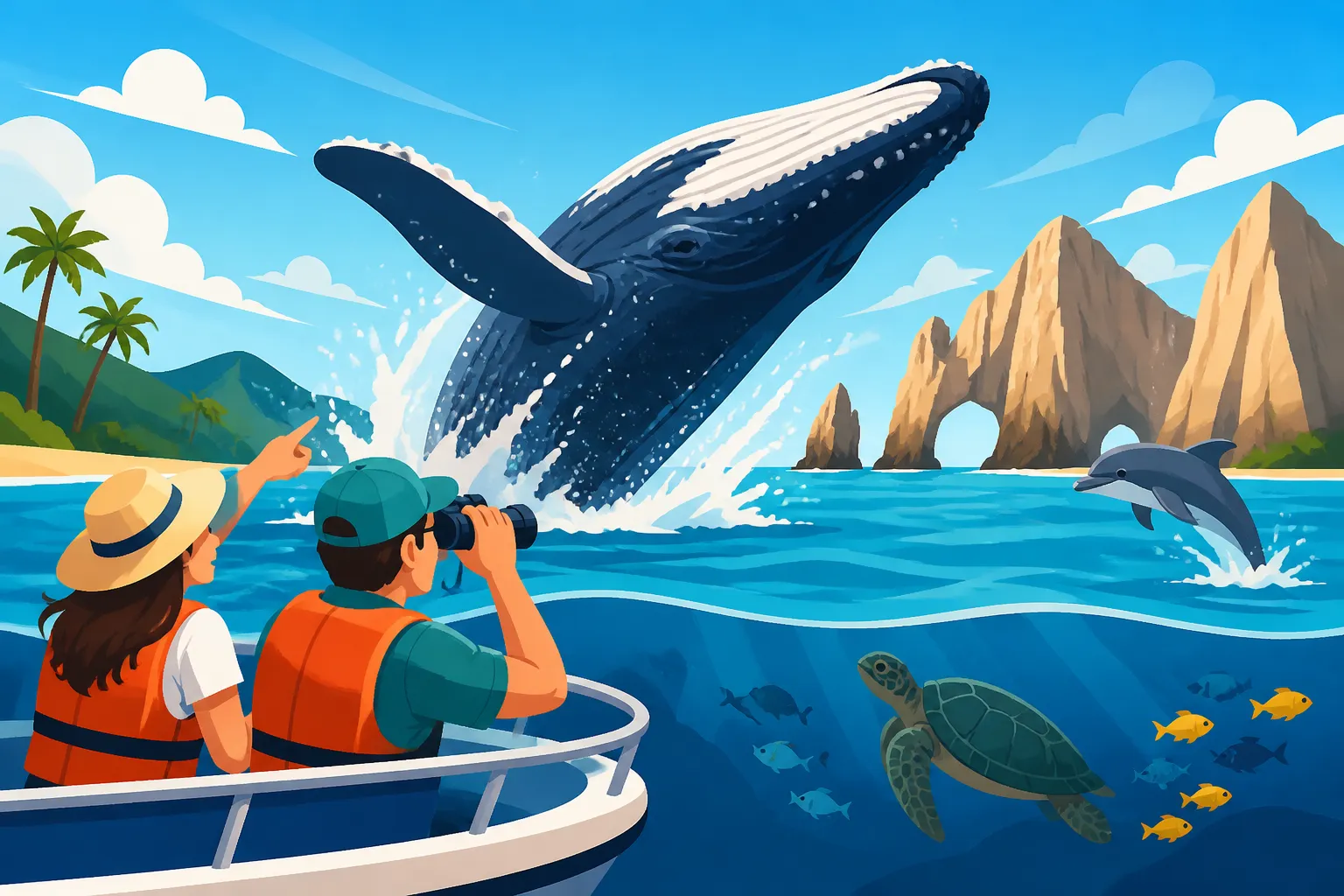
Whale Watching and Marine Wildlife in Mexico
One of the most heartbreaking experiences for a first-time visitor to Mexico is arriving in a coastal paradise like Los Cabos or Puerto Vallarta with dreams of seeing a breaching humpback, only to realize they missed the migration by a single week. This guide eliminates that guesswork, providing a veteran expat’s deep dive into the timing, locations, and ethical considerations for experiencing Mexico’s world-class whale watching and marine wildlife.
Disclosure: This post may contain affiliate links. We may earn a commission at no extra cost to you if you make a purchase through these links. Read full disclosure.
The Seasonal Rhythm of Mexico’s Whale Migrations
Understanding the timing of whale migrations in Mexico is less about a fixed calendar and more about understanding the biological needs of these massive mammals. I’ve seen countless tourists book expensive boat trips in the middle of summer expecting whales, only to spend four hours staring at empty blue water. Most whales come to the Pacific coast of Mexico to breed and give birth in the warm, protected lagoons, and they don't stick around once the water temperature begins to climb.
The humpback whales are the stars of the show in places like Banderas Bay and the southern tip of Baja. These acrobatic giants generally arrive in early December and stay until late March or early April. If you are planning a trip, the "sweet spot" is almost always February. This is when the calves are active, and the males are most competitive, leading to spectacular displays of breaching and tail-slapping. It is a noisy, high-energy season that transforms the coastal atmosphere.
In the Sea of Cortez, the timing shifts slightly for different species. While humpbacks are common, this is also one of the few places on Earth where you can see the Blue Whale, the largest animal to ever live. These elusive giants prefer the deep, nutrient-rich waters near Loreto from February through March. Because they are more sensitive to boat traffic, seeing them requires a bit more patience and a highly experienced captain who understands their diving patterns.
The Grey Whale Lagoons of Baja California Sur
If you want an experience that feels less like a tour and more like a spiritual encounter, you have to head north to the grey whale lagoons. Places like Guerrero Negro, San Ignacio Lagoon, and Magdalena Bay are world-renowned for "friendly" grey whales. Unlike other species that might ignore boats, these whales often approach small skiffs, known as pangas, and actually encourage human interaction. I remember the first time a mother whale pushed her calf toward our boat; it was a moment of profound trust that still gives me chills.
These lagoons are strictly regulated by the Mexican government to ensure the whales aren't harassed. You won't find massive cruise ships here. Instead, you'll be in a small panga with a local fisherman who has likely spent his entire life reading the water. The season here is relatively short, peaking between January and March. Because these locations are remote, you should look into Mexico's Regions and Where to Go: A Traveler's Overview to understand the logistics of reaching the central Baja peninsula, as it involves significant driving or regional flights.
Logistically, reaching these lagoons can be a challenge. Many expats prefer to take a long-distance bus to avoid the stress of driving the Transpeninsular Highway at night. You can use Busbud to check schedules for the Aguila or ABC bus lines that run from La Paz or Loreto toward the northern lagoons. It is a much more relaxing way to see the desert landscape without worrying about the legendary "Baja 1000" style road conditions.
Swimming with the Giants: Whale Sharks in Two Seas
Mexico is uniquely blessed with two distinct whale shark seasons on opposite sides of the country. These "gentle giants" are actually the world’s largest fish, and swimming alongside them is a humbling experience. In the state of Quintana Roo, specifically near Isla Holbox and Isla Mujeres, the season runs from late May through September. This coincides with the peak of summer heat, which can be intense, so it is worth checking Is Hurricane Season a Problem for Visiting Mexico? before you book your flights for the later part of that window.
On the Pacific side, specifically in the Bay of La Paz, whale sharks gather from October through April. The water here is cooler, but the experience is often more intimate because the number of boats allowed in the "whale shark zone" at any given time is strictly limited by GPS monitoring. This is a massive improvement over the older, unregulated days, and it ensures the animals aren't stressed by overcrowding.
When booking these tours, I always recommend using a reputable aggregator like Viator to compare reviews and ensure the operator follows ecological guidelines, such as "no-touch" policies and biodegradable sunscreen requirements. It is also wise to cross-reference your accommodation on Booking.com to ensure you are staying close to the docks, as most whale shark tours depart very early in the morning to catch the calmest waters.
The Playful Sea Lions of the Sea of Cortez
If the whales are the majestic kings of the ocean, the California sea lions are the mischievous court jesters. The best place to interact with them is Los Islotes, a set of rocky outcrops at the northern tip of Isla Espíritu Santo, near La Paz. This is a permanent colony, meaning you can visit them year-round, though the experience changes depending on the month.
During the summer months (June through August), the alpha males are extremely territorial because it is mating season, and snorkeling is often restricted to keep visitors safe. However, in the autumn and winter, the pups are born and become incredibly curious. They will often swim right up to your mask, nibble on your fins, and perform underwater somersaults. It is one of the few places in the world where wild marine mammals actively seek out play with humans.
To get to the island, you'll need to join a boat tour from the La Paz Malecón. These trips often include a full day of snorkeling and a beach lunch. While the price might seem high for a day trip, it usually includes park permits and gear. When budgeting for your excursion, remember to factor in Tipping in Mexico (Propina): When and How Much for your guide and captain, as they do a lot of heavy lifting to keep you safe and fed in remote waters.
Sea Turtle Conservation and Nesting
Mexico’s coastline serves as a vital nesting ground for several species of sea turtles, including the Green, Loggerhead, and the critically endangered Leatherback. On the Caribbean coast, places like Akumal were once famous for swimming with turtles, though heavy tourism has led to stricter regulations to protect the seagrass beds. If you choose to visit, please respect the buoy lines and always wear a life vest to prevent accidentally kicking the coral or the animals.
On the Oaxacan coast, the town of Mazunte is the heart of turtle conservation. Once a center for turtle hunting, it has been transformed into a sanctuary. Between August and January, you can witness "arribadas," where thousands of Olive Ridley turtles storm the beaches to lay their eggs. Many local NGOs allow volunteers to participate in hatchling releases, which is a fantastic way for expat families to get involved in the local community.
If you are traveling between these coastal towns, the infrastructure varies wildly. For example, getting from the Riviera Maya down to Oaxaca often requires a flight back through Mexico City or a very long bus ride. You can utilize Getting Around Mexico: Buses, Flights, and Car Hire to map out the most efficient route. Using Busbud can help you secure tickets for the ADO GL or Platino lines, which offer the comfort necessary for those 12-hour hauls across the southern states.
Regional Marine Wildlife Calendar
To help you plan your move or your next big trip, I’ve put together a quick reference for the best times to see specific animals. Keep in mind that nature doesn't always follow a strict schedule, but these windows are your best bet for a successful encounter.
| Species | Primary Location | Peak Season | Activity Type |
|---|---|---|---|
| Humpback Whale | Puerto Vallarta / Cabo | Jan – March | Boat Watching |
| Grey Whale | Guerrero Negro / Mag Bay | Feb – March | Close Encounters |
| Blue Whale | Loreto | Feb – March | Boat Watching |
| Whale Shark | Isla Holbox / Mujeres | June – August | Snorkeling |
| Whale Shark | La Paz | Nov – March | Snorkeling |
| Sea Lions | Isla Espíritu Santo | Oct – May | Snorkeling / Diving |
| Sea Turtles | Akumal / Mazunte | June – Nov | Nesting / Hatching |
Ethical Considerations and Practical Advice
Living here as an expat, you see the "mordida" (bribe) culture and the "anything goes" attitude that can sometimes creep into the tourism industry. When it comes to marine wildlife, this can be devastating. I’ve seen boats crowd a single mother whale until she’s forced to dive in stress. As a responsible traveler, you have the power to stop this. If your captain is getting too close or chasing an animal, speak up. A good captain respects the 60-meter buffer zone for whales.
Safety is another concern that foreigners often worry about. While the water is generally safe, the "wild" aspect of these tours is real. Always wear your life jacket, even if the captain says it's optional. The Pacific can produce "rogue" swells that can easily toss a panga. For more on navigating local transport safely, see How to Stay Safe Taking Taxis in Mexico or the section on boat safety in our broader travel guides.
Finally, consider the environmental impact of your visit. The "Sargassum" seaweed blooms on the Caribbean coast can sometimes make whale shark tours more difficult or result in cancellations. Always have a backup plan. I usually use Booking.com to find hotels with flexible cancellation policies just in case a weather event or environmental factor shifts my plans. If you are booking through an agency like Viator, read the fine print on their refund policy for weather-related cancellations, as the port captain can close the harbor at a moment’s notice if the winds pick up.
Preparing for Your Marine Adventure
When packing for these trips, remember that it is often 10 degrees cooler on the water than it is on the beach. Even in the heat of a Cabo summer, the wind chill on a fast boat can be biting. I always bring a light "windbreaker" and a dry bag for my camera and phone. Most pangas don't have dry storage, and a single splash from a whale's tail can ruin your expensive electronics.
If you are heading to The Yucatán Peninsula: Beaches, Ruins, and Cenotes, remember that many of the marine parks now ban chemical sunscreens entirely. You’ll need to buy "reef-safe" mineral sunscreen, which can be expensive at the hotel gift shop. Buy it at a local Chedraui or Walmart beforehand to save a few hundred pesos.
Lastly, don't forget that these encounters are a privilege, not a right. Sometimes the whales don't want to play, or the whale sharks have moved to deeper water for the day. Embrace the "Mexican time" philosophy. If the wildlife doesn't show up, enjoy the ceviche on the beach and the sound of the waves. The ocean here is a living thing, and it deserves our patience as much as our admiration.
Disclaimer
The information provided in this guide is based on seasonal patterns and current environmental regulations in Mexico as of 2026. Wildlife sightings are never guaranteed, and travel conditions can change due to weather or government policy. Always verify local port statuses and operator permits before embarking on a tour.