What Is a Comida Corrida and How Does It Work?
If you are new to Mexico, you have likely noticed that eating out every day at "trip-advisor-approved" restaurants quickly drains your budget and leaves you feeling like you are missing the real culinary soul of the country. Many foreigners feel intimidated by small, local eateries with handwritten signs and no English menus. This guide solves that mystery by explaining the comida corrida, the most authentic, affordable, and delicious way to eat like a local every single day.
Disclosure: This post may contain affiliate links. We may earn a commission at no extra cost to you if you make a purchase through these links. Read full disclosure.
Understanding the Heart of the Mexican Lunch Hour
When I first moved to Mexico City, I spent my first two weeks eating at expensive cafes in Roma Norte because I was too nervous to step into the small, bustling "fondas" that lined the side streets. I didn’t understand why everyone was sitting down to three-course meals at 2:00 PM for the price of a latte back home. It took a patient neighbor to explain that the comida corrida is the lifeblood of the Mexican workday. It isn't just a meal; it is a cultural institution that ensures everyone, from construction workers to office executives, gets a hot, home-cooked meal in the middle of the day.
The term "corrida" roughly translates to "running" or "continuous," referring to the fact that the dishes are served in a specific, rapid sequence. Unlike a traditional a la carte restaurant where you might wait twenty minutes for an entree, a comida corrida place is designed for efficiency and volume. You sit down, choose your main course, and the first two courses usually arrive within minutes. It is the perfect solution for travelers who have just arrived in a new city via Busbud and need a filling, reliable meal before checking into their rental.
In the broader context of Mexican Food Culture: Eating and Drinking as a Visitor, the comida corrida represents the "comida casera" (home cooking) that locals miss when they are away from their mother’s kitchen. These establishments, often called fondas or cocinas económicas, are usually family-run. The grandmother might be in the back making the mole, while the teenagers are out front taking orders. It is an intimate experience that makes you feel less like a tourist and more like a member of the neighborhood.
The Anatomy of a Perfect Comida Corrida
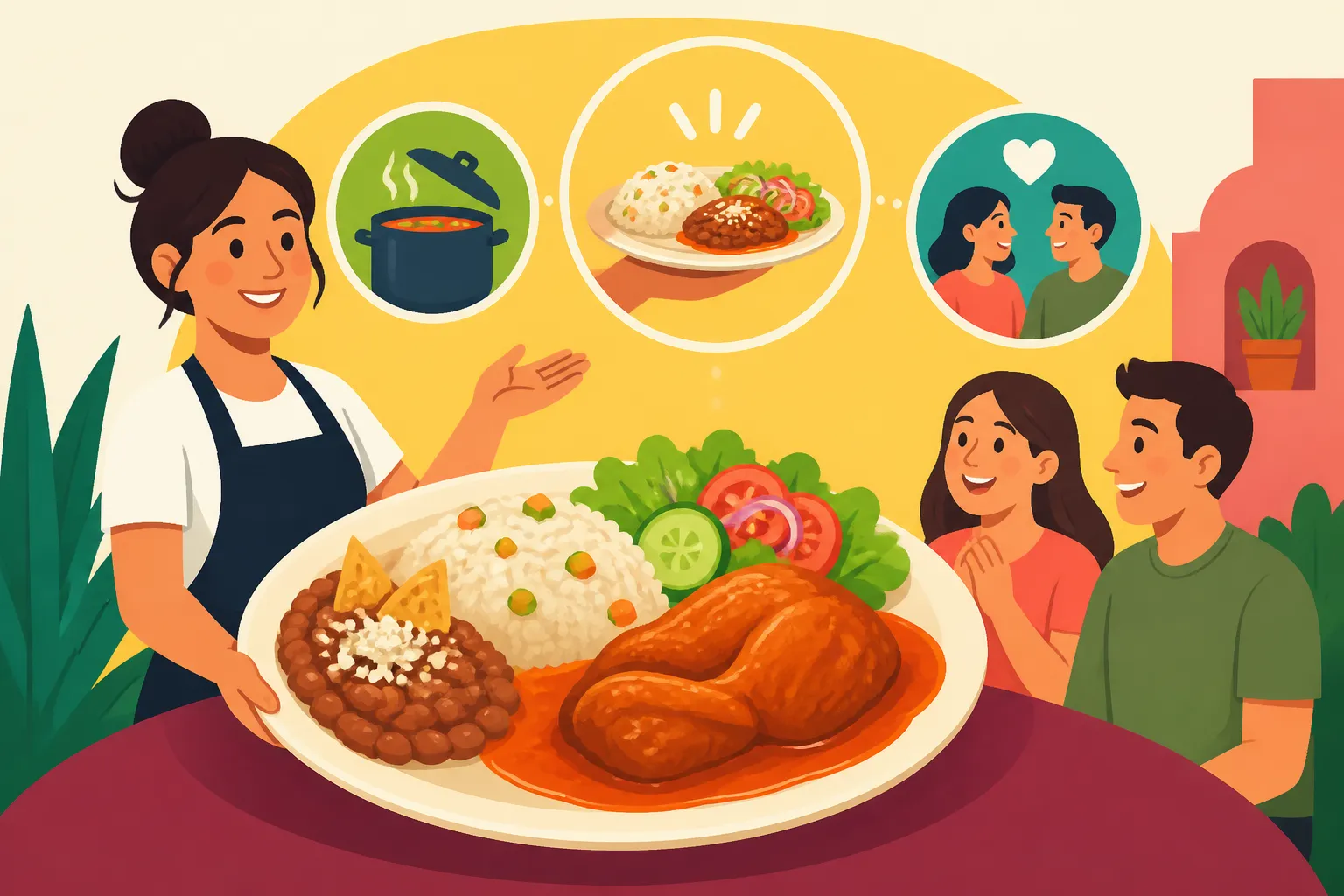
A standard comida corrida consists of four to five distinct parts, all included in one fixed price. Understanding this sequence is vital because the waiter will often rattle off the options in rapid-fire Spanish, assuming you already know the drill. If you are worried about the language barrier, it is helpful to brush up on Ordering Food in Spanish in Mexico Without Stress before you head out.
The First Course Sopa Aguada
The meal almost always begins with a "sopa aguada" (literally, watery soup). This is typically a light, comforting broth. The most common variety is "consomé de pollo," a clear chicken broth usually served with a bit of shredded chicken, rice, and chopped cilantro and onion on the side for you to add yourself. Another frequent option is a "crema," which is a blended vegetable soup like crema de elote (corn) or crema de zanahoria (carrot).
I always tell people not to fill up too much on the bread or tortillas served with the soup. In a traditional fonda, you will be given a basket of warm tortillas or a "bolillo" (a crusty white roll). These are meant to accompany the entire meal, especially the main course. If you are staying at a hotel you found on Booking.com, ask the front desk where the nearest "cocina económica" is; they will almost certainly point you to a place where the sopa aguada tastes exactly like home.
The Second Course Sopa Seca
This is where many expats get confused. After the liquid soup, the waiter will bring the "sopa seca" (dry soup). In Mexico, "dry soup" usually means a starch—either red rice (arroz rojo) or a small portion of pasta (fideo or spaghetti). The rice is almost always cooked with tomato, peas, and carrots, and it is common to see a slice of hard-boiled egg or a few slices of avocado on top.
This course serves as a bridge between the light appetizer and the heavy main event. It is also where the "corrida" aspect shines; as soon as your soup bowl is empty, the rice plate appears. This efficiency is why these places are so popular with the working class. If you are exploring the city and booked a walking tour through Viator, you’ll find that a quick stop for a comida corrida is far more satisfying than a soggy sandwich from a convenience store.
The Third Course El Plato Fuerte
The "plato fuerte" (strong plate) is the star of the show. While the first two courses are usually fixed, you will have three to five choices for your main dish. Common options include:
- Milanesa de Pollo o Res: Breaded and fried chicken or beef fillets.
- Enchiladas Verdes o Rojas: Tortillas rolled with chicken and covered in salsa.
- Chiles Rellenos: Poblano peppers stuffed with cheese or meat.
- Cerdo en Salsa Verde: Pork chunks simmered in a tangy tomatillo sauce.
- Albóndigas: Mexican meatballs in a chipotle tomato sauce.
The main dish is typically served with a side of "frijoles" (beans), either pot-cooked (de la olla) or refried (refritos). It is a massive amount of food, and for most expats, it is the biggest meal of the day. This aligns perfectly with the Cost of Living in Mexico: 2026 Comprehensive Guide, as a full meal like this often costs between 70 and 120 pesos ($4 to $7 USD), making it significantly cheaper than cooking the same variety of items at home.
Drinks and Desserts Agua del Día and Postre
Your meal will almost always include an "agua fresca," which is a large glass of water blended with fresh fruit. Common flavors include jamaica (hibiscus), horchata (rice and cinnamon), or seasonal fruits like melon or guava. This isn't just a side drink; it's a vital part of the cooling experience when eating spicy salsas.
Finally, there is the "postre" (dessert). Don’t expect a giant slice of cake. The dessert in a comida corrida is usually a "gentle" finish—a small cup of lime gelatin (gelatina), a piece of flan, or "arroz con leche" (rice pudding). It is just enough sweetness to cleanse the palate before you head back out into the Mexican sun.
How to Order and Navigate the Experience
Walking into a fonda for the first time can feel like crashing a private party. These spaces are often loud, crowded, and move at a frantic pace. However, the staff is generally incredibly patient once they realize you are genuinely interested in their food.
Finding the Best Spots in Your Neighborhood
The best comida corrida spots don't have websites or Instagram pages. They have a chalkboard (pizarrón) out on the sidewalk. Look for the words "Menú del Día" or "Comida Completa." If the place is packed with locals between 2:00 PM and 3:30 PM, that is your green light. In residential areas, you might even find these operating out of the ground floor of someone's house.
For travelers, checking out Mexican Markets and Food Halls for Visitors is another great way to find high-quality fixed-price lunches. The "comedores" inside local markets like Mercado Medellín in Mexico City or Mercado Lucas de Gálvez in Mérida offer some of the freshest ingredients because the vendors are literally steps away.
Dealing with the Fonda Etiquette
There are a few unwritten rules you should know to avoid looking like a total "gringo." First, if the place is crowded, it is common to share a table. If someone sits down at your table, a simple "provecho" (enjoy your meal) is the standard greeting. When you finish your meal and get up to leave, it is also polite to say "provecho" to the people still eating around you.
Second, the menu is usually oral or written on a board. If you don't understand something, don't be afraid to ask, "Qué lleva el guisado?" (What is in the stew?). Most owners are proud of their recipes and will happily explain. If you have dietary restrictions, such as being a vegetarian, check out Vegetarian and Vegan Food in Mexico to learn which common dishes can be modified, though keep in mind that traditional fondas often use lard or chicken stock in almost everything.
| Component | Common Options | Purpose |
|---|---|---|
| First Course | Consomé, Crema de Verduras, Sopa de Letras | Hydration and appetite stimulation |
| Second Course | Arroz Rojo, Spaghetti, Coditos (macaroni) | Starchy base for the meal |
| Main Dish | Milanesa, Mole, Enchiladas, Bistec | Protein and the primary flavor profile |
| Sides | Frijoles, Tortillas, Salsa | Essential accompaniments for every bite |
| Drink | Jamaica, Horchata, Limonada | Refreshment (Agua del Día) |
| Dessert | Gelatina, Flan, Arroz con Leche | A small, sweet finish |
Why Expats and Tourists Love the Comida Corrida
Beyond the price, there is a health and social aspect to the comida corrida that makes it a favorite for long-term residents. In many Western countries, "fast food" is synonymous with "unhealthy food." In Mexico, the "fastest" lunch is actually quite balanced. You get a broth, a small portion of carbs, a protein, a side of beans (high fiber), and fresh fruit water.
Health Benefits of Home Cooked Meals
If you are trying to stay healthy, you can easily customize your meal. You can ask for "puntas de res" (beef tips) instead of the fried milanesa, or ask for "frijoles de la olla" (boiled beans) instead of the fried version. Because these meals are made fresh that morning, they lack the preservatives and excessive sodium found in chain restaurants.
I’ve found that eating a large comida corrida in the mid-afternoon actually helps with the Staying Healthy in Mexico: Essential Tips for Food, Water, and Preventive Care advice I give to newcomers. By eating your largest meal when your metabolism is highest, and having a lighter "merienda" (late-night snack) of Street Food in Mexico: Tacos, Tamales, and More, you align your body with the local rhythm and avoid the heavy indigestion that often comes from late-night heavy dining.
Budgeting and Saving Money in Mexico
For those moving to Mexico on a fixed income or a digital nomad budget, the comida corrida is the ultimate hack. If you eat a 100-peso lunch five days a week, your monthly food bill for lunches is only around $120 USD. This leaves you with plenty of extra cash to spend on weekend trips you book through Booking.com or expensive dinners in the tourist zones.
It also simplifies your life. You don't have to grocery shop for five different ingredients to make a mole; you just walk two blocks, sit down, and let someone else do the dishes. It provides a sense of routine and community. You’ll start to recognize the other regulars—the local shopkeeper, the mailman, the students—and soon enough, you’ll be the expat who gets a friendly "Hola, qué tal?" the moment you walk through the door.
Tips for the Best Experience
To truly master the art of the comida corrida, keep these final tips in mind. First, always check the "salsa" on the table before dumping it on your food. Usually, there will be a green salsa (verde) and a red salsa (roja). One is usually significantly hotter than the other, and it changes daily.
Second, pay attention to Tipping in Mexico (Propina): When and How Much. While the meal is cheap, the workers in these fondas work incredibly hard. A 10-15% tip is standard and deeply appreciated. If your meal was 90 pesos, leaving a 100-peso bill and telling them to keep the change is a perfectly acceptable and kind gesture.
Finally, don't be afraid to use Polite Spanish in Mexico: Usted vs Tú for Visitors when addressing the staff. Often, the woman running the kitchen is referred to as "Doña" followed by her name as a sign of respect. Showing this level of cultural awareness will often get you an extra scoop of rice or a warmer smile, turning a simple lunch into a highlight of your day.
Disclaimer
The information provided in this guide is based on cultural norms and personal experiences in Mexico as of 2026. Prices, availability, and specific dish compositions may vary significantly by region and individual establishment. Always exercise standard food safety precautions when dining at local eateries. This content is for informational purposes and does not constitute professional financial or nutritional advice.