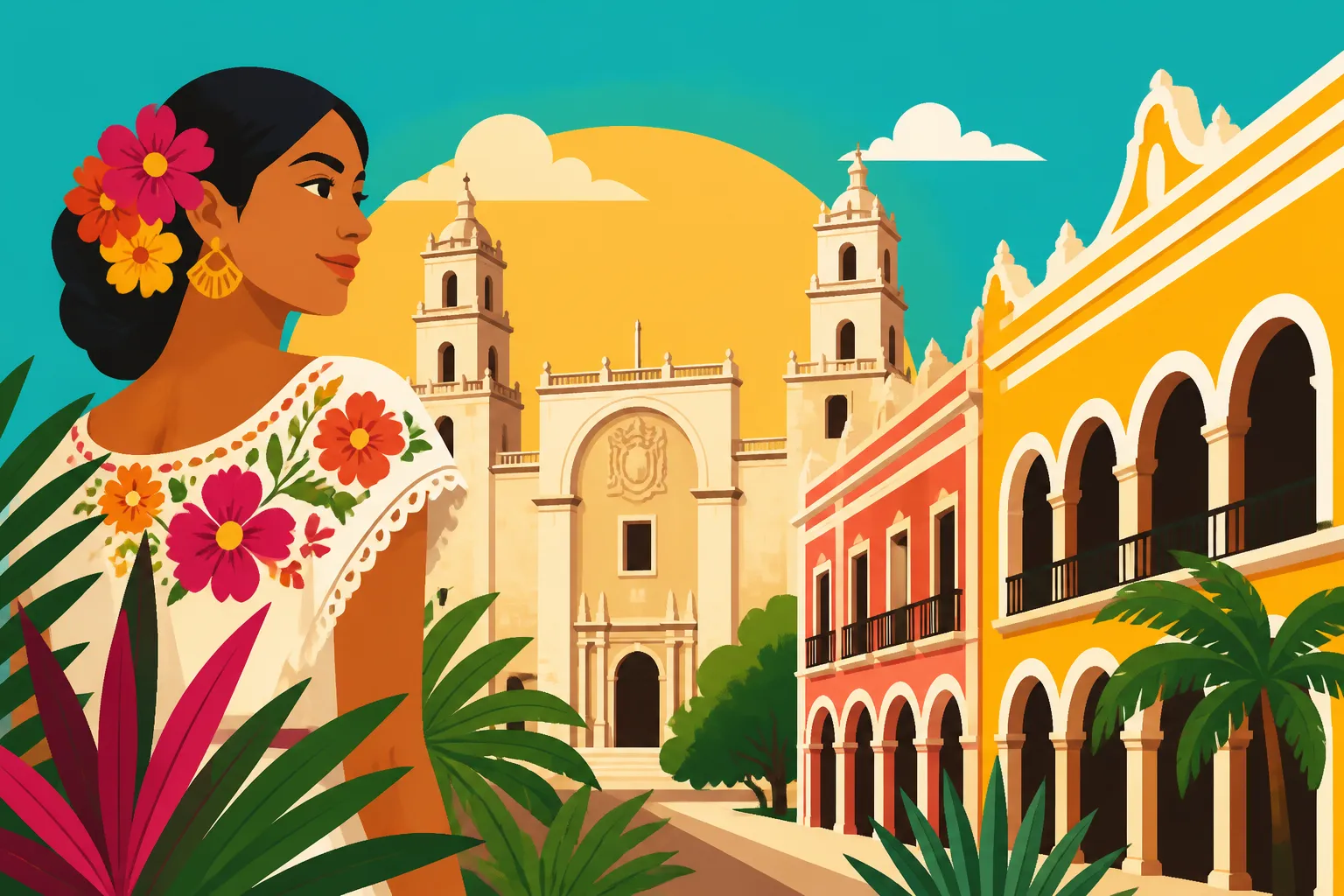
Mérida City Guide: Colonial Charm in the Yucatán
Most visitors land in Mérida and find the oppressive heat and sprawling colonial streets intimidating, often retreating to air-conditioned hotels and missing the city’s vibrant soul. This guide solves that by providing an insider’s roadmap to navigating the White City, from its hidden cantinas to its complex social etiquette, ensuring you experience the true colonial charm of the Yucatán.
Disclosure: This post may contain affiliate links. We may earn a commission at no extra cost to you if you make a purchase through these links. Read full disclosure.
Why Mérida is the Expat and Cultural Capital of the Yucatán
Mérida often feels like a secret that the rest of the world is only just starting to uncover. While Cancún and Playa del Carmen were built for tourism, Mérida was built for living. It is the capital of the state of Yucatán and acts as the cultural heartbeat of the entire peninsula. As someone who has navigated the administrative mazes of various Mexican cities, I can tell you that Mérida offers a stability and a sense of tradition that is hard to find elsewhere. The city is famous for its "white" limestone buildings and a history that is as much Maya as it is Spanish.
The allure of the city lies in its unique blend of European aesthetics and indigenous roots. During the late 19th century, Mérida was actually the wealthiest city in the world thanks to the production of henequen, a type of sisal fiber used for rope. This "green gold" funded the construction of the opulent mansions you see along Paseo de Montejo, designed to rival the grand boulevards of Paris. Today, those same mansions house museums, banks, and boutique hotels, providing a backdrop that makes a simple morning walk feel like a trip through time.
For those considering more than a weekend visit, the Cost of Living in Mérida: 2026 Guide for Expats remains one of the most attractive factors. While prices have certainly risen as the city's popularity has spiked, it remains significantly more affordable than the Riviera Maya. You aren't just paying for a lower cost of life, though; you are paying for a quality of life that includes some of the highest safety ratings in North America. Whether you are walking home from a late-night concert in the park or navigating the bustling markets, there is a palpable sense of peace here that is rare in a city of nearly a million people.
The Allure of Colonial Architecture and History
The architecture in Mérida isn’t just a tourist attraction; it’s a living part of the city’s identity. The Centro Histórico is one of the largest in Mexico, surpassed only by Mexico City. Every street is a grid of pastels—mustard yellows, dusty pinks, and vibrant teals. When you walk these streets, you'll notice the thick stone walls and high ceilings of the colonial homes. These weren't just stylistic choices; they were functional necessities designed to handle the intense Yucatecan sun before the days of modern cooling.
If you are looking to stay in one of these historic gems, I always suggest checking Booking.com for boutique hotels located in restored casonas. These properties often feature central courtyards (patios) with lush gardens and dipping pools, which are essential for surviving the midday heat. Staying in a place with history allows you to appreciate the craftsmanship of the pasta tiles—decorative cement floor tiles—that are a signature of the region. Many expats have moved here specifically to buy and restore these ruins, a labor of love that has revitalized the downtown area over the last two decades.
Beyond the aesthetics, the history of Mérida is deeply intertwined with the Maya. Many of the colonial buildings, including the San Ildefonso Cathedral, were built using stones from ancient Maya temples that stood on this site long before the Spanish arrived in 1542. This layer of history is visible if you look closely at the cathedral’s facade, where you can occasionally spot a carved Maya glyph embedded in the colonial masonry. It’s a haunting and beautiful reminder of the city’s complex origins.
Safety and Community Life in the White City
Safety is usually the first question I get from people thinking about visiting or moving to Mexico. Mérida is consistently ranked as the safest city in Mexico and one of the safest in the Western Hemisphere. This isn't just government propaganda; it’s a reality born of a tight-knit community and a cultural emphasis on family and public life. The "vecino" (neighbor) culture is strong here. People sit on chairs outside their front doors in the evenings to catch the breeze and chat with passersby.
This level of safety allows for a public life that is incredibly rich. Every night of the week, the city hosts free cultural events in its various plazas. You might find a traditional Jarana dance performance in front of the Palacio Municipal on a Monday or a live big band in Parque Santa Lucia on a Thursday. This commitment to public culture ensures that the squares are always filled with families, couples, and seniors, creating a self-policing environment that feels welcoming and secure.
For foreigners, integrating into this community requires patience and a basic understanding of Spanish Language and Everyday Communication for Visitors. While you can get by with English in some tourist spots, the locals—known as Meridanos—greatly appreciate the effort to speak their language. They are known for being formal and polite, so using "usted" and starting every interaction with a "buenos días" or "buenas tardes" will go a long way in building rapport with your neighbors and local shopkeepers.
The Growing Digital Nomad and Expat Scene
In recent years, Mérida has seen a massive influx of remote workers and retirees. This has led to a boom in high-speed internet availability and the opening of numerous coworking spaces, particularly in neighborhoods like García Ginerés and the North. The city offers a different pace of life than the "digital nomad hubs" like Tulum; it's less about beach parties and more about Sunday brunches and art gallery openings.
The expat community here is diverse, consisting of artists, writers, and entrepreneurs from all over the world. This makes it easy to find social groups or hobby clubs, but it’s important to avoid the "expat bubble." The most successful residents are those who bridge the gap between the international community and the local culture. You'll find that Healthcare in Mérida: Quality of Medical Care in Yucatán is a major draw for this demographic, with world-class private hospitals that provide excellent care at a fraction of U.S. or European costs.
However, moving here isn't without its administrative hurdles. Navigating the INM (Immigration) office can be a test of your resolve. Whether you are applying for a temporary or permanent residency, be prepared for multiple visits and a fair amount of paperwork. My advice is always to hire a local expert or "gestor" to help you through the process. It’s a small investment that prevents a lot of headaches and ensures you are following the latest regulations.
Navigating Mérida: Getting There and Around
Getting to Mérida has become significantly easier as the city's profile has grown. The Manuel Crescencio Rejón International Airport (MID) is well-connected, with direct flights from major hubs like Houston, Miami, Dallas, and Mexico City. When you land, you'll immediately feel the "Mérida embrace"—a wall of humidity that tells you you've arrived in the tropics. My veteran tip: don't take the first taxi you see at the arrivals gate. If you walk just outside the airport grounds, or use an authorized airport taxi stand inside, you’ll save a significant amount of stress.
Transportation within the state is also undergoing a revolution. The Tren Maya, a massive infrastructure project connecting the entire peninsula, now has a station serving Mérida (Teya). While the station is located about 20-30 minutes outside the city center, it provides a scenic and modern way to reach places like Valladolid or Cancún. For those who prefer the tried-and-true method, the ADO bus system remains the gold standard for regional travel.
When planning trips to nearby towns or ruins, I often use Busbud to compare schedules and book tickets in advance. It’s much easier than standing in line at the CAME (the first-class bus station) in the heat. For more curated experiences, such as visiting a remote cenote or a private hacienda, checking out options on Viator can save you the hassle of navigating local transport if your Spanish isn't quite up to the task of negotiating with a "colectivo" driver.
Using Long-Distance Buses and the Tren Maya
The ADO bus network is remarkably efficient and comfortable. If you’ve never used long-distance buses in Mexico, prepare to be surprised. The "Platino" and "GL" classes offer reclining seats, personal screens, and even coffee service. Traveling from Mérida to Campeche or the Caribbean coast by bus is often more relaxing than driving, as it allows you to avoid the "topes" (speed bumps) and occasional military checkpoints that are part of any Mexican road trip.
The Tren Maya is the new kid on the block. While it has faced controversy regarding its environmental impact, there is no denying the convenience it offers for travelers looking to cover large distances quickly. The Teya station is the main hub for Mérida. You can catch a shuttle or a quick Uber from the city center to reach the station. It’s a great way to see the jungle landscape from a comfortable, air-conditioned carriage, though I recommend checking the schedules frequently as they are still being refined.
For shorter distances or day trips to the beach at Progreso, "colectivos" (shared vans) are the local way to go. They depart from various points in the Centro Histórico once they are full. They are cheap, fast, and a great way to experience how the majority of locals get around. Just be prepared for a snug fit; they don't leave until every seat is taken!
Getting Around Town: Uber vs. Walking vs. Public Transport
Inside the city, walking is your best bet for exploring the Centro Histórico. However, the sidewalks are notoriously narrow and can be uneven. Wear comfortable shoes and keep an eye on the ground. During the summer months (which is most of the year), walking is best done before 11:00 AM or after 5:00 PM. The sun in the Yucatán is intense, and the humidity can make a ten-minute walk feel like a marathon.
Uber and Didi are both widely available and very affordable in Mérida. They are generally safer and more transparent than street taxis, as the price is set in the app. I always recommend using these apps, especially at night or when traveling to the northern part of the city where things are more spread out. If you do take a street taxi, make sure to agree on the price before you get in, as they do not use meters.
Public buses (camiones) are also an option, though the routes can be confusing for newcomers. Recently, the city introduced the "Va y Ven" system—modern, air-conditioned buses that run on major peripheral routes. These require a pre-loaded card, which you can buy and top up at various kiosks. It’s a significant upgrade from the older, louder buses that used to dominate the streets and is a sign of Mérida’s push toward modernizing its infrastructure.
| Transportation Mode | Best For | Approx. Cost (USD) | Pro Tip |
|---|---|---|---|
| Walking | Centro Histórico exploration | Free | Stick to the shady side of the street. |
| Uber/Didi | Quick city trips / Night travel | $3 – $8 | Check the license plate before entering. |
| Va y Ven Bus | Major city arteries / North Mérida | $0.75 | Buy the card at a kiosk beforehand. |
| Colectivo | Trips to Progreso or nearby towns | $1.50 – $2.50 | Have small change ready in pesos. |
| ADO Bus | Intercity travel (Campeche, etc.) | $20 – $40 | Book via Busbud for easy e-tickets. |
Neighborhoods of Mérida: Where to Stay and Live
Choosing where to stay in Mérida depends heavily on your tolerance for noise and your desire for convenience. The city is broadly divided into the Centro (Historic Center) and the Norte (the modern North). For travelers, the Centro is where the magic happens. This is where you’ll find the colonial architecture, the bustling markets, and the nightly cultural events. However, the Centro can be noisy—buses, church bells, and early-morning street sweepers are all part of the soundtrack.
As you move north, the city becomes more modern and Americanized. This is where the large shopping malls, high-end hospitals, and luxury car dealerships are located. For many expats with families, the North offers a more suburban lifestyle with gated communities (privadas) and easy access to international schools. However, you will lose that "old world" charm and will definitely need a car to get around.
When I first arrived, I stayed in a small rental near Parque Santiago. It was the perfect introduction to the city. Every morning, I could walk to the local market for fresh fruit and a "café con leche." Finding the right balance between the vibrant, sometimes chaotic energy of the Centro and the quiet comfort of the suburbs is the key to enjoying your time in Mérida.
Centro Histórico: The Heart of the Action
The Centro is the soul of Mérida. It is organized around the Plaza Grande, where the cathedral and the Governor’s Palace sit. Living or staying here means you are steps away from the best restaurants, museums, and galleries. The streets are numbered, which makes navigation easy once you get the hang of it (even numbers run north-south, odd numbers run east-west).
The houses in the Centro are often unassuming from the outside—plain facades with heavy wooden doors. But once you step inside, you are often greeted by sprawling courtyards, soaring ceilings, and vibrant gardens. It’s a world of "hidden" luxury. The downside of the Centro is the air quality and noise. The older buses emit quite a bit of exhaust, and the stone walls of the canyons created by the streets can amplify the sound of traffic.
Despite this, the Centro remains the most popular choice for visitors. The neighborhood is undergoing a massive gentrification process, with many old ruins being converted into high-end rentals and chic cafes. If you enjoy being in the middle of everything and don't mind a bit of grit, this is where you belong.
Paseo de Montejo: Elegance and Modernity
Paseo de Montejo is Mérida’s version of the Champs-Élysées. This wide, tree-lined boulevard is home to some of the most impressive architecture in Mexico. Walking along the Paseo, you'll see the Palacio Cantón, which houses the Anthropology Museum, and the iconic Monumento a la Patria. On Sunday mornings, the street is closed to cars for the "Bici-Ruta," a city-wide cycling event that brings out thousands of locals.
Staying near Paseo de Montejo offers a slightly more upscale and relaxed vibe than the dense streets of the Centro. The sidewalks are wider, there are more trees, and the cafes are a bit more "European" in style. It’s a great area for those who want a bit of colonial charm but prefer a more spacious environment.
The area around the Paseo has seen significant development recently, with new hotels and luxury apartment complexes popping up. It serves as a bridge between the old city and the new North. It’s also home to some of the best high-end dining in the city, making it a favorite for foodies and those looking for a sophisticated night out.
Santa Ana and Santa Lucia: Local Flavor and Culture
Santa Ana and Santa Lucia are two smaller "barrios" within the Centro that have become incredibly popular with the expat community. Santa Lucia is famous for its park, which features the "confidenciales"—oversized white chairs designed for couples to sit facing each other. Every Thursday night, the park hosts the "Serenata Yucateca," a traditional musical performance that has been running for over 50 years.
Santa Ana, just a few blocks north, feels a bit more like a local neighborhood. It has a fantastic market where you can get some of the best breakfast tacos in the city. The area is filled with art galleries and small boutiques, making it a hub for the creative community. It’s also perfectly situated between the Plaza Grande and Paseo de Montejo, offering the best of both worlds.
Living in these areas allows you to experience the daily rhythms of the city. You’ll get to know the man who sells honey on the corner and the woman who runs the local "lavandería" (laundry). It’s this sense of belonging that keeps people coming back to Mérida year after year.
The Culinary Scene: More Than Just Tacos
Yucatecan food is a world unto itself. It is distinct from the rest of Mexican cuisine, influenced heavily by Maya ingredients and Caribbean and European trade. Forget what you think you know about "Mexican food"—here, you won't find as much focus on heavy cheeses or cumin. Instead, you'll find sour oranges, achiote (annatto seed), habanero peppers, and slow-cooked meats.
Eating in Mérida is a sensory experience. From the smell of roasting pork at 6:00 AM to the sweet taste of a "marquesita" (a crispy crepe filled with cheese and Nutella) sold from a street cart at night, the city is a constant feast. However, new visitors should be mindful of Staying Healthy in Mexico: Essential Tips for Food, Water, and Preventive Care to avoid the dreaded "Montezuma’s Revenge." Always opt for busy stalls where the food is cooked fresh in front of you.
The city offers everything from $1 street snacks to $100 fine-dining tasting menus. The culinary scene is currently exploding, with young chefs returning to their roots and using traditional Maya techniques in modern ways. Whether you are eating on a plastic stool in a market or at a white-linen table, the quality of the ingredients is usually top-notch.
Essential Yucatecan Dishes You Must Try
You cannot leave Mérida without trying Cochinita Pibil. This is the king of Yucatecan dishes—pork marinated in achiote and sour orange juice, wrapped in banana leaves, and slow-cooked in an underground pit (pib). It’s traditionally served with pickled red onions and a side of fiery habanero salsa. My favorite way to eat it is in a "torta" (sandwich) for breakfast at the Santa Ana market.
Another staple is Sopa de Lima. Don't let the name fool you; it's much more than just a lime soup. It’s a rich turkey or chicken broth seasoned with local "lima" (which is more aromatic and less acidic than a standard lime), shredded meat, and crispy fried tortilla strips. It’s the ultimate comfort food and surprisingly refreshing even on a hot day.
For a snack, look for Panuchos and Salbutes. Panuchos are fried tortillas stuffed with black bean paste and topped with shredded turkey, avocado, and onions. Salbutes are similar but the tortilla isn't stuffed, making them a bit lighter and puffier. Both are delicious and can be found at almost every "pueblo" food stall. If you want to dive deeper into the menu, check out What Are the Must-Try Foods in Mexico? for a broader perspective on national favorites.
Markets vs. Fine Dining: Where to Find the Best Food
The Lucas de Galvez market is the labyrinthine heart of Mérida’s food trade. It’s loud, crowded, and smells of everything from fresh cilantro to raw leather. It’s also where you’ll find the cheapest and most authentic food in the city. Navigating it can be overwhelming, so go early and follow your nose. This is where locals buy their "recados" (spice pastes) and fresh produce.
On the other end of the spectrum, Mérida has become a destination for fine dining. Restaurants like Kuuk and Musem are pushing the boundaries of what Yucatecan food can be. These spots often require reservations weeks in advance and offer a sophisticated look at the region’s biodiversity. They are a great way to celebrate a special occasion or to see how traditional Maya ingredients like "chaya" (a local leaf similar to spinach) can be elevated.
In between these two extremes are the many "cocinas económicas"—small, family-run eateries that serve a set "comida corrida" (lunch special) for a fixed price. This usually includes a soup, a main dish, a side, and a drink. It’s the best way to eat like a local and keep your budget in check. For those worried about the language barrier, many of these places have handwritten menus on chalkboards, and pointing always works!
Tipping and Dining Etiquette in Mérida
Tipping in Mexico is an essential part of the service economy. In restaurants, a tip of 10% to 15% is standard. If the service was exceptional, 20% is appreciated but not expected. Always check your bill (la cuenta) to see if "propina" (tip) has already been included—this is technically illegal but sometimes happens in tourist-heavy areas. For a full breakdown on how to handle these situations, see Tipping in Mexico (Propina): When and How Much.
Dining is a social affair in Mérida. Meals are meant to be lingered over, and you will never be rushed out of a restaurant. In fact, you will almost always have to ask for the bill ("La cuenta, por favor") because it is considered rude for a waiter to bring it before you ask, as it implies they want you to leave.
When eating at markets or street stalls, the etiquette is a bit more casual. You often pay after you eat. Simply tell the vendor what you had, and they will give you the total. It’s based on an honor system that is surprisingly robust. Also, keep in mind that many smaller places are cash-only, so always have a few pesos on hand. If you’re unsure about the water, remember that How to Avoid Traveler's Stomach Illness in Mexico usually involves sticking to bottled or filtered water, which every reputable restaurant will provide.
Activities and Cultural Experiences
One of the best things about Mérida is that you don't have to spend a lot of money to be entertained. The city’s "Mérida en Domingo" program turns the entire Centro into a street festival every Sunday. There are food stalls, craft markets, and live music everywhere. It’s a day for families to gather and for visitors to soak up the local atmosphere.
Cultural life here is also deeply tied to the Maya ruins that surround the city. Mérida serves as the perfect base for exploring the archaeological wonders of the Yucatán. While Chichén Itzá is the most famous, it is also the most crowded. I often suggest that visitors look into smaller, more atmospheric sites like Uxmal or Mayapán. These ruins allow for a more contemplative experience, where you can often climb the structures and have the place nearly to yourself.
Beyond the ruins, the Yucatán is home to thousands of cenotes—natural limestone sinkholes filled with crystal-clear fresh water. These were sacred to the Maya and are now the perfect way to cool off after a day of exploring. Many are located within an hour’s drive of the city and offer everything from developed "eco-parks" to rugged holes in the ground accessible only by a bumpy dirt road.
Free Nightly Events and Cultural Programs
The City Council of Mérida does an incredible job of providing free entertainment. Every night, a different plaza or park hosts a performance. On Fridays, you can see a reenactment of the ancient Maya ball game (Pok-ta-pok) in front of the cathedral. It’s a dramatic display involving fire and athletic skill that shouldn't be missed.
On Saturdays, the "Noche Mexicana" at the foot of Paseo de Montejo features folk dances and music from all over Mexico, not just the Yucatán. It’s a great way to see the diversity of Mexican culture in one sitting. These events are designed for locals as much as tourists, so they feel authentic and are a great place to people-watch.
The best part about these programs is their consistency. They happen every week, rain or shine (unless it’s a hurricane!). It creates a rhythm to the city that makes it easy to plan your evenings. Just grab a marquesita from a nearby vendor, find a bench, and enjoy the show.
Museums and Historical Sites Within the City
If you want to understand the soul of the Yucatán, head to the Gran Museo del Mundo Maya. Located in the north of the city, this modern museum is a masterpiece of design, shaped like a giant ceiba tree (the sacred tree of the Maya). It houses thousands of artifacts and provides a comprehensive look at Maya history, from ancient times to the present day. It’s one of the best museums in Mexico and is well worth the trip out of the Centro.
Within the Centro, the Palacio de Gobierno contains a series of massive murals by local artist Fernando Castro Pacheco. These paintings depict the violent and triumphant history of the Yucatecan people and are free to view. The San Ildefonso Cathedral is another must-visit. As the oldest cathedral on the mainland Americas, its austere interior and massive crucifix (the Cristo de la Unidad) are deeply moving.
For art lovers, the city is filled with smaller galleries, particularly in the Santa Ana neighborhood. The Museo de la Ciudad de Mérida, located in a beautiful old post office building, gives a great overview of the city’s development from a Maya settlement to a modern metropolis. Most of these museums are very affordable, and many offer free entry on Sundays for residents.
Day Trips: Cenotes, Ruins, and Beaches
If you have a few days, getting out of the city is a must. The "Puuc Route" is a collection of Maya sites, including the stunning Uxmal, that showcase a more ornate style of architecture than what you’ll find at Chichén Itzá. Many people find Uxmal to be even more impressive because of its surrounding jungle and the fact that you can still feel the "wildness" of the site.
Cenotes are the other major draw. The village of Cuzamá is famous for its cenote tour, where you are taken between three different sinkholes on a "truc"—a small wooden platform pulled by a horse along old henequen plantation rails. It’s a quirky and fun experience. For something more relaxed, the town of Homún has dozens of cenotes within a small area, many of which are easy to access.
Finally, there’s the coast. Progreso is the closest beach, located just 30 minutes north. It has a long "malecón" (boardwalk) filled with restaurants and bars. While the water isn't the turquoise blue of the Caribbean, it’s clean, calm, and perfect for a day of sun and seafood. For a more "boutique" beach experience, head further east to Celestún, where you can take a boat tour to see thousands of wild flamingos in the mangroves.
Practical Tips for Living and Traveling in Mérida
Mérida is a city of extremes, particularly when it comes to the weather. Learning how to adapt to the local environment is the difference between an exhausting trip and a magical one. The first rule of Mérida: the sun is not your friend between noon and 4:00 PM. Follow the local lead and take a "siesta." Many shops in the Centro will close during these hours, reopening in the evening when it’s cooler.
Connectivity is generally excellent. Fiber optic internet is common in the Centro and the North, making it a reliable spot for remote work. You can easily pick up a SIM card from a Telcel or AT&T store; just bring your passport and a bit of patience for the activation process. This will give you access to maps and ride-sharing apps, which are essential for navigating the city.
Socially, Mérida is a conservative but very welcoming city. People dress neatly, even in the heat. You won't see many locals wearing flip-flops or swimwear in the city center; that’s reserved for the beach. A light linen shirt or a "guayabera" (the traditional pleated shirt of the Yucatán) is the perfect attire for men, while sundresses are great for women.
Dealing with the Yucatán Heat and Humidity
The heat in Mérida is a "wet" heat. From May to September, humidity levels often hover around 90%, and temperatures can regularly exceed 100°F (38°C). This can be a shock to the system. The key is hydration. Don't just drink water; make sure you're getting electrolytes. Locals love "sueros"—a mix of mineral water, lime juice, and salt.
When choosing a place to stay, air conditioning is not a luxury; it is a necessity. Even if you think you’re "tough," the lack of a cool place to sleep will wear you down after a couple of days. Many traditional homes have hooks in the walls for hammocks. Sleeping in a hammock allows for air circulation all around your body and is surprisingly comfortable once you learn the "diagonal" sleeping technique.
Mosquitoes are another reality of the tropics. While the city does a good job of spraying, you should still use repellent, especially at dusk. This is also why many homes have "mirriñaques" (screens) on the windows. Keeping the air moving with ceiling fans is also a great natural deterrent for bugs.
Connectivity, SIM Cards, and Remote Work
If you're planning to work from Mérida, you'll find plenty of cafes with decent Wi-Fi, but they can get noisy. Coworking spaces like Conexión or Workcenter offer more professional environments with back-up generators—which are important because power outages can happen during the summer storm season.
For mobile data, Telcel has the best coverage in the region. You can buy a "prepago" (prepaid) SIM card for a few dollars and load it with "Amigo Sin Límite" packages that include data, social media, and calls to the US and Canada. It’s a very cost-effective way to stay connected.
One thing to keep in mind is the "trámite" (process) culture. Everything from getting a library card to setting up a bank account requires a "comprobante de domicilio" (proof of address), usually a recent utility bill. If you're staying in an Airbnb, this can be tricky, so try to handle as much of your digital life as possible before you arrive.
Language Barriers and Local Social Cues
Mérida is a city of "por favors" and "gracias." Politeness is the currency here. When you enter a shop or a restaurant, it is customary to greet everyone with a general "buenas tardes." When you leave, a "que le vaya bien" (may it go well for you) is a common and appreciated parting.
While English is spoken in the high-end hotels and some restaurants, don't expect it to be the norm. Having a translation app on your phone is helpful, but even better is a small pocket phrasebook. Learning how to order your coffee or ask for directions in Spanish will fundamentally change how people interact with you.
The local accent, "Yucateco," is also unique. It has a distinct singsong quality and incorporates many Maya words. For example, you might hear someone refer to a child as a "huir" or say "lo busqué y no lo busqué" (I looked for it but didn't find it). It’s a charming part of the local culture that you’ll start to pick up the longer you stay.
Disclaimer
The information provided in this guide is for informational purposes only and reflects the experiences and observations of the author. Travel conditions, safety, and local regulations in Mexico can change rapidly. Always check with official government sources and exercise personal discretion when traveling or moving abroad. All brand mentions are based on personal preference and are not paid endorsements.