Puebla and Querétaro: Central Mexico’s Colonial Cities
Most travelers to Mexico find themselves trapped in a loop of beach resorts and the sprawling chaos of the capital, often missing the sophisticated colonial charm found just a few hours away. This guide provides a deep dive into Puebla and Querétaro, solving the dilemma of where to find authentic history, safe streets, and world-class gastronomy while navigating the logistical hurdles of central Mexico.
Disclosure: This post may contain affiliate links. We may earn a commission at no extra cost to you if you make a purchase through these links. Read full disclosure.
The Colonial Heart of Central Mexico
When I first arrived in Mexico years ago, I fell into the same trap as everyone else. I thought Mexico was either a white-sand beach or a sprawling, neon-lit megalopolis. It took one weekend trip to the central highlands to realize that the soul of this country resides in its colonial cities. Puebla and Querétaro aren’t just stops on a map; they are living museums where the architecture of the Spanish conquest meets the vibrant energy of modern Mexican life. These cities offer a temperate climate, high-altitude air that feels crisp compared to the humid coast, and a level of safety that often surprises newcomers.
For many foreigners, the administrative side of visiting or moving to these cities can feel like a labyrinth. Whether you are trying to figure out which neighborhood (colonia) isn't too noisy or how to pay your water bill without spending three hours in line, the learning curve is real. However, the payoff is a lifestyle that feels both historic and remarkably functional. Both cities have spent the last decade modernizing their infrastructure, making them top choices for retirees and digital nomads who want a "real" Mexican experience without sacrificing high-speed internet or paved roads.
Why Puebla and Querétaro belong on your itinerary
Puebla and Querétaro represent two different flavors of the Mexican experience. Puebla is the grand dame, steeped in religious history and home to some of the most complex cuisine in the world. It feels regal, with its tiled facades and the looming presence of the Popocatépetl volcano. It is a city where tradition is not a performance for tourists but a way of life. If you want to see Colonial Towns and Pueblos Mágicos that actually feel lived-in, Puebla is your starting point.
Querétaro, on the other hand, is the rising star of the Bajío region. It is consistently ranked as one of the cleanest and safest cities in the country. While it has a stunning historic center, it is also a hub for the aerospace and automotive industries, meaning it has a level of prosperity that reflects in its manicured parks and efficient public services. For those looking at Living in Querétaro: Colonial City Life for Foreign Professionals, the draw is often the balance between a relaxed colonial pace and a highly productive, modern economy.
Getting there: Busbud and the Bajío routes
Getting between these cities or from Mexico City is surprisingly easy, provided you know the "system." In Mexico, long-distance buses are not the budget-last-resort they are in some countries; they are often luxury experiences. When planning your route, using a platform like Busbud is essential for comparing schedules and securing tickets in advance, especially during peak seasons like Semana Santa or the winter holidays. This avoids the frustration of arriving at the massive "TAPO" or "Norte" stations in Mexico City only to find the next three departures are sold out.
The drive from Mexico City to Puebla takes about two to three hours, depending on the notorious traffic leaving the capital. The route to Querétaro is similarly timed but heads north into the high plateau. If you are traveling as a group or simply don't want to deal with the bus stations, many expats prefer hiring private drivers or using Viator to find specialized transport services that include a bit of sightseeing along the way. Navigating Long-Distance Buses in Mexico: ADO and Premium Lines is a rite of passage for any veteran expat, and mastering the bus system will unlock the entire central region for you.
Puebla: The City of Angels and Mole
Puebla, or Heroica Puebla de Zaragoza, is a city of layers. Its nickname, "The City of Angels," comes from a legend that angels actually helped construct the massive cathedral. Walking through the center, you can feel that weight of history. For the expat, the challenge in Puebla is often the "density" of the experience. The city is big, busy, and sometimes loud, but it offers a depth of culture that is hard to match. It is a place where you can spend your morning in a 17th-century library and your afternoon at a world-class modern art museum.
One thing you have to understand about Puebla is its fierce pride. The people here, the Poblanos, are known for being somewhat more conservative and formal than their counterparts in the capital. This reflects in the social etiquette. A polite "buenos días" or "con permiso" goes a long way here. If you are coming from a culture that is very direct and fast-paced, the slower, more cushioned social interactions in Puebla can be a source of frustration until you realize it’s actually the oil that keeps the city's gears turning.
The Architectural Splendor of the Historic Center
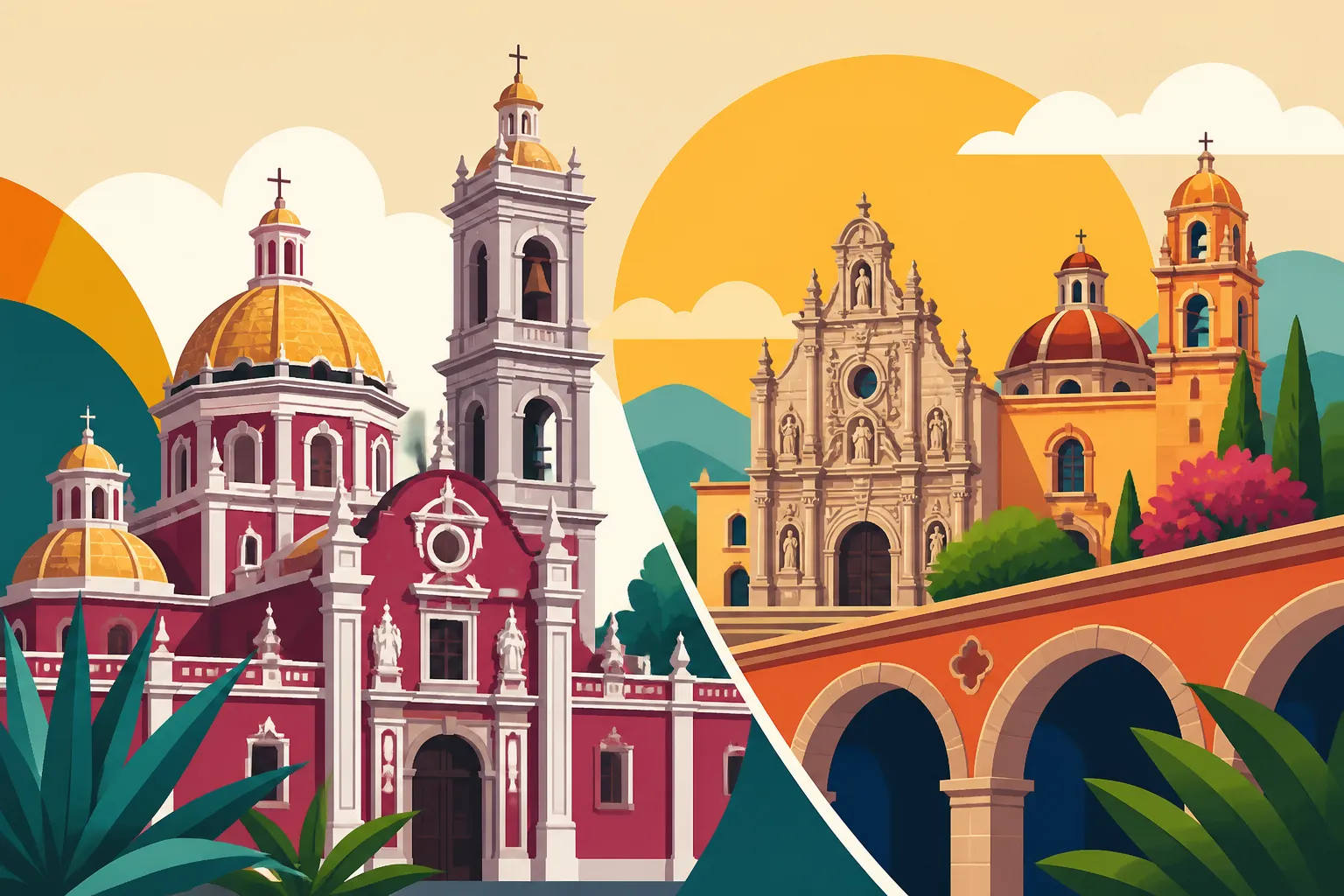
The heart of Puebla is its Zócalo, a massive main square anchored by a cathedral that took nearly 300 years to finish. Unlike many other Mexican cities, Puebla’s architecture is defined by the extensive use of Talavera tiles. These colorful, glazed ceramic tiles are embedded in the walls of churches, houses, and fountains, creating a vibrant mosaic effect that changes as the sun moves across the sky. The Church of Santo Domingo and its Rosary Chapel are essential stops; the interior is so heavily gilded in gold leaf that it feels like walking inside a jewelry box.
For those staying longer, the neighborhoods surrounding the center offer different vibes. La Paz is the hilltop area where you’ll find more modern apartments and a higher concentration of expats, while Cholula—just a short drive away—is famous for having a church built on top of the largest pyramid (by volume) in the world. When searching for accommodations, using Booking.com allows you to filter for "Historic Center" properties, which I highly recommend for your first few visits. Staying in an old converted mansion (casona) is an experience you won't get in a modern hotel chain.
Talavera and Gastronomy
You cannot talk about Puebla without talking about its food. This is the birthplace of Mole Poblano, a complex sauce involving dozens of ingredients including chocolate and various dried chilies. It is a culinary feat that many expats initially find intimidating but eventually crave. If you are visiting in late summer, you must try Chiles en Nogada. It’s a seasonal dish of poblano peppers stuffed with meat and fruit, covered in a walnut cream sauce and pomegranate seeds, designed to represent the colors of the Mexican flag.
Beyond the high-end restaurants, Mexican Markets and Food Halls for Visitors provide a window into the daily life of Poblanos. The Mercado el Alto is a great place to see mariachis waiting for work while you tuck into a cemita, a local type of sandwich on a sesame-seeded bun that is famously overflowing with quesillo and papalo. Understanding Mexican Food Culture: Eating and Drinking as a Visitor is vital here; lunch is the main meal of the day, often starting around 2:00 PM and lasting for hours.
Practical Tips for Navigating Puebla
The traffic in Puebla can be genuinely chaotic. The city was designed for horse-drawn carriages, not modern SUVs. My advice is to stay central and walk as much as possible. When you do need to move further afield, ride-sharing apps are widely available and generally safer and more transparent than hailing a taxi on the street. Always double-check your destination in the app, as Puebla has many streets with similar names that can lead you to the complete opposite side of town.
Also, be prepared for the altitude. Puebla sits at over 7,000 feet. If you are coming from sea level, you will feel winded walking up a flight of stairs for the first few days. Drink plenty of water and take it easy on the tequila for the first 48 hours. Most expats find that their bodies adjust within a week, but the dry mountain air can also lead to dehydration faster than you expect. It's one of those small logistical details that can make or break your first impression of the city.
Querétaro: Tradition Meets Modernity
Querétaro is often the city that "convinces" people to move to Mexico. While Puebla is grand and historic, Querétaro feels exceptionally livable. It has managed a feat that many colonial cities fail at: growing into a major industrial powerhouse while keeping its historic center pristine. The city is famous for its massive stone aqueduct, consisting of 74 arches that stretch across the valley. It’s a symbol of the city’s ingenuity and a constant landmark that helps you keep your bearings.
For foreigners, Querétaro feels like a "soft landing." The streets in the center are largely pedestrianized, the parks are filled with families on Sunday afternoons, and the level of public cleanliness is almost startling. It is a city that takes its rules seriously. You won’t see the same level of street vending or chaotic traffic as you do in other parts of the country. This orderliness is part of why it has become such a magnet for international professionals working in the nearby industrial parks.
The Aqueduct and the Historic Core
The historic center of Querétaro is a UNESCO World Heritage site, and for good reason. It’s a labyrinth of plazas and "andadores" (pedestrian walkways) that connect stunning baroque churches and former convents. The Plaza de Armas is the social heart of the city, lined with cafes and the government palace. It is the perfect place to sit and people-watch. You will notice that the local government puts a lot of effort into lighting the buildings at night, turning the entire center into a romantic, golden-hued landscape.
If you are interested in the deeper history of the city, I suggest booking a walking tour through Viator. A guide can explain the pivotal role Querétaro played in the Mexican War of Independence—this is where the "Conspirators of Querétaro" met in secret to plot against the Spanish crown. Knowing this history makes walking the streets feel more like traveling through time. For many expats, this rich historical context is a major part of the city’s appeal, providing a sense of place that is often missing in more modern expatriate destinations.
Living in Querétaro: The Expat Perspective
If you are considering Living in Querétaro: Colonial City Life for Foreign Professionals, you will likely find yourself looking at neighborhoods like Juriquilla or Milenio III. These are newer areas that offer gated communities (fraccionamientos), modern shopping malls, and international schools. While they lack the colonial charm of the center, they provide a level of security and convenience that families often prioritize. The contrast between the 18th-century center and the 21st-century suburbs is one of the city's most defining characteristics.
The administrative side of living here is relatively efficient compared to other Mexican states. The local "Hacienda" (tax office) and "INM" (immigration office) are known for being professional, though the language barrier can still be a challenge. It is highly recommended to have a basic grasp of Spanish or hire a local facilitator to help with things like setting up utilities or renewing your residency. Despite the modern feel, the "old ways" of doing business through personal connections still hold weight in Querétaro.
Vineyards and the Sierra Gorda
One of the best parts of being based in Querétaro is what lies just outside the city. The state is home to the "Ruta del Queso y Vino" (Cheese and Wine Route). To the northeast, the town of Tequisquiapan serves as a gateway to dozens of high-quality vineyards and artisanal cheese farms. It is a fantastic weekend escape that feels more like the countryside of Spain or Italy than central Mexico. Many expats make a habit of visiting the vineyards in the summer for the "Vendimia" (harvest festivals).
Further north, the landscape changes dramatically as you enter the Sierra Gorda. This is a biosphere reserve filled with rugged mountains, deep canyons, and five Franciscan missions that are also UNESCO sites. It is an adventurer’s paradise. However, the roads are winding and can be dangerous for those not used to mountain driving. For your first trip into the Sierra, I strongly suggest using a tour service to navigate the logistics and ensure you hit the best spots like the Puente de Dios or the Escanela River.
Comparing the Two: Which One is Right for You?
Choosing between Puebla and Querétaro often comes down to what you prioritize in your lifestyle or travel experience. Puebla offers a deeper, more traditional dive into Mexican culture and cuisine, but it comes with the "grit" and noise of a larger, more traditional city. Querétaro offers a cleaner, safer, and more organized environment that is arguably easier for foreigners to navigate, though some find it lacks the "soul" or raw character of Puebla.
| Feature | Puebla | Querétaro |
|---|---|---|
| Primary Vibe | Traditional, Grand, Religious | Modern, Clean, Efficient |
| Main Attraction | Talavera & World-Class Food | Aqueduct & Wine Country |
| Safety Level | Moderate (standard city caution) | High (considered very safe) |
| Climate | Temperate/Cooler due to altitude | Mild/Dry |
| Expats | Growing, but mostly scattered | Established, concentrated in suburbs |
| Walkability | High in center, difficult outside | Very high in center, car-heavy suburbs |
For a short-term tourist, Puebla is often the winner because the sights are more "monumental." For a long-term resident, Querétaro frequently wins because the infrastructure makes daily life less stressful. However, both cities are subject to the same national laws regarding immigration and safety. It is always wise to keep an eye on Safety in Mexico: What Expats Need to Know About Staying Safe as conditions can change, though these two cities have remained remarkably stable over the last decade.
Travel Logistics and Local Secrets
When planning your trip, don't try to cram both cities into a single long weekend. They are too big and offer too much to be "checked off" in 48 hours. Give yourself at least three days in each. If you are coming from abroad, the easiest way to reach this region is usually flying into Mexico City (AICM) and taking a direct "luxury" bus from the airport terminal. These buses are safe, have reclining seats, and save you the hassle of navigating through the city center with luggage.
One "pro tip" for both cities: learn the local tipping culture. In restaurants, 10% is standard, but 15% is becoming the norm for exceptional service. For street food, tipping isn't expected but leaving a few pesos is always appreciated. You can read more about the nuances in Tipping in Mexico (Propina): When and How Much. Small coins are also essential for "franeleros" (people who help you park on the street) and public restroom attendants.
Where to stay: Using Booking.com effectively
When searching for a place to stay, I always suggest looking for properties that mention "interior patios." In colonial cities, the street noise can be intense—church bells, gas trucks with their signature jingles, and neighbors' dogs are part of the soundscape. A room that faces an interior courtyard will be significantly quieter than one facing the street. On Booking.com, you can often see this mentioned in the reviews by other travelers who prioritize a good night's sleep.
In Puebla, look for hotels near the "Calle de los Dulces" (Street of Sweets), which is a delight for anyone with a sweet tooth. In Querétaro, staying near the "Plaza de la Independencia" puts you in the middle of the best dining and nightlife. If you are looking at longer-term rentals, be aware that many landlords still prefer to deal in cash and may not speak English, so having your documents in order and a translator on hand is vital.
Tours and Experiences via Viator
While I'm a big advocate for exploring on your own, some things in these cities are simply better with a guide. For example, the hidden history of the tunnels in Puebla was only recently opened to the public and is fascinating when explained by a local expert. Similarly, the wine tours in Querétaro often involve visits to multiple vineyards that are hard to coordinate without a designated driver. Using Viator to pre-book these experiences ensures you don't waste your limited vacation time trying to find a reputable operator on the street.
Also, look for food tours. In Puebla, a food tour is the best way to understand the difference between the various types of mole and to find the best street stalls that you might otherwise walk past. In Querétaro, a night tour that includes "Leyendas" (legends) is a local tradition where actors in period costumes lead you through the dark alleys of the center, telling ghost stories and historical anecdotes. It’s a bit kitschy, but it’s a wonderful way to see the city from a different perspective.
Safety and Social Etiquette
While both cities are generally safe, you should never abandon the basic common sense you would use in any major city. Pickpocketing can happen in crowded markets, and it’s best to avoid walking alone in poorly lit areas late at night. For more detailed advice, check out Staying Safe in Mexico: Practical Tips for Travelers. The most important thing is to be aware of your surroundings and not to flash expensive jewelry or large amounts of cash.
Socially, central Mexico is more formal than the coastal areas. When entering a small shop, it is customary to say "Buenas tardes" to the shopkeeper. When leaving, a "Gracias, hasta luego" is expected. This politeness is the social fabric that makes these cities feel so welcoming. As an expat, you will find that the more you adapt to these local customs, the more the community will open up to you. It’s the difference between being a perpetual outsider and truly feeling at home in the colonial heartland.
Disclaimer
The information provided in this guide is for educational and informational purposes only. While every effort has been made to ensure the accuracy of the facts and travel advice, conditions in Mexico can change rapidly. Always check with official government resources and local authorities for the most up-to-date information regarding safety, immigration, and health regulations before planning your trip or move.