Living in Querétaro: Colonial City Life for Foreign Professionals
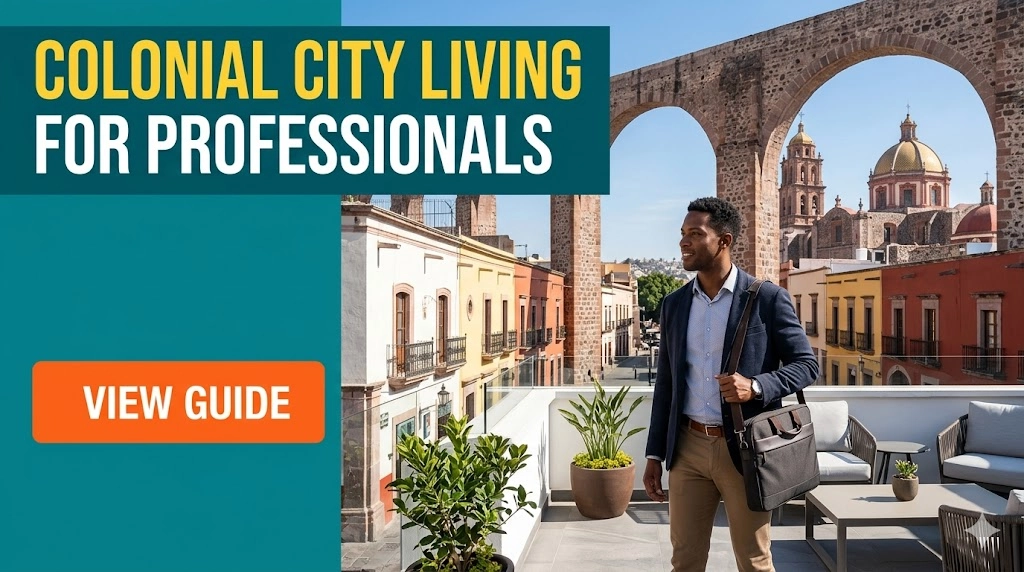
Navigating the historic, rose-colored stone arches of Querétaro’s colonial center while coordinating a remote software deployment used to feel like a surreal contradiction. I spent my first few weeks here oscillating between the 18th-century charm of the Centro Histórico and the hyper-modern corporate parks of Juriquilla. This guide breaks down why Querétaro has become the premier destination for foreign professionals seeking a high-quality, high-tech, and high-safety life in the Mexican interior.
Disclosure: This post may contain affiliate links. We may earn a commission at no extra cost to you if you make a purchase through these links. Read full disclosure.
The Professional Magnet: Why Querétaro?
Querétaro is not your typical Mexican retirement haven. While San Miguel de Allende caters to artists and Lake Chapala to retirees, Querétaro is the beating industrial and technological heart of Mexico. For foreign professionals, it offers a “Best of Both Worlds” scenario: a UNESCO World Heritage colonial city paired with a booming aerospace and automotive industry.
The Industrial Powerhouse and “Aerospace Valley”
Known as the “Aerospace Valley of Mexico,” Querétaro is home to global giants like Bombardier, Airbus, and Safran. It is one of the top five cities in the world for aerospace investment. This industrial maturity has created an ecosystem that demands high-level technical expertise, drawing in thousands of foreign engineers, executives, and consultants.
Beyond aerospace, the city is a critical hub for the automotive and IT sectors. The arrival of massive data centers from Microsoft and Amazon Web Services has further cemented the city’s status as Mexico’s primary tech corridor. For an expat professional, this means you aren’t living in a “foreigner bubble” isolated from the local economy; you are living in a city where your professional skills are part of the daily fabric. If you’re planning to work for one of these giants, understanding your tax obligations is critical. Be sure to read Taxes in Mexico for Expats: A Complete Guide to Income Tax and More.
Safety and Stability
Safety is often the primary concern for foreign professionals relocating to Mexico. As of early 2026, Querétaro remains one of the safest and most peaceful states in the country. The homicide rate here remains well below the national average, and the city’s proactive municipal police force is among the most well-funded in Mexico.
While “petty crime” like pickpocketing exists in crowded markets, the violent crime that often makes headlines in other regions is virtually absent from the neighborhoods where expats live and work. This stability allows professionals to walk their dogs at night, enjoy rooftop dining, and drive to corporate parks without the hyper-vigilance required in some other Mexican hubs.
Choosing Your Base: Neighborhoods for Professionals
Querétaro is a city of contrasts. Your daily lifestyle will differ drastically depending on whether you choose the historic masonry of the center or the manicured gated communities of the north.
Centro Histórico: The Soul of the City
Living in the Centro Histórico means living inside a living museum. The architecture is a stunning mix of baroque and neoclassical styles, characterized by pedestrian-only streets and vibrant plazas.
Pros: * Walkability: You can walk to world-class restaurants, independent bookstores, and colonial theaters.
- Atmosphere: The energy of evening callejoneadas (musical walks) is unbeatable.
- Architecture: Living in a restored casona with high ceilings and interior courtyards.
Cons:
- Noise: Between church bells and late-night festivals, “quiet” is rare.
- Parking: Almost nonexistent.
- Plumbing: Historic homes often have ancient pipes that can’t handle toilet paper.
If you choose the historic route, you must interrogate the lease carefully regarding structural maintenance. For a deep dive into local laws, read Understanding Mexican Rental Contracts: Key Terms and Tenant Rights.
Juriquilla: The Upscale Expat Hub
Located about 20 minutes north of downtown, Juriquilla is the undisputed favorite for foreign executives and families. It is built around a man-made lake and features golf courses, international schools, and massive shopping malls like Antea (the largest in Mexico).
Pros:
- Modernity: Flawless infrastructure, reliable water, and underground electrical lines.
- Security: Gated communities (privadas) with 24/7 armed guards.
- Convenience: Immediate access to international-brand supermarkets and luxury gyms.
Cons:
- Traffic: The commute on Highway 57 during rush hour is soul-crushing.
- Car-Dependency: You cannot live in Juriquilla without a personal vehicle.
Zibatá and El Refugio: The Planned Future
For the modern digital professional, Zibatá is currently the most sought-after planned community. It is designed with high sustainability standards, featuring cycle paths, eco-parks, and a stunning golf course. It offers a “city within a city” feel that is highly attractive to young remote-work professionals.
To bridge your arrival and scout these neighborhoods, veteran professionals often utilize Selina. Booking a private room at a Selina location (often found in the more vibrant urban areas) gives you immediate access to commercial-grade Wi-Fi and a community of other working professionals who can give you the “real talk” on commute times and landlord reliability before you sign a long-term contract.
Infrastructure and the Digital Workspace
For a foreign professional, “good enough” internet is not an option. Your career depends on high-definition video calls and massive data transfers.
Internet Reliability and Power
Querétaro’s internet infrastructure is among the best in Latin America. In neighborhoods like Juriquilla and Milenio III, fiber-optic speeds of 200 Mbps to 500 Mbps are the standard via providers like Totalplay and Telmex.
However, even in a modern city, the CFE power grid can be temperamental during the summer rainy season. Sudden afternoon thunderstorms can knock out transformers. Professionals living here should absolutely invest in a high-capacity Uninterruptible Power Supply (UPS) for their modem.
Because finding specialized, high-end tech hardware in local Querétaro stores can be a bureaucratic hunt, savvy expats rely on Amazon Mexico. Utilizing the localized Amazon Mexico platform allows you to order clinical-grade surge protectors, ergonomic office chairs, and specialized networking gear directly to your door, completely bypassing the customs delays of international shipping.
Beating the Connectivity Gap
The moment you land at Querétaro Intercontinental Airport (QRO), the race to connect begins. You cannot rely on spotty airport Wi-Fi to coordinate a shuttle to Juriquilla or translate a conversation with a building manager.
To guarantee immediate, high-speed data, you must download a localized eSIM profile through Airalo before your plane touches the tarmac. Having a dedicated Airalo data package ensures you are connected to the robust Telcel 4G/5G network the second you switch off airplane mode. This allows you to track your Uber, message your real estate agent, and keep your business communications flowing during that critical first day of relocation.
The Cost of Living in 2026
Querétaro offers an incredible lifestyle arbitrage for those earning in USD or EUR, but the city has experienced significant inflation over the last three years due to the “Nearshoring” boom.
| Expense Category | Monthly Estimate (Professional) | Notes |
| Rent (2-Bed in Juriquilla) | $1,200 – $1,800 USD | Can be as low as $800 in older neighborhoods. |
| Utilities (Electricity/Gas/Internet) | $150 – $250 USD | Spikes in winter if using space heaters. |
| Dining (4 times/week) | $400 – $600 USD | Mix of street food and high-end steakhouse. |
| Private Health Insurance | $100 – $250 USD | Varies by age and coverage tier. |
The Unfurnished Reality
When searching for a long-term home, be prepared for the Mexican definition of “unfurnished” (sin amueblar). In many cases, this means bare concrete walls. No refrigerator, no stove, and often no built-in closets.
Outfitting a raw apartment during your first week while managing a full-time job is a recipe for burnout. This is another area where Amazon Mexico is a lifesaver. You can order your “línea blanca” (appliances) and even a “mattress in a box” for delivery on day two. To understand the cost differences between furnished and unfurnished, review Real Estate in Mexico: Renting vs Buying for Expats.
Healthcare: The Elite Private Sector
Querétaro is home to some of the best medical facilities in Mexico, specifically catering to the wealthy industrial sector. For foreign professionals, the public IMSS system is rarely the primary choice.
Top-Tier Hospitals
- Hospital Star Médica: A modern, highly efficient facility with English-speaking specialists.
- Hospital Ángeles: The gold standard for private care in the city, with a massive range of diagnostic equipment.
- Hospital San José (Juriquilla): Convenient for those living in the northern suburbs.
Specialist visits typically cost between $50 and $90 USD. While “cheap” compared to the US, a major surgery will still run into the tens of thousands. You must possess international or localized private health insurance to access these elite facilities without a massive upfront cash deposit. To understand the tiered system of care, read Healthcare in Mexico: Complete Guide for Expats Public vs Private. If you need maintenance medications, you should also consult Pharmacies in Mexico: How to Get Medications OTC vs Prescription.
Logistics: Getting Around the City
Querétaro’s geography is a challenge. The city is divided by a major federal highway (Highway 57) that carries the bulk of Mexico’s northern industrial freight.
The Car vs. Uber Debate
If you live in Juriquilla or Zibatá, owning a car is non-negotiable. Walking is physically impossible due to massive highways and a lack of continuous sidewalks. However, driving in Querétaro requires a thick skin and defensive habits. The local “Right of Way” is often determined by the size of the vehicle.
If you live in the Centro or Milenio III, you can easily rely on Uber and DiDi. These services are remarkably cheap (usually $3–$7 USD for a cross-town trip) and significantly safer than street taxis. To decide whether to import your own car or buy locally, consult Bringing Your Car vs Buying in Mexico: Pros and Cons for Expats.
Bureaucracy and the Professional Resident
You cannot legally live and work in Querétaro long-term on a tourist visa. The Mexican government has tightened restrictions, and “border runs” are no longer a viable strategy for professionals.
Securing Temporary Residency
To open a local bank account or sign a formal internet contract in your name, you need a Temporary Resident Card. This process must begin at a Mexican consulate in your home country. Once you arrive in Querétaro, you have 30 days to complete the “Canje” (exchange) at the local INM office.
The Querétaro INM office is notoriously efficient but demands perfect paperwork. Any typo on your forms will result in a rejection. For a step-by-step roadmap to surviving this gauntlet, follow our guide on How to Apply for Temporary Residency in Mexico: Step-by-Step.
The Importance of the RFC
If you are a professional resident, you legally need an RFC (Mexican Tax ID). Without it, you cannot legally purchase a car or pay certain municipal taxes. Getting an appointment at the SAT (tax authority) in Querétaro is a sport in itself, often requiring weeks of checking the digital portal at 2:00 AM.
Social Life and Cultural Integration
Querétaro offers a “refined” social life. The city doesn’t have the loud, frantic nightlife of Guadalajara or the gritty bohemian scene of CDMX. Instead, it offers world-class vineyards, artisanal cheese tours, and a thriving polo and equestrian culture.
The Wine and Cheese Route
Located just 45 minutes from the city is Tequisquiapan and the heart of Mexico’s burgeoning wine region. Weekend trips to vineyards like Cava de Oro or Freixenet are a staple of professional life here. It is an incredibly sophisticated way to spend a Saturday, far removed from the “Spring Break” vibe of the coast.
Breaking the Expat Bubble
Locals in Querétaro, known as Queretanos, are famously polite but can be reserved. Building a local friendship circle takes time and effort. Professionals who thrive here are those who join local sports clubs (like Fronton or Padel) or volunteer with municipal clean-up projects.
Learning Spanish is not “optional” if you want to integrate. While your boss at the aerospace plant might speak English, the guy fixing your boiler or the teller at the bank will not. To manage the ongoing logistics of utilities while you learn the language, study Setting Up Utilities in Mexico: Electricity, Water, and Internet.
References
Primary sources (official)
- Municipio de Querétaro: The official municipal government portal for city regulations, tax payments, and infrastructure updates. https://www.municipiodequeretaro.gob.mx/
- Instituto Nacional de Migración (INM): The federal portal for residency requirements and official paperwork formats. https://www.gob.mx/inm
Other helpful sources
- ExpatDen: A comprehensive, firsthand resource for navigating the costs and logistics of moving to central Mexico. https://www.expatden.com/mexico/
Disclaimer
The information provided in this guide is for educational, logistical, and informational purposes only and does not constitute formal immigration, legal, real estate, or medical advice. Mexican laws regarding residency, tax ID (RFC) requirements, and tenant rights are subject to frequent and sudden legislative changes in 2026. Always consult with a certified bilingual Mexican attorney or a registered immigration facilitator before signing long-term leases or executing financial transfers. Thoroughly verify your health insurance coverage limits directly with your provider before relocating.