Living in Los Cabos: Expat Life at Land’s End
Los Cabos—the municipality encompassing both Cabo San Lucas and San José del Cabo—is one of Mexico’s most expensive, modern, and high-energy expat destinations. As of early 2026, it remains a premier magnet for North American retirees, digital nomads, and luxury seekers. However, thriving here requires navigating a unique desert environment, a complex utility infrastructure, and a dual-city lifestyle that can be as polarizing as it is beautiful. This guide breaks down the physical, financial, and logistical realities of living at the tip of the Baja Peninsula.
Disclosure: This post may contain affiliate links. We may earn a commission at no extra cost to you if you make a purchase through these links. Read full disclosure.
The Climate Reality: Desert Sun and the Summer Burn
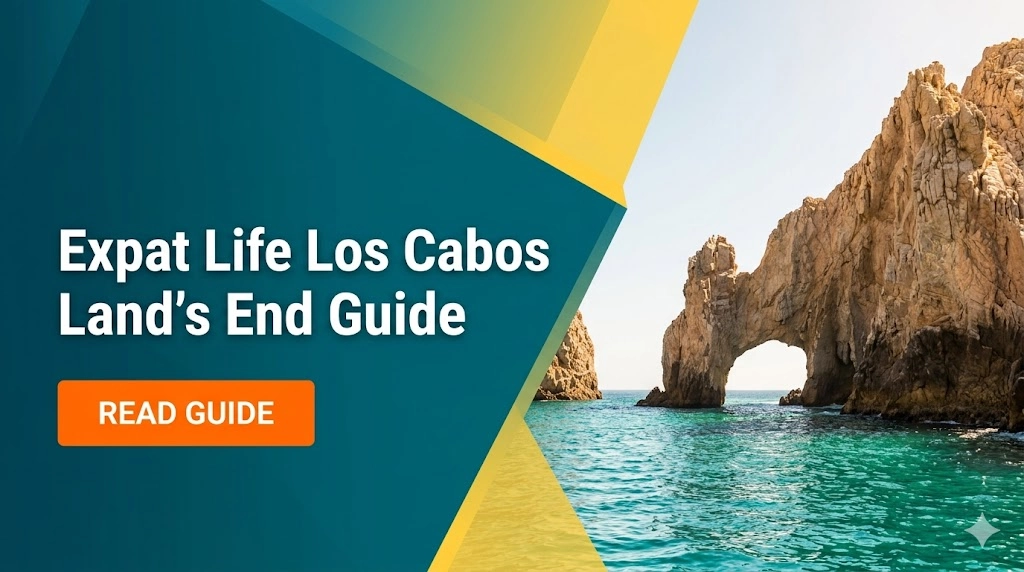
When you move to Los Cabos, you aren’t moving to the tropics; you’re moving to the desert. The landscape is a striking mix of golden sands, jagged cactus, and deep blue water. This geography dictates every aspect of your life, from your water consumption to your electricity bill.
350 Days of Sunshine
The primary draw for most expats is the weather. Los Cabos averages over 350 sunny days per year. If you suffer from Seasonal Affective Disorder or are simply tired of gray northern winters, this is your sanctuary. From November through April, the weather is absolute perfection, with daytime temperatures in the high 70s and low 80s and cool, crisp nights.
However, many “snowbirds” flee the region by late May for a reason. The summer months (July through September) are punishingly hot. Temperatures frequently soar past 100°F (38°C). Unlike the humid Caribbean coast, the heat here is dry, but it is intense. The desert sun at this latitude is aggressive; it will bleach your patio furniture, crack your tires, and dehydrate you within minutes.
Hurricane Season and the Arroyos
While Baja California Sur is a desert, it is not immune to tropical weather. Hurricane season runs from June through November, with peak activity in September. Because the ground is sun-baked and non-porous, even a “moderate” tropical storm can cause massive flash flooding.
The region is carved by arroyos—dry creek beds that stay empty for 360 days a year but can transform into raging torrents of mud and debris during a storm. When hunting for a home, you must meticulously check the topography. A house built near an arroyo might have a spectacular desert view, but it could be structurally compromised or inaccessible during the rainy season. To understand how these environmental risks affect property values and long-term security, review Real Estate in Mexico: Renting vs Buying for Expats.
Choosing Your Town: A Tale of Two Cabos
One of the most common mistakes newcomers make is assuming Cabo San Lucas and San José del Cabo are interchangeable. While only 20 miles apart, they offer two fundamentally different lifestyles.
Cabo San Lucas: The Energetic Heart
Cabo San Lucas is the Cabo you see in movies. It’s built around a massive, world-class marina and the famous Medano Beach. It is the center of the region’s nightlife, high-end shopping, and social activity.
- The Vibe: High-energy, social, and unapologetically tourist-driven.
- Who Lives Here: Younger expats, digital nomads, and those who want to be “in the mix.”
- The Reality: It is loud, crowded during peak season, and traffic around the marina can be soul-crushing. However, it offers incredible walkability. If you live in a condo downtown or in Pedregal, you may not even need a car for your daily errands.
San José del Cabo: The Cultural Sanctuary
San José del Cabo is the refined, historic older sister. It features a charming colonial center, a central plaza with a mission church, and a thriving Art District.
- The Vibe: Sophisticated, traditional, and community-oriented.
- Who Lives Here: Retirees, families, and those seeking a “real” Mexican town feel.
- The Reality: The pace of life is noticeably slower. The weekly Thursday night Art Walk is the social anchor of the community. While San José has beautiful beaches, they are often not swimmable due to dangerous undertows and strong Pacific currents.
The Corridor: The Luxury Middle Ground
The 20-mile stretch of highway connecting the two towns is known as “The Corridor.” This is where you’ll find the most exclusive gated communities, world-renowned golf courses, and luxury resorts. Living here offers peace and spectacular ocean views, but it makes you entirely car-dependent. You will spend a significant portion of your week driving the Transpeninsular Highway to reach a grocery store or a doctor.
The Infrastructure Crisis: Water and Power
Behind the luxury villas and pristine infinity pools lies a developing infrastructure that is struggling to keep up with explosive growth. As an expat, you must become an active manager of your home’s resources.
The Great Water Shortage
Los Cabos is currently facing a critical water shortage. The municipal supply (OOMSAPAS) is simply not sufficient for the growing population. In many neighborhoods, municipal water is only “turned on” once every few weeks.
To live here comfortably, you cannot rely solely on the city pipes. Your home must have a large-capacity underground cistern (cisterna)—ideally 10,000 to 15,000 liters. When the municipal lines go dry, you must call a private water truck (pipa) to refill your tank.
Ordering a pipa in July or August is a stressful exercise in patience and Spanish. Prices surge during droughts, and wait times can be days. If you are renting, you must clarify who pays for the pipa—the landlord or you. For a detailed breakdown of how to navigate these local utility hurdles, study Setting Up Utilities in Mexico: Electricity, Water, and Internet.
CFE and the Electricity Trap
Electricity in Mexico is managed by the CFE and is billed on a tiered system. In the desert heat of Los Cabos, running your air conditioning 24/7 is a fast-track to the DAC (Doméstico de Alto Consumo) rate.
Once you hit the DAC tier, the government removes all subsidies, and your bill can easily jump from $50 USD to $400+ USD per month. Many long-term residents invest in solar panels to combat this. If you are moving into an unfurnished rental, you must budget for high-efficiency inverter AC units. To bypass the chaotic local retail supply chain for energy-saving appliances, many expats rely on Amazon Mexico. Utilizing the localized Amazon Mexico platform allows you to order high-quality floor fans, LED lighting, and smart thermostats directly to your door, helping you manage your consumption from day one.
The True Cost of Living in 2026
Los Cabos is one of the most expensive regions in Mexico. While it is still cheaper than Seattle or Vancouver, the “cost-of-living arbitrage” is less dramatic here than in cities like Oaxaca or Mérida.
The Rental Market
As of early 2026, the rental market is incredibly tight. The influx of remote workers has driven prices up significantly in desirable neighborhoods like El Tezal or downtown San José.
| Neighborhood | Typical 2-Bed Rent (USD) | Lifestyle Vibe |
| Cabo San Lucas (Downtown) | $1,500 – $2,500 | Walkable, near bars/marina |
| El Tezal (CSL) | $1,200 – $2,000 | Family-friendly, gated, car-needed |
| Pedregal (CSL) | $3,500 – $6,000+ | Ultra-luxury, gated, views |
| San José (Centro) | $1,400 – $2,200 | Cultural, quiet, artistic |
| Puerto Los Cabos (SJDC) | $4,000 – $8,000 | Golf, marina, seclusion |
Beyond the rent, you will likely face the Aval requirement. Most landlords demand a local co-signer with property in Baja to guarantee your lease. If you don’t have one, be prepared to pay for a Póliza Jurídica (legal insurance policy) or offer 3–6 months of rent upfront. To protect your rights during these negotiations, read Understanding Mexican Rental Contracts: Key Terms and Tenant Rights.
Groceries and the “Gringo Tax”
Because almost everything in Los Cabos must be trucked down the 1,000-mile peninsula from Tijuana or shipped across the sea, grocery prices are higher than in mainland Mexico. You have access to massive American-style stores like Costco and Walmart, which provide comfort but often at US-level prices.
To save money, you must learn to shop at local mercados and fruterías in neighborhoods like Colonia Ejidal. However, be aware of the “Gringo Tax.” In tourist zones, prices are often quoted in USD and inflated. Always carry Mexican pesos and ask for the precio local when possible. Managing these daily expenses and understanding your tax residency status is vital; for more information, read Taxes in Mexico for Expats: A Complete Guide to Income Tax and More.
Connectivity and the Digital Nomad Setup
Los Cabos is a top-tier destination for remote workers, but you cannot rely on “vacation Wi-Fi” to maintain a professional career.
Fiber Optics vs. Starlink
In central Cabo San Lucas and San José, fiber-optic internet from providers like Telmex and Totalplay is widely available and reliable, offering speeds up to 500 Mbps. However, if you move to the East Cape or more remote sections of the Corridor, the infrastructure is spotty. In these areas, SpaceX’s Starlink has become the gold standard for expats.
Staying Connected with Airalo
The absolute worst feeling is landing at SJD airport, realizing the airport Wi-Fi is broken, and being unable to call a secure Uber because your home roaming isn’t working.
To guarantee immediate, high-speed connectivity the second your plane lands, you should download a localized eSIM profile through Airalo. Having an Airalo data package ready allows you to navigate the confusing airport exits, message your shuttle driver, and translate complex Spanish lease terms during your first housing tour without being stranded in a digital dead zone. It’s the ultimate safety blanket for the arriving expat.
Co-Working and Community
Working from a high-rise condo with a view is great until the power goes out during a summer storm. To ensure professional continuity and to meet other driven professionals, many nomads utilize Selina. Booking a private room or a co-working desk at a Selina location (often found in vibrant Mexican hubs) provides you with commercial-grade backup power and a built-in community.
While Los Cabos is still developing its dedicated co-working scene, utilizing Selina hubs in nearby regions or during your scouting trips ensures you aren’t isolated in a tourist bubble. You can sit in the co-working space, grab a coffee, and network with other expats who can give you the “real talk” on which local ISPs are actually reliable in specific neighborhoods. For a deeper dive into the nomad lifestyle, consult Digital Nomads in Mexico: Remote Work Guide.
Healthcare: World-Class Care at Land’s End
One of the biggest “pros” of living in Los Cabos is the quality of private medical care. Because the region caters to wealthy international tourists, the private hospital networks are exceptional.
Top-Tier Private Hospitals
- Hospital H+: Located in the Corridor, this is often the primary choice for expats. It features state-of-the-art diagnostic equipment and bilingual specialists.
- Amerimed: Situated near the marina in Cabo San Lucas, it is excellent for emergency care and routine specialist visits.
- AMC (Advanced Medical Center): Highly regarded for surgical procedures and orthopedic care.
Consultations with English-speaking specialists typically cost between $40 and $80 USD. While this is affordable, a major surgical emergency or a complex hospital stay in these facilities can easily run into the tens of thousands.
The Financial Safety Net
You cannot rely on the Mexican public healthcare system (IMSS) for complex trauma or specialized care; the wait times are long, and the facilities are underfunded. Attempting to self-insure a major accident is financial suicide. You must secure robust international or local private health insurance to guarantee VIP access to these private hospitals without draining your life savings. To compare policies and understand why domestic plans often fall short, review Choosing Private Health Insurance: Local Mexican Plans vs International Coverage. For routine maintenance and local laws, see Pharmacies in Mexico: How to Get Medications OTC vs Prescription.
Safety and Daily Life
Is Los Cabos safe? Statistically, yes. The region maintains some of the lowest crime rates in all of Mexico, largely because the local economy is so dependent on tourism that the government and private sector invest heavily in security.
Situational Awareness
While violent crime against expats is extremely rare, petty theft and opportunistic crimes occur. Most “safety” issues for expats revolve around road safety. Driving in Cabo requires a thick skin and hyper-vigilance. The Transpeninsular Highway is notorious for high-speed accidents, wandering livestock (cows and horses), and aggressive right-of-way rules.
Always drive defensively, never drive on rural highways at night, and always use registered ride-share apps or official taxis. For a complete guide on navigating the roads, read Taking Road Trips in Mexico: Safety and Planning Tips.
Establishing Your Basecamp
relocating to Los Cabos is a massive logistical undertaking. You shouldn’t sign a 12-month lease from your living room in Minnesota. You need to be on the ground to test the water pressure, listen to the neighborhood noise levels, and smell the nearest arroyo.
Many veteran expats recommend a “soft landing.” Book a transitional stay for 30 days in a central, highly connected area. This gives you time to complete your residency Canje at the local INM office and scout neighborhoods without the pressure of a ticking clock.
Conclusion: Is Cabo Right for You?
Living in Los Cabos is a choice to trade rustic, “old-world” Mexico for a high-octane, modern desert lifestyle. It is a place of profound contrasts: where you can buy $1 street tacos in the morning and dine at a Michelin-starred restaurant in the evening. It offers unparalleled safety and world-class healthcare, but it demands that you become an active manager of your own water and power.
If you are looking for a dirt-cheap retreat, Cabo will disappoint you. But if you have the budget to navigate the desert’s demands, Land’s End offers a quality of life that is, quite literally, at the edge of paradise.
References
Primary sources (official)
- Municipio de Los Cabos: The official municipal portal for local regulations, water utility alerts (OOMSAPAS), and public safety updates. https://loscabos.gob.mx/
- Secretaría de Turismo de Baja California Sur (SETUE): The official state tourism and development bureau providing data on regional infrastructure, medical tourism standards, and investment guidelines. https://setuesbcs.gob.mx/
Other helpful sources
- Baja Properties: A highly trusted, veteran real estate resource detailing the neighborhood-by-neighborhood costs and infrastructure realities for foreigners. https://www.bajaproperties.com/blog/it-expensive-live-cabo-san-lucas/
- ExpatDen: A practical, firsthand resource for navigating the bureaucratic gauntlet of residency and daily life in the Baja Peninsula. https://www.expatden.com/mexico/
Disclaimer
The information provided in this comprehensive guide is for educational, logistical, and informational purposes only and does not constitute formal immigration, legal, real estate, or medical advice. The cost of living, rental market prices, and public utility stability in Los Cabos are highly volatile and subject to rapid economic shifts and environmental factors. Always consult with a certified bilingual Mexican attorney or a registered immigration facilitator before signing long-term leases, and thoroughly verify your international health insurance coverage networks before relocating.