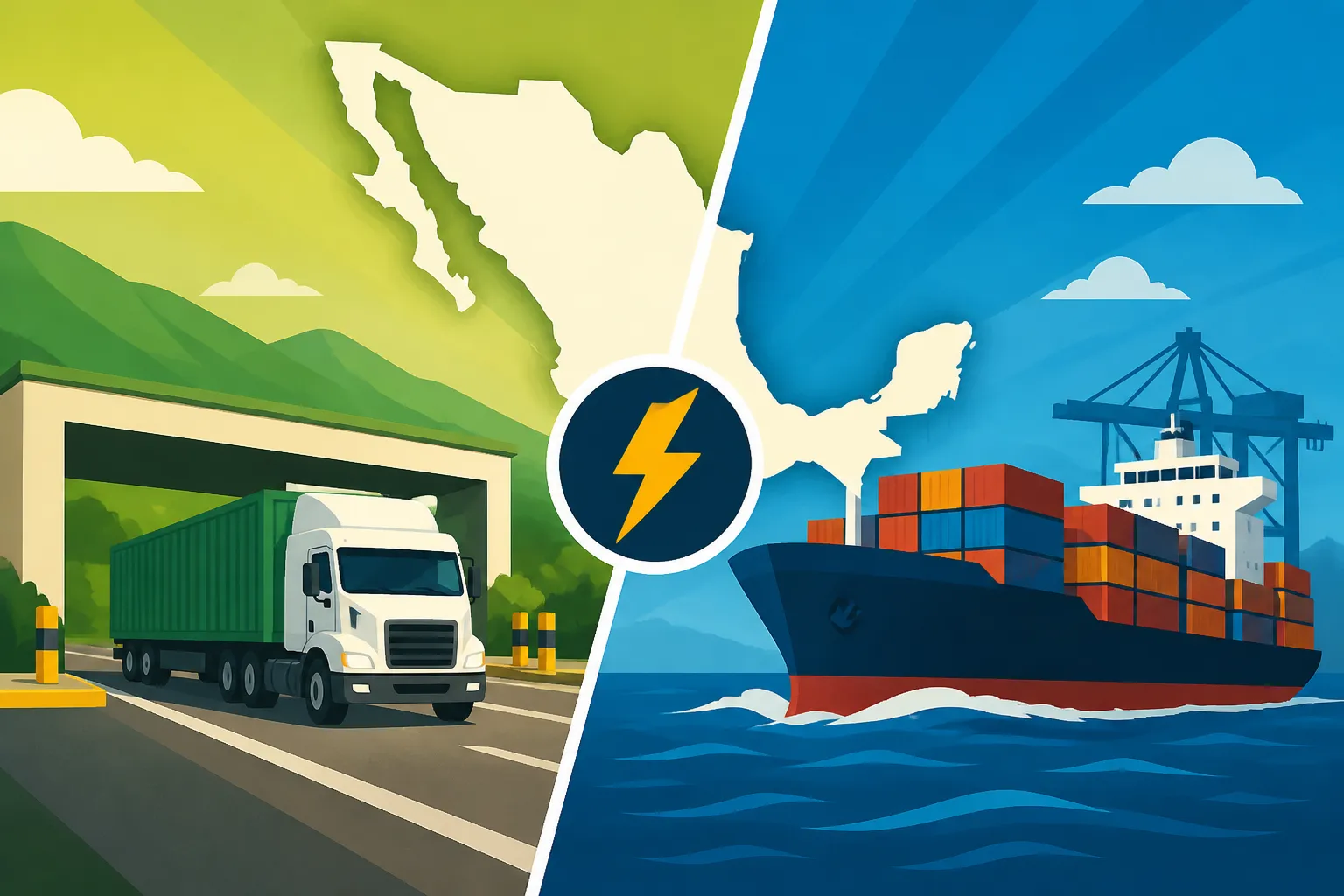
Land Border Crossing vs Sea Freight to Mexico: When Each One Wins
Oh, the infamous move to Mexico! You've sorted your visa (or you're getting there!), found a potential place to live, and now the big question looms: how on earth do you get your beloved belongings here without losing your mind, your money, or half your stuff at the border? This guide is going to walk you through the nitty-gritty of two main options – driving your goods across the land border or shipping them via sea freight – to help you figure out which one is the least headache-inducing for your unique situation.
Disclosure: This post may contain affiliate links. We may earn a commission at no extra cost to you if you make a purchase through these links. Read full disclosure.
The Land Border Crossing Conundrum: Driving Your Belongings Across
Let's be real, the idea of packing up your car or renting a U-Haul and driving your life savings (or at least your favorite armchair) right into Mexico sounds romantic, doesn't it? The open road, the feeling of control, the promise of saving a buck. But as any expat who's been here a while will tell you, "romantic" and "Mexico's customs process" rarely belong in the same sentence.
The Allure and the Reality of DIY Moves
The primary draw of a DIY land border move is often the perception of cost savings and complete control. You envision carefully packing your boxes, loading them into a truck, and driving them straight to your new home in San Miguel de Allende or Ajijic. You think, "I'm already driving my car across, what's a few more boxes?" This approach works for some, usually those with very minimal possessions – maybe a few suitcases, some personal keepsakes, and nothing that would flag a customs agent for a deeper look.
However, the reality can hit you hard at the border. You're not just crossing a line on a map; you're entering a different country with its own complex set of rules, especially concerning goods. What seems like a straightforward process can quickly become a multi-day ordeal involving unexpected fees, extensive paperwork, and detailed inspections. The "control" you hoped for can dissolve into frustration as you navigate a system that often seems designed to be opaque. For instance, if you're bringing your vehicle, you'll also need to manage a Temporary Import Permit (TIP) for Cars: What Residents Should Know, which is a whole other layer of bureaucracy on its own, adding to the complexity of your border crossing day.
Navigating Mexican Customs at the Border
When you arrive at a Mexican land border crossing, especially with a vehicle full of household goods, you're looking at a different experience than a typical tourist entry. While many cross the border daily for tourism or quick trips, bringing your entire household requires specific documentation and a keen understanding of the process. You'll be directed to the aduana (customs) area, which can be a bustling, sometimes confusing place. The key here, above all else, is your Menaje de Casa. Without this vital document, you risk having to pay steep import taxes on everything you bring, or worse, having your goods denied entry.
The Menaje de Casa is a consular certificate that allows foreign residents to import their used household goods duty-free. It proves that the items you're bringing are your personal effects, not commercial goods for resale. Obtaining it requires a detailed inventory of every single item, down to the last spoon, prepared before you even leave your home country. This list needs to be notarized and then presented at a Mexican consulate. Imagine trying to explain in halting Spanish to a customs agent why your couch is "used" and not a new import if you don't have this document. Major border crossings like Laredo, Texas (for those coming from the central US), or Nogales, Arizona (for western US arrivals), are familiar with the Menaje de Casa process, but be prepared for thorough checks. It's not uncommon to hear stories of expats spending hours, or even a full day, at customs, waiting for their documentation to be reviewed and their vehicle inspected. For more general advice, you might find our guide on Customs Tips for New Residents: What You Can Bring When Moving to Mexico helpful.
Costs and Time Investment for Land Crossings
While the upfront cost of hiring a moving company might make your eyes water, consider the true costs of a DIY land border crossing. It’s not just about fuel and hotel stays. You'll incur expenses for:
- Vehicle Permits: If you're driving your own car or a rental truck, you'll need the appropriate temporary import permits and insurance.
- Potential Broker Fees: Even if you plan to do it yourself, you might find yourself overwhelmed at the border and hiring a agente aduanal (customs broker) on the spot, often at a premium.
- "Inspection" Fees: Sometimes, an unofficial "expediting" fee might be requested. While you should never offer a bribe (mordida), refusing can sometimes lead to agonizingly long delays and very thorough inspections.
- Time Off Work/Lost Income: The process can take several days, even weeks, including travel time, waiting at the consulate for your Menaje de Casa, and potential delays at the actual border. If you're self-employed or taking unpaid leave, this time adds up.
- Wear and Tear on Your Vehicle: Driving a loaded vehicle thousands of miles through potentially varied terrain.
Let's do a quick hypothetical: driving from Denver, Colorado, to Puerto Vallarta, Jalisco, is roughly 2,000 miles. That's easily 3-4 days of driving, two people in a car, plus the truck, so double the gas. Add 3-4 nights in hotels, food, and then potentially 1-2 full days at the border for customs clearance, assuming everything goes smoothly with your Menaje de Casa. You're easily looking at a week of travel time and stress, along with hundreds, if not thousands, in associated costs. For some, this personal investment of time and energy is worth it, but for many, it quickly outweighs the perceived savings of not hiring professionals.
Embracing the Ocean: Sea Freight for Household Goods
For most expats making a full move to Mexico, especially with an entire household of furniture and personal effects, sea freight often emerges as the less stressful, albeit more expensive, option. It removes the border crossing anxiety and hands the heavy lifting (literally and figuratively) to experienced professionals.
What is Sea Freight and How Does It Work?
Sea freight involves shipping your belongings in large metal containers on cargo ships. This is typically the most economical way to move a significant volume of goods internationally. There are generally two options:
- Full Container Load (FCL): You get an entire container (usually 20-foot or 40-foot) to yourself. This is ideal if you're moving a large house and want your items to be sealed and untouched by other shipments. The container is packed at your home, then transported to the port (e.g., Houston, Long Beach), loaded onto a ship, sailed to a Mexican port (like Manzanillo on the Pacific side or Veracruz on the Gulf), and then trucked to your new home.
- Less than Container Load (LCL): Your belongings share space within a container with other people's shipments. This is a good option for smaller moves (e.g., a one-bedroom apartment) that are too large for a personal vehicle but not big enough to justify an entire container. The downside is that transit times can be longer as the container waits to be filled, and your items are handled more as they're loaded and unloaded with other goods.
A professional moving company typically handles all the logistics: packing your items, loading them securely, arranging transport to the departure port, managing the shipping line, customs clearance at both ends, and final delivery to your doorstep in Mexico. They will ensure everything is adequately protected for the journey, which is crucial when moving everything you own. You can find more advice on what to bring and what to leave behind in our guide on Moving to Mexico: What to Pack and What to Buy Locally.
The Paper Trail: Documentation for Sea Freight
Don't let anyone tell you sea freight is less bureaucratic than driving. It just shifts the burden of bureaucracy from you personally navigating a border checkpoint to an experienced customs broker working on your behalf. The documentation is still critical, arguably even more so, as mistakes can lead to significant delays and storage fees at the port. You’ll need:
- Bill of Lading: This is essentially the contract between you and the carrier, detailing the shipment.
- Detailed Packing List/Inventory: This needs to match your Menaje de Casa precisely. Discrepancies can cause major issues.
- Menaje de Casa: Absolutely essential for duty-free entry. Without it, you're looking at paying duties, which can be 10-25% of the declared value of your goods. Make sure to obtain this from the Mexican consulate nearest your previous residence before your items ship.
- Proof of Residency: Your Mexican Temporary or Permanent Resident visa card is required to prove you are eligible to import your household goods duty-free.
- Passport and Other IDs.
This is where the value of a professional moving company truly shines. They have dedicated customs brokers (agente aduanal) in Mexico who specialize in navigating these intricate requirements. They speak the language, understand the latest regulations, and know exactly what paperwork needs to be filed when. Trying to do this yourself as an individual is incredibly complex and rarely recommended. This is a prime example of where a service like Sirelo can connect you with reputable companies that handle all of this for you, ensuring that critical documents like your Duty-Free Import of Household Goods: Using Menaje de Casa with Your Visa are processed correctly.
Timeline and Pricing for Shipping by Sea
Timeline: Be prepared for patience. Sea freight is not fast.
- Packing and Loading: 1-3 days, depending on size.
- Transit to Port and Loading onto Ship: 1-2 weeks.
- Ocean Transit: From the US to Mexico, this can be anywhere from 1-4 weeks, depending on the route and port.
- Customs Clearance and Delivery from Port: This is often the most variable part, ranging from 1-3 weeks, sometimes longer, depending on congestion, inspections, and bureaucracy.
Realistically, expect your goods to arrive at your new home anywhere from 4 to 10 weeks after they leave your old one. Planning ahead is paramount.
Pricing: This will vary wildly based on volume, distance, and the services you choose (packing, unpacking, insurance). Expect it to be more expensive than driving a U-Haul, but often less costly than driving and having to deal with border issues, fines, or lost time. Costs typically include:
- Packing and Crating: If professionally done.
- Transportation: From your home to the departure port, and from the arrival port to your new home.
- Ocean Freight Charges: The actual cost of shipping the container.
- Port Fees: Fees charged by the ports at both ends.
- Customs Broker Fees: For handling the import process in Mexico.
- Insurance: Highly recommended.
- Potential Storage Fees: If there are delays in customs clearance.
While a full container move for a 3-bedroom house from the US to Mexico might run anywhere from $5,000 to $15,000+ (depending on distance, services, and current market rates), this cost often covers everything from door-to-door, providing immense peace of mind. For a smaller LCL shipment, you might be looking at $2,000-$5,000. It's a significant investment, but it protects your belongings and your sanity.
Key Factors to Consider When Making Your Choice
Deciding between driving your belongings across the border and shipping them by sea isn't a one-size-fits-all answer. It truly depends on your specific circumstances, patience level, and what you prioritize.
Shipment Size and Type of Belongings
This is perhaps the biggest determinant.
- Small, Essential Items Only: If you're truly minimalist, moving with just a few suitcases, maybe some small electronics, and nothing large or valuable, then a land border crossing in your personal vehicle might be feasible. Think clothes, books, a laptop, and small decorative items. You'd likely classify these as personal effects, and if you don't have enough to justify a Menaje de Casa, you might just pay a small duty if questioned. However, this is always a gamble.
- Anything Larger Than a Car Trunk Load: If you have furniture, a full household of kitchenware, art, multiple large boxes, or sentimental items you absolutely cannot replace, sea freight is the clear winner. Imagine trying to explain to a border agent why your family heirloom antique cabinet is "personal effects" in a car that's already crammed. Fragile items, electronics, and anything easily damaged also benefit from the professional packing and secure environment of a dedicated container. For larger moves, the sheer logistics of moving these items yourself across multiple borders is overwhelming and risky.
Budget and Time Constraints
Your wallet and your watch play a huge role in this decision.
- Tight Budget, Flexible Time, High Patience: If your budget is extremely limited, and you have weeks or even months to dedicate to the moving process, including potential delays at the border, researching customs regulations, and doing all the heavy lifting yourself, then a land border crossing might be considered. However, this is a rare combination of factors for a full move. Remember the hidden costs of time, stress, and potential fines if you get things wrong. This is where getting a realistic overview of your overall Cost of Living in Mexico: 2026 Comprehensive Guide can help put moving costs into perspective.
- Prioritizing Peace of Mind, Efficiency, and Asset Protection: If you value your time, want to minimize stress, and ensure your belongings arrive safely and legally, sea freight with a professional mover is the way to go. While the initial quote might seem higher, it often encapsulates most of the costs and removes the burden of navigating complex international logistics yourself. This allows you to focus on other aspects of your move, like finding a place to live or settling into your new community. This is precisely why services like Sirelo are invaluable – they streamline the quote process from vetted companies, allowing you to compare comprehensive service packages.
Your Comfort Level with Mexican Bureaucracy and Language
Let's be blunt: Mexican bureaucracy can be challenging even for fluent Spanish speakers who have lived here for years. For new expats, especially those with limited Spanish, it can feel like trying to solve a Rubik's Cube blindfolded.
- High Spanish Fluency, Deep Understanding of Mexican Admin, High Frustration Tolerance: If you're fluent in Spanish, have a solid grasp of how Mexican government offices operate (which often means "things rarely go as planned, and you might need multiple visits"), and have an infinite well of patience, then you might brave the border crossing yourself. You'd be comfortable arguing a point with a customs official, understanding complex forms, and knowing your rights.
- Limited Spanish, Low Tolerance for Bureaucracy, Desire for Smooth Transition: For the vast majority of expats, this is the reality. You're moving to a new country for a reason – often for a simpler, less stressful life. Throwing yourself into a potentially high-stakes, high-stress interaction at a border crossing with a language barrier is a recipe for disaster. This is where professional movers, often found through platforms like Sirelo, become your invaluable intermediaries. Their customs brokers handle all the communication and paperwork in Spanish, navigating the system on your behalf. This significantly reduces the stress and likelihood of costly errors. If you're worried about administrative tasks, our guide to Dealing with Bureaucracy in Mexico: Tips for Handling Paperwork and Appointments offers helpful strategies.
When to Call in the Professionals: Using a Moving Company
For most expats moving a household to Mexico, the decision eventually boils down to: "I need help." This is where international moving companies come into play, and finding the right one can make or break your transition.
The Value of a Full-Service Mover
An international moving company specializing in moves to Mexico offers an end-to-end solution that takes the immense pressure off your shoulders. Their services typically include:
- Professional Packing: They use specialized materials and techniques to ensure your items survive the long journey. This also often includes inventorying each box, which is crucial for your Menaje de Casa.
- Loading and Transportation: From your old home to the departure port.
- Freight and Logistics: Booking the container, managing the shipping line, tracking your shipment.
- Customs Clearance (Both Ends): This is the holy grail. Their associated customs brokers handle all the complex paperwork, duties (if applicable), and interactions with Mexican customs officials, ensuring a smooth, legal import of your goods. They are experts at managing your Menaje de Casa through the system.
- Insurance: Most reputable movers offer comprehensive insurance packages, protecting your belongings against loss or damage during transit.
- Delivery and Unpacking: From the arrival port directly to your new home in Mexico, often including unpacking and debris removal.
Think of them as your personal administrative army, fighting the bureaucratic battles and handling the physical strain so you don't have to. This peace of mind is often worth every penny, allowing you to focus on things like finding a new car or getting settled. For specific advice on vehicles, you might check out Bringing Your Car vs Buying in Mexico: Impact on Visa and Legal Status.
How Sirelo Simplifies the Process
This is precisely the kind of overwhelming decision that platforms like Sirelo were built for. Trying to find and vet international moving companies on your own can be a daunting task. You're looking for reliability, experience with Mexican customs, transparent pricing, and good customer service – all from a company that might be thousands of miles away.
Sirelo acts as a fantastic intermediary, simplifying this complex process into a few easy steps. Instead of sifting through countless websites and making endless phone calls, you input your moving details once. Sirelo then connects you with a curated list of pre-vetted, reputable international moving companies that specialize in moves to Mexico. You'll receive multiple quotes, allowing you to compare services, pricing, and timelines side-by-side.
This doesn't just save you time and hassle; it gives you leverage. By comparing offers, you can often find the most competitive prices for the services you need. Sirelo ensures that the companies you're getting quotes from are legitimate and experienced in international relocation, specifically to Mexico, helping you avoid potential scams or unreliable movers. It's truly a game-changer for getting comprehensive, comparable quotes for both sea freight and potentially even assisted land transport, making Sirelo your first stop for planning your international move.
Avoiding Pitfalls: Choosing the Right Mover
Even with a platform like Sirelo, it's wise to do your due diligence. Here are some key tips:
- Get Detailed Quotes: Ensure the quote is "door-to-door" or "port-to-door" and clearly outlines all included services (packing, customs clearance, delivery). Ask about potential extra charges.
- Check Insurance Options: Understand what's covered, what's not, and the deductible.
- Read Reviews: Look for recent reviews, especially those mentioning moves to Mexico.
- Ask About the Menaje de Casa Process: A good mover will have a clear process for guiding you through this, including preparing your inventory list.
- Trust Your Gut: If something feels off, or if a company is pressuring you excessively, walk away.
The "Menaje de Casa" – Your Golden Ticket (or Biggest Headache)
I've mentioned it a few times, and for good reason: the Menaje de Casa is the most critical document for importing your household goods duty-free into Mexico, regardless of whether you're driving them across the border or shipping them via sea freight.
What it is and Why it's Non-Negotiable
A Menaje de Casa (literally, "house inventory") is a certificate issued by a Mexican consulate in your home country. It’s essentially an official declaration and approval of your used household goods, confirming that they are indeed your personal effects for your new residence in Mexico, not commercial imports. Without this document, you are generally required to pay significant import duties (often 10-25% of the declared value) on everything you bring that isn't considered "personal luggage." Imagine paying thousands of dollars in taxes on your own used furniture and appliances!
This certificate is directly tied to your residency status. You must be a legal temporary or permanent resident of Mexico to apply for and use a Menaje de Casa. For insights into obtaining your residency, you can refer to the Mexico Temporary Resident Visa: Comprehensive Guide for Expats (2026 Update).
The Application Process: Where, When, How
The Menaje de Casa process requires careful planning and attention to detail.
- Obtain Your Residency Visa: You cannot apply for a Menaje de Casa until you have your Mexican residency visa (Temporary or Permanent). You'll typically apply for this at a Mexican consulate in your home country.
- Gather Documents:
- Original and copy of your Mexican residency card (or the stamped visa in your passport).
- Original and copy of your passport.
- Proof of address in your previous country (utility bill, driver's license).
- Proof of address in Mexico (rental contract, utility bill in your name, carta de residencia from your municipality).
- A meticulously detailed inventory list of ALL your household goods. This list must be in Spanish, itemized, and include quantities and a brief description of each item. For example, "1 refrigerador (usado)" for a used refrigerator, "6 platos (usados)" for six used plates. Crucially, items must be "used" – no new items unless they were purchased at least six months prior and you can prove it. This list needs to be typed, not handwritten.
- Consulate Appointment: You must make an appointment at a Mexican consulate in your current country of residence. Be prepared; consulates can be sticklers for detail. If even one item on your list is missing, or the format isn't exactly right, they might send you away to correct it, delaying your move.
- Pay the Fee: There is a fee for the Menaje de Casa, which varies by consulate but is usually around $100-$150 USD.
- Receive the Certificate: Once approved, you'll receive the certificate and stamped copies of your inventory list. These are the precious documents you (or your moving company's customs broker) will present at Mexican customs.
It's absolutely vital that the goods you bring into Mexico match your Menaje de Casa list exactly. Mexican customs agents will compare the contents of your shipment to the list. Any discrepancies, particularly undeclared items or new items, can lead to delays, fines, or even confiscation. This is another area where a reputable moving company that understands the intricacies of Navigating Mexico's Immigration System: Visas, INM Procedures, and Regulations and the Menaje de Casa can be a true lifesaver.
Making the Right Decision for Your Move
So, after all that, which method wins for you? Let's break it down one last time.
The Clear Winner for Most Expats
For the vast majority of expats making a permanent move to Mexico with more than just a couple of suitcases, sea freight with a professional, full-service international moving company is the undeniable winner.
Why? Because it offers:
- Peace of Mind: You hand over the most stressful parts of the process – the heavy lifting, the complex international logistics, and especially the customs navigation – to experts.
- Security: Professional packing and containerized shipping reduce the risk of damage or loss.
- Legal Compliance: The customs broker ensures your Menaje de Casa is processed correctly, minimizing the risk of unexpected duties or fines.
- Efficiency: While slower than driving, it's far more efficient than getting stuck at the border for days.
A platform like Sirelo is precisely designed to help you secure competitive, transparent quotes from these reputable companies, making the process of finding the right mover significantly easier and less daunting.
The Niche Case for Land Border Crossing
A land border crossing is truly only advisable for a very specific type of mover:
- Minimalist Movers: You have very few items that fit easily into your personal vehicle, and you're prepared to declare them and potentially pay small duties if required.
- High Tolerance for Bureaucracy & Strong Spanish Skills: You are extremely comfortable navigating Mexican government processes and can advocate for yourself in Spanish.
- Unlimited Time & Patience: You are not on a strict timeline and can afford to spend days (or more) dealing with potential border delays.
- No High-Value or Sentimental Items: You're not bringing anything irreplaceable or extremely valuable, as the risks of damage, loss, or confiscation are higher without professional handling and insurance.
If you don't fit all of these criteria, the risks and stresses of a DIY land border crossing likely outweigh any perceived cost savings.
Final Considerations and Next Steps
Moving internationally is a monumental task, and importing your household goods is one of the biggest pieces of that puzzle. Don't underestimate the complexity, especially when moving to Mexico.
- Assess Your Belongings: Make a detailed inventory of everything you truly need and want to bring. Be ruthless in decluttering.
- Budget Realistically: Get several quotes for sea freight and compare them. Don't just look at the lowest number; understand what services are included. Factor in the hidden costs of a DIY move (time, stress, potential issues).
- Plan Ahead: The Menaje de Casa process alone takes time. Get your residency visa, then apply for your Menaje de Casa at least 1-2 months before your desired shipping date.
- Get Quotes with Sirelo: Seriously, this is your best first step. Head over to Sirelo, input your details, and get quotes from multiple reputable international movers. It will give you a clear picture of the costs and services available, empowering you to make the best decision for your unique move to Mexico.
| Feature | Land Border Crossing (DIY/Assisted) | Sea Freight (Professional Mover) |
|---|---|---|
| Suitable For | Minimal belongings, high risk tolerance, short distance, extreme budget | Full household, valuable items, peace of mind, all distances |
| Cost (Estimated) | Low upfront (fuel, vehicle permits), high hidden (time, stress, fines) | Moderate to High (all-inclusive quote), transparent, insurance optional |
| Time Investment | Days to weeks (driving, border, potential delays) | Weeks to months (packing, transit, customs clearance) |
| Hassle/Stress | VERY HIGH (personal responsibility for customs, language barrier) | LOW (mover handles most logistics and bureaucracy) |
| Required Spanish | HIGH (for border interactions, forms) | LOW (mover's broker handles communication) |
| Insurance/Security | DIY (personal risk), lower protection | Professional packing, comprehensive insurance options |
| Menaje de Casa | Absolutely critical, processed by you | Absolutely critical, processed by mover's broker |
| Who Wins | Rare niche cases, small loads | Most expats with significant belongings |
Ultimately, your move to Mexico should be an exciting new chapter, not a logistical nightmare. Choose the method that best aligns with your priorities, and don't be afraid to lean on the professionals to make it as smooth as possible.
Disclaimer
The information provided in this guide is for general informational purposes only and does not constitute legal, financial, or immigration advice. While we strive to provide accurate and up-to-date information, regulations and processes in Mexico can change frequently. Always consult with qualified legal, immigration, or moving professionals for advice tailored to your specific situation before making any decisions related to your move to Mexico.