Peso Volatility and Your Budget: Timing Conversions Without Guessing
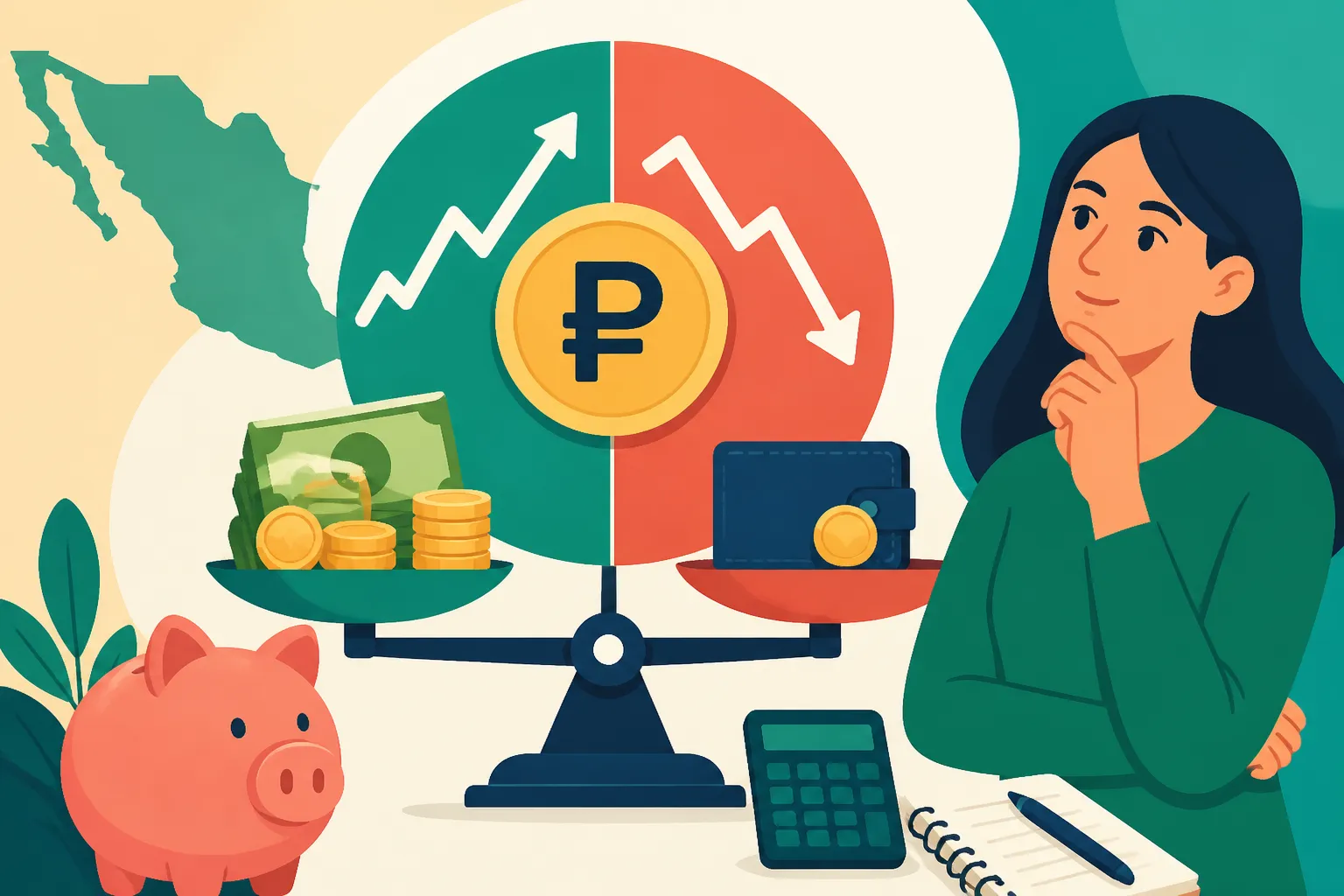
If you've been living in Mexico for any length of time, you've no doubt experienced the dizzying dance of the Mexican peso. One day it's strong, making your foreign currency feel like a superpower, and the next, it dips, and suddenly your budget feels tighter than a pair of skinny jeans after a holiday feast. This constant fluctuation can be incredibly frustrating for expats trying to budget and manage their finances. This guide is here to shed light on peso volatility, helping you understand its rhythm and offering practical, reliable ways to manage your money without feeling like you're constantly gambling at the exchange house.
Disclosure: This post may contain affiliate links. We may earn a commission at no extra cost to you if you make a purchase through these links. Read full disclosure.
The Peso's Personality: Understanding What Drives Its Swings
The Mexican peso, or MXN, is one of the most actively traded currencies among emerging markets, which means it’s always reacting to a whole host of factors, both global and local. For those of us living here, it feels personal, but it's really just the world economy doing its thing. Understanding what makes it tick can help you predict trends, or at least avoid panicking when you see a sudden dip.
Global Economics and Local Policy
First off, Mexico's economy is inextricably linked to the global stage, especially its giant neighbor to the north. When the U.S. economy sneezes, Mexico often catches a cold, and that certainly affects the peso. Think about interest rates: if the U.S. Federal Reserve raises rates, investors might pull money out of riskier emerging markets like Mexico to put it into safer, higher-yielding U.S. assets. This outflow of capital weakens the peso. Conversely, if Mexico's central bank, known as Banxico, raises its interest rates to combat inflation, it can make holding pesos more attractive, thus strengthening the currency. It's a constant tug-of-war.
Then there are the big global events. A war breaking out halfway across the world, a surge in oil prices, or even a major shift in trade agreements can send ripples directly to the peso. For instance, global recessions typically lead to less demand for Mexican exports and tourism, which reduces the inflow of foreign currency and weakens the peso. Locally, political stability, election outcomes, and government spending policies also play a huge role. When there's uncertainty, foreign investors get nervous, and they're quick to pull their money out, driving the peso down. On the flip side, clear, consistent economic policies can instill confidence and help the peso remain relatively stable. It’s a complex mix, and keeping a casual eye on major economic news, both domestic and international, can give you a better feel for the upcoming trends.
Remittances and Tourism's Impact
It's not all big banks and government policies, though. Everyday people and their cross-border activities also have a massive impact on the peso. Remittances, the money sent home by Mexicans working abroad (predominantly in the U.S.), represent a colossal inflow of foreign currency into Mexico. This constant stream of dollars being converted into pesos on a daily basis provides significant support to the peso's value. When these remittances are high, it creates a steady demand for pesos, which can help strengthen it against other currencies.
Tourism is another major player. Think of all the dollars, euros, and other currencies that tourists bring into Mexico and convert to pesos for their hotels, meals, and souvenirs. Areas like Cancún, Playa del Carmen, Puerto Vallarta, and even San Miguel de Allende thrive on this foreign capital. When tourism booms, more foreign currency enters the country, gets exchanged for pesos, and helps prop up the local currency. Conversely, during periods of travel restrictions or global downturns, the tourism sector takes a hit, reducing this inflow and potentially weakening the peso. For expats, this means that even your own spending here, and the collective spending of your fellow tourists and digital nomads, contributes to the very market you're trying to navigate. This is why you often see the peso strengthen during peak tourist seasons or holiday periods.
How Peso Volatility Hits Your Wallet
For expats, the peso's rollercoaster ride isn't just an interesting economic phenomenon; it directly impacts your quality of life and financial planning. When your income is in one currency (like USD, CAD, or EUR) and your expenses are in another (MXN), every swing can feel like a direct hit or a lucky break. It makes budgeting feel less like a plan and more like a prediction.
Rent and Bill Payments
Your monthly rent is probably one of your biggest expenses here in Mexico, and it’s almost certainly denominated in pesos. If you're getting paid in U.S. dollars or Canadian dollars, a sudden weakening of the peso means that more of your home currency is required to cover the same peso amount. For example, let’s say your rent is 15,000 MXN. If the peso is strong at 17 MXN to 1 USD, you’re paying roughly $882 USD. But if the peso weakens to 18.5 MXN to 1 USD, that same 15,000 MXN now costs you about $811 USD. Great, right?
However, the reverse is true when the peso strengthens. If it goes to 16 MXN to 1 USD, your rent suddenly jumps to $937 USD. This fluctuation can make it incredibly difficult to set a fixed budget in your home currency. The same applies to other recurring bills like electricity (CFE), internet (Telmex, Totalplay), gas, and even your grocery shopping. One month you might feel flush, the next you're pinching pennies, all because of something entirely outside your control. This constant shift requires a flexible mindset and smart financial tools. If you're relying on traditional banks for these conversions, you're likely losing even more to unfavorable exchange rates and hidden fees. This is where tools like Wise really shine, offering you the real exchange rate and transparent fees, so you know exactly what you're paying and when. For more insights on how to manage your local payments, check out our guide on Paying Utility Bills in Mexico: Methods and Tips for Expats.
Larger Purchases and Investments
The impact of peso volatility is even more pronounced when you’re considering larger financial commitments, such as buying a vehicle, funding a home renovation, or even making a down payment on a property. Imagine you've saved up a substantial amount in your home currency for a down payment on a beautiful home in Mérida. You've factored in the current exchange rate, but by the time you're ready to make the transfer, the peso has strengthened significantly. Suddenly, your carefully saved funds buy fewer pesos, and your dream home feels further away.
The same goes for long-term investments within Mexico. If you're looking to invest in Mexican stocks or property, the timing of your currency conversion is paramount. A poorly timed transfer can erode a significant portion of your potential gains before you even begin. For example, if you sell property and want to repatriate your funds, a weak peso might mean you get fewer dollars back than you anticipated. This is where strategic thinking and reliable, cost-effective currency exchange become absolutely critical. You need a service that allows you to lock in favorable rates or at least provides the best possible rate at the moment of transfer, helping you maximize your investment. Understanding the larger financial picture is key, and you can learn more about specific investment avenues in our guide on Mortgage Options for Expats: Financing a Property Purchase in Mexico.
Strategies for Navigating Currency Fluctuations
Dealing with a volatile peso doesn't mean living in a constant state of anxiety. As expats, we learn to adapt, and a big part of that is implementing smart financial strategies to protect our hard-earned money from the whims of the market. It's about being proactive, not just reacting.
Diversifying Your Savings
One of the most fundamental strategies for dealing with currency volatility is to diversify where and in what currency you hold your savings. Instead of keeping all your eggs in one basket – say, all in pesos or all in your home currency – consider holding a portion in both. This isn't just for multi-millionaires; it's a practical approach for any expat.
Here's how it generally works: keep enough pesos in a local bank account to cover your immediate monthly expenses and a small emergency fund. This shields you from needing to convert funds at an unfavorable rate if the peso suddenly strengthens against your home currency. For your larger savings or funds you don't need immediately, it often makes sense to keep them in your home currency, perhaps in an account back home or even in a multi-currency account like the one offered by Wise. This way, if the peso weakens, the purchasing power of your foreign currency (when you eventually convert it) increases, essentially giving you a buffer. Conversely, if the peso strengthens, your peso holdings benefit. Finding the right balance depends on your personal risk tolerance, anticipated spending, and the current market outlook. It’s a bit like an insurance policy against extreme swings. For more on this, you might find our article on Should Expats Keep Savings in Pesos or Dollars? Managing Currency Risk particularly useful.
Setting a Target Exchange Rate
Another intelligent approach is to set a "target exchange rate." This means you decide what rate you consider favorable for converting your funds and then patiently wait for the market to hit that number. This moves you away from converting out of necessity and into converting out of opportunity. Many online currency tools and apps allow you to set alerts that notify you when the peso-to-dollar (or whatever currency pairing you need) hits your desired rate.
Once you get that alert, you can then initiate your transfer. This requires a little discipline and foresight, but it can save you a considerable amount over time compared to simply converting money whenever your bills are due. For example, if you know you need to transfer $1,000 USD to cover your monthly expenses and your ideal rate is 17.5 MXN to 1 USD, you wait for that rate. If it drops to 17.0, you might hold off if you can. If it jumps to 17.8, you might pull the trigger. Services like Wise offer features that can help with this, giving you transparent rates and often allowing you to hold funds in different currencies until the time is right. This way, you're not guessing; you're strategizing. You can also explore various methods of getting favorable rates in our Currency Exchange in Mexico: Getting the Best Rates on Pesos guide.
Hedging and Bulk Transfers
For those with larger sums, or for regular, significant expenses, a more advanced strategy involves a form of "hedging" or making bulk transfers. While individuals typically don't have access to complex financial instruments like forward contracts (which allow you to lock in an exchange rate for a future transaction), you can achieve a similar effect by making larger, less frequent transfers when the rate is favorable.
Instead of sending money every two weeks for smaller expenses, consider sending a larger sum – enough to cover 2-3 months of expenses – when the exchange rate is particularly advantageous. This reduces the number of times you're exposed to unfavorable rates and minimizes transaction fees if your service charges per transfer. Of course, this requires having a larger cash reserve available and a secure place to hold your pesos in Mexico, like a reputable bank account. Always be mindful of the security of your funds, whether they are in cash or a local bank. However, by leveraging a service like Wise, which offers low fees regardless of transfer size and maintains the real exchange rate, even smaller, more frequent transfers can be managed efficiently without significant penalties. This balance of timing and cost-efficiency can really help your budget stretch further.
The Best Tools for Smart Currency Exchange
Navigating the ebb and flow of the peso while trying to manage your finances can feel like a full-time job. Thankfully, there are tools designed specifically to make this process smoother, more transparent, and ultimately, more cost-effective for expats. The days of relying solely on your home bank or local exchange booths are largely behind us if you want to keep more of your hard-earned money.
Why Traditional Banks Fall Short
Let's be honest, traditional banks, both back home and here in Mexico, aren't always designed with the expat's best interests at heart when it comes to international money transfers. They often present a seemingly convenient option, but that convenience comes at a steep price. First, there are the "hidden fees." While a bank might advertise a low or even zero transfer fee, they often bake their profit into a less-than-favorable exchange rate. This means you’re not getting the true mid-market rate you see on Google; instead, they're giving you a rate that benefits them, quietly skimming a percentage off your transfer. Over time, these small differences add up to a significant amount, especially if you're making regular transfers for rent and living expenses.
Secondly, the process can be slow. Transfers can take several business days, sometimes longer, leaving you in limbo and potentially impacting your ability to pay bills on time. And let's not forget the customer service aspect – trying to resolve an issue with an international transfer through a call center can be a bureaucratic nightmare, often complicated by language barriers. When you're trying to keep a handle on your budget in a foreign country, you need speed, transparency, and a fair deal, which traditional banks often fail to deliver. This is why many expats actively seek out alternatives for sending money internationally, particularly those looking for efficiency and value. For a broader comparison of options, check out Transferring Money Internationally: Best Ways to Send Money to/from Mexico.
Introducing Wise: Your Currency Exchange Ally
This is precisely where Wise steps in as an absolute game-changer for expats in Mexico. If you haven't heard of it, you're missing out on one of the most powerful tools available for managing international finances. Wise was built on the principle of transparency and fairness, essentially cutting out the middleman that traditional banks represent.
What makes Wise the hero in this scenario? Primarily, it’s their commitment to using the real exchange rate – the mid-market rate you see when you Google "USD to MXN." They don't pad the rate with hidden markups. Instead, they charge a small, upfront, and completely transparent fee for each transfer. You know exactly what you’re paying and exactly how much peso you’ll receive before you even hit send. This transparency is invaluable when you're budgeting across currencies.
But it's not just about the rates and fees. Wise also offers incredible speed. Most transfers to Mexico arrive within hours, sometimes even minutes, which is a lifesaver when you need to cover an urgent bill or just don't want your funds tied up for days. Beyond simple transfers, Wise offers a multi-currency account, allowing you to hold money in over 50 currencies, including USD, CAD, EUR, and MXN. This means you can keep a balance in your home currency and convert it to pesos only when the exchange rate is favorable, or when you need it. This ability to diversify your savings within one platform is a huge advantage for managing peso volatility. For anyone opening a Mexican bank account, having Wise to fund it is a no-brainer. You can learn more about local banking in How to Open a Bank Account in Mexico: Requirements and Tips.
Step-by-Step with Wise
Getting started with Wise is remarkably straightforward, even if you’re not a tech whiz. Here’s a basic rundown of how you can use it to send money to Mexico, making it your go-to solution for currency exchange:
- Sign Up for a Free Account: Head over to the Wise website or download their app. The registration process is quick and usually only requires an email, a password, and some basic personal details for verification, as they are a regulated financial institution.
- Set Up Your Transfer: Once logged in, you’ll initiate a transfer. You'll specify:
- The amount you want to send in your source currency (e.g., USD, CAD).
- The currency you want it to arrive in (MXN).
- Wise will immediately show you the exact exchange rate, the transparent fee, and the precise amount your recipient will receive in pesos. There are no surprises here.
- Add Recipient Details: You’ll need the recipient's Mexican bank account details. This typically includes their full name, the bank name, and their 18-digit CLABE number. If you're sending to yourself, you'll simply use your own Mexican bank account information.
- Fund Your Transfer: You can pay for your transfer in several ways, depending on your location. Common options include:
- Debit card or credit card (often the fastest, but sometimes with a slightly higher fee).
- Bank transfer from your home country bank account (usually the cheapest option, but may take a bit longer for the funds to reach Wise).
- Wire transfer.
- Using a balance you already hold in your Wise multi-currency account.
- Confirm and Track: After funding, you confirm the transfer, and Wise will send you confirmation emails and updates. You can track the progress of your money in real-time through their website or app.
Most transfers to Mexico using Wise are completed within a few hours, often much faster than traditional banking methods, putting you in control and giving you peace of mind.
Practical Tips for Budgeting in a Volatile Market
Living in Mexico with income from abroad means your budget is a living, breathing thing, constantly adapting to the peso's moods. But it doesn't have to be a source of constant stress. By implementing a few practical tips and leveraging smart tools, you can create a financial plan that's resilient to currency fluctuations.
Create a Dual-Currency Budget
One of the most effective ways to manage your money in a volatile environment is to create a budget that tracks your income and expenses in both your home currency and Mexican pesos. This might sound like extra work, but it provides incredible clarity and helps you understand the true cost of living.
Start by listing all your fixed peso expenses: rent, utilities, local phone plan, etc. Then, list your variable peso expenses: groceries, transportation, dining out, entertainment. Convert your foreign income into pesos using a realistic average exchange rate, or better yet, the actual rate you typically get with Wise. Now you can see how much foreign currency you need to exchange each month to cover your peso costs. For your income and any savings you hold in your home currency, keep a separate tally. This dual view allows you to instantly see the impact of a peso swing. If the peso weakens, you'll notice your USD-to-peso conversion yields more pesos, making your foreign income stretch further for your local expenses. If it strengthens, you'll be able to tell how much more USD you'll need to exchange. This visibility empowers you to adjust discretionary spending or decide if it's a good time to transfer larger sums. For a detailed look at typical expenses, our Cost of Living in Mexico: 2026 Comprehensive Guide can be a great starting point for your budget. You can also explore specific examples in Monthly Budget in Mexico: Living Well on $1,500, $2,500, and $4,000.
Emergency Fund in Both Currencies
Just as you diversify your general savings, it’s prudent to maintain your emergency fund in a mix of both your home currency and pesos. An emergency fund is designed to cover unexpected costs, and when you live abroad, those costs can be denominated in either currency.
Having an easily accessible chunk of pesos in a local Mexican bank account ensures that if a sudden emergency arises – perhaps a medical bill, a car repair, or a sudden home repair – you don't have to scramble to convert funds at potentially the worst possible exchange rate. This immediate access can save you stress and money. For your larger emergency savings, it's often wise to keep the bulk in your home currency, especially if it's a more stable currency like the USD or EUR. This protects the purchasing power of those funds against a significant peso devaluation. Consider setting up a Wise multi-currency account where you can hold both currencies, allowing you to convert instantly if needed, always at the real exchange rate. This layered approach provides a robust safety net, giving you confidence no matter what surprises life in Mexico throws your way. Learn more about preparing for the unexpected in Medical Emergencies in Mexico: What Expats Should Know and Prepare.
Automating Transfers
While keeping an eye on the exchange rate for optimal timing is a great strategy, life as an expat is busy. You can’t always be glued to the currency charts. This is where automation, particularly through a service like Wise, can be incredibly beneficial for managing your recurring peso expenses.
Many people set up automated transfers to their Mexican bank account from their home bank, which means they're subject to whatever rate their bank offers on the day of the transfer, along with potentially high fees. With Wise, you can schedule regular transfers, ensuring your money arrives in Mexico consistently. Even if you're not perfectly timing the market, using Wise means you're always getting the real mid-market exchange rate and paying only small, transparent fees. This consistent, fair rate provides much more stability than relying on traditional bank transfers. You can set up recurring payments for your landlord, or simply ensure a steady stream of funds lands in your local account for daily expenses. This way, you streamline your finances, reduce administrative hassle, and know you're always getting a fair deal on your conversions. It’s about leveraging technology to take the guesswork and the grind out of cross-border money management, freeing you up to enjoy your life in Mexico.
Disclaimer
The information provided in this guide is for general informational purposes only and does not constitute financial, legal, or immigration advice. While we strive to keep the information up-to-date and correct, currency markets, financial regulations, and economic conditions in Mexico can change rapidly. Expats should always consult with qualified financial advisors, tax professionals, and legal experts regarding their specific situation before making any financial decisions or undertaking currency exchanges. We recommend doing your own thorough research and seeking professional guidance tailored to your individual needs.