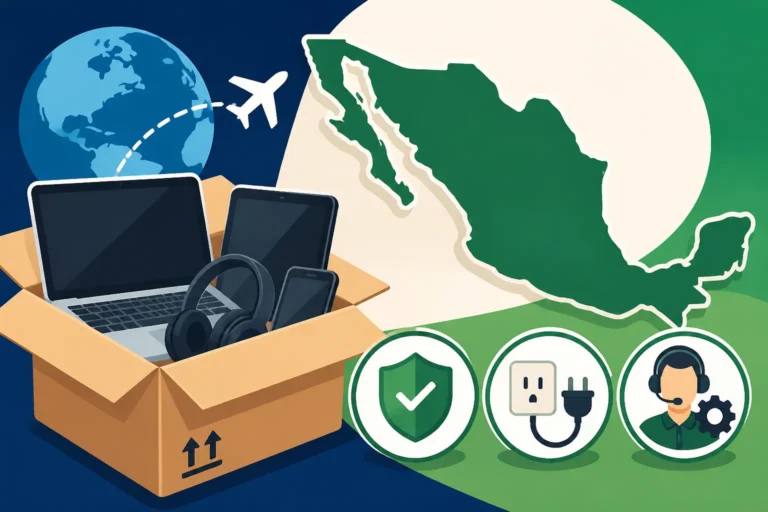
Menaje de Casa Without a Residency Card Yet: Sequencing the Paperwork
Moving to Mexico can be an exhilarating adventure, but let's be real, the paperwork often feels like trying to solve a Rubik's Cube blindfolded. One of the biggest headaches many of us face is bringing in our household goods, our menaje de casa, when our residency visa is approved and stamped in our passport, but the physical residency card from the Instituto Nacional de Migración (INM) is still weeks or even months away. You're in this frustrating limbo: a legitimate resident in the eyes of the consulate, but without the final plastic proof that customs often seems to demand. This comprehensive guide will walk you through how to navigate the menaje de casa process even when your shiny new residency card isn't in hand yet, highlighting how a trusted moving partner can be your absolute lifeline.
Disclosure: This post may contain affiliate links. We may earn a commission at no extra cost to you if you make a purchase through these links. Read full disclosure.
Understanding the Menaje de Casa: Your Ticket to Duty-Free Moving
When you decide to make Mexico your home, you'll inevitably encounter the term menaje de casa. This isn't just a fancy Spanish phrase; it's a critical document that can save you a fortune and a world of stress.
What is a Menaje de Casa, Really?
At its core, a menaje de casa is a detailed inventory of your personal household items – everything from your beloved couch and kitchen appliances to your clothes, books, and even your grandmother's antique lamp – that you plan to bring into Mexico duty-free. It's a special privilege granted to foreign residents moving to Mexico, distinguishing your personal belongings from commercial goods or new items that would otherwise be subject to hefty import taxes. Think of it as your official declaration that these items are for your personal use, already owned, and part of your life transitioning to Mexico.
This document is incredibly important because Mexico, like many countries, has strict rules and high tariffs on imported goods. Without an approved menaje de casa, your cherished possessions could be classified as commercial imports. This means you could be forced to pay significant duties, which can sometimes amount to 16% to 20% or more of the estimated value of your items, plus storage fees if there are delays. Imagine finally seeing your moving truck arrive at the border, only to be hit with a bill for thousands of dollars to get your own furniture back! This one-time permit allows you to avoid that financial hit and bureaucratic nightmare. It’s essential to remember that it's a one-shot deal; once you use it, you generally can't get another one, so make sure your list is complete.
Why You Need It Before Your Ship Arrives
The golden rule of international moving, especially when it comes to menaje de casa, is timing. You absolutely, positively must have your menaje de casa document issued by a Mexican consulate before your household goods arrive at a Mexican port or border crossing. This isn't a "nice-to-have"; it's a non-negotiable requirement.
If your belongings arrive at customs without this crucial document in hand, you're looking at a world of expensive problems. Your goods will likely be held in storage, accruing daily fees that can quickly skyrocket. Customs agents won't release them without the proper paperwork, and getting that paperwork sorted after the fact is a monumental task, often leading to months of delays, exorbitant costs, and intense frustration. In some extreme cases, without proper documentation, your items could even be confiscated or auctioned off. This is a situation no one wants to be in, especially after navigating the complex waters of getting your residency approved. Planning ahead and securing your menaje de casa at the appropriate time is arguably as important as getting your residency visa itself.
The Residency Card Conundrum: A Classic Mexican Catch-22
This is where the real expat frustration often kicks in. You've done the hard work, navigated the consulate appointment, presented your financial solvency, and finally, there it is: your shiny new temporary or permanent resident visa stamp proudly displayed in your passport. You're a resident! You're ready to move! But then comes the moment you realize you don't actually have the physical plastic residency card yet.
The Bureaucratic Hold-Up
After your residency visa is approved and stamped into your passport by a Mexican consulate outside of Mexico, you still have a crucial final step once you arrive in the country: the canje, or exchange process, at an INM office. This is where you exchange that visa stamp for your actual plastic residency card. The canje involves another appointment, fingerprints, photos, and a waiting period. This waiting period can be agonizingly long, ranging from a few days to several weeks, or even a couple of months, depending on the INM office and current processing times.
This delay creates a classic Catch-22 for many expats. You are officially a resident from the moment that visa stamp hits your passport, giving you the right to live and establish a home in Mexico. However, the physical card is often considered the ultimate proof for many administrative procedures within Mexico, including, at times, the menaje de casa application or customs clearance. It's a maddening cycle: you need your menaje de casa because you're moving as a resident, but some interpretations of the rules might seem to demand a document (the residency card) that you can only get after you've moved. Many expats have been left scratching their heads, wondering why the system doesn't account for this common logistical gap. You can learn more about this process in our guide, Navigating Mexico's Immigration System: Visas, INM Procedures, and Regulations.
The Specific Challenge with Menaje de Casa
Historically, and depending on the specific Mexican consulate you're dealing with, obtaining the menaje de casa without the physical residency card has been a point of confusion and contention. Some consulates might strictly interpret the rules, wanting to see the número de residente (residency card number) before issuing the menaje. This is a huge problem if your moving truck is scheduled to leave next week, and your INM canje appointment isn't for another month.
The reality is that your valid temporary or permanent resident visa stamp in your passport should be sufficient proof of your intent and right to reside in Mexico for the purpose of the menaje de casa. After all, the visa is your initial authorization to enter Mexico as a resident. However, the lack of a standardized, clear directive across all consulates can make this part of the process a gamble. Some consulates are more expat-friendly and pragmatic, accepting the visa stamp and perhaps proof of your upcoming INM appointment. Others might be less flexible, leading to delays and arguments. This is precisely why having an experienced moving service, like those found through Sirelo, can be a game-changer. They often have direct experience with various consulates and their specific requirements, helping you pre-empt potential issues and gather the right documentation from the start.
How to Navigate the Menaje de Casa Process Without a Physical Residency Card
Don't despair! While the system isn't always perfectly aligned, there is a clear pathway to obtaining your menaje de casa even when your physical residency card is still a twinkle in INM's eye. It requires meticulous planning and, ideally, the right support.
Step 1: Applying at the Mexican Consulate (The Critical First Step)
This step is non-negotiable and must be completed before you ship any household goods. You apply for your menaje de casa at the Mexican consulate that issued your residency visa. If you've moved or the consulate is too far, you might be able to apply at another consulate, but it's always safest to start with the one that processed your visa.
Here's how to navigate the "no physical card" issue during your consulate appointment for the menaje de casa:
- Your Visa Stamp is Key: Present your valid passport with the temporary or permanent resident visa stamp. This stamp is undeniable proof that you have been approved for residency and have the legal right to enter Mexico as a resident. It is your initial residency document. You can find more details on this initial phase in our guide, The Temporary Resident Visa for Mexico: Step-by-Step.
- INM Appointment Confirmation: If you've already scheduled your canje appointment with INM in Mexico, bring the confirmation printout. This shows the consulate that you are actively moving forward with obtaining your physical card, even if it's not yet issued.
- Detailed Inventory: Prepare an exhaustive list of all household goods you intend to import. This list should be in both Spanish and English, often categorized by room (e.g., Sala – living room, Cocina – kitchen, Recámara – bedroom). Be very detailed, including quantities and a brief description (e.g., "6 dining chairs, used," "1 television, 50-inch, used"). Some consulates require this list to be notarized, so check their specific guidelines.
- Proof of Address in Mexico: Provide a rental contract or utility bill for your new address in Mexico. This confirms your intent to establish a domicile.
- Proof of Financial Solvency: While typically submitted for your residency visa, some consulates might request a refreshed proof of funds for the menaje application itself.
- Fee Payment: There is a fee for the menaje de casa, which varies by consulate. Be prepared to pay this in local currency or by card as required.
When you contact the consulate, explicitly state your situation: "I have my temporary/permanent resident visa stamped in my passport, but I have not yet completed my canje with INM to receive the physical card. Can I still apply for my menaje de casa?" Their answer will guide you. Remember, a professional moving company found through a platform like Sirelo will have experience with these consulate variations and can often provide specific advice based on their past clients' experiences.
Step 2: The Role of Your Moving Company and Customs Broker
This is where the support of a reliable international moving company becomes absolutely invaluable, especially when you're navigating the nuances of the menaje de casa without your physical residency card. When you compare moving companies on Sirelo, look for those with extensive experience in Mexico.
Once your menaje de casa has been issued by the Mexican consulate, it still needs to be presented and processed by Mexican customs (Aduana) when your shipment actually arrives. Your chosen international moving company will work with a licensed Mexican customs broker (an agente aduanal) who is the expert at navigating the complexities of Mexican import regulations.
- Expert Navigation: The customs broker understands that the consulate-issued menaje de casa document, coupled with your valid visa stamp in the passport (and potentially your comprobante de trámite from INM, proving your canje is in process), is the legitimate basis for duty-free import. They are well-versed in interpreting the current regulations, even when the INM card is pending.
- Paperwork Coordination: Your moving company and their broker will ensure all your documents, including your passport with the visa, the consulate-issued menaje de casa, and any INM proof, are correctly submitted to customs. They act as your representative, handling communication with customs officials and addressing any queries or additional requirements.
- Troubleshooting: Should any unexpected issues arise at customs due to the missing physical card, a good customs broker, working with your moving company, is equipped to troubleshoot and present your case effectively, minimizing delays and additional costs. This level of expertise and advocacy is nearly impossible to replicate if you're attempting a DIY move. Comparing movers on Sirelo can help you find companies with a strong track record of success in these exact scenarios. You can also explore general tips for importing goods in Customs Tips for New Residents: What You Can Bring When Moving to Mexico.
Step 3: Coordinating with INM and Your Arrival
The ideal sequence for a smooth move to Mexico looks like this:
- Residency Visa First: Secure your temporary or permanent resident visa stamp in your passport.
- Menaje de Casa Second: Apply for and obtain your menaje de casa from the Mexican consulate before you leave your home country. This must be done while your visa is active and before your goods ship.
- Move to Mexico: Enter Mexico with your visa-stamped passport.
- Complete Canje: Immediately upon arrival (or within the timeframe given by INM, usually 30 days), begin your canje process at a local INM office to get your physical residency card. You can read more about this in How to Complete the Canje After Entering Mexico.
- Goods Arrive: Schedule your household goods to arrive after you have completed the menaje de casa consulate process and ideally, after you have initiated your canje at INM.
What if your goods arrive while your physical residency card is still being processed by INM?
This is a common scenario. As long as you have your consulate-issued menaje de casa document, your passport with the valid visa stamp, and the official proof from INM that your canje process has started (the comprobante de trámite or acuse de recibo), your customs broker should be able to clear your goods. This collection of documents demonstrates your legal status and the progressive steps you've taken toward obtaining your final residency card. The key is that the menaje de casa itself was issued based on your approved residency status as evidenced by your visa, not necessarily the physical card. The experience of movers found on platforms like Sirelo will be crucial here, as they often handle this specific timing challenge.
Key Considerations, Timelines, and Avoiding Common Pitfalls
Moving internationally, especially with household goods, is a marathon, not a sprint. Planning, patience, and professional help are your best allies.
Timing is Everything
Seriously, you cannot overstate the importance of timing. Here's a simplified checklist:
- Residency Visa Approval: Get that visa stamped in your passport.
- Menaje de Casa Application: Apply at your consulate immediately after visa approval, allowing 1-3 weeks for processing. Do NOT ship anything until this is done.
- Shipping Lead Time: Ocean freight can take anywhere from 4-8 weeks, sometimes more, depending on the origin and destination. Air freight is faster but exponentially more expensive.
- INM Canje: Schedule your INM appointment as soon as you arrive in Mexico. The physical card could take weeks to be issued.
Ideally, you want your goods to arrive in Mexico after you've had a chance to settle, attend your canje appointment, and perhaps even receive your physical card. However, this isn't always feasible. The critical point is to have your consulate-issued menaje de casa document in hand before your shipment leaves its origin country. Plan for buffer time in every step. Rushing any part of this process is a recipe for stress and unexpected costs.
Document Preparation and Specific Consulate Requirements
This is where the devil is truly in the details. Each Mexican consulate, while operating under federal guidelines, can have slightly different interpretations or additional requirements for the menaje de casa.
- Call Ahead: Always, always call the specific Mexican consulate where you plan to apply for your menaje de casa. Ask for their precise, up-to-date list of requirements. Specifically inquire about proof of residency when the physical INM card is not yet issued. Ask if the visa stamp in your passport is sufficient.
- Meticulous Inventory: Your household goods list needs to be as accurate and detailed as possible. Don't just write "kitchen stuff." List "6 dinner plates, 6 bowls, 6 cups, 1 coffee maker, 1 toaster, used." This level of detail helps customs and avoids questions. Ensure it's signed, dated, and notarized if the consulate requests it.
- Copies, Copies, Copies: Make multiple copies of every single document: passport, visa, INM appointment confirmation, rental agreement, menaje de casa application, and the issued menaje de casa itself. Keep digital copies too!
- Fees: Have the consular fee ready. Consulates typically do not accept personal checks.
A lack of attention to any of these details can lead to your menaje de casa application being rejected, causing significant delays to your entire moving plan. You need to gather every piece of paper and organize it perfectly.
The Value of Professional Moving Services
Trying to orchestrate an international move, particularly one involving the nuanced menaje de casa process without your physical residency card, can feel like you're conducting a symphony with no sheet music. This is precisely where professional moving services, especially those found and compared on a platform like Sirelo, truly shine.
Think about it: you're already dealing with the complexities of your new life in Mexico, from learning the language to figuring out how to get a How to Get a CURP as a Foreigner: The Mexican ID Number Explained or setting up utilities. Adding the burden of understanding obscure customs regulations and battling bureaucratic inconsistencies can push even the most resilient expat to their limits.
An experienced international moving company has a dedicated team and, crucially, established relationships with licensed customs brokers in Mexico. These brokers are experts in Mexican import laws and have likely dealt with the "no physical residency card yet" dilemma countless times. They can:
- Provide Up-to-Date Advice: They know the current requirements of different Mexican consulates and can guide you on the specific documents you'll need, including how to best present your visa stamp as proof of residency for your menaje de casa.
- Handle Complex Paperwork: They will manage the intricate customs declarations, ensuring your menaje de casa document, combined with your visa, is correctly submitted to the Aduana (customs).
- Problem Solve: If customs agents raise questions about the missing physical card, their brokers are the ones who can confidently explain your situation, cite relevant regulations, and ensure a smooth clearance.
- Streamline the Process: By entrusting the logistics to professionals, you free yourself to focus on settling into your new home, rather than agonizing over port fees and customs forms.
Using a platform like Sirelo allows you to get competitive quotes from multiple vetted moving companies that specialize in moves to Mexico. You can compare their experience, read reviews from other expats who have faced similar challenges, and choose a partner that instills confidence. This isn't just about moving your boxes; it's about moving your life with peace of mind, knowing that the most confusing parts of the bureaucratic dance are being handled by experts who understand the nuances of the menaje de casa for new residents. It's an investment that pays dividends in reduced stress, saved time, and avoided costs.
| Step | Action | Key Document | "No Card Yet" Solution | Sirelo's Role (through partner movers) |
|---|---|---|---|---|
| 1 | Obtain Mexican Residency Visa | Visa in Passport | Required for Menaje application | N/A (Pre-moving/Immigration) |
| 2 | Apply for Menaje de Casa at Consulate | Consulate-issued Menaje | Visa in Passport + INM appointment confirmation (if available) | Connects to movers who advise on specific consulate requirements for "no card" situations |
| 3 | Move to Mexico & Complete Canje | INM Appointment Proof / Comprobante de Trámite | Proof of Canje process (shows card is pending) | N/A (Your personal immigration step with INM) |
| 4 | Ship Household Goods | Menaje de Casa document | Consulate-issued Menaje + INM proof (if card not ready) | Connects to movers & customs brokers experienced in this specific nuance |
| 5 | Clear Customs in Mexico | Menaje de Casa, Resident Card (if ready), Passport, INM proof | Broker works with consulate Menaje & INM proof | Facilitates finding experienced customs brokers via moving companies on Sirelo |
Disclaimer
The information provided in this guide is for general informational purposes only and does not constitute legal or immigration advice. Mexican immigration and customs laws and regulations are complex and subject to change without notice. Always consult with an accredited Mexican immigration attorney or a professional customs broker for advice specific to your individual situation. The author and publisher are not responsible for any actions taken or not taken based on the information presented herein.