How to Complete the Canje After Entering Mexico
You have finally secured that shiny visa sticker from the Mexican consulate in your home country, but the moment you land on Mexican soil, a high-stakes countdown begins. I remember the sheer panic I felt when I realized my 30-day window to complete the "Canje" was half over because I had misinterpreted a stamp in my passport. This guide will walk you through every granular detail of the post-entry exchange process so you can secure your residency card without the bureaucratic heartbreak.
Disclosure: This post may contain affiliate links. We may earn a commission at no extra cost to you if you make a purchase through these links. Read full disclosure.
Crossing the Border and the 30 Day Countdown
The very first mistake many expats make happens before they even leave the airport. When you land in Mexico, you are not a tourist anymore. You are a "Resident in waiting." Historically, this meant filling out a paper FMM (Forma Migratoria Múltiple), but in 2026, most major Mexican airports have moved to a digital system or simplified passport stamps. Regardless of the technology at your specific port of entry, you must ensure the immigration officer processes you as a resident and not as a visitor.
If you use an automated E-Gate, make sure you keep the receipt it spits out. If you see a human officer, you must present your passport with the visa sticker prominently displayed. Tell them clearly: "Canje de Residencia." I have seen far too many people handed a 180-day tourist stamp, which effectively voids their expensive visa sticker. If you are marked as a tourist, you cannot complete the canje, and you might have to leave the country and start the entire process over. This is a nightmare scenario that is easily avoided by double-checking your entry status on the official government portal immediately after clearing customs.
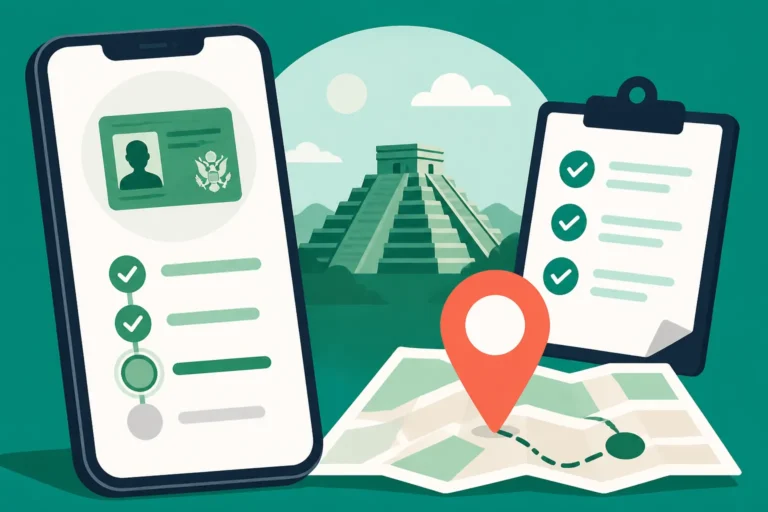
Once you have entered correctly, the law states you have 30 calendar days to present yourself at an INM (Instituto Nacional de Migración) office. Note that this is not 30 business days; the clock includes weekends and holidays. If you are moving to a popular expat hub like Puerto Vallarta or San Miguel de Allende, appointments can be scarce. It is vital to understand Mexico Immigration Terminology 101: FMM, CURP, RFC and Other Essentials so you aren't fumbling through the initial paperwork while your 30-day window closes.
Preparing Your Document Dossier for INM
The "Canje" process is effectively an exchange. You are trading that one-time-use sticker in your passport for a plastic Resident ID card. To do this, you need a very specific set of documents. If you show up missing even one photocopy, the officer will likely send you away, and you will lose your precious appointment slot.
The core of your dossier includes the "Formato para solicitar trámite migratorio," which is generated online through the INM portal. You will also need a "Carta Solicitud," a formal letter written in Spanish requesting the exchange. This letter needs to state your intent, your current address in Mexico, and your personal details. If your Spanish isn't quite up to the task of drafting formal legal requests, don't worry—most local "copy shops" near INM offices have templates, or you can find reliable translators. If you brought supporting documents like marriage or birth certificates that aren't in Spanish, you will need certified translations. Using a service like RushTranslate can be a lifesaver here, as they provide the speed and accuracy required for sensitive immigration documents.
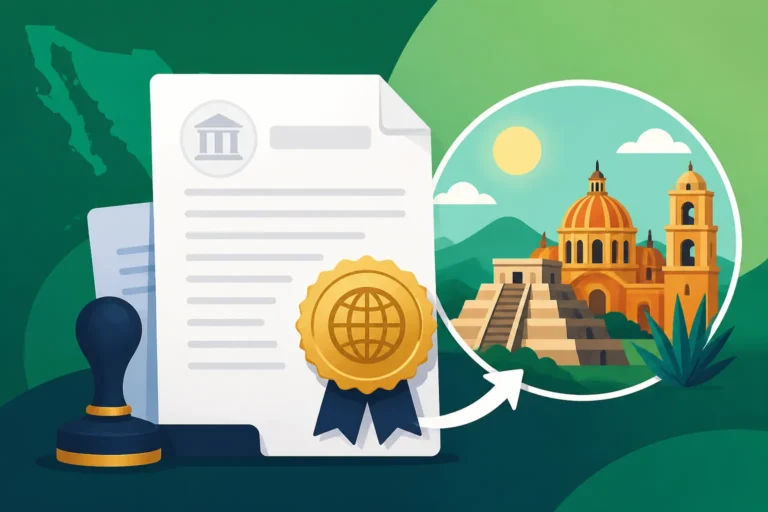
You will also need your original passport, the visa sticker, and the digital or physical record of your entry (the FMM record). You should also have at least three photocopies of every single page of your passport that has a stamp or personal information. Mexico is a land of "copias," and having an extra set is better than having to hunt for a Xerox machine in the middle of a government building. If you are applying for residency based on family unity, ensuring your foreign documents are properly prepared is essential. For more on this, check out Apostilles and Translations for Mexican Immigration to ensure your paperwork meets the strict "Perito Traductor" standards often required by specific INM delegations.
Navigating the e5cinco Payment and Bank Visit
One of the quirks of Mexican bureaucracy is that you don't pay the immigration office directly. Instead, you pay at a bank. You must generate a payment sheet called an "e5cinco" from the government website. This sheet contains specific codes for the "Canje" fee, which varies depending on whether you are getting Temporary or Permanent residency.
Take this printed sheet to a major bank like BBVA, Banamex, or Santander. You must pay in cash (Pesos). The bank teller will give you a receipt with a digital stamp; this receipt is your proof of payment and is arguably the most important piece of paper in your folder. Do not lose it. I usually recommend making three copies of the bank receipt immediately after leaving the teller.
It is also worth noting that the fees for residency change every January based on the UMA (Unidad de Medida y Actualización). If you are processing your canje early in the year, make sure you are using the 2026 rates. If you need a breakdown of what these costs look like for your budget,. Once the payment is made, you are ready for the actual visit to the INM office.
The Appointment and Fingerprinting Process
Depending on the city you are in, you may need to book an appointment online or show up very early to get a "ficha" (a numbered ticket). The online system is the standard for most major cities, though it is notoriously glitchy. If you are struggling to secure a time slot, consult How to Book an INM Appointment in Mexico for tips on when the system usually refreshes.
On the day of your appointment, dress "business casual." It might sound silly, but appearing professional goes a long way with immigration officers. When your name or number is called, you will hand over your dossier. The officer will review your documents, verify your payment, and then take you into a separate area for "biometrics." This involves high-resolution digital fingerprints of all ten fingers, a signature, and a digital photo.
A pro tip from someone who has been through this: do not wear white clothing on your appointment day. The background for the residency photo is white, and if you are wearing a white shirt, you will look like a floating head on your ID card for the next four years. Also, ensure that any foreign documents required for family-linked residency are already translated. Again, services like RushTranslate are incredibly useful for getting these translations done quickly if you realized at the last minute that your birth certificate needs to be in Spanish.
| Document Name | Purpose | Where to Get It |
|---|---|---|
| Formato de Solicitud | Main application form | Online INM Portal |
| Passport & Visa | Proof of identity and visa | Your home country |
| Entry Record (FMM) | Proof of legal entry | Online or Port of Entry |
| Bank Receipt (e5cinco) | Proof of fee payment | Any Mexican Bank |
| Request Letter | Formal request in Spanish | Self-drafted or Lawyer |
| Photographs | ID card photos (if requested) | Local photo studio |
Collecting Your Card and Final Steps
In some smaller INM offices, you might receive your plastic card the same day. However, in cities like Mexico City or Playa del Carmen, you will likely be given a "NUT" (Número de Único de Trámite) and told to check the online status of your application. Once the status changes to "Resolución Positiva," you return to the office to pick up your card.
When you finally hold that plastic card in your hand, check every single letter of your name, your date of birth, and your nationality. If there is a typo, point it out immediately. It is much easier to fix a mistake while you are standing in the office than it is to come back six months later. Once you have your card, you are officially a legal resident of Mexico.
Your next immediate step is to download your CURP (Clave Única de Registro de Población). This is your unique ID number that allows you to do everything from opening a bank account to signing up for a gym membership. Your residency card will have a CURP printed on it, but it often takes a few days to become "active" in the national database. For a step-by-step on how to verify this, read How to Get a CURP as a Foreigner: The Mexican ID Number Explained. You should also keep in mind that as a resident, you have certain obligations, such as notifying INM if you change your address or marital status. If you move to a new apartment to celebrate your residency, make sure you know How to Change Your Address With INM in Mexico to stay compliant.
Common Pitfalls to Avoid During the Canje
Even the most prepared expat can run into trouble. One of the biggest issues is the "expired" entry record. If you wait until day 29 of your 30-day window to start the process, you leave yourself zero margin for error. If the INM system is down or if the bank is closed for a holiday, you could fall out of status.
Another common hurdle is the requirement for "certified" translations. While some offices are lenient, many require that any document not in Spanish—such as a marriage certificate used for a spouse's visa—be translated by a "Perito Traductor" (a court-certified translator). If you are preparing your documents before arriving in Mexico, using RushTranslate can provide a solid foundation for your paperwork, though you should always confirm if your local INM office requires a specific local stamp.
Finally, remember that the "Canje" is a one-way street. Once you start the process, you should generally not leave Mexico until you have the physical card. If you must leave for an emergency, you have to apply for a special "Exit/Entry Permit" (Permiso de Salida y Regreso), or you risk abandoning your application entirely. For more on managing your time and expectations at the immigration office, I highly recommend reading Surviving the INM Office: Tips for a Smooth Visa Processing Day. It covers the "unwritten rules" of the office that can make your day much easier.
Summary of the Post-Canje Life
Once the card is in your wallet, the heavy lifting of immigration is mostly over. You will likely need to renew your card after one year (for temporary residents), and then again after three more years, before you eventually transition to permanent status.
Being a resident opens up a world of possibilities that tourists simply don't have. You can buy and register a car in your name, get a local driver’s license, and even sign up for the public healthcare system if you choose. If you're interested in how residency changes your access to medical care, take a look at Public Healthcare in Mexico: IMSS and IMSS Bienestar Explained for Expats.
The "Canje" is the final hurdle in a long, often expensive journey to living in Mexico. It requires patience, a lot of photocopies, and a willingness to navigate a system that doesn't always make sense. But the moment you walk out of that INM office with your residency card, the stress of "will they let me stay?" evaporates, replaced by the excitement of truly calling Mexico home.
Disclaimer
This guide is for informational purposes only and does not constitute legal advice. Mexican immigration laws and procedures are subject to frequent changes. Always consult with the official Instituto Nacional de Migración (INM) website or a qualified immigration attorney to verify the current requirements for your specific situation.