The Temporary Resident Visa for Mexico: Step-by-Step
Navigating the financial solvency requirements and the confusing "two-step" process of the Mexican Temporary Resident Visa is enough to make any aspiring expat want to pull their hair out. I remember sitting in a cold consulate waiting room with a stack of bank statements, terrified that one missing staple would ruin my dream of living in Oaxaca. This guide provides a meticulous, real-world walkthrough of the entire process to ensure you move from applicant to resident without the typical administrative heartbreak.
Disclosure: This post may contain affiliate links. We may earn a commission at no extra cost to you if you make a purchase through these links. Read full disclosure.
Understanding Financial Solvency Requirements
The most significant hurdle for most applicants isn't the interview itself, but the math behind the financial solvency requirements. Mexico does not have a "one size fits all" number. Instead, the requirements are tied to the UMA (Unidad de Medida y Actualización), which increases annually. In 2026, the figures have shifted upward again, reflecting Mexico's evolving economic landscape. Understanding how to present your wealth is the difference between a "yes" and a "no."
Income vs. Savings: Which Path is Right for You
When you apply, you generally choose between showing a consistent monthly income or a significant balance in savings/investments. For retirees or those with stable remote jobs, the income path is often the smoothest. You will need to show the last six months of pay stubs or pension statements. However, if your income is variable—perhaps you are a freelancer or business owner—the savings route is much safer. This requires showing the last twelve months of statements with a balance that never dips below the required threshold.
Choosing between these paths requires looking at your long-term financial stability. Consulates are looking for "solvency," which in their eyes means you won't be taking a job away from a Mexican citizen. If you are leaning toward the savings path, ensure your accounts are liquid. Stocks and 401ks are usually accepted, but real estate equity is not considered liquid for this specific visa category. For a deeper look at the specific numbers, check out Mexico Temporary Residency Financial Requirements (2026).
The UMA Calculation and 2026 Realities
The UMA is the daily value used to calculate everything from traffic fines to visa requirements. Because the Temporary Resident Visa requires income equal to 300 to 400 times the daily UMA (depending on the specific consulate's discretion), the bar is higher than it was just a few years ago. It is common for expats to look at blogs from 2021 and think they qualify, only to be rejected at the window because they are a few hundred dollars short.
I always recommend that applicants aim for 10% to 15% above the "official" number. Why? Because the exchange rate between the Mexican Peso and your home currency fluctuates daily. If the Peso strengthens against the Dollar or Euro on the day of your interview, your bank balance might suddenly fall below the UMA-converted threshold. It's a cruel technicality that has sent many people home empty-handed. You can find more details on this in Understanding Mexico's UMA: How It Determines Financial Requirements.
Preparing Your Proof of Funds
Preparation is where most people fail. You cannot simply print out a "transaction history" from your online banking portal. Consulates typically demand official monthly statements that show your name, the bank's logo, and a clear closing balance. Some consulates even require these statements to be stamped by the bank, though this is becoming less common as digital banking becomes the norm.
If your statements are not in Spanish or English, you will almost certainly need a certified translation. Even when they are in English, some "stricter" consulates in non-English speaking countries may demand translations. This is where using a service like RushTranslate becomes invaluable. They provide the certified translations that immigration officers expect, ensuring there is no "lost in translation" moment regarding your hard-earned savings. Providing a clear, translated summary of your financials shows the officer that you are organized and serious.
The Consulate Interview: Navigating the First Major Hurdle
The Temporary Resident Visa process technically begins outside of Mexico. You cannot—and I cannot stress this enough—switch from a tourist "visa" to residency while staying inside the country unless you have specific family ties. You must visit a Mexican consulate abroad to get your initial visa sticker.
Choosing the Right Consulate
Not all consulates are created equal. In the expat world, we often talk about consulates as if they are independent kingdoms. One consulate in Texas might be incredibly friendly and process your visa in two hours, while another in California might have a three-month wait for appointments and demand extra documentation. It is perfectly legal to "consulate shop," meaning you can book an appointment at a consulate that isn't in your home jurisdiction, provided they allow "non-residents" of that specific area to apply.
I personally traveled three states over for my interview because the local office was notorious for rejecting remote workers. When choosing, look for recent reports in expat forums regarding their specific requirements for the Mexico Temporary Resident Visa: Comprehensive Guide for Expats (2026 Update). Some offices are more familiar with digital nomad income, while others strictly prefer traditional pensions.
Document Preparation and the Role of Certified Translations
When you walk into that consulate, you are essentially presenting a "dossier" of your life. This includes your passport, the application form, your photos (which must be a specific "infantil" size), and your financial proof. If you are applying as a couple or family, you will also need marriage and birth certificates.
These legal documents often require an Apostille from your home country and a translation. This is another critical point where RushTranslate can save your application. Having a professional, certified translation of your marriage certificate ensures the consulate recognizes your legal union for the purpose of a "Family Unity" application. Do not try to use Google Translate for legal documents; the consulate will see right through it and likely deny your application on the spot. For more on the specifics of the interview, see How to Apply for a Temporary Resident Visa at a Mexican Consulate.
What Happens Inside the Interview Room
The "interview" is often more of a conversation. The officer wants to know why you want to live in Mexico and how you plan to support yourself. They aren't looking for a deep philosophical treatise on Mexican history; they want to see that you are a person of good character with the means to live comfortably. Be honest, be polite, and for heaven's sake, dress professionally.
I've seen people show up to their consulate appointment in flip-flops and tank tops, only to be treated with visible skepticism by the staff. In Mexico, formal "tramites" (administrative procedures) are treated with a level of respect. Wearing a collared shirt and being organized with your folders goes a long way. If the officer approves you, they will take your passport and usually return it within a few hours (or days) with a shiny new visa sticker inside.
Entering Mexico: The Transition from Visa Sticker to Resident
Once you have that sticker in your passport, you are not a resident yet. You are a person with permission to become a resident. This is a distinction that trips up many people. The sticker is valid for a single entry and usually expires within 180 days of being issued. You must use it to enter Mexico and start the final stage of the process.
Landing at the Airport: FMM Changes
In the past, every traveler had to fill out a paper FMM (Forma Migratoria Múltiple). Most major Mexican airports have moved to a fully digital system. However, when you enter with a residency visa sticker, you must be extremely careful at the immigration booth. You must ensure the officer scans your visa and marks your entry as "Canje" (Exchange) rather than "Turista."
If the officer accidentally stamps you in as a tourist for 180 days, your residency process is effectively dead in the water until you leave the country and re-enter correctly. Always double-check your digital entry record or the stamp in your passport before walking away from the booth. It is much easier to fix a mistake in the moment than it is to deal with the INM Office Visits: What to Expect When Processing Your Visa in Mexico later.
The 30-Day Countdown
From the moment you clear immigration in Mexico, a 30-day clock starts ticking. This is your window to visit the local INM (Instituto Nacional de Migración) office and exchange your sticker for a plastic residency card. If you miss this window, your visa becomes invalid, and you might have to start the entire process over from the beginning at a consulate abroad.
I recommend arriving in your destination city and heading to the INM office within the first week. Appointments can be hard to come by, and the paperwork can be finicky. You will need to pay the residency fees at a local bank before your appointment, which is a whole other adventure in Mexican bureaucracy. For a breakdown of these costs, refer to Mexico Immigration Fees and Costs: Budgeting for Your Residency.
| Step | Location | Timeframe | Goal |
|---|---|---|---|
| 1. Consulate Appt | Outside Mexico | 1-2 Hours | Receive Visa Sticker |
| 2. Entry to Mexico | Airport/Border | 30 Minutes | Correct "Canje" entry |
| 3. Bank Payment | Mexican Bank | 1 Hour | Pay the "Derechos" (Fees) |
| 4. INM Submission | INM Office | 3-5 Hours | Submit paperwork & photos |
| 5. Biometrics | INM Office | 1 Hour | Fingerprints and Signature |
| 6. Card Pickup | INM Office | 1 Hour | Receive Resident ID Card |
The INM Process: Exchanging Your Sticker for a Card
The second step, known as the "Canje," is often where the real "Welcome to Mexico" frustration begins. Every INM office operates slightly differently. The office in Merida might require different folders than the office in Puerto Vallarta. This is the stage where patience is your best friend.
The Canje Step-by-Step
You will need to fill out a basic online form (the "Solicitud"), print it, and bring it along with your passport, the original FMM (if digital, a printout of your entry), and proof of fee payment. Most offices also require a "Carta de Solicitud," a formal letter written in Spanish requesting the exchange. This is another area where precision matters. If your Spanish isn't quite up to the task of writing formal legal requests, having a service like RushTranslate help with any supporting documents or certifications you might need can keep your file professional.
The officer will review your documents, and if everything is in order, they will "receive" your application. In some offices, you might get your card the same day. In busier cities like Mexico City or Playa del Carmen, you might have to wait several weeks for your "biometrics" appointment. This phase is detailed in The Canje Process: Exchanging Your Visa for a Resident Card.
Biometrics and the Fingerprinting Ritual
Once your application is approved, you will be called in for biometrics. They will take your fingerprints, a digital photo, and your signature. This data is used to produce your residency card, which is your official ID in Mexico. It is a small, green plastic card that you should carry with you at all times.
The photo taken at the INM office is notorious for being unflattering—don't expect a glamour shot. But that little piece of plastic is your golden ticket. It allows you to open bank accounts, get a Mexican driver's license, and enter and exit the country without ever worrying about a tourist stamp again. To learn more about life after the card, check out How to Get a CURP as a Foreigner: The Mexican ID Number Explained.
Getting Your CURP and Card
Along with your card, you will be assigned a CURP (Clave Única de Registro de Población). This is essentially your social security number in Mexico. You will need it for almost everything: signing up for internet, buying a car, or even getting a discount at some museums. The CURP is usually printed on your residency card, but you can also download a formal certificate online once your residency is active.
Living as a Temporary Resident: Rights and Limitations
Congratulations, you are officially a Temporary Resident! This status usually lasts for one year initially, after which you can renew it for another three years. However, having the card comes with specific rules you must follow to keep your status in good standing.
Lucrativa vs. No Lucrativa
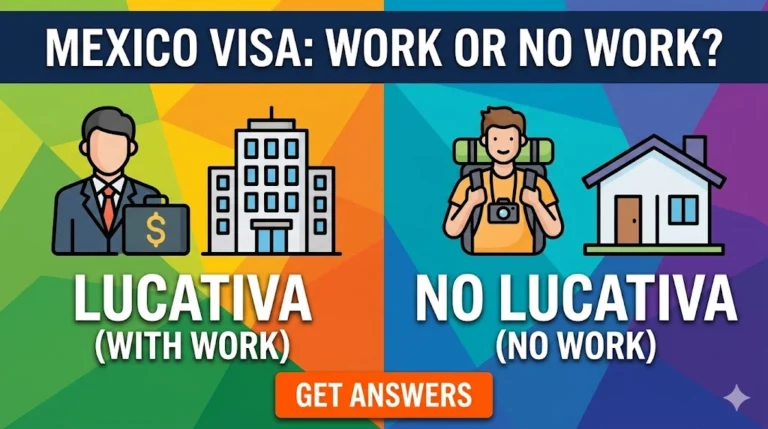
Most people apply for a "No Lucrativa" visa, meaning they are not permitted to earn money from a Mexican source. If you are a digital nomad working for a company in the US or Canada, you are fine. However, if you decide you want to open a cafe in Tulum or work for a local Mexican architecture firm, you must apply for "Work Authorization" (Permiso para Trabajar).
Working without this authorization is a serious offense and can lead to deportation. The process involves your employer (or you, if self-employed) filing additional paperwork with INM. It’s a bit of a headache, but it’s the only way to work legally. You can find out more at Can You Work on a Temporary Resident Visa in Mexico? Rules Explained.
Traveling In and Out of the Country
One of the best perks of residency is the ease of travel. You no longer have to worry about the "180-day" limit or whether an immigration officer will let you back in. However, there is a catch: you must always present your residency card when leaving and entering. If you forget it, or if the airline doesn't record your exit correctly, it can cause major issues with your residency status.
When you leave Mexico by air, you usually don't need to do anything special at the airport other than show your card to the airline and immigration. When you return, make sure the officer scans your card. Do not let them give you a tourist stamp! If you are in the middle of a renewal and need to travel, you must apply for a special "Exit and Re-entry Permit" (Salida y Regreso) to avoid losing your residency.
Bringing Your Foreign Car
For many, the draw of Mexico is the road trip. As a Temporary Resident, you have the unique right to keep a foreign-plated vehicle in Mexico for the entire duration of your residency status (up to four years). This is handled through a TIP (Temporary Import Permit).
However, you must be diligent. Every time you renew your residency card, you must notify the customs office (Aduana) to extend your car's permit. If your residency expires and you haven't notified Aduana, your car becomes "illegal" in the country and could be confiscated. For more on this, see Temporary Import Permit (TIP) for Cars: What Residents Should Know.
Renewing Your Status: Looking Ahead to Permanent Residency
The Temporary Resident Visa is, as the name suggests, temporary. Your first card is valid for exactly one year. You must start the renewal process within 30 days before it expires. Do not wait until the day of expiration!
The Year 1 to Year 4 Path
When you renew after your first year, you can choose to renew for one, two, or three additional years. I always recommend renewing for the full three years if you can afford the fee. This saves you three additional trips to the INM office and protects you from any future fee increases.
After you have completed a total of four years as a Temporary Resident, you are eligible to skip the financial solvency requirements and move directly to Mexico Permanent Residency Explained: A Complete Guide (2027). This is the ultimate goal for many, as permanent residency never expires and gives you almost all the rights of a Mexican citizen, minus the right to vote.
Transitioning to Permanent Resident Status
The transition from Temporary to Permanent is generally much easier than the initial application. Since you have already proven your finances once and have a "track record" in the country, the government is much more willing to grant you permanent status. Once you have that card, you are a "forever" resident.
This journey from that first nervous consulate interview to holding a permanent residency card is a rite of passage for many expats. It requires organization, a bit of money, and a lot of patience. But waking up to the sound of a co-op coffee roaster in Chiapas or the waves in Sayulita makes every single trip to the INM office worth it.
Disclaimer
This guide is for informational purposes only and does not constitute legal or immigration advice. Mexican immigration laws and financial requirements (including UMA values) are subject to change without notice. Always verify current requirements with the official website of the Mexican Government or a certified immigration professional before beginning your application. While we strive for accuracy, the "real-world" experience at consulates and INM offices can vary significantly by location.