Leaving Mexico and Re-entering: Travel Tips for Residents and Visa Holders
The Mexican digital border is a highly sophisticated, unforgiving network. The National Institute of Migration (INM) tracks every single entry and exit in real-time. A simple mistake like using the wrong airport kiosk or leaving the country while a renewal is processing can instantly void your residency, forcing you to start the entire grueling, expensive process over from scratch at a consulate abroad. This comprehensive guide will break down the devastating “E-Gate Trap,” the strict requirements for traveling while your visa is processing, how long you can legally stay away, and how to safeguard your residency status at the immigration desk.
Disclosure: This post may contain affiliate links. We may earn a commission at no extra cost to you if you make a purchase through these links. Read full disclosure.
1. The Ultimate Danger: The “E-Gate Trap”
If you internalize only one piece of information from this entire guide, let it be this: As a legal resident of Mexico, you must never, under any circumstances, use the automated airport e-gates.
In an effort to speed up customs processing at major international hubs like Mexico City (MEX), Cancún (CUN), Puerto Vallarta (PVR), and Los Cabos (SJD), the Mexican government installed dozens of automated digital kiosks. Travelers simply scan their passports, look at a camera, and the gates swing open.
While these e-gates are a massive convenience for standard tourists, they are a catastrophic bureaucratic trap for residents.
How the E-Gate Destroys Your Residency
The software powering the automated e-gates is programmed exclusively for tourists. When you scan your passport at the kiosk, the federal INM database immediately registers your entry as a “Visitor without Permission to Perform Lucrative Activities” (a tourist on an FMM).
By law, an individual cannot hold two conflicting immigration statuses simultaneously. The exact millisecond the computer registers you as a tourist, it legally overwrites and permanently cancels your Temporary or Permanent Residency. * You cannot reverse this by arguing with the machine.
- You cannot fix this by going to your local INM office the next day.
- Your residency is legally dead. You will have to forfeit your status, fly back to your home country, and re-apply at a Mexican consulate, paying all the massive federal fees over again.
The Resident’s Protocol for Re-entry
When you land in Mexico, you must ignore the short, fast-moving line for the automated kiosks.
- Find the Human Line: Walk directly to the standard immigration line staffed by human INM officers. Often, there is a specific line marked for Ciudadanos y Residentes (Citizens and Residents).
- The Document Hand-off: When you step up to the desk, you must hand the officer your valid passport AND your physical Tarjeta de Residente at the exact same time.
- The Verbal Confirmation: Look the officer in the eye and explicitly state: “Soy residente.” (I am a resident).
- Verify the Stamp: The officer will scan your card, log your entry as a returning resident, and stamp your passport. Before you walk away, look at the stamp. The officer should have checked the box for “Residente” or written your residency type. If they accidentally wrote “180 days” or checked “Turista,” politely but firmly hand it back and ask them to correct it immediately.
To deeply understand this pitfall and others, read our comprehensive guide: Common Mistakes to Avoid When Applying for Mexican Residency Visas.
2. Traveling While Processing: The “Permiso de Salida”
What happens if you have a family emergency in the United States or Canada, but your passport is currently locked at the INM because you are in the middle of a residency renewal, a Cambio de Condición (Change of Status), or a data correction?
If you leave Mexico while an immigration procedure is actively processing, the INM instantly cancels your application under the legal presumption of abandonment.
However, the Mexican government provides a specific, legal mechanism to pause your procedure and allow you to travel: The Permiso de Salida y Regreso (Exit and Return Permit).
How to Obtain the Exit Permit
You cannot get this permit at the airport. You must proactively apply for it at the local INM office where your procedure is pending, at least a week before your flight.
- The Digital Request: Log into the INM Micrositio and generate the formal request for a Permiso de Salida y Regreso.
- The Formal Letter: You must draft a letter in Spanish, signed in blue ink, explaining exactly why you need to leave the country (e.g., medical emergency, scheduled business trip, wedding) and stating your exact departure and return dates.
- The Photographs: You must provide specific tamaño infantil photographs (white background, front-facing, no smiling, ears visible, no glasses).
- The Federal Fee: You will be issued a payment form to take to a local bank. In 2026, the fee for this specific exit permit is approximately $600 to $800 MXN.
- The INM Interview: You submit this dossier to the INM. If approved, they will issue you a physical, stamped, formal letter.
Rules of the Exit Permit
- Validity Window: The letter will specify the exact dates you are allowed to be out of the country. This is typically a maximum of 60 days.
- The Departure: When you arrive at the airport to leave Mexico, you must go to the airport INM office before you go through security. You must show them the letter, and they will stamp it, officially logging your authorized departure.
- The Return: When you fly back into Mexico, you do not use the e-gates. You go to a human officer, present your passport and the stamped letter. They will log your authorized return, and your residency processing resumes safely.
3. The Initial Entry: Arriving with a Consular Visa Sticker
If you are not yet a full resident with a plastic card, but rather a prospective resident flying into Mexico for the very first time with a pre-approved visa sticker from a consulate, your entry procedure is uniquely perilous.
The “Canje” Stamp Requirement
The visa sticker placed in your passport by the Mexican consulate in Los Angeles, London, or Toronto is not your residency card. It is a single-use entry visa valid for 180 days. Its only legal purpose is to get you across the Mexican border so you can initiate the Canje (Exchange) process at a local INM office.
When you land in Mexico with this sticker:
- Absolutely bypass the automated e-gates. If you use the e-gate, you enter as a tourist, and your lucrative consular visa is permanently voided.
- Go to a human INM officer.
- Open your passport directly to the page containing the visa sticker. Hand it to the officer.
- Explicitly state: “Vengo para el canje de mi visa.” (I am coming for the exchange of my visa).
- The Visual Verification: Do not leave the desk until you verify the stamp. The officer MUST write the word “Canje” or clearly check the residency box on your entry stamp. If they stamp you as a tourist for 180 days, you cannot process your residency. You will have to fly out of Mexico and re-enter to get the correct stamp.
From the date of this specific entry stamp, you have exactly 30 calendar days to report to your local INM office to begin the plastic card issuance process. To understand the granular costs and procedures of this specific phase, review Mexico Immigration Fees and Costs: Budgeting for Your Residency.
4. How Long Can You Stay Away? (Temporary vs. Permanent)
One of the most profound benefits of holding Mexican residency is the freedom of movement. Unlike a tourist FMM, which restricts your stay and resets upon exit, a residency card grants you the right to enter and exit Mexico as frequently as you desire. However, your specific residency class dictates the long-term rules.
Residente Temporal (Temporary Residents)
If you hold a Temporary Resident card, you can leave Mexico the day after you receive your card, spend 10 months traveling through Europe, and return to Mexico without any issues.
The Catch: Your card has a hard expiration date. You must be physically present inside Mexican territory to renew your card. The INM requires you to initiate your renewal process strictly within the 30 days prior to your card’s expiration date. If you are in the United States and your Temporary Resident card expires while you are outside of Mexico, you have a massive problem. You cannot renew it abroad. You have a maximum grace period of 55 days from the expiration date to re-enter Mexico, and you must rush straight to the INM the next day to pay hefty late fines to salvage your status.
Residente Permanente (Permanent Residents)
If you hold a Permanent Resident card, you have achieved the ultimate immigration freedom.
There are zero physical presence requirements to maintain your Permanent Residency status. You can leave Mexico, move back to Canada for five years, and your Mexican Permanent Residency card remains completely valid. Because the card has Vigencia Indefinida (Indefinite Validity), you never have to return to the INM to renew it. You can return to your beachfront condo in Puerto Vallarta half a decade later, hand your card to the INM agent, and walk right through.
To understand the long-term strategic differences between these statuses, review Temporary vs Permanent Residency in Mexico: Key Differences and Benefits.
5. The Citizenship Trap: The 180-Day Rule
If your ultimate goal is to transition from a resident to a fully naturalized Mexican citizen holding a powerful dual passport, everything you just read in the previous section comes with a devastating caveat.
The National Institute of Migration (INM) does not care how long you leave the country. However, citizenship is not handled by the INM; it is handled by the Secretariat of Foreign Affairs (SRE). The SRE cares deeply about your physical presence.
The Integration Mandate
To prove you are truly integrated into the Mexican nation, the SRE strictly enforces an absenteeism limit for naturalization applicants.
Regardless of whether you are on the standard 5-year track (for independent expats) or the fast-tracked 2-year track (for those married to Mexicans or parents of Mexican children), the rule is identical:
You cannot have been outside of Mexico for more than 180 days in total during the two (2) years immediately preceding your citizenship application date.
- The Math: If you plan to submit your naturalization dossier to the SRE on November 1, 2026, the government will audit your passport stamps and INM border scans from November 1, 2024, to November 1, 2026.
- If you spent 3 months summering in Canada in 2025, and 4 months working remotely in Europe in early 2026, you have accumulated roughly 210 days outside of Mexico.
- The Result: You are legally ineligible to apply for citizenship. Your residency is perfectly safe, but you must wait until your rolling two-year window reflects less than 180 days of absence.
If a Mexican passport is your end goal, you must rigorously track every single day you spend outside the country. For a complete guide on taking this final step, read How to Become a Mexican Citizen: The Complete Naturalization Guide.
6. Returning with Life Changes: The Translation Mandate
Frequent international travel often coincides with major life events. Perhaps you returned to the United States to get married. Perhaps you went back to the UK to have a child.
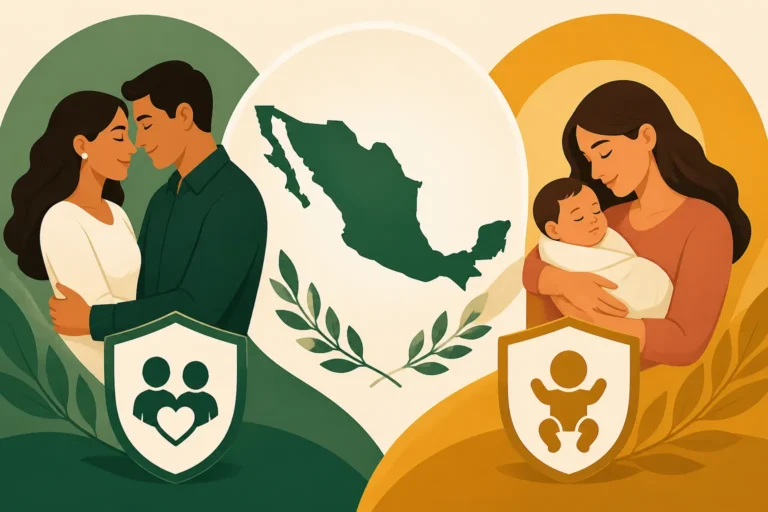
If you plan to bring your new spouse or your newborn child back to Mexico and sponsor their residency under the constitutional right of Vínculo Familiar (Family Unity), you cannot simply show up at the INM with an English marriage license or a Canadian birth certificate.
The Authentication Reality
Foreign vital records are legally meaningless to the Mexican government in their original form.
- The Apostille: The foreign document must first be internationally authenticated via an Apostille from the issuing government (e.g., the US Secretary of State).
- The Certified Translation: Once apostilled, Mexican immigration law strictly mandates that the document must be accompanied by a certified Spanish translation.
You cannot use a web translator, and you cannot ask your bilingual friend to translate your child’s birth certificate. The Mexican government explicitly requires translations performed by a recognized, sworn translator embedded within the Mexican legal system (a Perito Traductor).
We strongly recommend utilizing RushTranslate for your family’s vital records. They specialize in certified, sworn translations specifically formatted for highly sensitive, complex Mexican INM procedures. By sending your apostilled marriage and birth certificates to RushTranslate while you are still abroad, you ensure your documents are legally flawless and ready to submit the moment you return to Mexico. Do not risk a rejection of your family’s residency over a translation technicality.
7. Health Coverage Across Borders: The Invisible Risk
One of the most dangerous oversights expats make when traveling frequently between Mexico and their home country is assuming their healthcare will seamlessly follow them.
The Void Between Systems
- The Mexican Side: If you are a resident registered with the public IMSS system, that coverage stops the exact second you cross the border out of Mexico. It is useless in the US or Europe.
- The Home Country Side: If you are a US expat, your Medicare does not cover you in Mexico. If you are a Canadian, your provincial health plan is severely limited or void once you establish residency abroad.
- The Travel Insurance Trap: Standard travel insurance is explicitly designed for tourists. If you are a legal resident of Mexico, standard travel insurance policies will often deny your claims for fraud, stating that you are not on a “trip,” but rather residing in the country.
The Dual-Country Solution
If you split your time between Mexico and your home country, or if you travel internationally for business, you cannot rely on piecemeal healthcare. A severe medical emergency—a cardiac event or a major traffic accident—can instantly wipe out your retirement savings or your business capital if it happens in the “wrong” country.
You must secure robust, globally portable health coverage. We highly recommend securing an expat-tailored policy through Cigna Global. Their international plans offer direct billing networks with Mexico’s elite private hospitals (like Hospital Ángeles and Star Médica), while simultaneously providing comprehensive coverage when you return to the US, Canada, or Europe.
This means that in a crisis, the hospital coordinates the massive bills directly with Cigna Global, completely bypassing the need for you to drain your checking account or navigate complex reimbursement forms across different international jurisdictions. For a comprehensive comparison of how to structure your health safety net, read Healthcare in Mexico: Complete Guide for Expats Public vs Private.
8. Customs and Aduana: Re-entering with Goods
When you re-enter Mexico as a resident, you are subject to different customs (Aduana) regulations than a first-time tourist.
The Personal Exemption
As a returning resident arriving by air, you are permitted to bring your personal luggage (clothing, toiletries) and a specific list of tax-free electronics, which typically includes:
- Two cameras or video cameras.
- Three cell phones.
- One laptop and one tablet.
- A maximum of $500 USD in “extra” merchandise (gifts, new items).
If you return from a shopping trip in Texas with $2,000 worth of new electronics in their original packaging, you must declare it and pay the 16% IVA (Value Added Tax) at the customs desk. Attempting to smuggle high-value goods through the green “Nothing to Declare” line can result in massive fines and confiscation of the items.
The Vehicle Warning (TIP)
If you hold a Residente Permanente (Permanent Resident) card, you are strictly forbidden by federal customs law from driving or possessing a foreign-plated (US or Canadian) vehicle in Mexico. If you drive a US-plated rental car across the border, or attempt to bring a family member’s foreign car into the interior while holding a Permanent Resident card, Aduana agents have the absolute legal authority to confiscate the vehicle on the spot for smuggling.
Temporary Residents may maintain a Temporary Import Permit (TIP) for a foreign vehicle, provided the TIP is properly renewed alongside the residency card. For a complete guide on navigating these strict vehicle laws, review Bringing Your Car vs Buying in Mexico: Pros and Cons for Expats.
9. Summary Checklist for Re-entry
Whether you are leaving for a 48-hour business trip to Miami or a six-month summer retreat in British Columbia, use this rapid-fire checklist to ensure your legal status in Mexico remains flawless:
- [ ] Check Processing Status: Ensure you do not have a pending Canje, renewal, or Cambio at the INM. If you do, you must obtain a formal Permiso de Salida y Regreso before flying.
- [ ] Verify Passport Validity: Your passport must be valid for at least six months to avoid airline boarding issues, regardless of your residency status.
- [ ] Track Your Days: If your goal is Mexican citizenship, log your exact departure and return dates to ensure you do not violate the SRE’s 180-day absence rule.
- [ ] Translate Life Events: If you acquired a new spouse or had a child abroad, secure Apostilles and send the vital records to RushTranslate for certified Spanish translation before you return.
- [ ] Secure Global Healthcare: Verify your Cigna Global international health policy is active so you are protected both abroad and the moment you touch down in Mexico.
- [ ] Bypass the E-Gates: Upon landing in Mexico, absolutely ignore the automated kiosks. Present your passport and residency card to a human officer and explicitly state: “Soy residente.”
- [ ] Verify the Stamp: Do not walk away from the INM desk until you confirm the officer stamped you correctly as a resident, preventing the devastating cancellation of your visa.
Leaving Mexico and returning home should be a seamless, stress-free experience. By understanding the digital pitfalls of the e-gates, respecting the strict timelines of the INM processing windows, and safeguarding your healthcare and documentation, you eliminate the anxiety of the border. You are not a passing tourist hoping for entry; you are a fully recognized, legally protected resident returning to the vibrant, unparalleled life you have built in Mexico.
References
Primary Sources (Official)
- Instituto Nacional de Migración (INM): The definitive federal portal detailing the exact requirements, forms, and fees for securing an exit permit while your residency is actively processing. https://www.inm.gob.mx/mpublic/publico/inm-tramites.html
- Secretaría de Relaciones Exteriores (SRE): The official portal outlining the strict 180-day physical presence rules and absence limits required for permanent residents applying for citizenship. https://sre.gob.mx/tramites-y-servicios/nacionalidad-y-naturalizacion
Other Helpful Sources
- Mexperience: A highly trusted portal providing simplified explanations of the e-gate dangers, the “Canje” entry process, and the rights of returning residents. https://www.mexperience.com/lifestyle/mexico-immigration-guide/
- ExpatDen Mexico: A detailed, firsthand resource offering granular breakdowns of navigating airport customs, securing globally portable health insurance, and maintaining dual-country logistics. https://www.expatden.com/mexico/
Disclaimer
The information provided in this comprehensive guide is for educational, logistical, and informational purposes only and does not constitute formal immigration, legal, tax, or medical advice. The consequences of using automated e-gates as a resident are severe and administratively devastating. Always verify the most current entry requirements directly with the INM or the nearest Mexican consulate before traveling. We strongly recommend consulting with a certified bilingual Mexican immigration attorney if you have complex travel histories or are managing an expired residency card while abroad. Thoroughly verify your international travel health insurance coverage networks directly with your provider to ensure full protection across all borders.